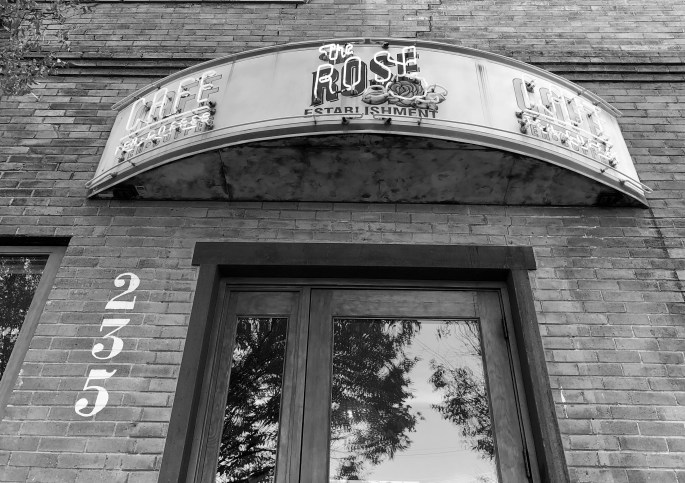
After driving just four hours south of Salt Lake City we are in a very different environment – sunshine and daytime temperatures in the 60 degree range. We spent one night in Sand Hollow SP in Hurricane, UT and were treated to a hot air balloon festival with balloons launching all around our campsite.
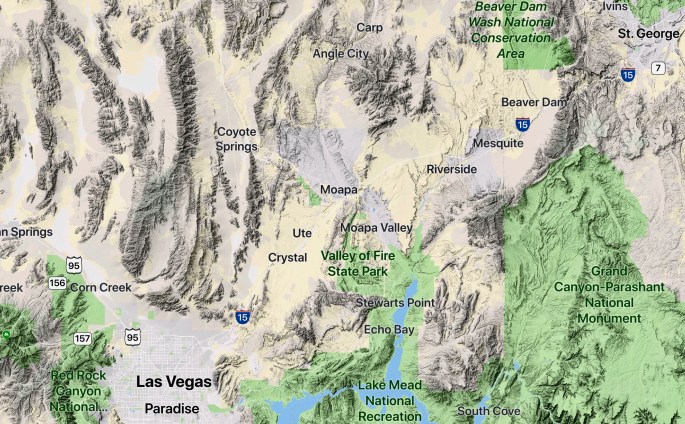
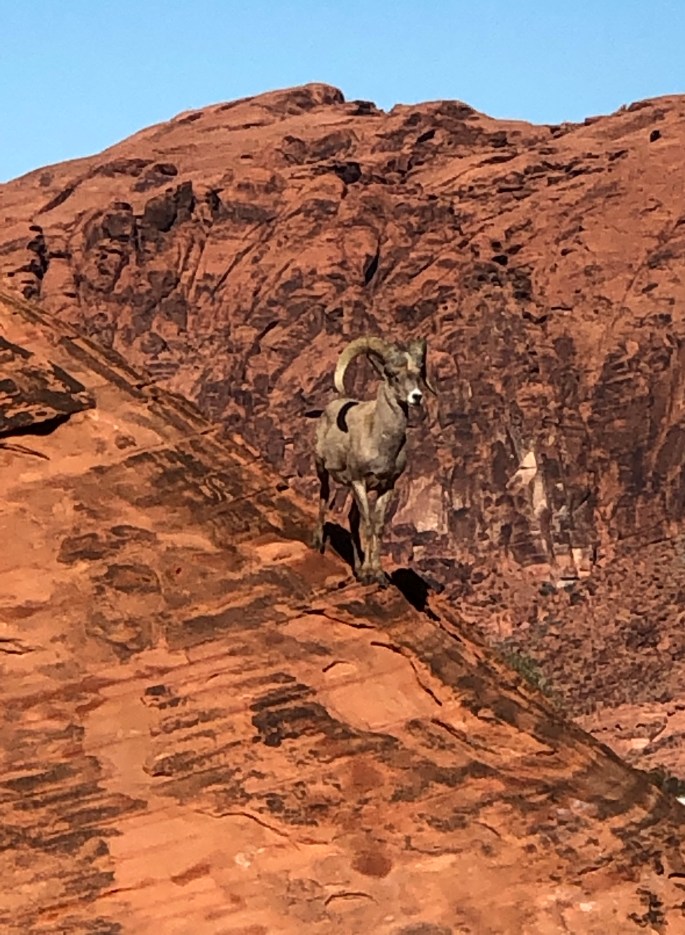
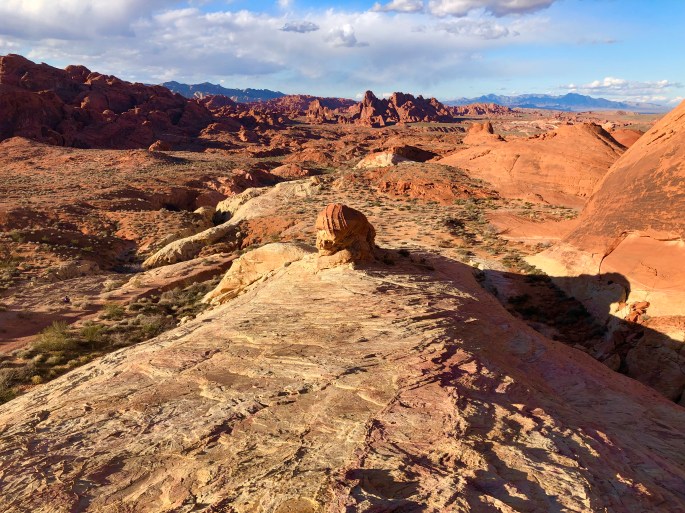
From Hurricane we traveled further south into Nevada where we camped and hiked at Valley of Fire SP. VFSP consists of 40,000 acres of land dominated by Aztec sandstone and limestone which combined creates spectacular scenery across the entire park. There are a number of petroglyphs in the park dating back apx. 2500 years. The state of Nevada has done a terrific job maintaining and conserving this land. The hiking trails are relatively short but offer great payoffs in regard to the views and wildlife viewing. We also found a number of narrow side canyons that provided solitude and great views. (004,005,006)
Fire Canyon
Wave Rock
White Dome, Valley of FireHot Air Balloons, Hurricane, UT
We spent several days in Salt Lake City waiting out a snowstorm that made travel south impossible. Maria and I made the best of it by visiting some old coffee friends and trying out several recommended coffee shops for the first time. Traveling to Hurricane, Ut and then on to Valley of Fire in Nevada. (001,002,003)
Pictured below in our final post is a sample of various forms of art we experienced during our first adventure. Thanks for following along on our maiden voyage in the Beast. We spent time in thirteen states and logged almost 8,400 miles over 90 days. To say the least, we had a blast, saw many beautful places and met a lot of really nice and very interesting people along the way.
We welcome any feedback, thoughts or suggestions you may have in regard to the blog.
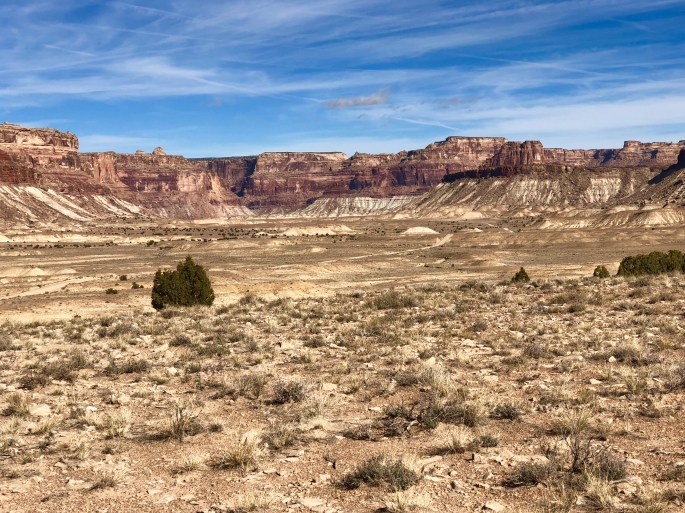
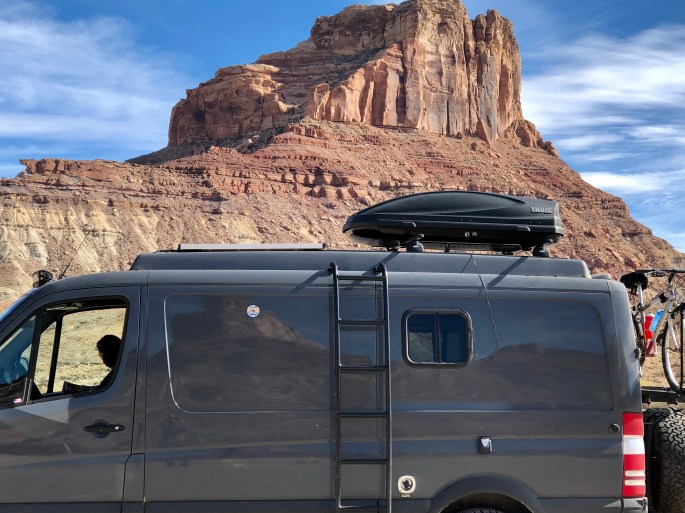
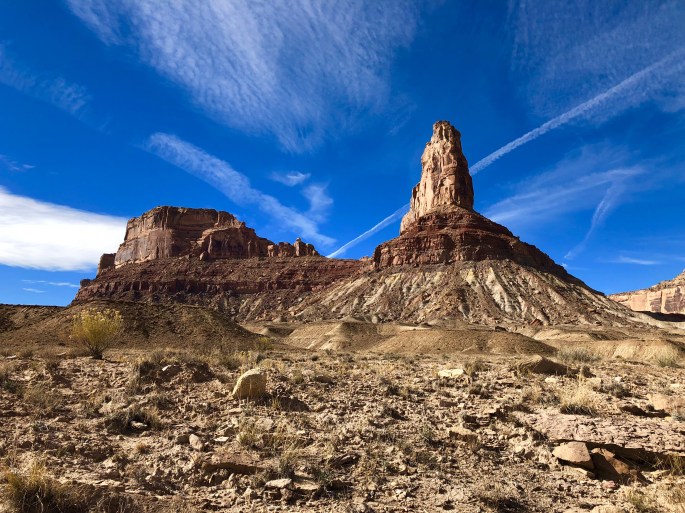
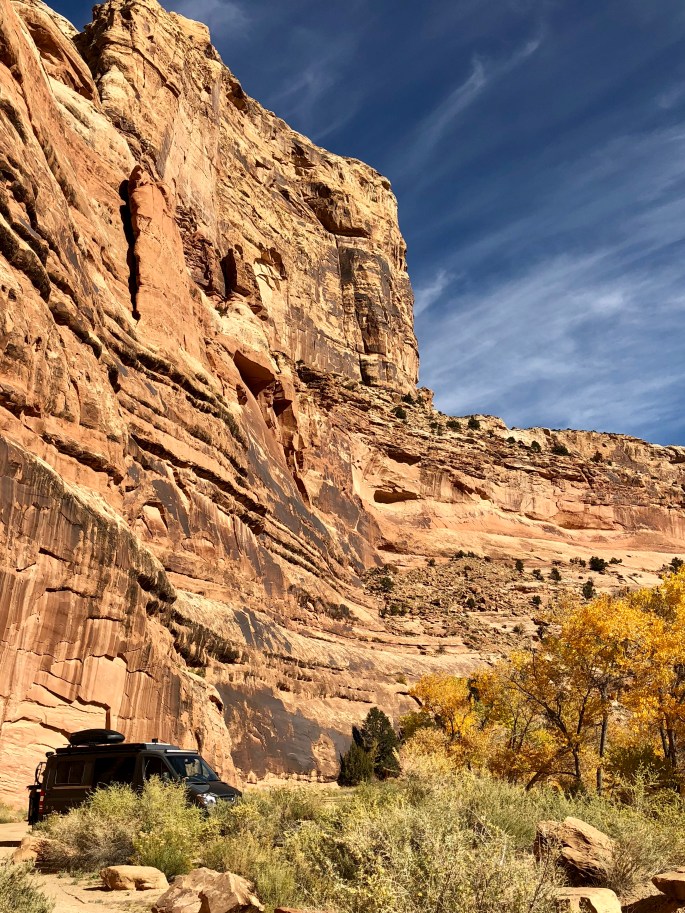
After departing Moab we ventured into the northern portion of the San Rafael Swell. The Swell is a rugged and undeveloped wilderness managed by the BLM. As is the case with most BLM public lands, there is unrestricted access for camping, hiking, driving and other activities. We followed the Buckhorn Draw Road which is unpaved but was dry and in good condition during our trip. The Swell is canyon country with many of the canyon walls reaching up to 500 feet. A number of the canyon walls also have pictographs and petroglyphs which were created about 2000 years ago by Barrier Canyon Indians.
The Swell was at one time a source of uranium but those mines are largely played out. The only other use of the land in the Swell is for grazing cattle. There are also a fair number of wild horses and burros roaming through the Swell.
The Swell is a starkly beautiful, undeveloped area and we hope that the BLM continues to keep it that way.
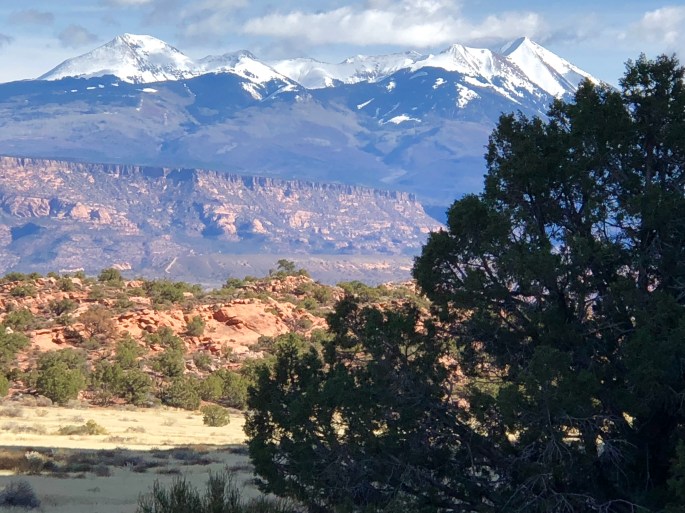
Traveled from Blanding to Moab as we make our way back to Salt Lake City. While in Moab we hiked the Hidden Valley Trail out to Hidden Pass on a perfect fall day. Stopping over in Moab also provided the opportunity to spend time at long time favorite Moab Coffee Roasters.
Moab was a down and out former mining town (uranium) of about 1500 people. More recently, like Sedona,it has experienced significant growth as a tourist destination for both Americanand international tourists.The growing popularity of mountain biking and off roading combined with two national parks has dramatically revitalized Moab’s economy and brought new people into the area.
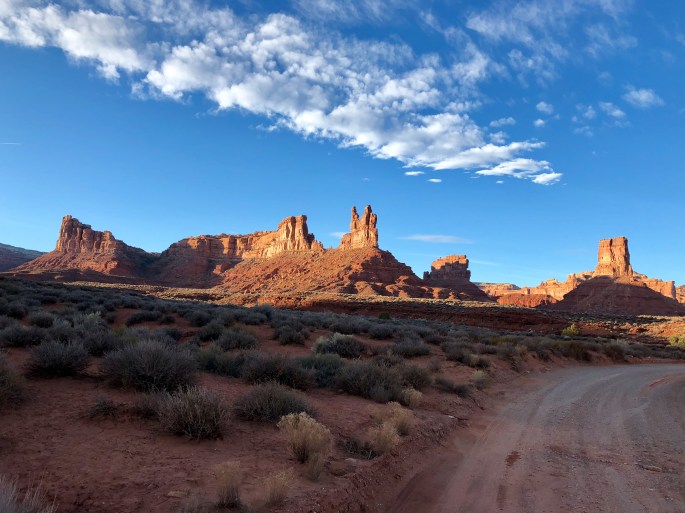
On our way north from Arizona to Utah we ventured into the Valley of the Gods. This valley was part of the Bears Ears NM until President Trump reduced the size of the NM. Fortunately, the valley is still protected for environmental concerns and remains under the management of the BLM.
While the valley is off the beaten path we found the trip to be more than worthwhile as the valley has a significant number of striking buttes, mesas, towers and mushroom rocks. There is a 17 mile road that winds through the valley and provides close up views for many of the formations. The road is unpaved but in good condition for the most part. 0085
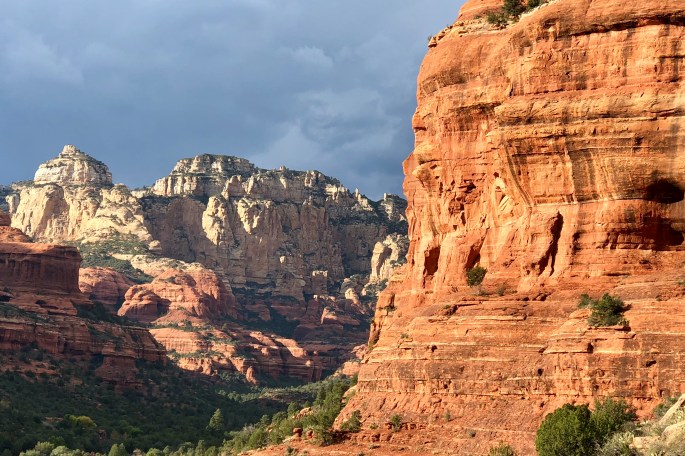
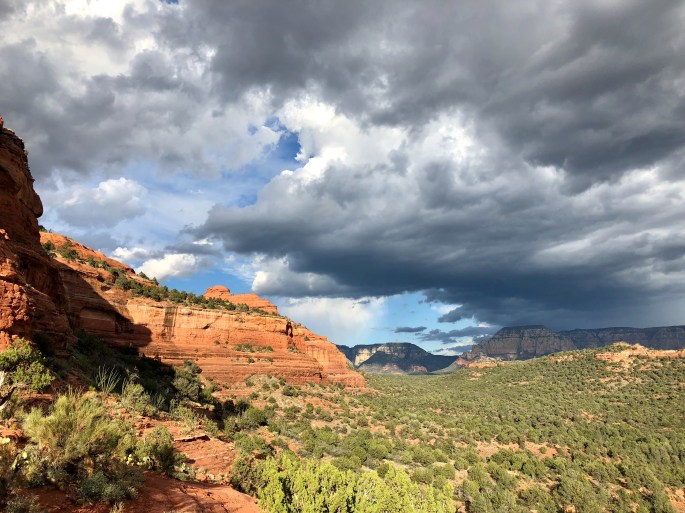
The scenery in Sedona is just as breathtaking as we remembered from our last visit many years ago. The town itself has grown substantially and become a major tourist destination. None the less we had a great time here as we found solitude while we hiked in the Red Rocks and boondocked under the stars in the Coconino NF.
The coffee scene was limited so we are not posting any highlights in that regard.
Departing for the Valley of the Gods in the morning. 0081,0082,0083,0084
Boynton CanyonBoynton Vista
Munds Wilderness from Submarine RockWilson Mountain from Brins Mesa Trail
We spent a couple of nights in Flagstaff or “Flag” as the locals refer to the city. This city of approximately 70,000 sits at 7000 feet above sea level in the Coconino NF with the San Francisco Peaks as the backdrop. The town still boasts a lively and well preserved downtown with local merchants, restaurants and most importantly good coffee. Flag is home to Northern Arizona University (The Lumberjacks). We have found that many of the towns we have visited that have a nice vibe like Flag have a university or college located within the city or town.
We visited three coffee roasters while in Flag. All were legit but our favorite was Firecreek Coffee Company. We have included photos from all three below.
While traveling our focus is to see new places, meet new people, try new adventures, however, as we wander we do need to deal with the mundane. For one of us that means doing laundry, for the other it means getting a haircut. Pictured below is Hermanis Ulibarri. A haircut from Mr. Ulibarri turned out to be anything but mundane. Mr. Ulibarri is 77 years old and has been “barbering” since his return from serving in Vietnam over 50 years ago. He has given haircuts to tourists from all over the world and has quite a following of French clients that spend time in Flag on a regular basis. Lots of interesting stories. Oh, and cash only if you stop in for a haircut on your next visit to Flagstaff.
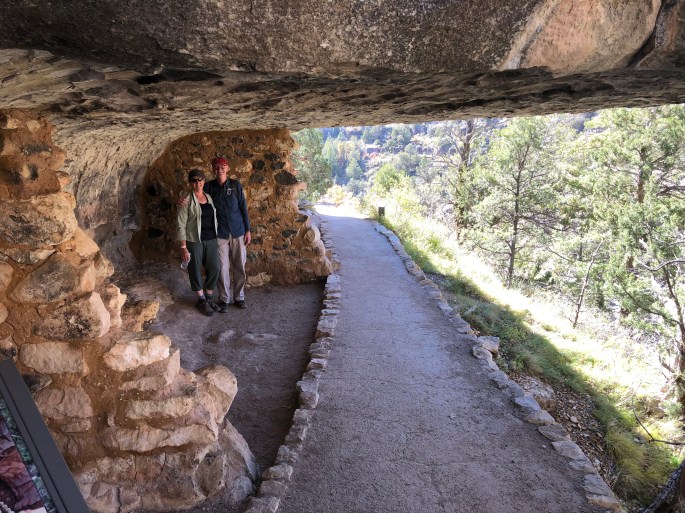
Just a few miles east of Flag is the Walnut Canyon NM. We spent an afternoon there viewing some of the extremely well preserved ancient cliff dwellings. These dwellings were constructed by the Sinagua People during the 12th to 13th centuries. The dwellings sit 300 feet above the canyon floor and provided protection from the weather, animals and rivals. The Island Trail has been constructed so that visitors can descend 200 feet down into the canyon and actually go inside a number of the dwellings. Amazing to think of an entire community raising families, growing crops, hunting, storing water and food while living 300 feet above the canyon floor.
We are off to Sedona for some hiking in the Red Rocks and perhaps to experience the energy of the purported vortices!
In order to watch game three of the World Series, we spent a night in a hotel in Page. Go Sox! Page was established in 1957 to support the thousands of workers and their families during the construction of the massive Glen Canyon Dam, which took over ten years. The dam is over 700 feet tall and 1000 feet wide. The construction of this dam created Lake Powell which provides water and electric power for western states. The lake and the surrounding area are now a significant tourist draw for boating and OHV riding.
Leaving Page for Flagstaff, we journeyed through the Navajo Nation Reservation which spans 27,000 square miles across Arizona, Utah and New Mexico. The population of the reservation is about 350,000. We have never been on a reservation without feeling a measure of sadness. The housing on reservations consists of trailers and ramshackle cabins. The poverty is obvious. What we saw within the Navajo Nation in Arizona was no different. The B+W photos in this post were taken on the reservation. I did not include any photos of tribal housing as it would be disrespectful. You will also see the issue of uranium mining being addressed in the art below. Navajo tribal members have significantly higher rates of cancer and other illnesses from exposure to uranium that was mined within the reservation; slag was left on the surface for years and mines were not sealed.