New River Gorge National River (NRGNR)

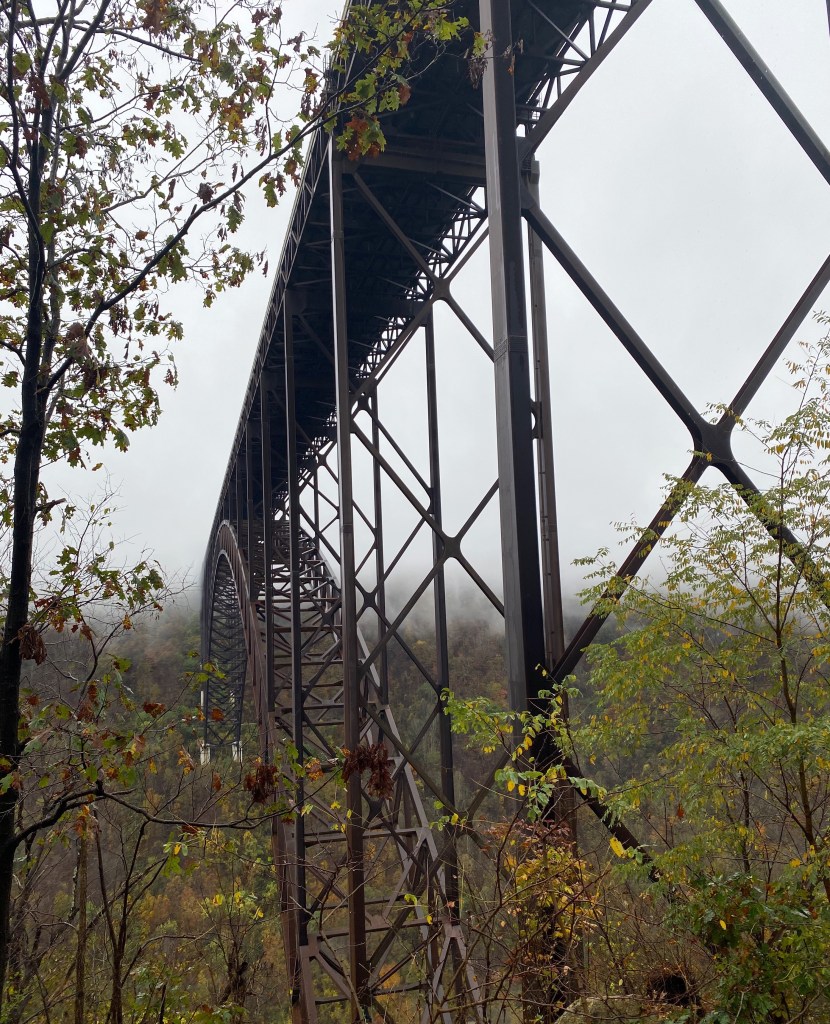
New River Gorge Bridge photographed from Long Point Trail
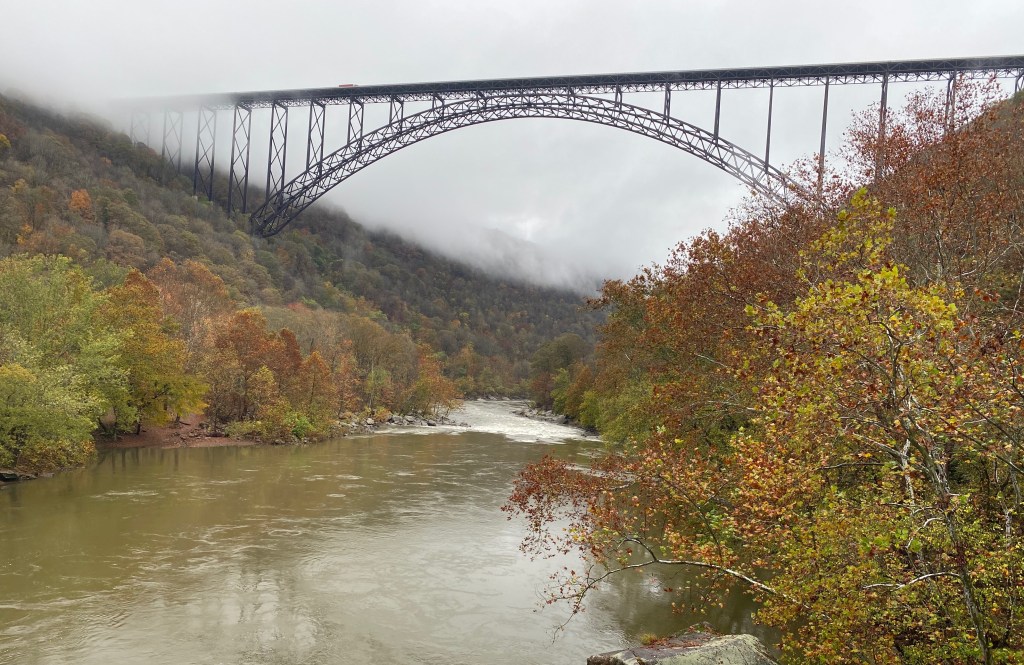
New River Gorge Bridge photographed from Fayetteville Station Road
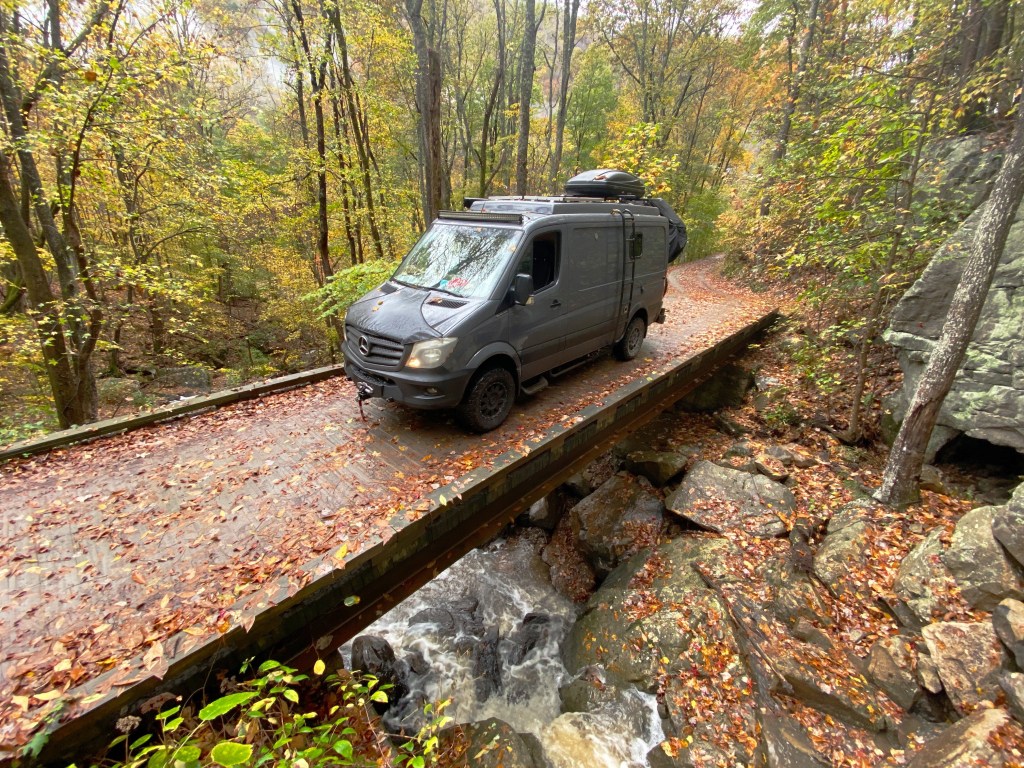
New River Gorge Bridge photographed from Fayetteville Station Bridge

The New River Bridge is quite a sight to see and truely an engineering marvel. It is the fourth longest single arch bridge in the United States and sits at a jaw dropping 876 feet above the floor of the gorge.

But for our money, the real attractions of the NRGNR are the history and artifacts of a way of life that existed down in the gorge for more than eighty years. The gorge was scarcely inhabited until surveyors discovered coal, and not just any coal. The coal in the gorge was high quality “smoke less” coal – highly prized for its high carbon content with minimal waste.

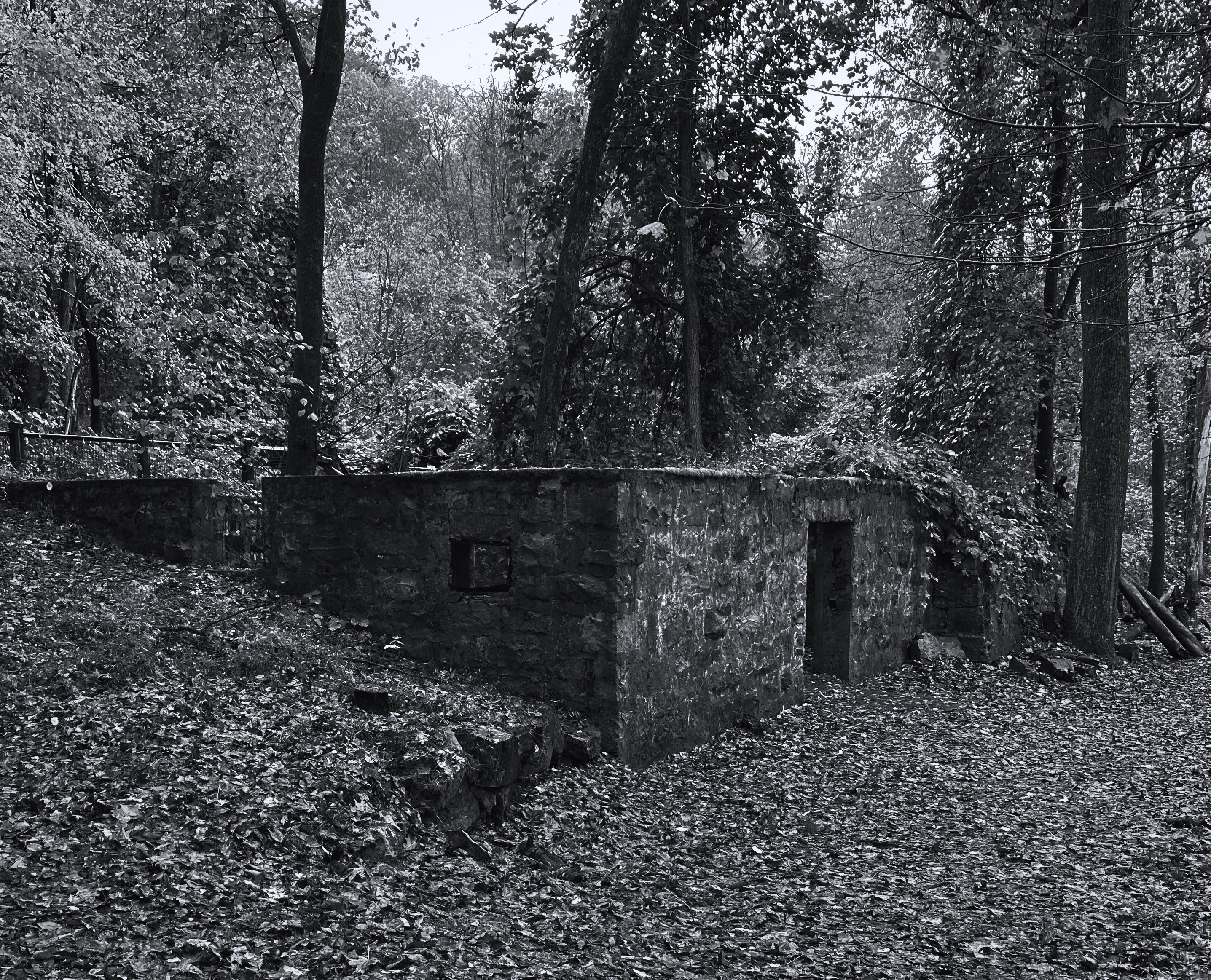
Within the gorge the remains of the Nuttallburg Mine provide insight into the workings of a coal mine and the life of the miners and their families. It is considered one of the best preserved mining complexes in West Virginia.

Visiting the site is a commitment in and of itself. The mining complex sits deep in the gorge at river level and requires driving down a windy, narrow and sometimes steep one lane road.

Keeney’s Creek Road (CR 85/2)
Drive to Nuttallburg Mine Site

The Nuttallburg Mine began operations in 1873 after the completion of the Chesapeake & Ohio railine through the gorge was completed. The rail line enabled the shipping of large quantities of coal as the river was not navigable and getting coal up out of the gorge by road was not feasible.

Because mining in the early days was very labor intensive and the local population was small, the mine operators needed to import workers. Workers came from all over Europe and Canada to work at the mine in a variety of capacities. As a result, the mining workforce and their families were a very diverse population.

The mine also employed African American workers who worked side by side with the other employees. However, outside of work the black employees and their families lived in a segregated town on the opposite end of the mining complex with their own church and school.

The mining town here appears to be typical of mining towns in this era as it was self-contained with its own schools, doctors, blacksmiths, social clubs, athletic teams and company store.

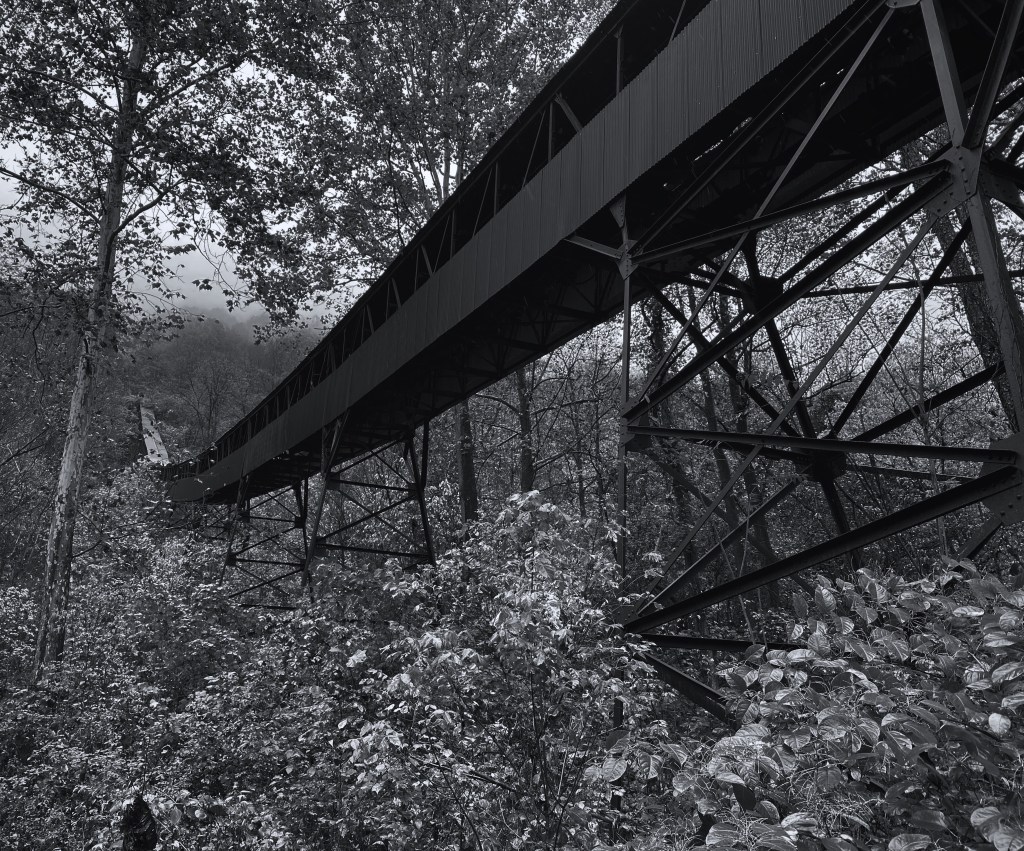
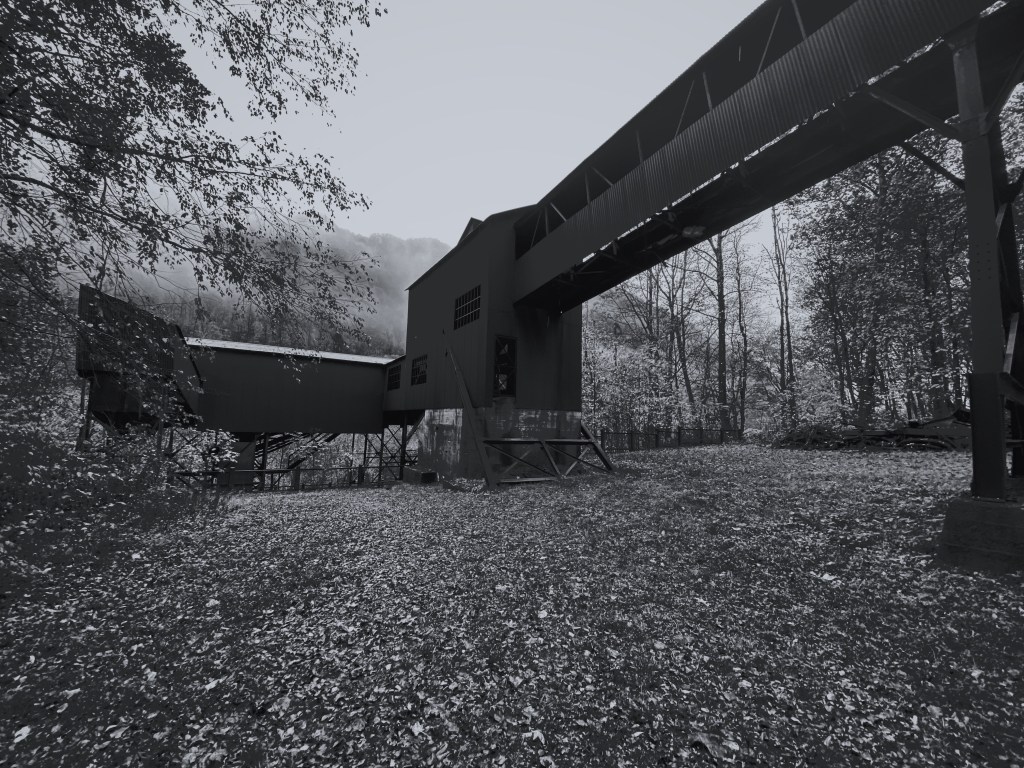
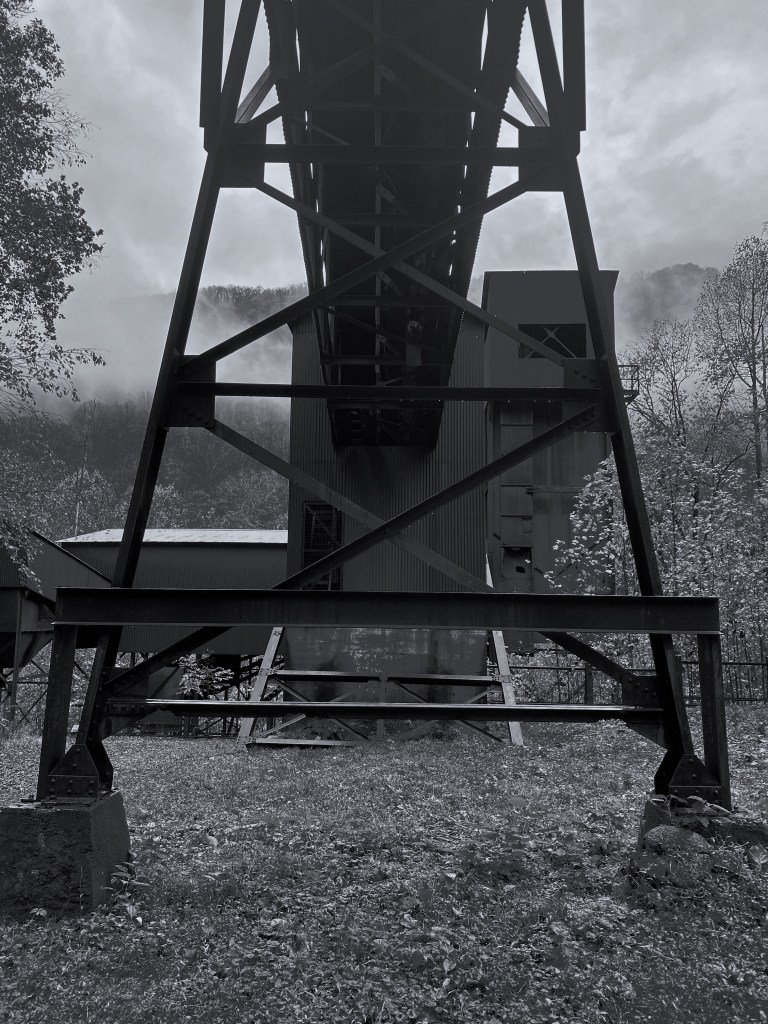
Coal Conveyor, Nuttallburg Mine, NRGNR

The coal conveyor pictured above is 1385 feet in length and brought coal down from the mine 600 feet above the gorge floor. This conveyor was built in 1926 and could move 125 tons of coal per hour.

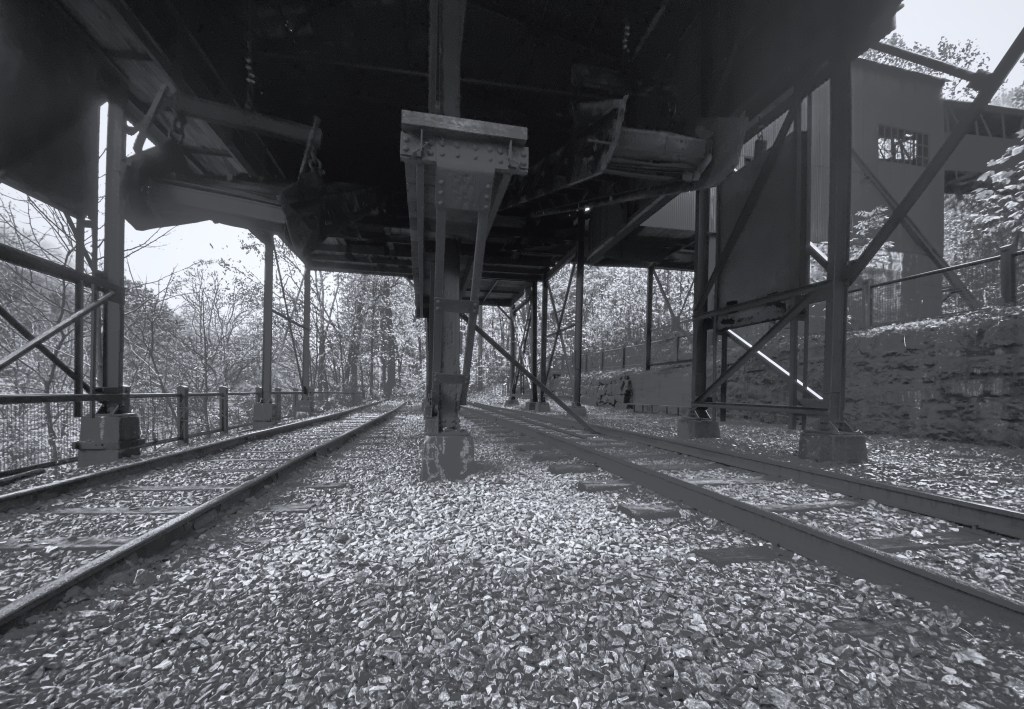
Coal Tipple, Nuttallburg Mine, NRGNR

The company store was a necessity because the employees had no means to travel from the mine complex. Therefore, the company paid the employees in a company issued scrip and most likely significantly overcharged their employees.

Henry Ford leased this mine and others during the early 1920s in order to control the coal supply that Ford needed for automobile production in the Dearborn, Michigan plant. Ford made substantial investments in the mine including the state of the art coal conveyor.

Ford ultimately sold his lease back to the Nuttall family when he found that he could not control the the railroad companies and often could not get his coal to Michigan when he needed it.

The mine continued operations under three different owners until the mid 1950s when it became abundantly clear that the mine was “played out”.

Today the National Park Service manages the mine complex and is doing a good job protecting the area and providing research and education relating to the history of the mine and the town of Nuttallburg.

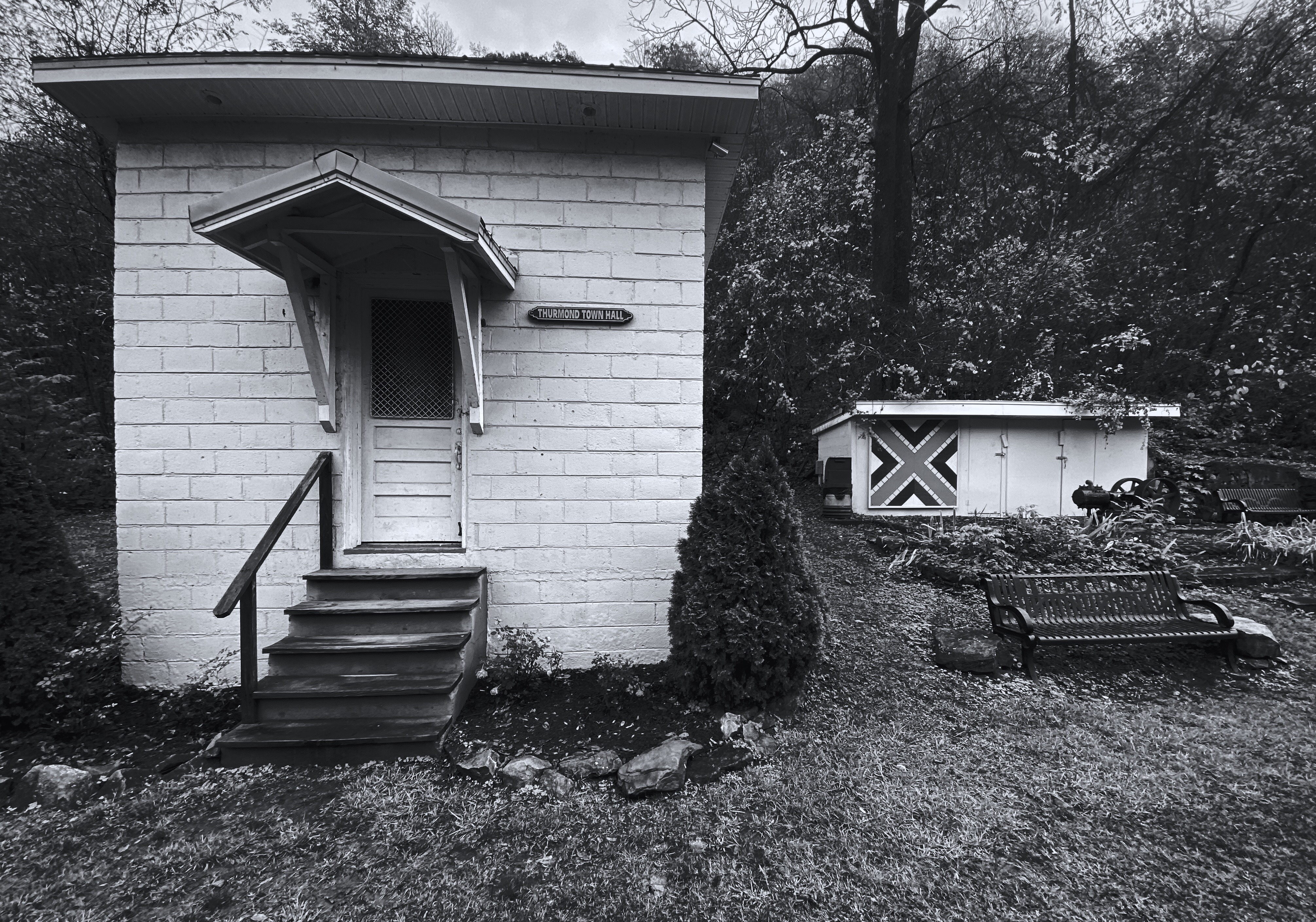
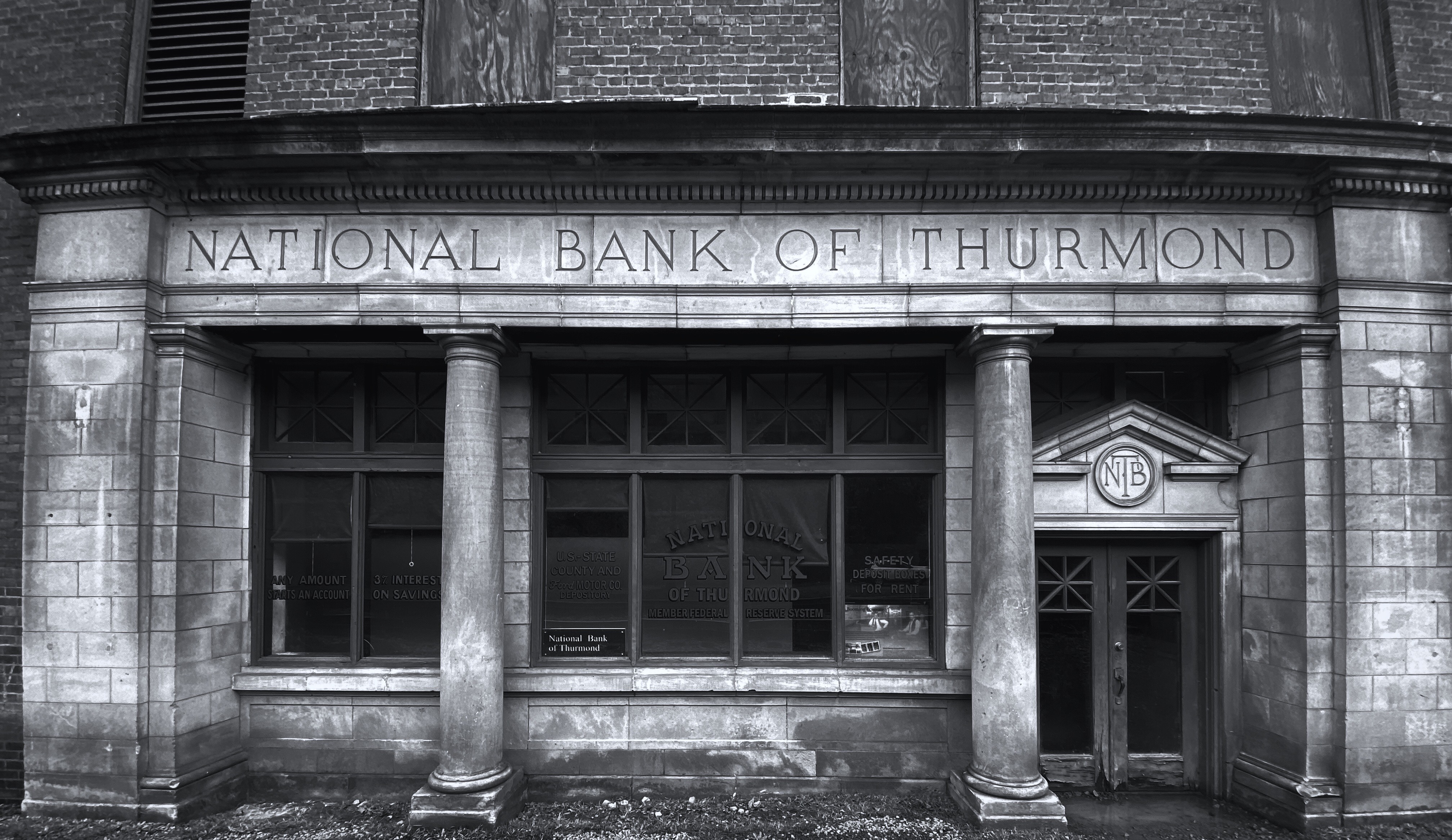
Thurmond, West Virginia

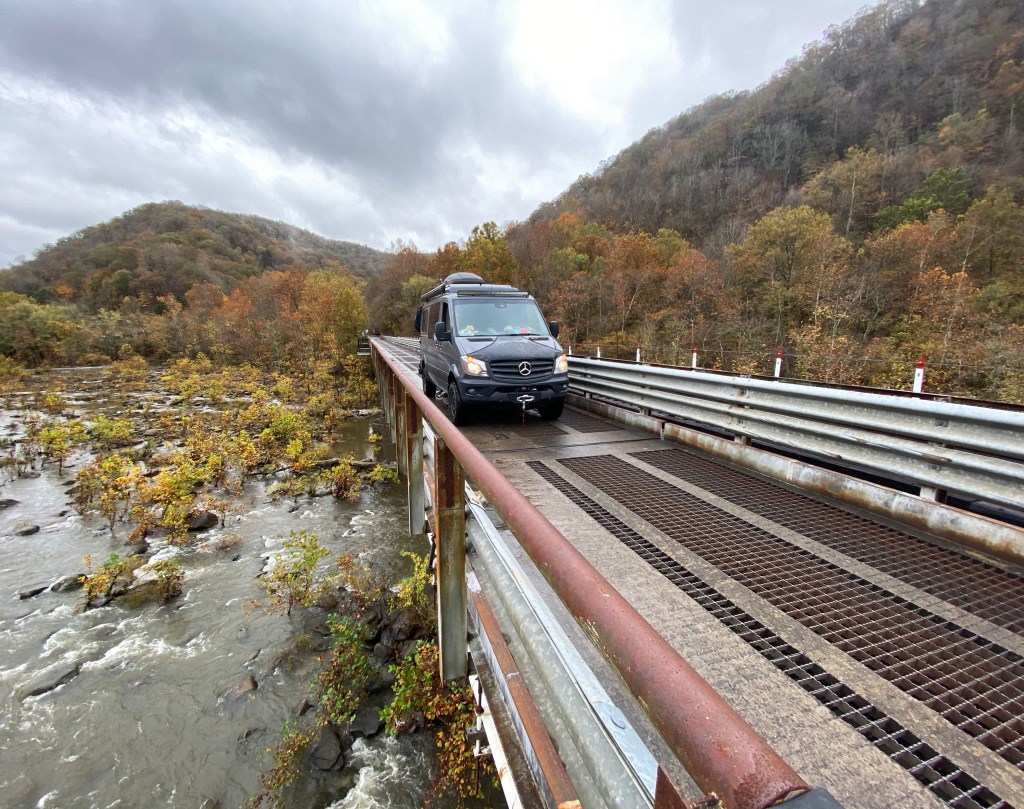
After our exploration of the remains at the Nuttallburg Mine site we ventured south and then east along the Dunloup Creek on County Road 25 to the town of Thurmond. The only way to get to Thurmond was by rail until 1921 when CR 25 was built. Crossing the New River today to Thurmond entails driving across a single lane bridge shared with the railroad.

Car and Train Bridge, Thurmond Road, Thurmond, West Virginia

At one time Thurmond was a rail center where short coal trains were assembled into longer trains that hauled coal out of the gorge. It was also the only place in the gorge where steam engines could load coal and water.

While the town “thrived” (population 462 in 1930) during the early portion of the 20th century the advent of the diesel locomotive rapidly diminished the need for the fueling and servicing of steam powered locomotives. From 1930 on the population diminished steadily although passenger trains continued to bring visitors who stayed at the two hotels that had been built during the prosperous days. Unfortunately, both of the hotels burned to the ground and those events put the finishing touches on the demise of the town.

While the town essentially vanished by the 1950s, the rail lines continue to be operated by the CSX Railway- still hauling coal out of the gorge from the many active mines that remain operational today (more on that topic in a future post about coal country).

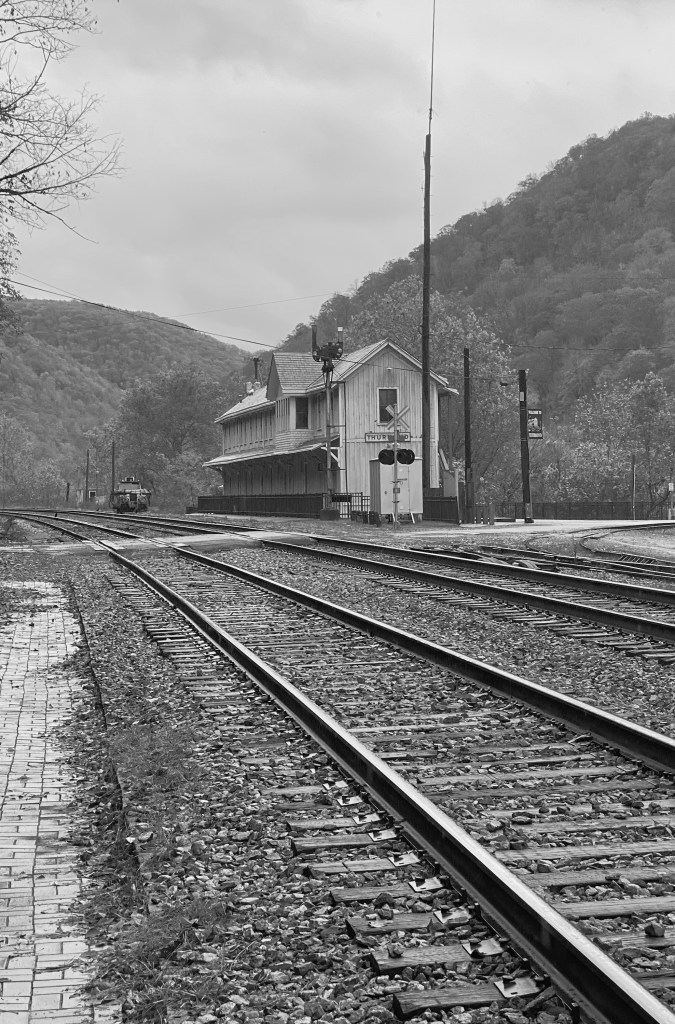
Today the population of Thurmond is four and most of the property in the town is owned and managed by the National Park Service. The former depot pictured below is now a visitor center during the summer months.

Thurmond, West Virginia,

Additionally, the Amtrak Cardinal train which runs three times a week from New York City to Chicago still stops at the Thurmond Depot. Not surprisingly, there is only one other stop in Amtrak’s entire system where fewer passengers board the train.

Main Street, Thurmond, West Virginia

An interesting feature of the town is that it never had a main street. All of the commercial buildings in town sat directly along the railroad tracks because there was no room for a street in addition to the rail line in the narrow river gorge.

The Coaling Station pictured below was built in 1922 and could hold more than 500 tons of coal for re-fueling steam locomotives.

Coaling Station, Thurmond, West Virginia
Thurmond Depot, Thurmond, West Virginia

We enjoyed exploring the New River Gorge National River and highly recommend this area for its beauty and history.

We will spend the next several days touring “coal country” in the southern part of the state before turning east and heading for Lewisburg, West Virginia for several days of bicycling the Greenbrier River Rail Trail.

Be seeing you!

Rails to Trails Adventures:Virginia

We have been keenly interested in cycling the significant network of Rails to Trails in Virginia and West Virginia for sometime. For a variety of reasons our previous plans to do so did not come to fruition.

Happily, we found while riding the trails in West Virginia and Virginia our expectations have been exceeded. The trails are well maintained and surrounded with breathtaking scenery and rich history.

In this post we are providing a brief overview of each of the trails we have completed in Virginia. We hope you enjoy it!

High bridge trail (HBT)

After riding the Greenbrier Trail in West Virginia, we journeyed east over the Allegheny Mountains and through the picturesque and pastoral Virginia Highlands to ride the High Bridge Trail.

The HBT is operated by the state of Virginia as a linear park. The trail itself is 32 miles long. The right of way that is now the bicycle trail dates back to 1838 when a nine mile section of track was completed and the City Point Railroad began operations. As with all of these abandoned lines, the original railroad was acquired by a number of successor companies finally coming under the ownership of the Norfolk & Southern. The Norfolk & Southern ceased operations on this line in 2005 and transferred the right of way to the state of Virginina.

Appomattox River

The high point of this trail is figuratively and literally the High Bridge Trestle. The trestle is almost a half mile in length and sits 125 feet above the Appomattox River, making it an exhilarating span to cycle.

The High Bridge is an historically significant bridge – beyond the engineering feat – as it was the site of two Civil War battles. During the first battle the Union Army attempted to destroy the bridge in order to stop Confederate troops from fleeing over the Appomattox River, however the Confederate troops repelled the Union Soldiers and were able to retreat across the bridge.

The very next day, 7 April, 1865 the Confederate troops attempted to burn the bridge in order to stop the Union troops from using the bridge to pursue the Southern troops. The High Bridge was rendered unusable but unfortunately for the Confederates the Union troops were able cross downstream on a wagon bridge and caught up with them just three miles north of the Appomattox River.

The High Bridge was repaired and put back into service by the Union Army to transport supplies and troops until the end of the war soon after these two battles.

TOBACCO HERITAGE TRAIL (THT)

Crossing Meherrin River

The THT runs from La Crosse to Lawrenceville in Southside Virginia. This area is in the heart of what was once the “Old Belt” of Virginia tobacco country. This trail was built on the former Atlantic and Danville Railway – which was formed to haul agrarian products including tobacco to market. LaCrosse, which is the current eastern trail head for this bicycle trail, was the site of the People’s Warehouse Company which stored and sold the tobacco grown in this area. Today, LaCrosse is a tiny town with a population of 575.

Tobacco in Virginia was cultivated during the early 1600s by British settlers. Prior to the British arriving the Native Americans were already growing and utilizing tobacco.

The British tobacco growers initially utilized indentured servants from Scotland and other European countries, but by the early 1700’s the growers could not import enough laborers from Europe so they turned to Africa and began importing slaves.

Tobacco is still very much part of the economy of Virginia today. The state is the third largest tobacco grower in the United States. Most of the “Virginia Gold” is used in cigarette manufacturing, although most cigarette manufacturing plants are located outside of the United States.

The five counties that the THT runs through are part of what has been called the Southern Black Belt. The Black Belt was originally areas in the deep south where cotton was grown and in North Carolina and Virgina where tobacco was grown. These areas had large populations of blacks because of the slave labor used to support the plantation economy. Today, many of these these counties still have majority black populations and the term Black Belt is used as a political construct as blacks are seen as voting largely as a block by political analysts.

Remnants of the Community of Charlie’s Hope, Virginia

The THT is a 22 mile trail and the plan is to double it in length as more funding is available to complete work on the abandoned right of way in additional towns.

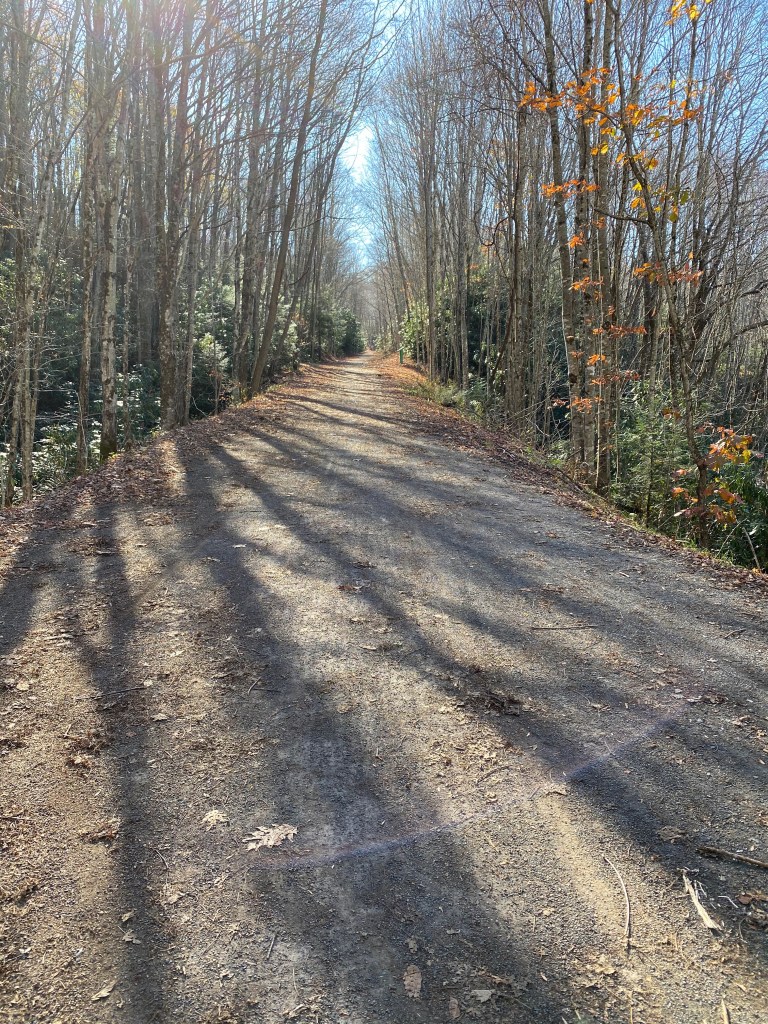
It is an enjoyable ride through forest and field but lacks the dramatic aspects of the trestles, tunnels, waterfalls, river, mountain and valley views afforded by many of the other trails. THT is a trail that is less traveled than others we have ridden on this trip and we had the trail to ourselves.

Virginia Creeper trail (VCT)

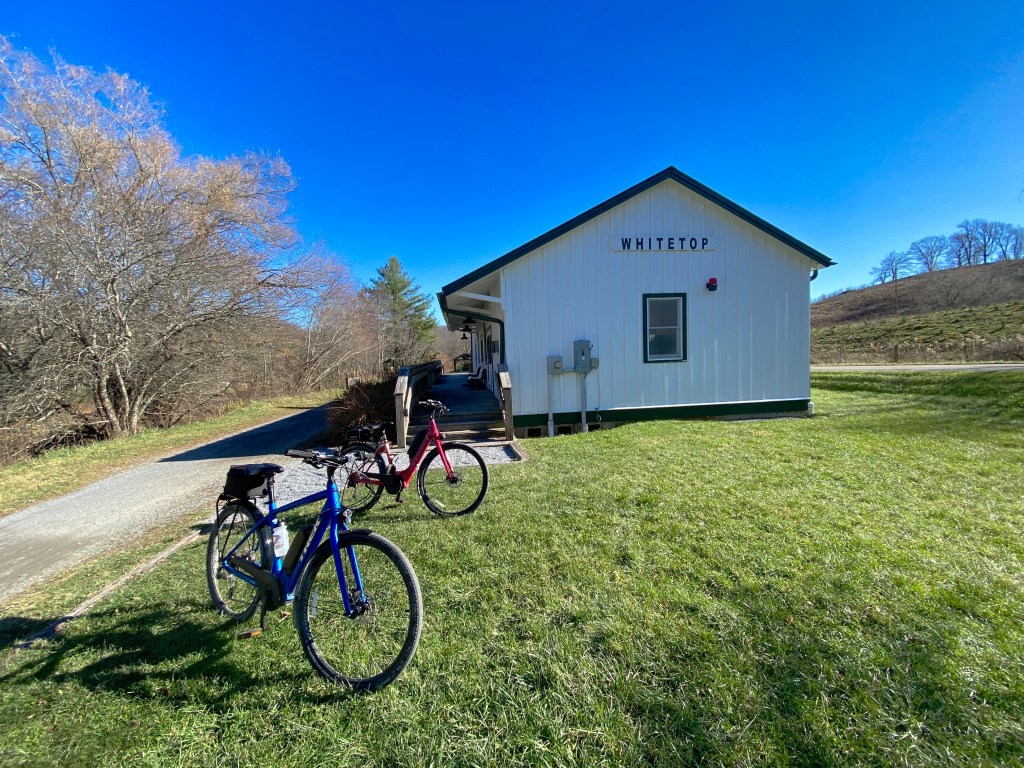
The VIrginia Creeper Trail is a 33 mile bicycle trail running from Abingdon at the western terminus to Whitetop at the eastern terminus. The trail had its origins as a Native American footpath and was later used by early Euro-American settlers including Daniel Boone.

During the early 1900s a railroad was constructed between Abingdon and Damascus and operated as the Virginia-Carolina Railroad. The railroad hauled timber, iron ore and passengers. The line was taken over by the Norfolk and Western Railroad which continued operations as a branch line until 1977. It is surprising that the line was operated through 1977 as it was never financially profitable. The Virginia Creeper moniker was the nickname of the line because the original steam locomotives had to “creep” up the steep and winding grades.

Taylors Valley
Trestle #7, Watauga Valley

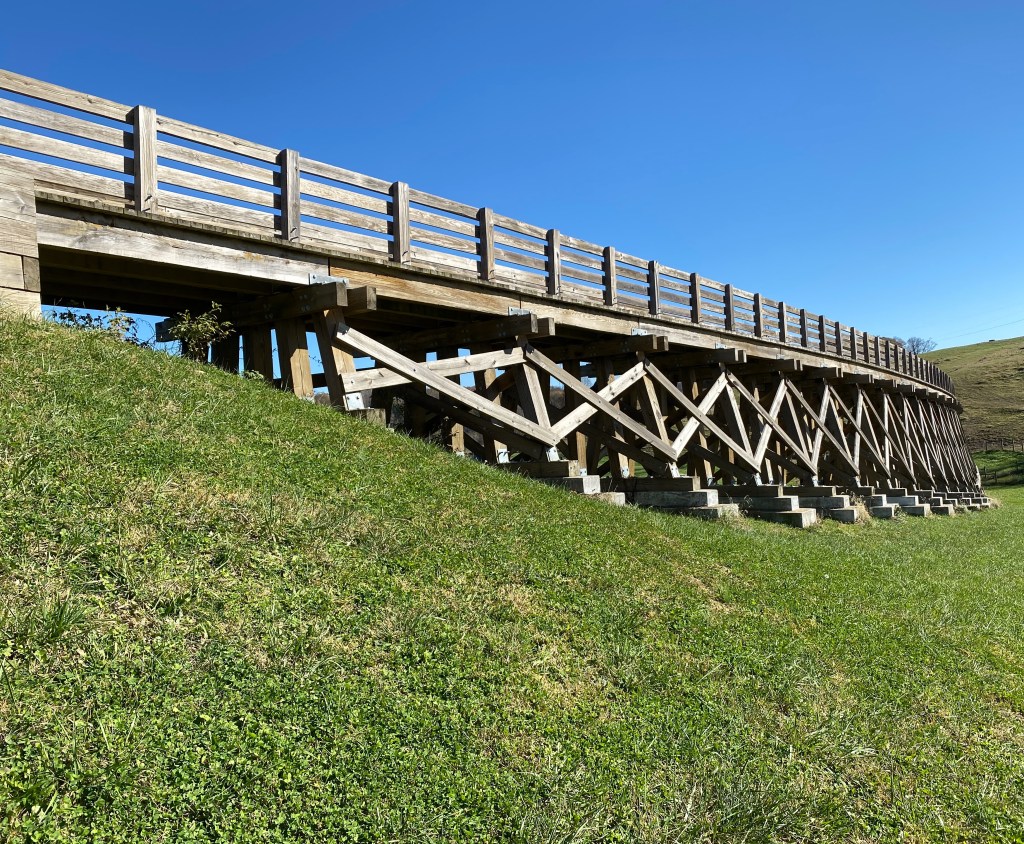
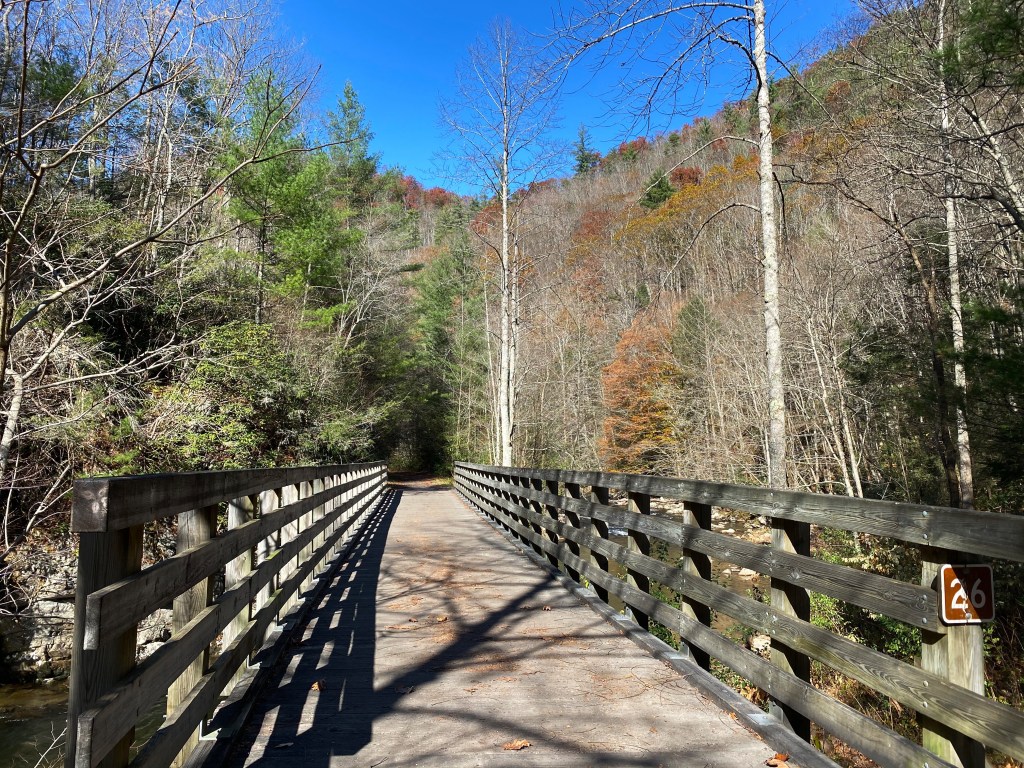
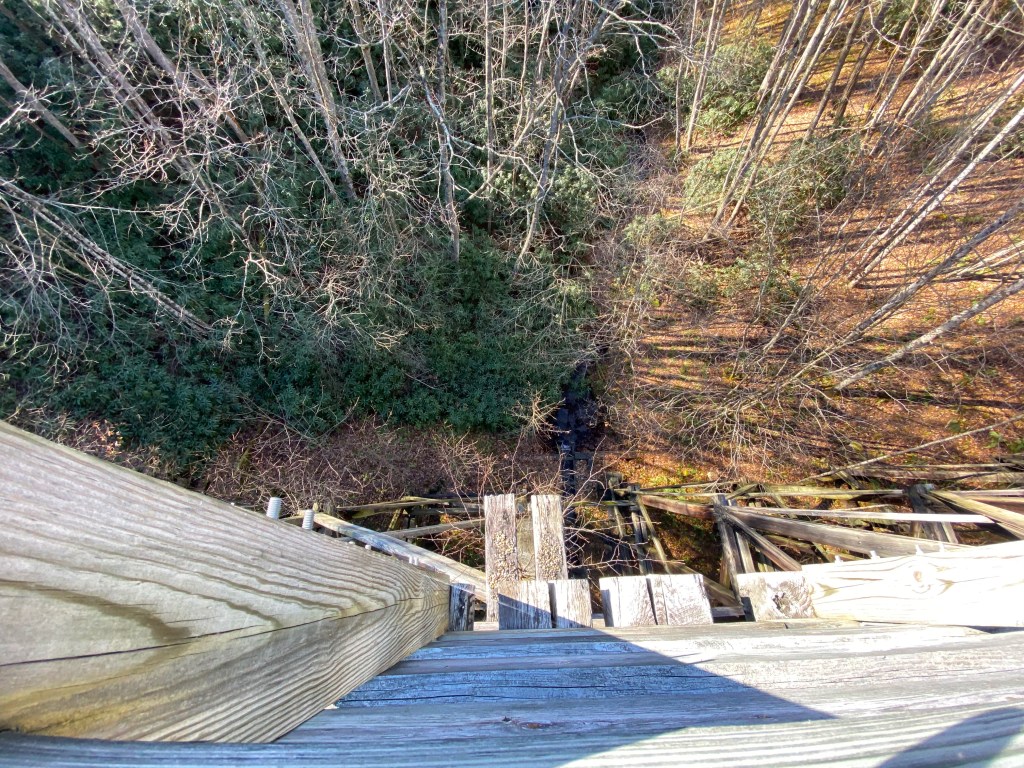
The former Virginia-Carolina has 50 trestles and bridges even though it was just a 33 mile branch line. From a bicycling perspective, the variety and number of high and curved trestles across hollows, valleys and rivers really adds to the excitement and enjoyment of this ride.

Trestle #12, South Holston

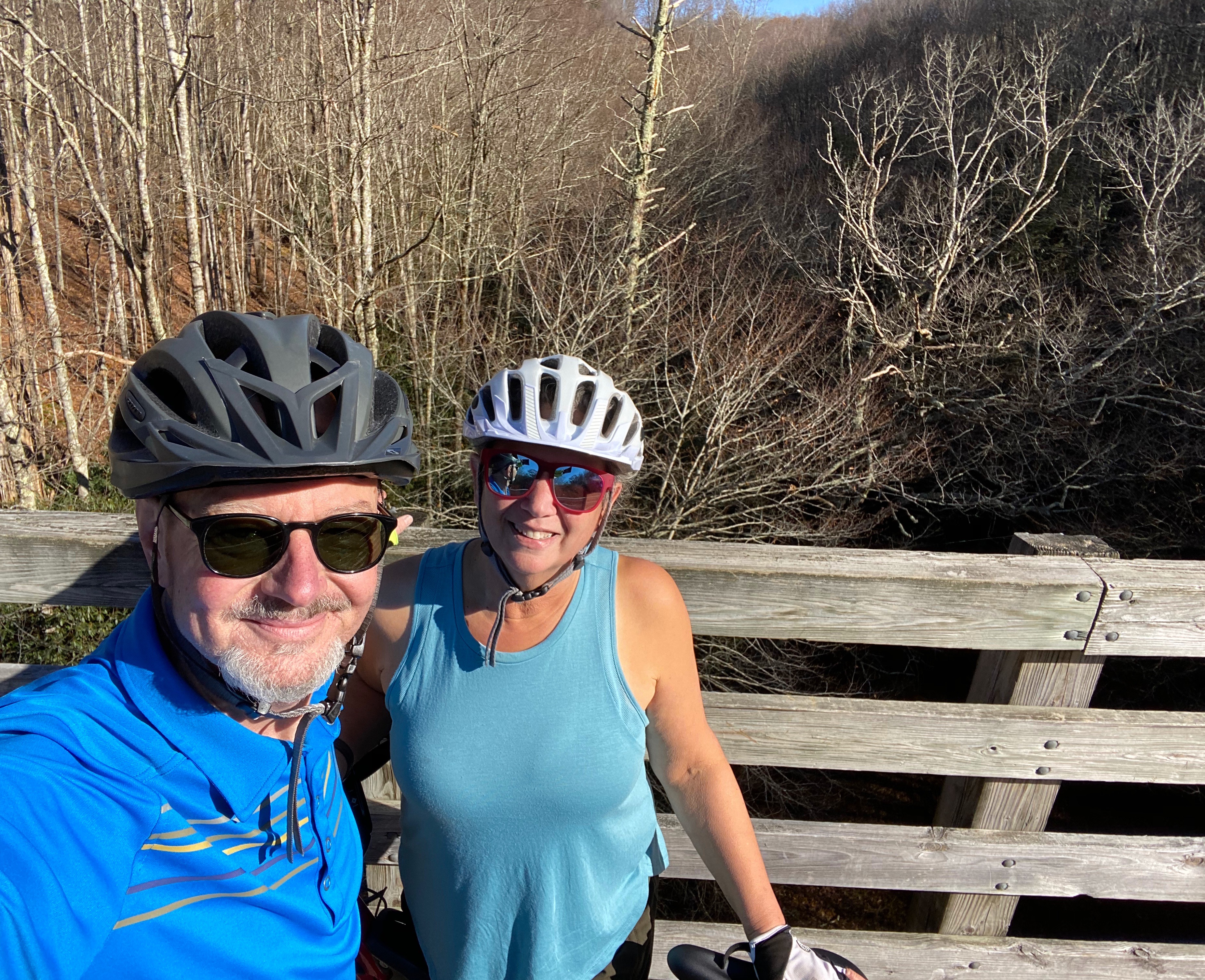
As you can see from the photographs we had beautiful weather during our two days of riding this trail and lots of solitude. The VCT is one of the best trails we have ever ridden.

New River Trail State Park (NRT)

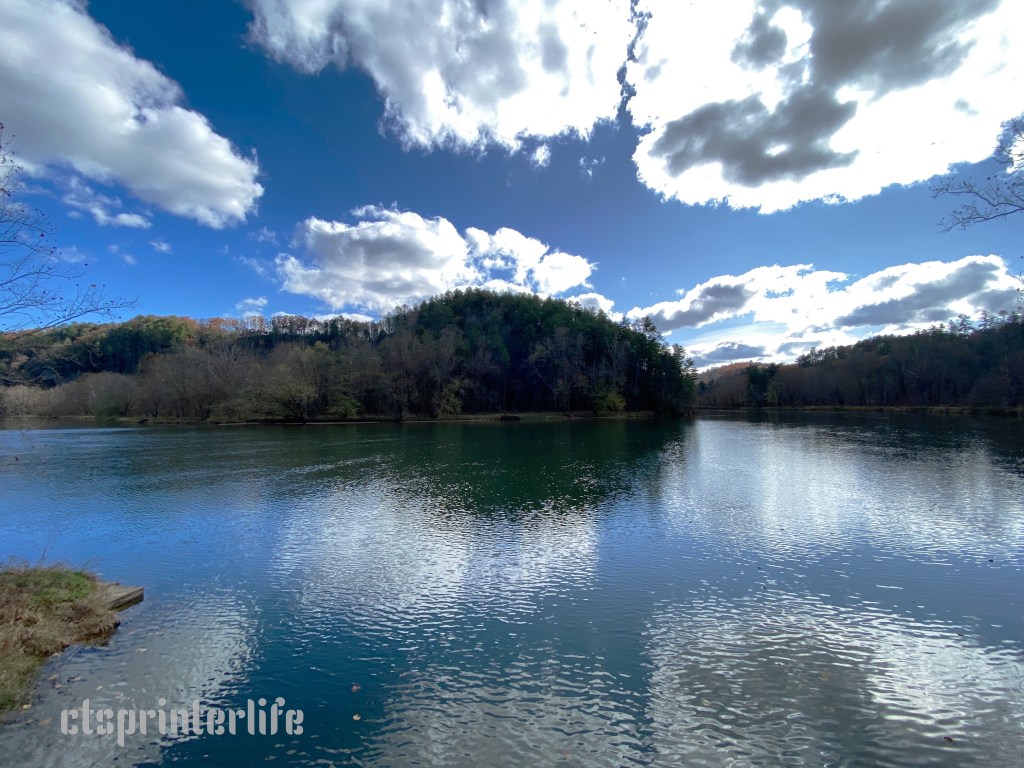
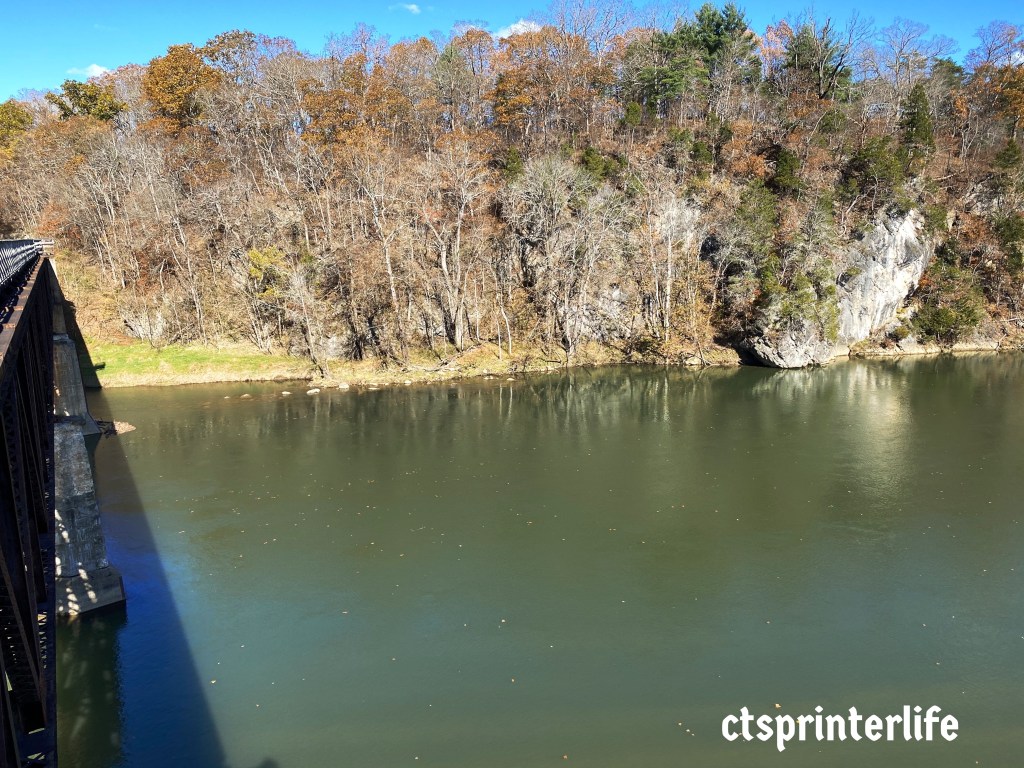
New River

The New River Trail is a 58 mile trail which follows the rail bed of the former Norfolk & Western Railway. The rail line was established primarily to haul iron ore to the railway’s main line in Pulaski. This line was in service from 1882 until 1982 when the successor company, Norfolk Southern, abandoned the line and donated the right of way to the state.

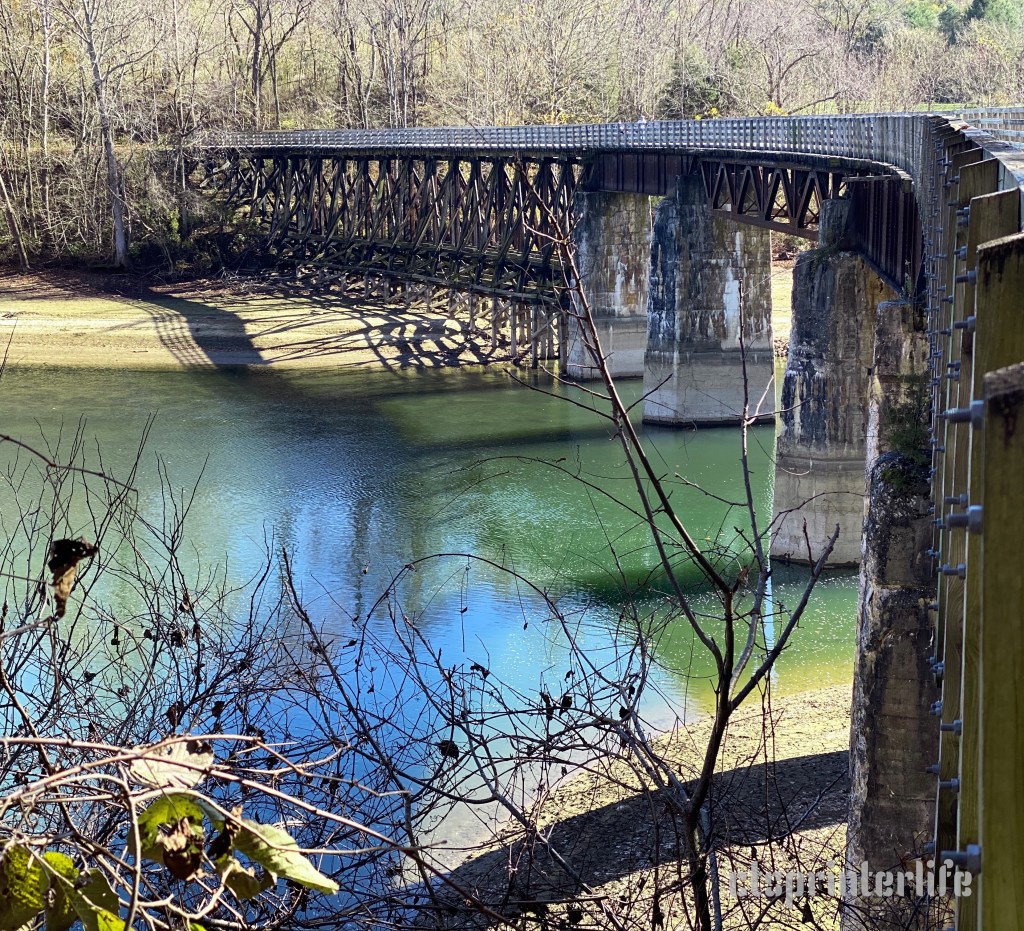
New River from the Ivanhoe Trestle

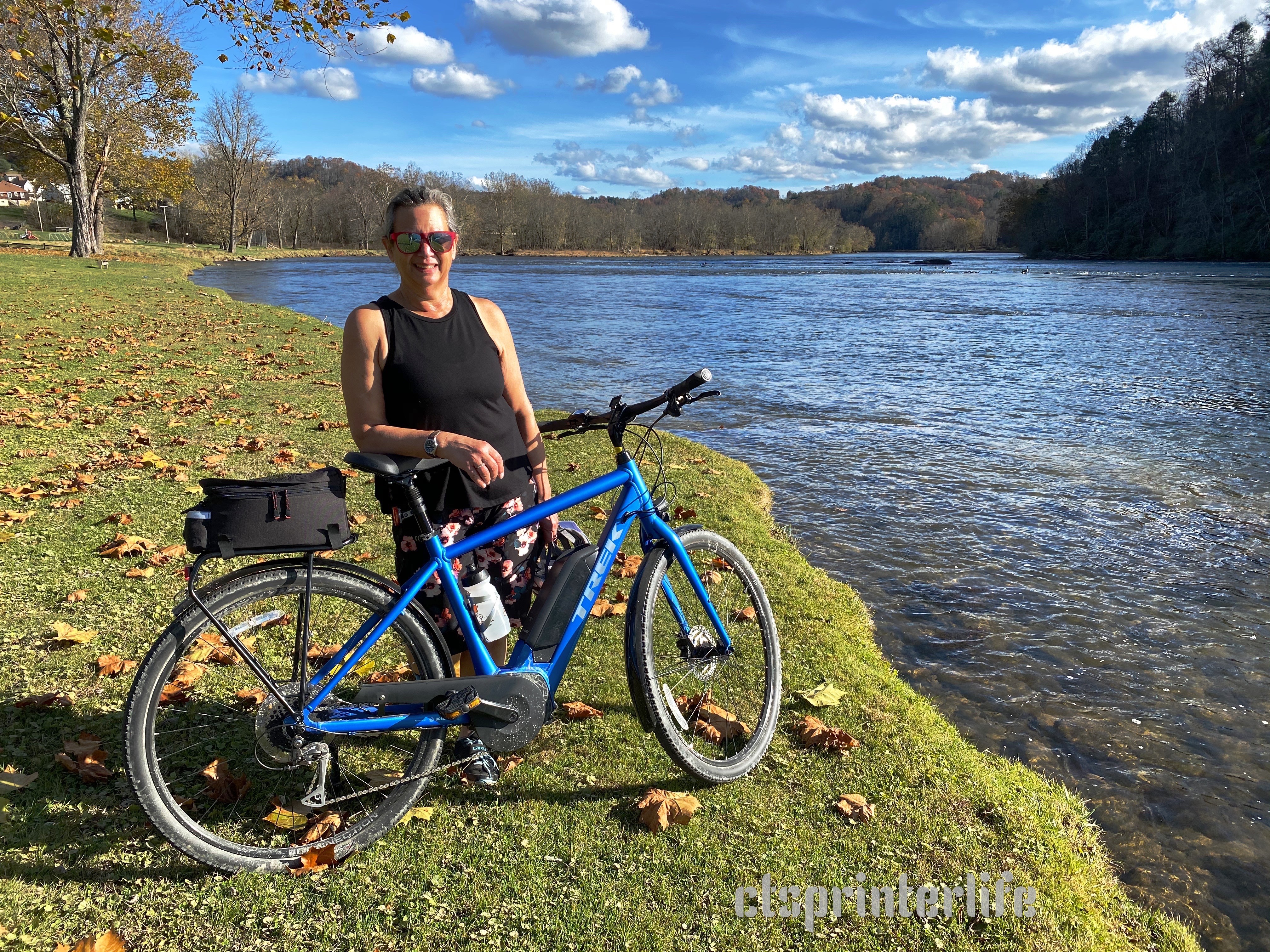
The NRT follows the the New River closely for most of the route and crosses the river several times as you travel from the terminus in Galax to the terminus in Pulaski. The trail provides wonderful views of the river and the surrounding rolling hills dotted with grazing cows.

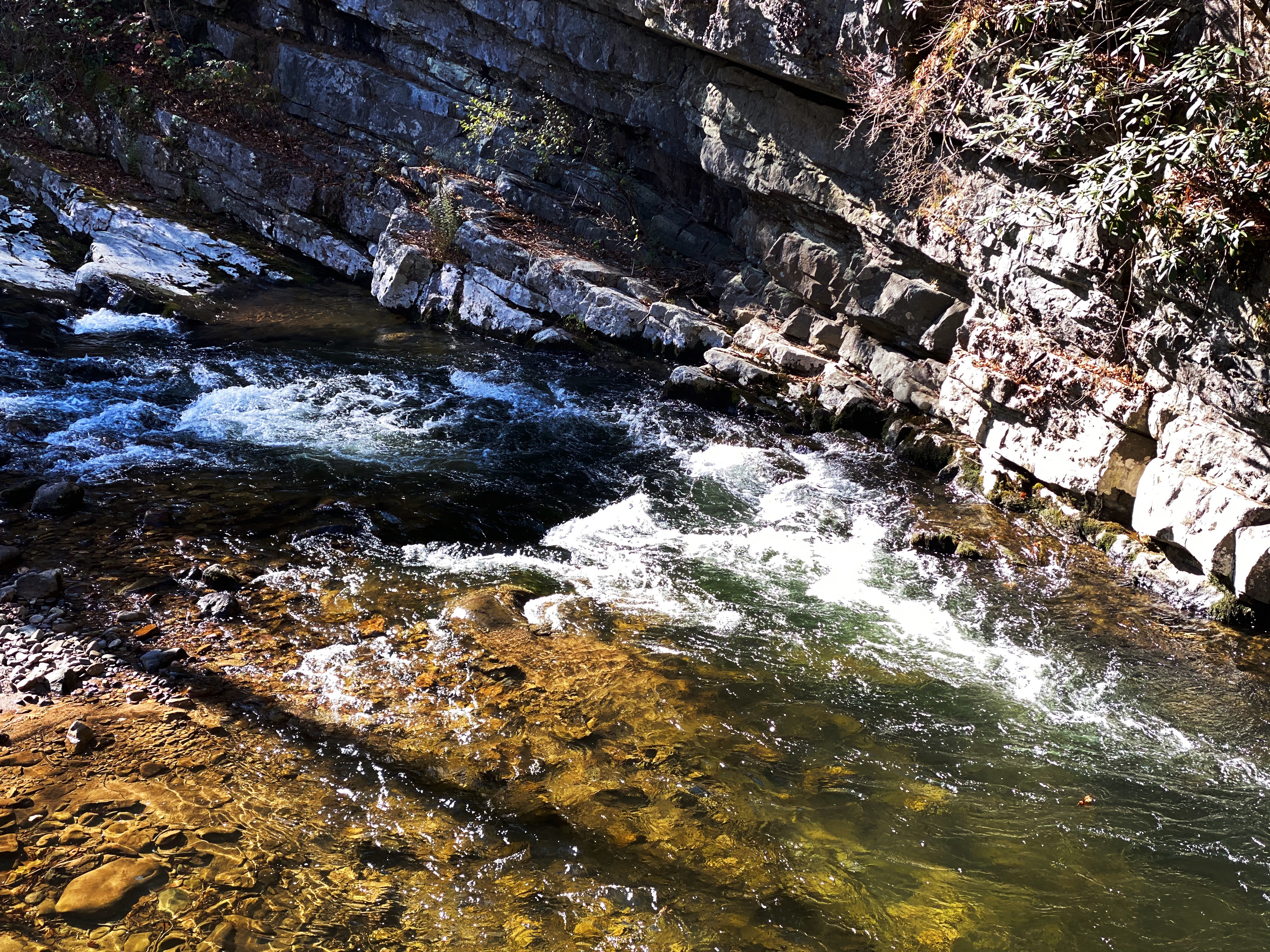
Between our time at New River Gorge and our three days cycling the NRT we have spent a fair amount of time with the river as a travel companion. The New River runs through three states and affords breathtaking scenery as it carves its way through the Appalachian Mountains.

Interestingly, the New River is claimed to be the second oldest river on the planet although there is some disagreement by the National Park Service. It is not disputed that it is among the top five oldest rivers while the Appalachian Mountains are considered by many geoligists to be the oldest mountains on earth.

Hiwassee Trestle, Hiwassee, Virginia

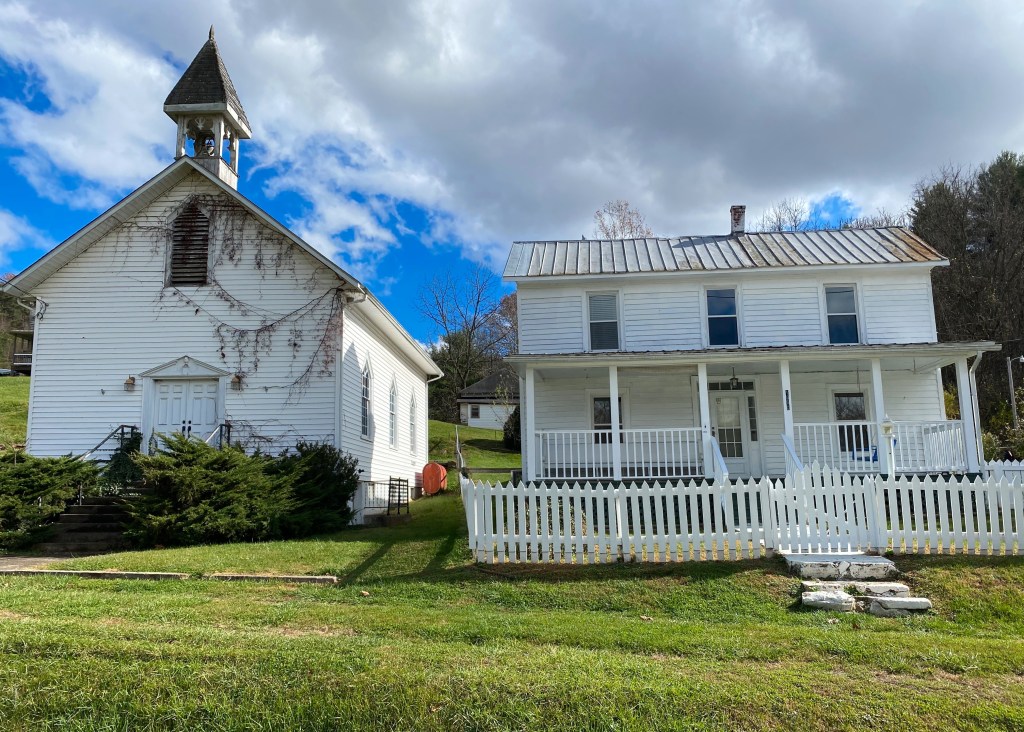
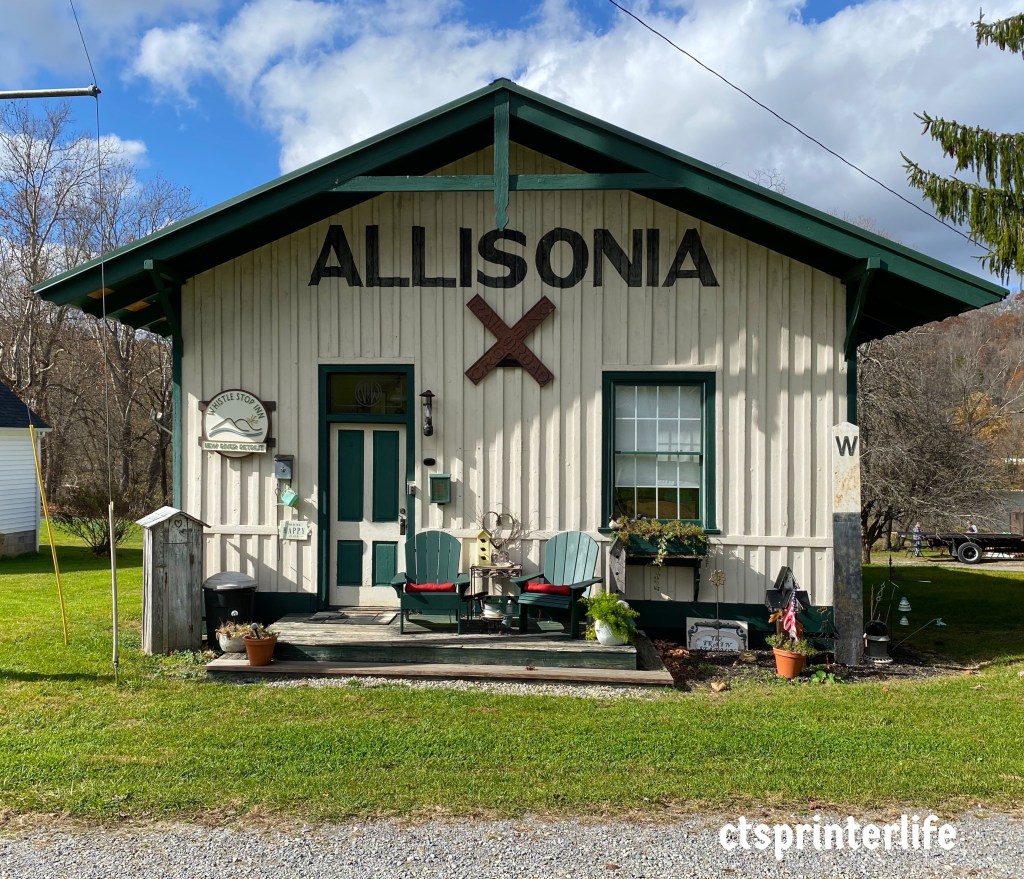
Alisonia, one of the tiny towns that was a stop on the former Northern & Western Railway line. The town still exists today, with a current population of 114.

In a future post we will share the highlights of our Rails to Trails cycling adventures in West Virginia.

Be seeing you!

Street Art Tourist: Street Art from the Road: Columbus

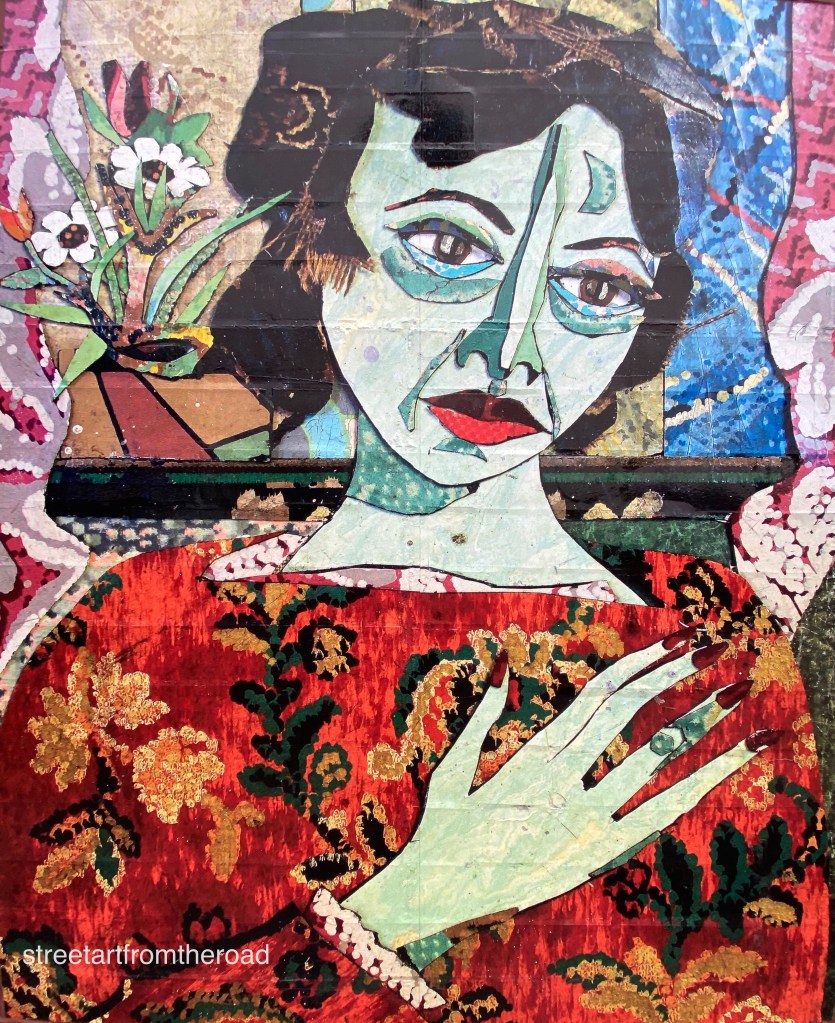
Artist Unknown, Discovery District

After departing Fort Wayne we decided to make a couple day stop in Columbus, Ohio. Columbus has three of the things we look for in a city: excellent third wave coffee cafes, a vibrant street art scene and distinctive neighborhoods.

While our stay was brief, we did quite a bit of walking through the various neighborhoods searching for murals. Of course, we fueled up at the coffee cafes that are conviently located in the various villages or districts.

Columbus has taken full advantage of the river waterfront (Scioto River) by creating many public greenspaces providing access to the riverfront for recreation and entertainment.

We will definitely weave Columbus into a future journey to get deeper into the museum and restaurant options (post pandemic) in addition to the coffee, street art and neighborhood history.

We hope you enjoy the selection of street art we have included in this post.

Onward to West Virginia…be seeing you.

Artist Unknown, Columbus – Discovery District
Untitled by Gabriela Torres @ms.torressss, Franklinton Arts District
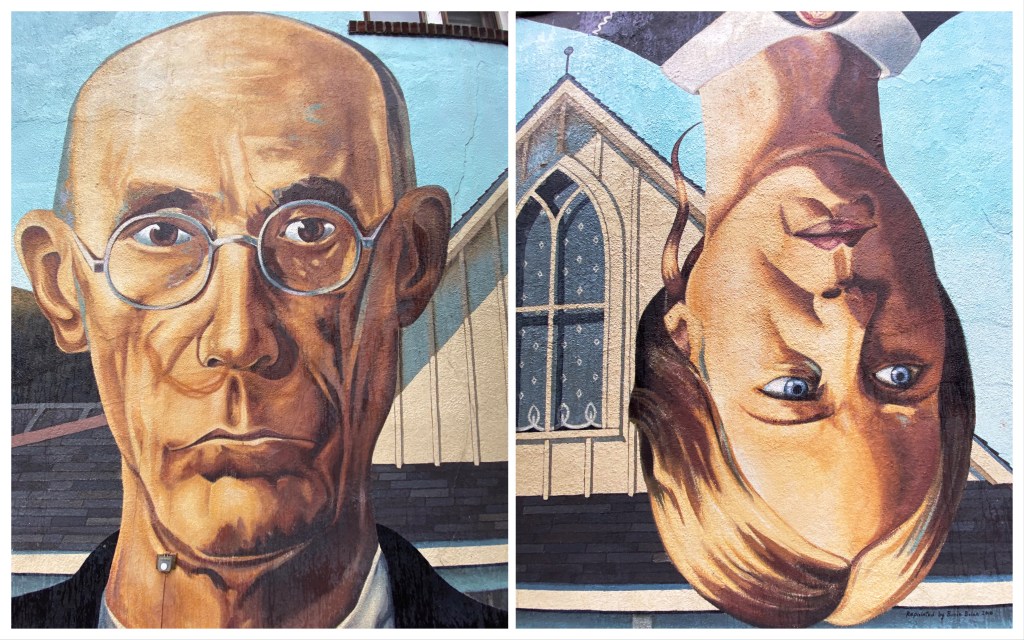
Teenuh Stays The Same by Bill Miller, Short North District
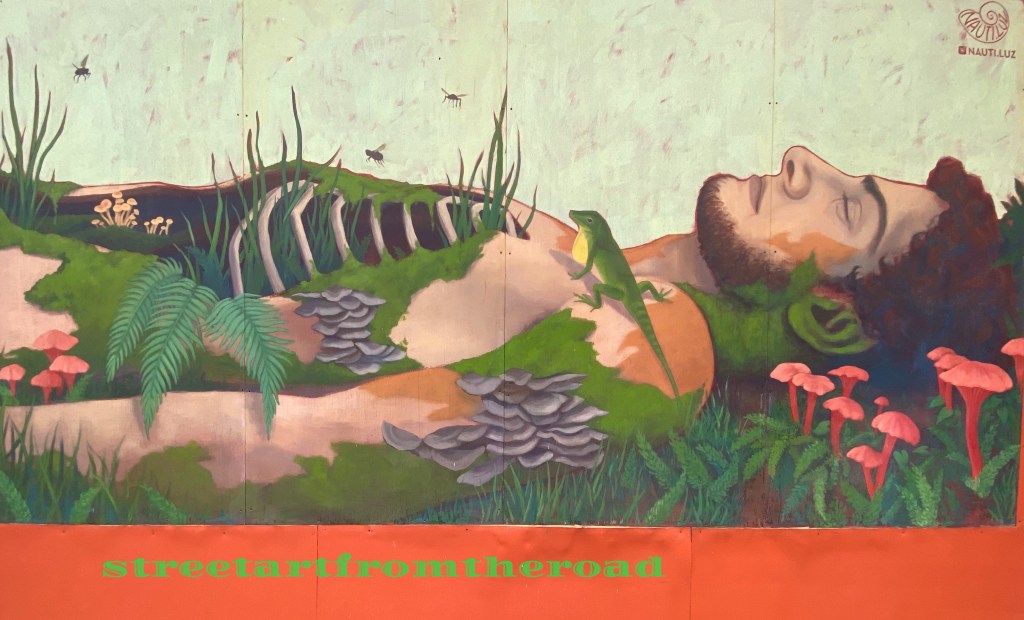
Eternal by Natalia Sanchez @nauti.luz, Franklinton Arts District
Deeper Connection by Edmund Boateng, Short North District
Artist Unknown, Short North District
KNOW JUSTICE, KNOW PEACE Artist(s) Unknown, Franklinton Arts District
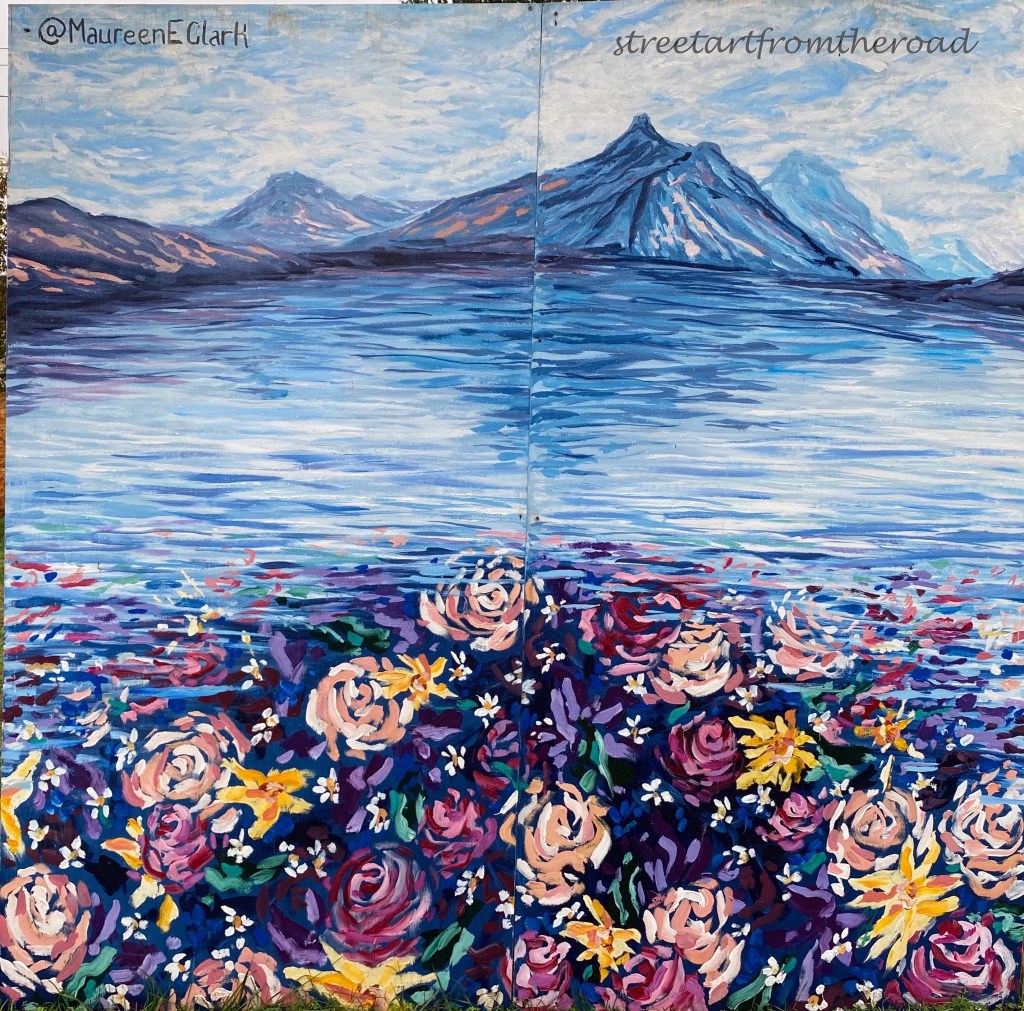
Panel from Mural of Hope by Maureen E. Clark @maureeneclark, Franklinton Arts District
Stolen Joy, Franklinton Arts District
Arist Unknown, Franklinton Arts District
Listen to the Hummingbird, Artist Unknown, Short North District
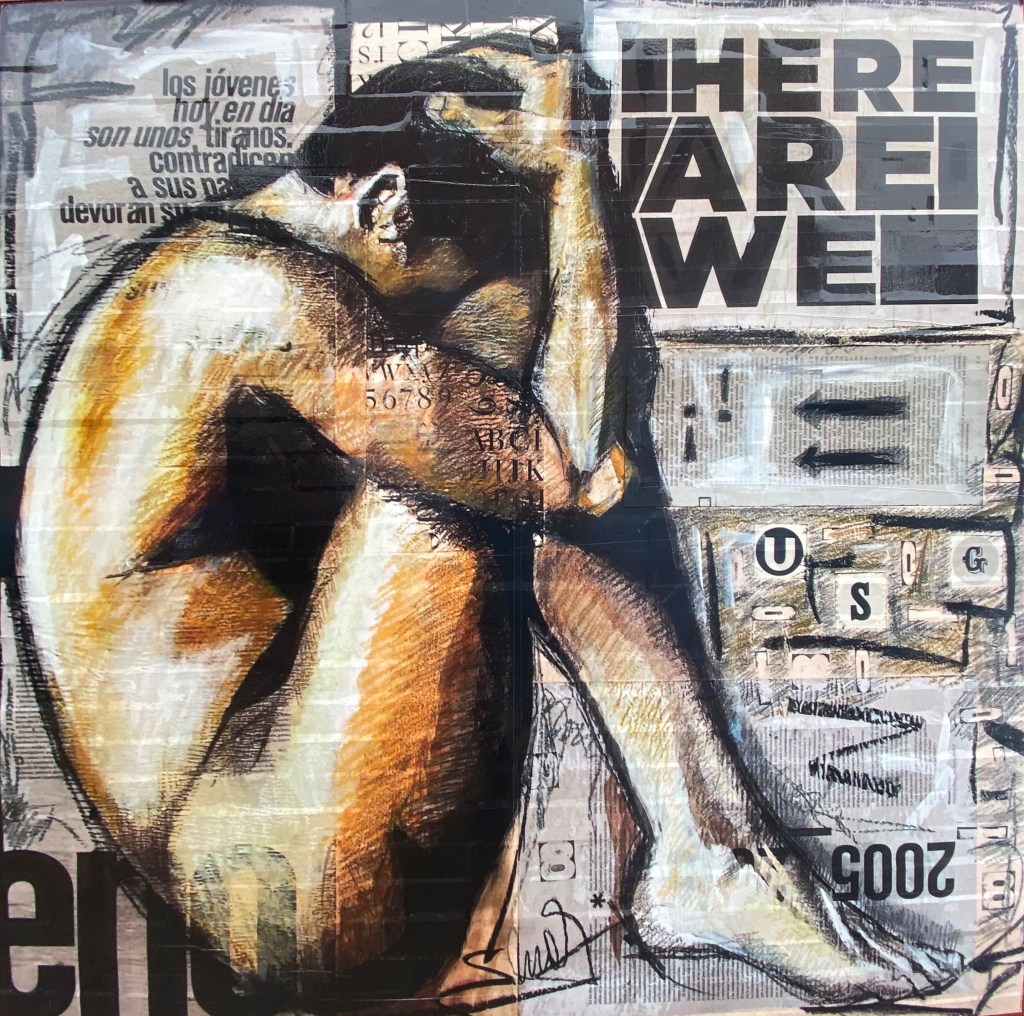
Here We Are by Alejandra Zanetta, Short North District

Street Art Tourist: Street Art from the Road: Fort Wayne

Our current trip got off to a rough start when we found ourselves in southern Pennsylvania with multiple issues with the Beast. The first issue required us to backtrack north to Wilkes-Barre to have repairs performed on the diesel exhaust fluid sensors. We were fortunate that the dealer was able to accomodate us quickly and resolved the issue.

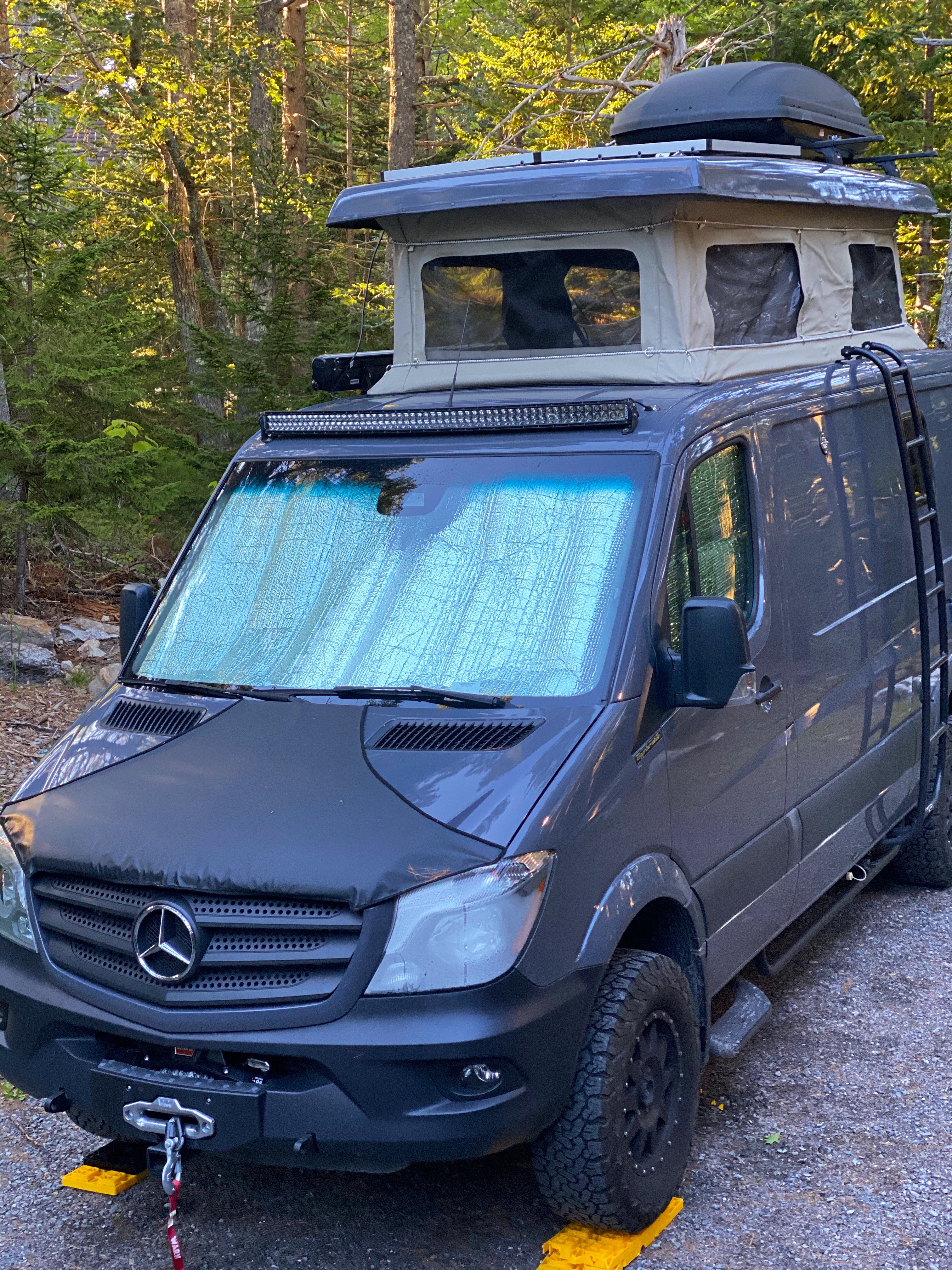
The second issue involved our penthouse roof which malfunctioned leaving the pop top partially and unevenly deployed. Unfortunately this particular issue required us to head approximately 600 miles west to Huntington, Indiana for repairs (Sportsmobile).

The good news, besides having the Beast back in full working order, was that we found ourselves with the opportunity to spend some time in Fort Wayne as we started our journey back towards our original first stop in West Virginia.

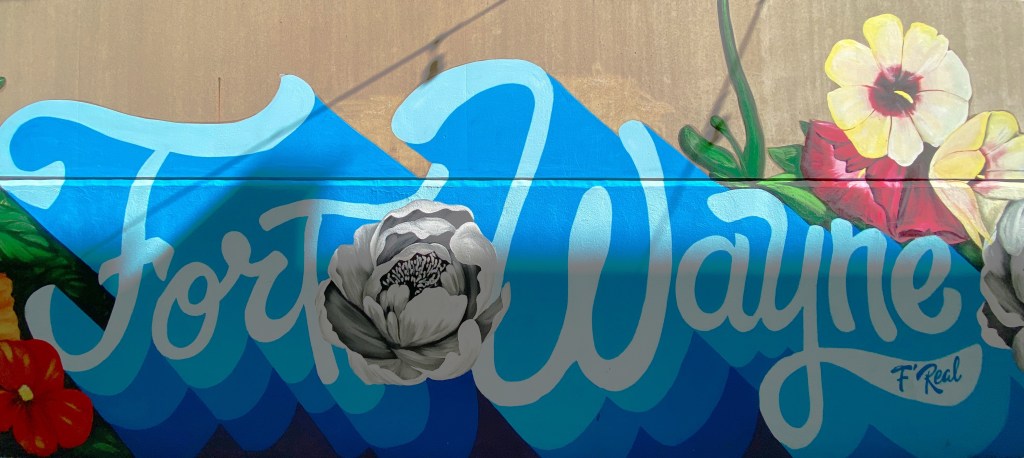
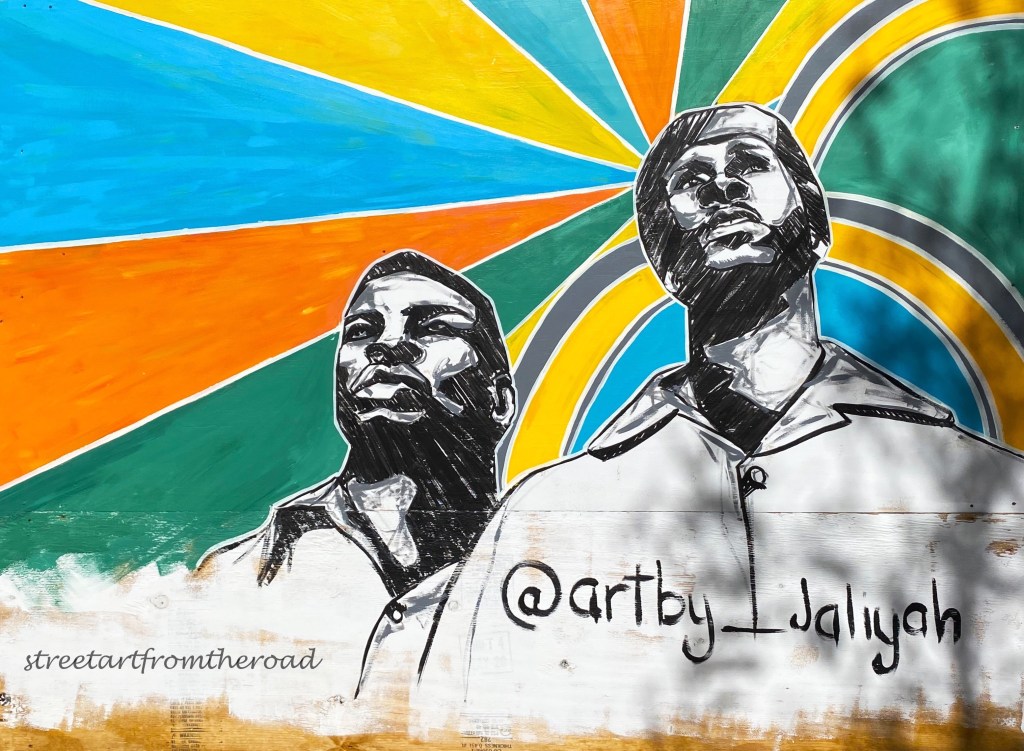
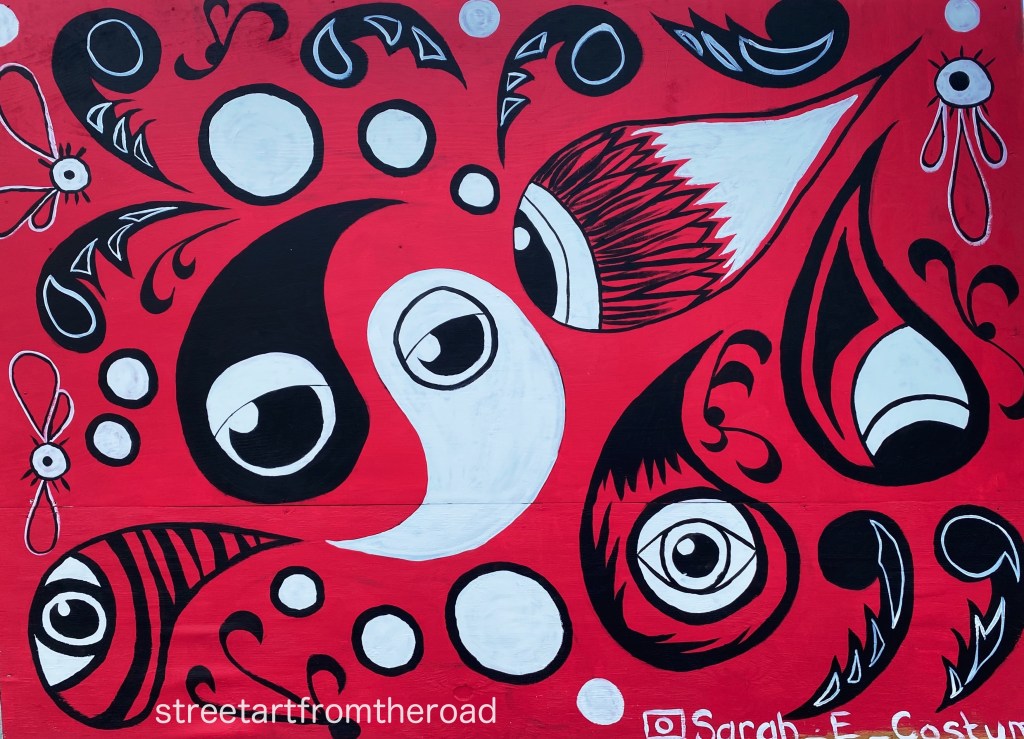
Fort Wayne is making a major investment in beautifying the city with street murals by both local and international artists.

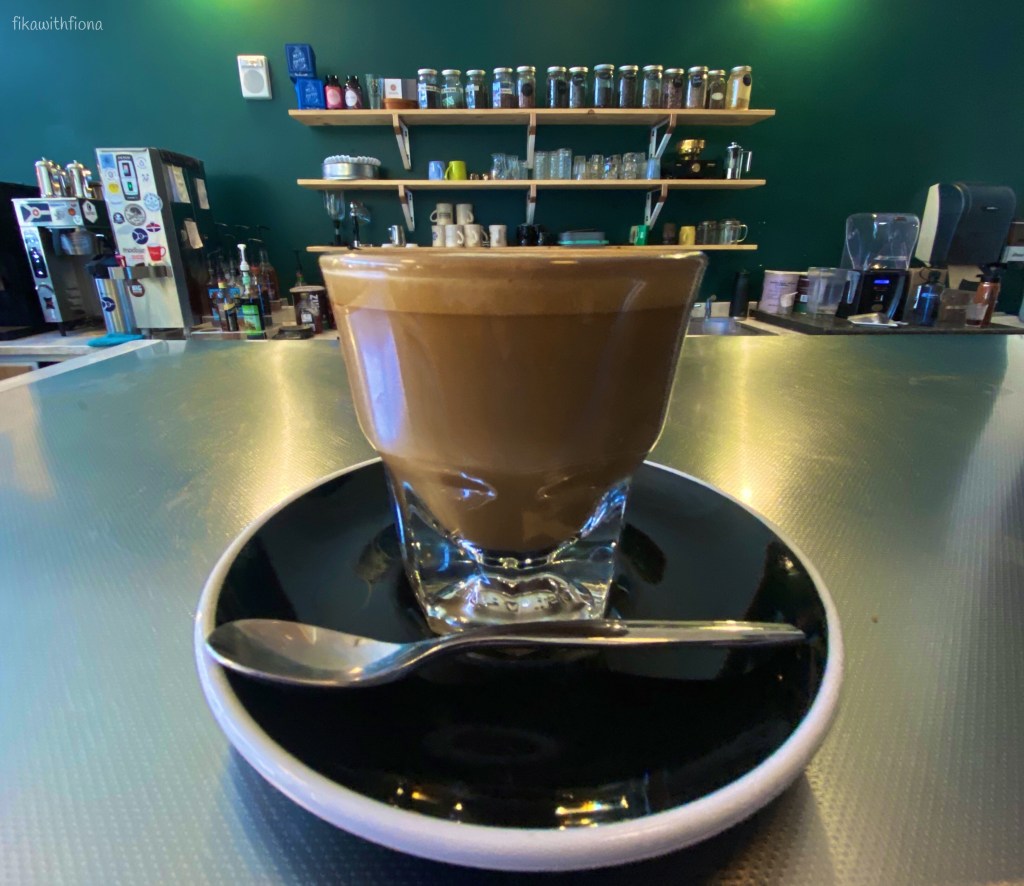
While you are in downtown taking in the art scene, please visit the excellent @Fortezzacoffee.

Fortezza Coffee

We hope you find these murals as interesting and beautiful as we do:

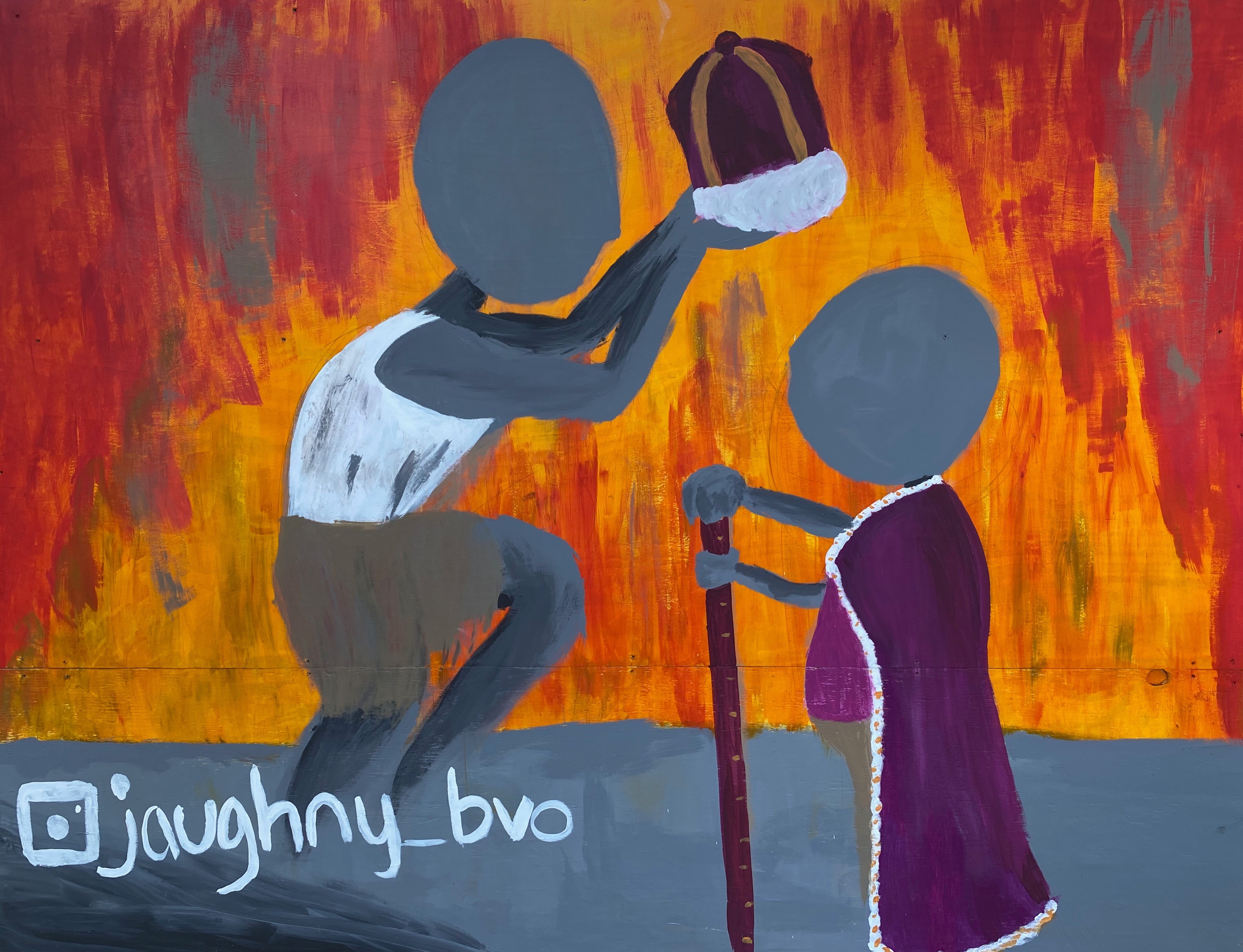
Untitled by Jaliyah Rice @artby_jaliyah
Where am EYE? by @sarah_e_costumes
NYANE by @jeffpilkinton
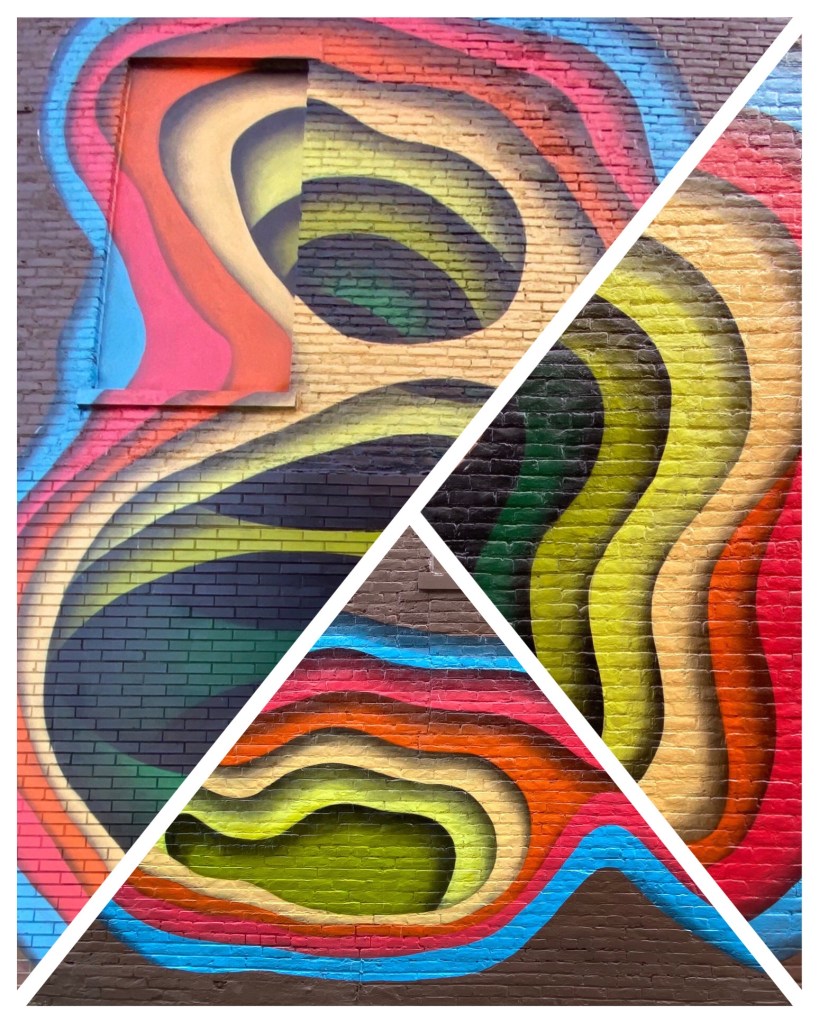
Untitled by 1010@1010ZZZ
Woven by Lyndy Bazile @afroplump
Through a Child’s Eyes by Jeff Pilkinton @jeffpilkinton
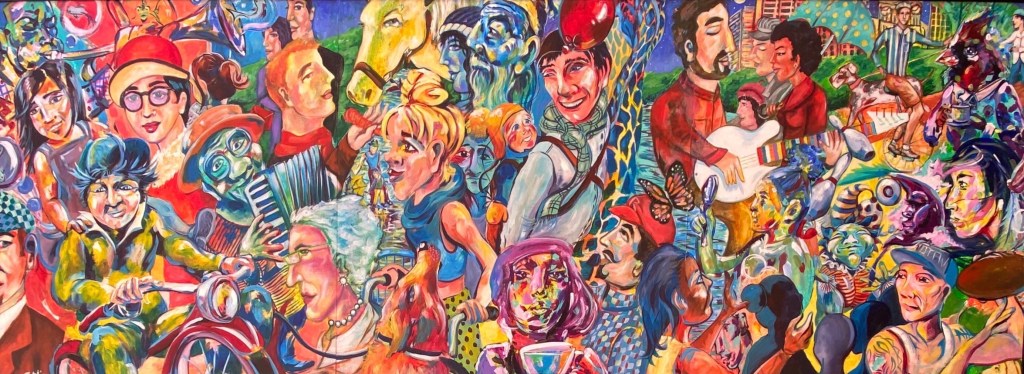
People Walking by Theoplis Smith, Terry Ratliff, and Alexandra Hall
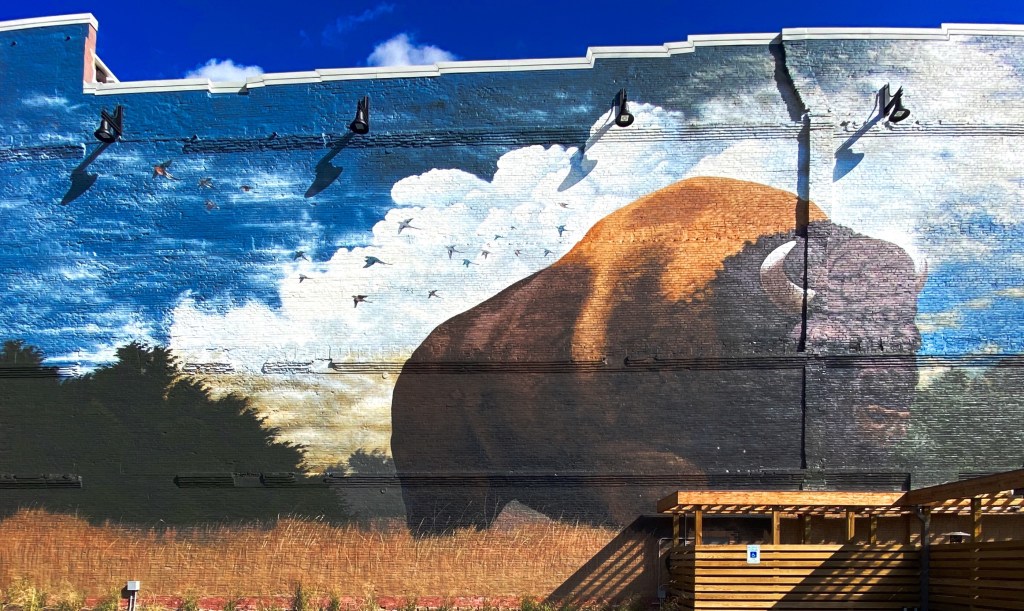
Bison by Tim Parsely

Next stop Columbus. Be seeing you!
Maine: Ever So Briefly: OTR 5.1

We departed Gorham, New Hampshire driving due east on Route 2 to Bethel, Maine. https://www.sundayriver.com/ In Bethel we took a break at DiCocoa’s Bakery & Cafe for coffee, tea and delicious baked goods. We highly recommend stopping here when you are in town. http://www.cafedicocoa.com

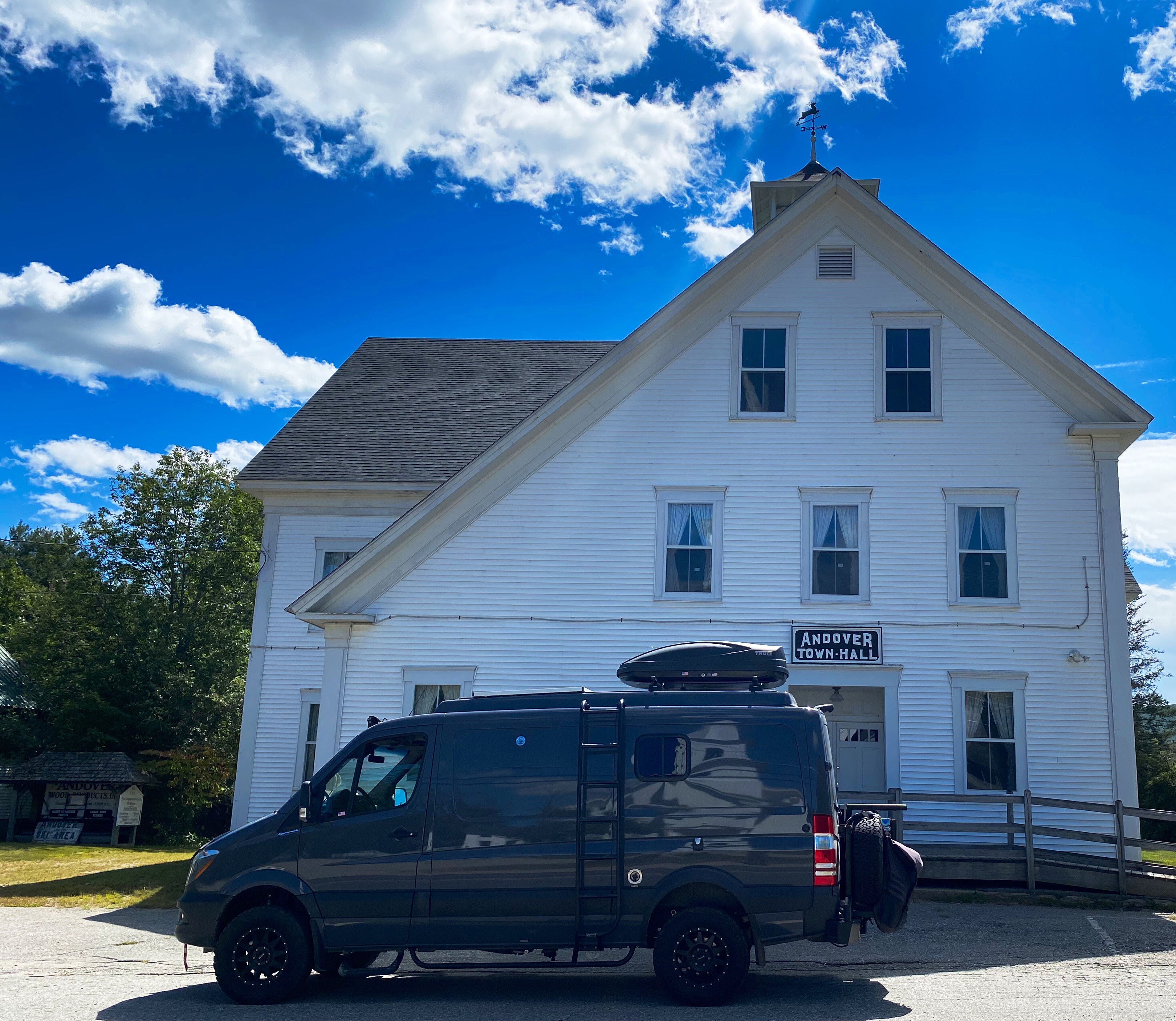
From Bethel we traveled north on Route 5 where we stopped in Andover for provisions. Andover is a small town in western Maine that dates back to 1788 and its roots as a lumber town go back to those early days. Ethan Allen Furniture operated a sawmill there until 2009.

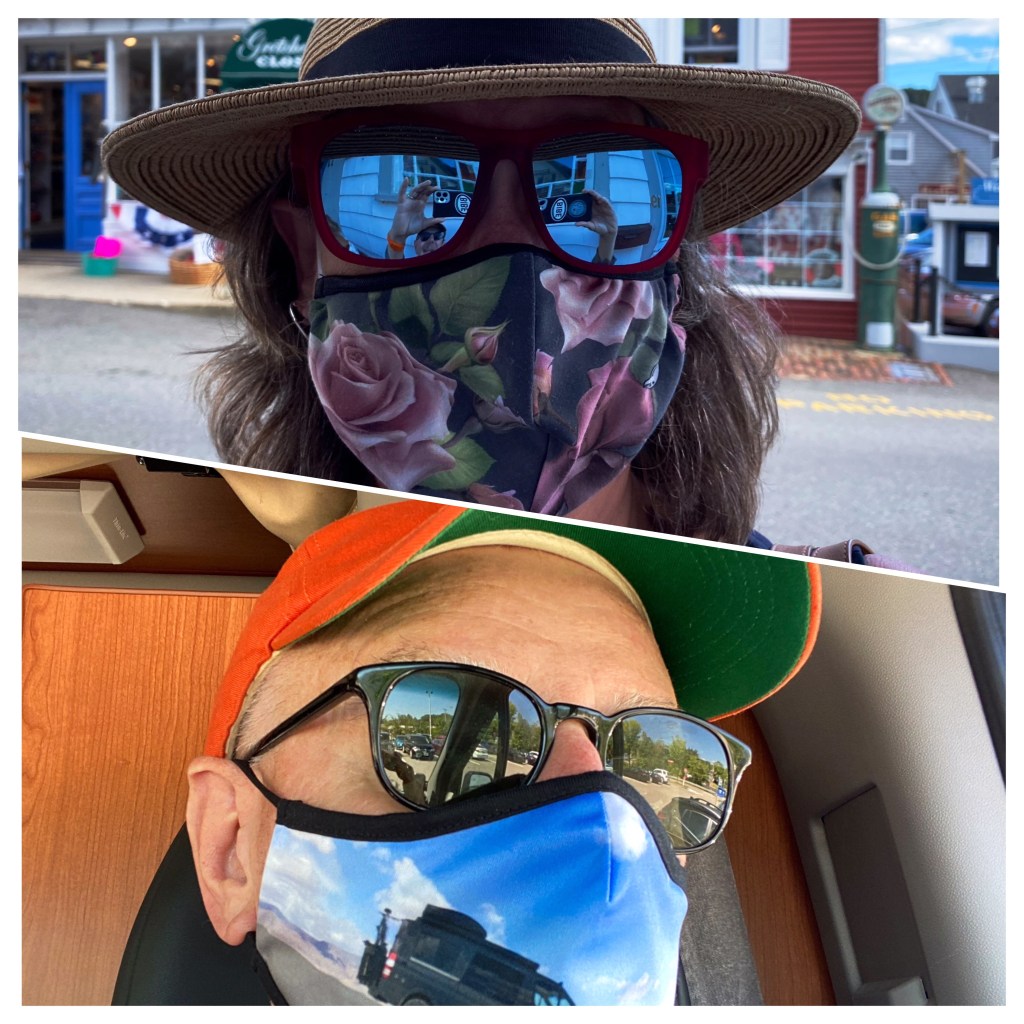
This region of Maine has seen almost no Covid-19 cases and we did not see a single local resident wearing a face mask. When we entered the local grocery we were advised that “we don’t wear masks here, when it is your time it is your time”. Good luck………

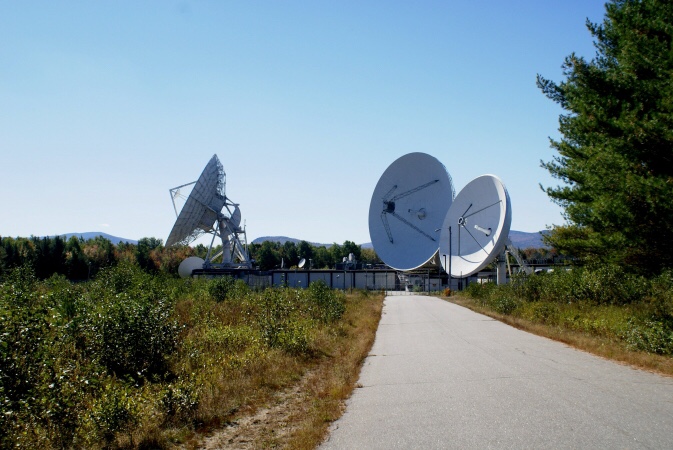
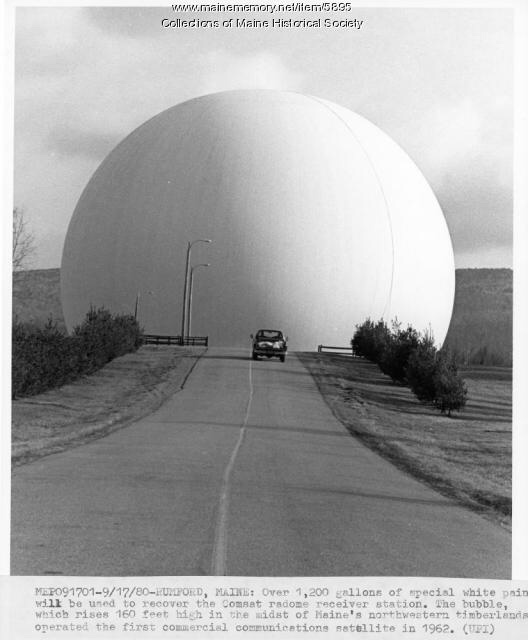
Because of it’s geographic location Andover was chosen as the site of the Andover Earth Station, one of the first satellite earth stations. This antenna installation was utilized to communicate with the Telstar 1 satellite which provided the earliest satellite television and telephone service between Europe and North America. The original antenna was dismantled in the early 1960s. Currently the site is operated by Verizon in support of their satellite communication network. Today, Andover is primarily a destination for hunters and fishing enthusiasts.

After provisioning in Andover we traveled north through South Arm and into the backcountry of the Richardson Public Reserved Land Trust. There are 37 land trust areas in Maine. The land trust areas provide dispersed camping opportunities in addition to a multitude of outdoor recreation activities. https://www.nrcm.org/explore-maine-map/public-reserved-land/

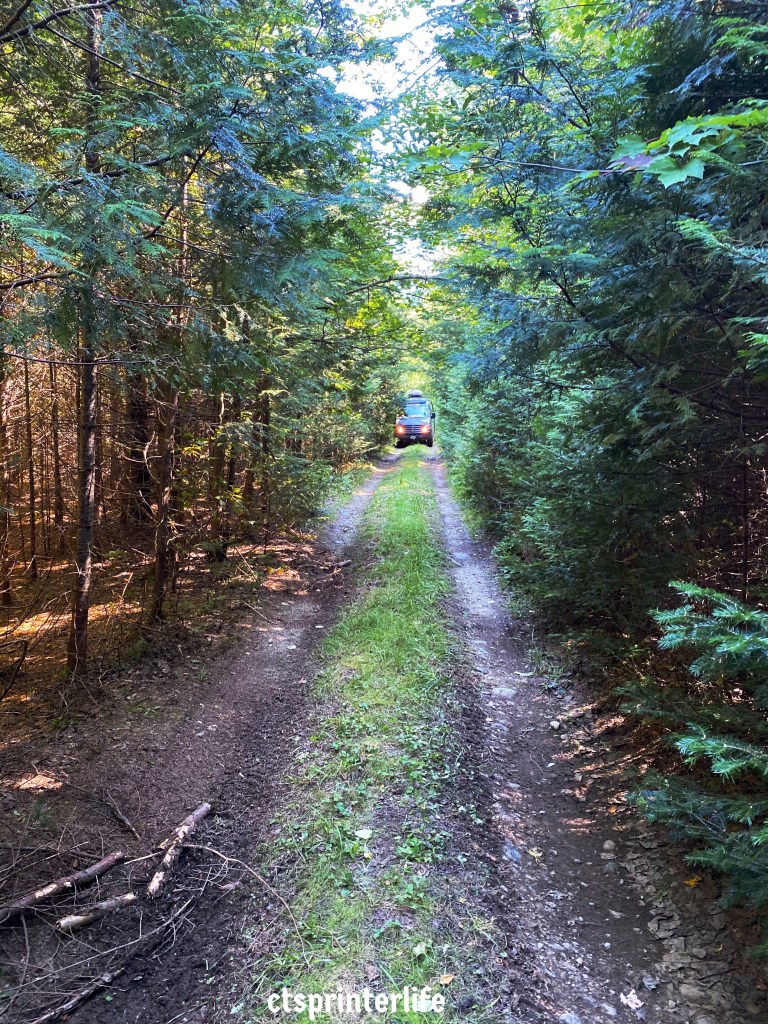
Part of our reason for heading to the Richardson Lakes area was the opportunity to put the Beast into 4wd mode on the many forest and logging roads and trails that run through the reserve. We spent a fun afternoon circling around the perimeter of the 22,000 acre preserve before heading to Worthley Lake to camp.

Lover’s Lane, Richardson Lakes, MPRL
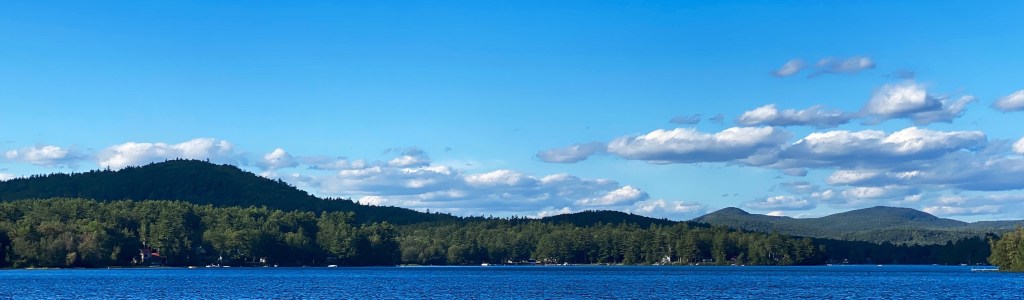
Richardson Lakes, MPRL
Worthley Pond, Peru, Maine

After our night at Worthley Pond we made the short trip to Hallowell to spend the day poking around in this historic town situated on the Kennebec River. The town was first settled in 1762.

The town has a prosperous history which was driven by the logging, shipbuilding, granite and ice industries that benefited from access to the Atlantic Ocean via the Kennebec River. Ice from Hallowell was taken by sailing ships to Cuba and various Caribbean Islands.

Today the town is a tourist draw with its many restaurants, pubs, shops and art galleries.

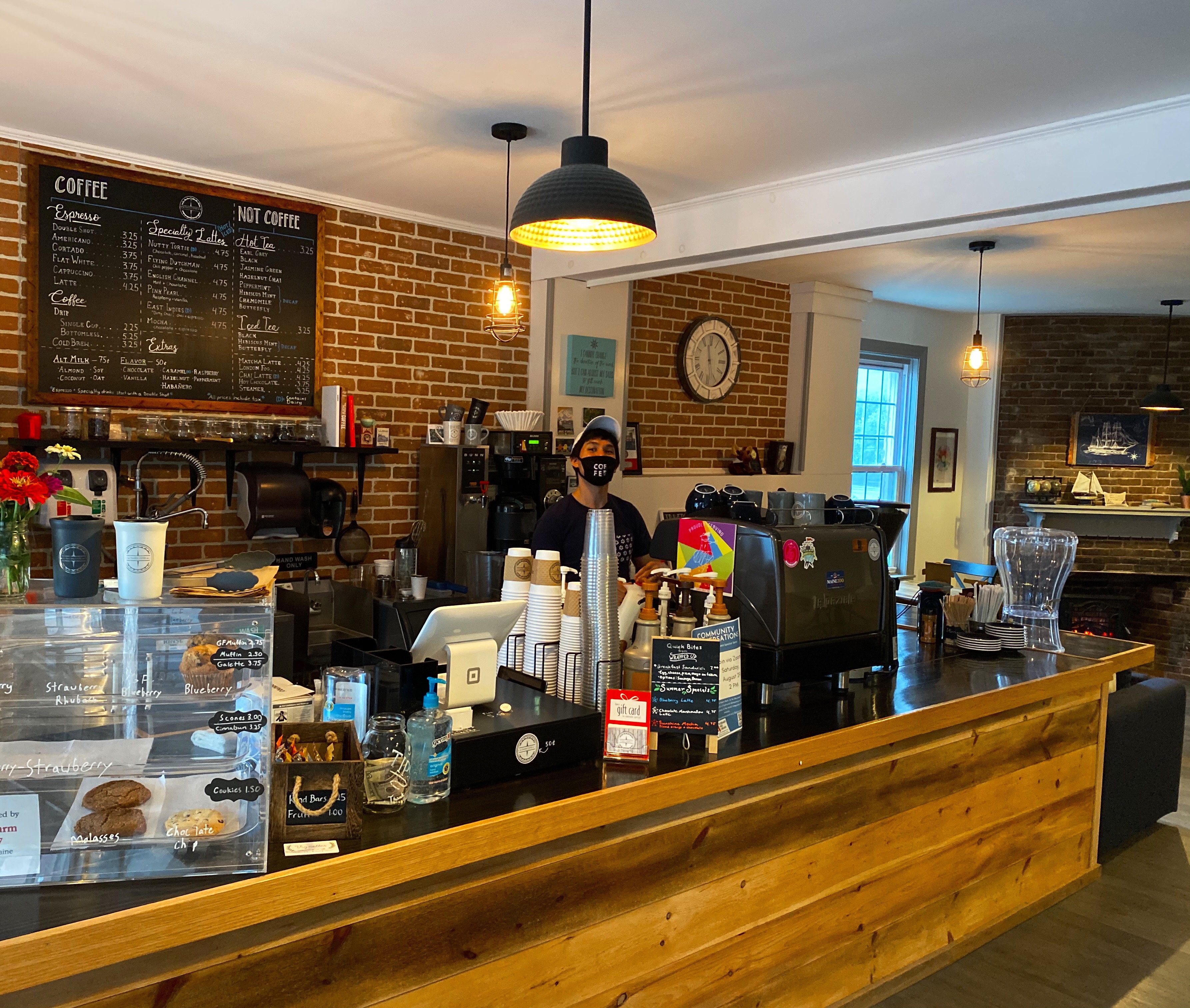
As many of you know, we are coffee and tea fans and were very pleased that Hallowell is home to Traverse Coffee Co located right in the heart of town on Water Street. Highly recommended. http://www.traversecoffeeco.com

Water Street, Hallowell, Maine, Pop. 2381

From Hallowell we made our way to the coast and the lovely town of Boothbay Harbor. The town sits on a peninsula which extends into the Bay of Maine and as such is a popular summer vacation destination and yachting center.

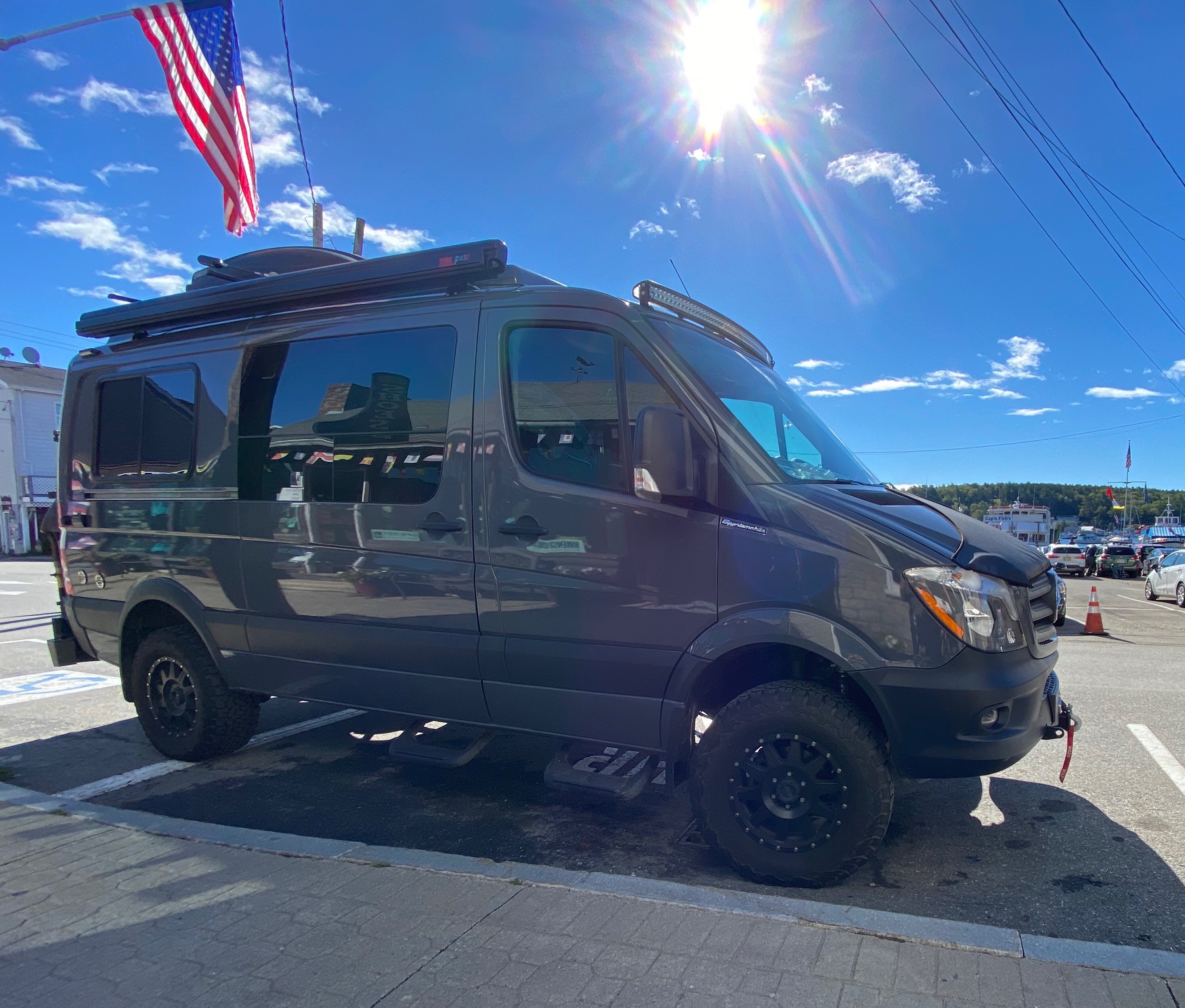
Our friends Dianna and Scott were vacationing in Boothbay Harbor while we were in town and they graciously allowed us to bivouac on their property during our stay.

Our Hosts: Scott, Dianna, Joanne, Penelope Rose, Phoebe Jane
Bivouac, Boothbay Harbor, Maine

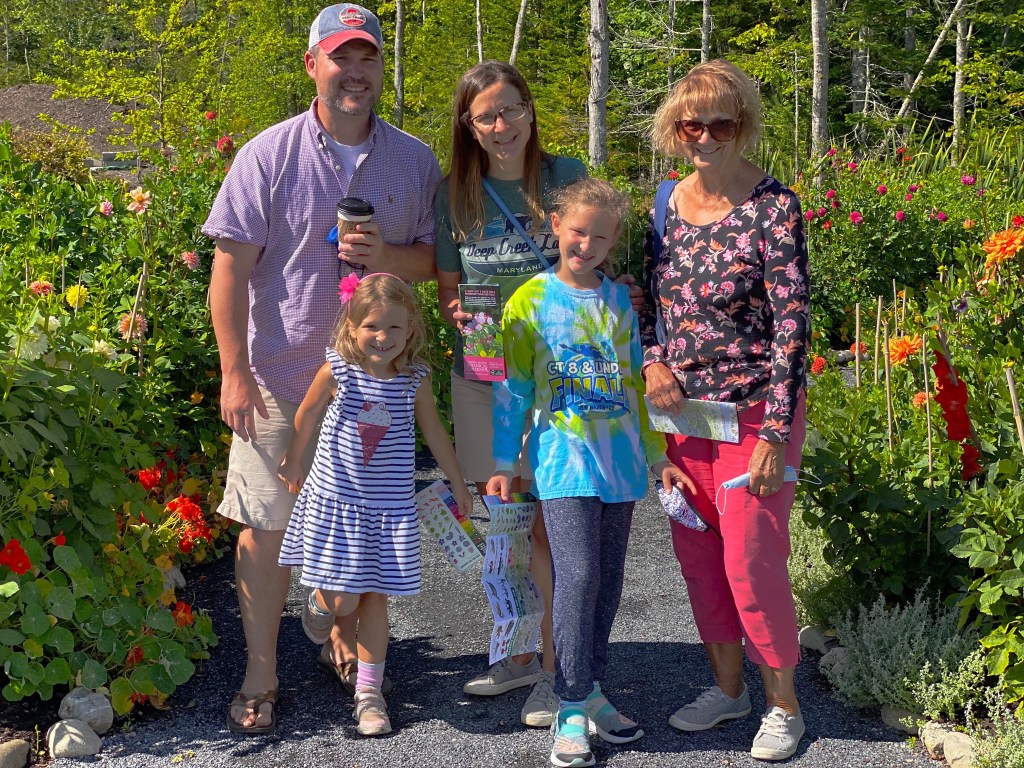
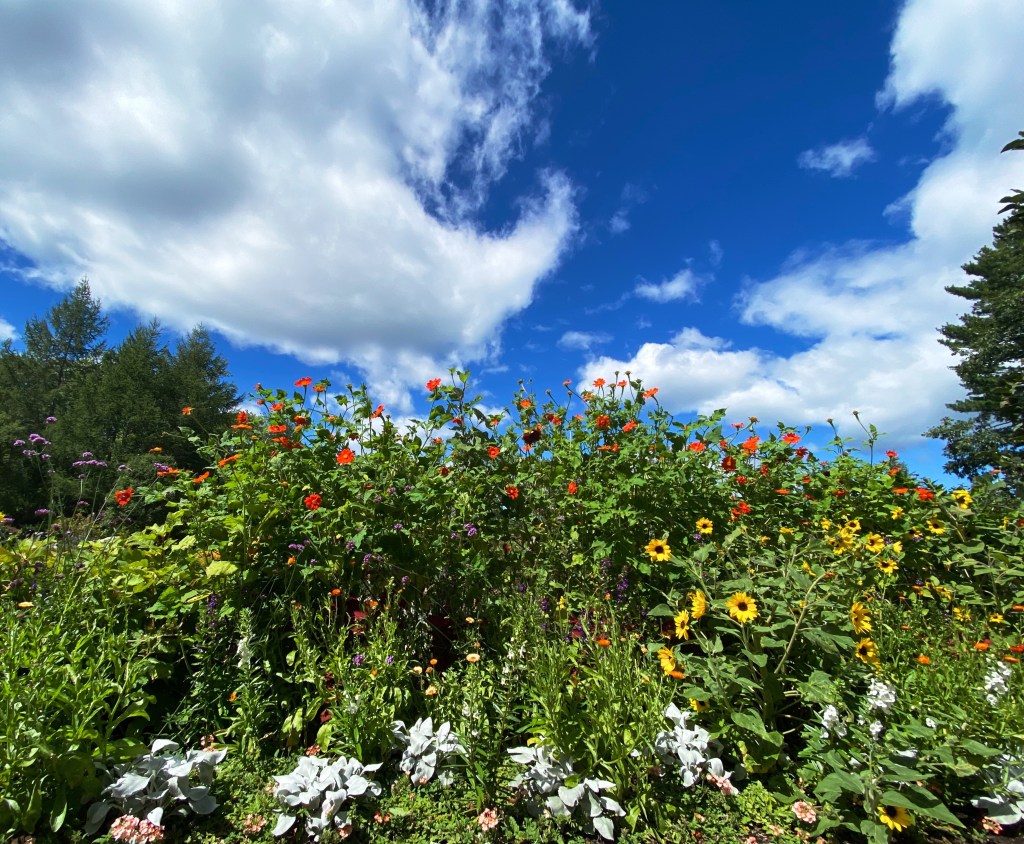
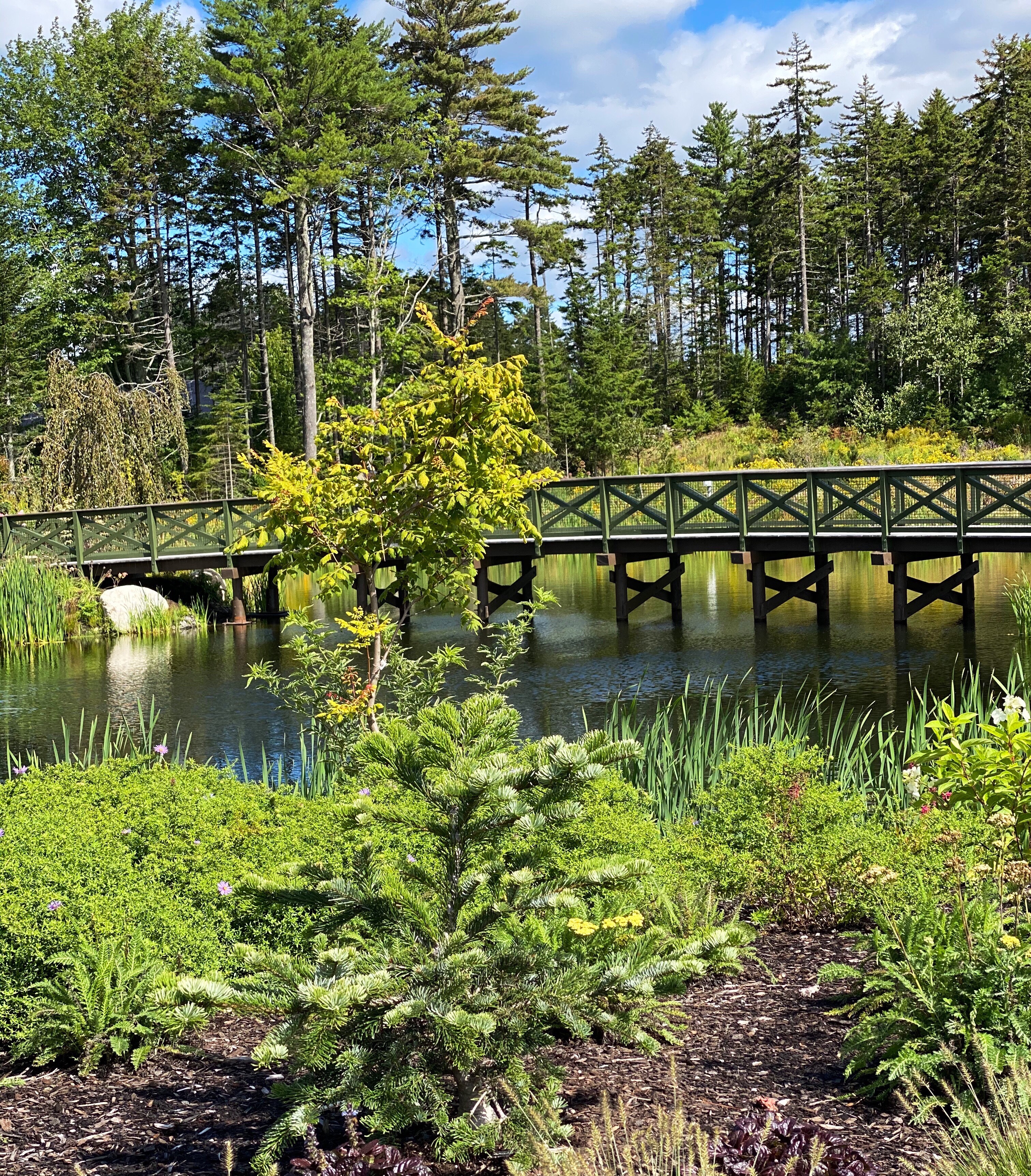
While in Boothbay Harbor we visited the Coastal Maine Botanical Gardens. This botanical garden is an absolute gem located on apx. 300 acres. The gardens are thoughtfully designed for touring and there are walking trails that provide access to the Back River which abuts the property. https://www.mainegardens.org/

The gallery below consists of photographs taken by the talented photographer Phoebe and feature her sister Penelope.

Coastal Maine Botanical Gardens

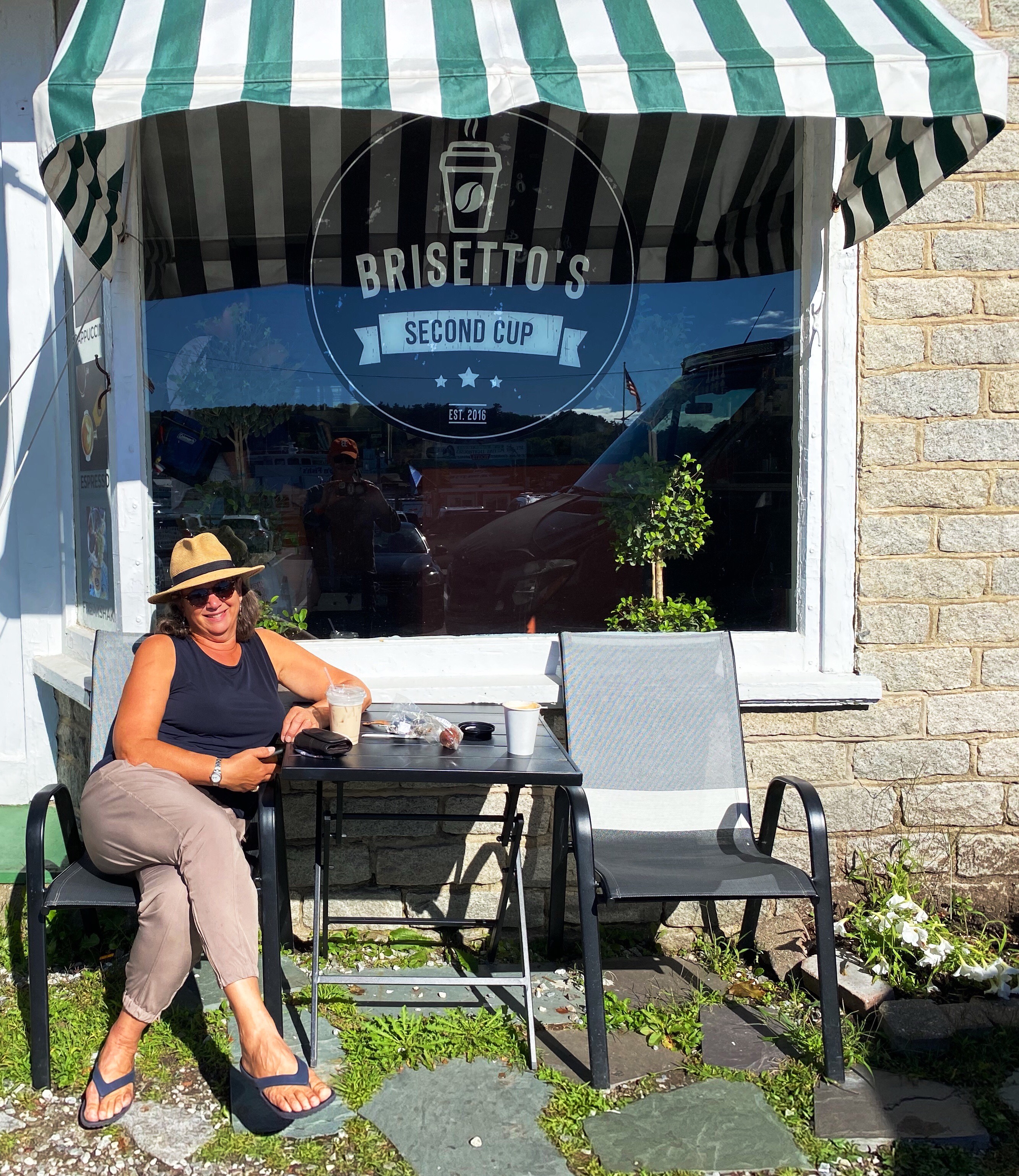
In addition to the botanical gardens we spent an afternoon in town at the harbor. Again we were blessed with an excellent coffee cafe in the heart of the shopping and restaurant district along the harbor. Highly recommended. http://www.brisettos.com

Portland was our destination after departing Boothbay Harbor. We had not visited Portland since 2011 so we were excited to get back to the city and see if the food, coffee and art scene is as vibrant as we remembered.

We spent our first afternoon walking around the city mural hunting and quickly found a plethora of fine works both authorized and unauthorized. We have included several works here but would refer you to our earlier post: Street Art From The Road:OTR 5.1 which includes a selection of murals from around Portland.

Portland, Maine – East Bayside

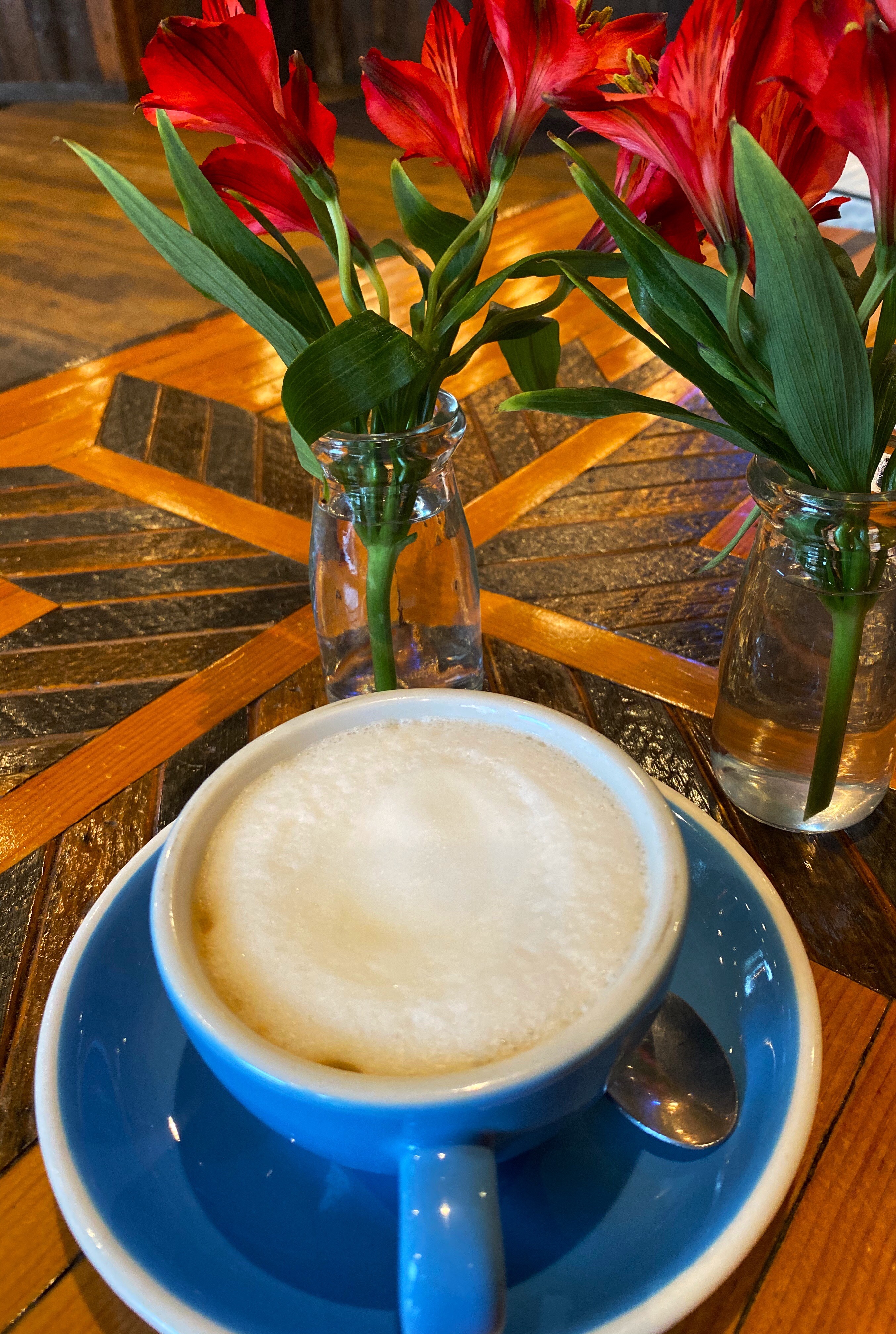
The third wave coffee scene in Portland has grown since our last visit but we continue to place Tandem Coffee at the top of our list. In addition to the great coffee the Congress Street cafe has an excellent bakery.

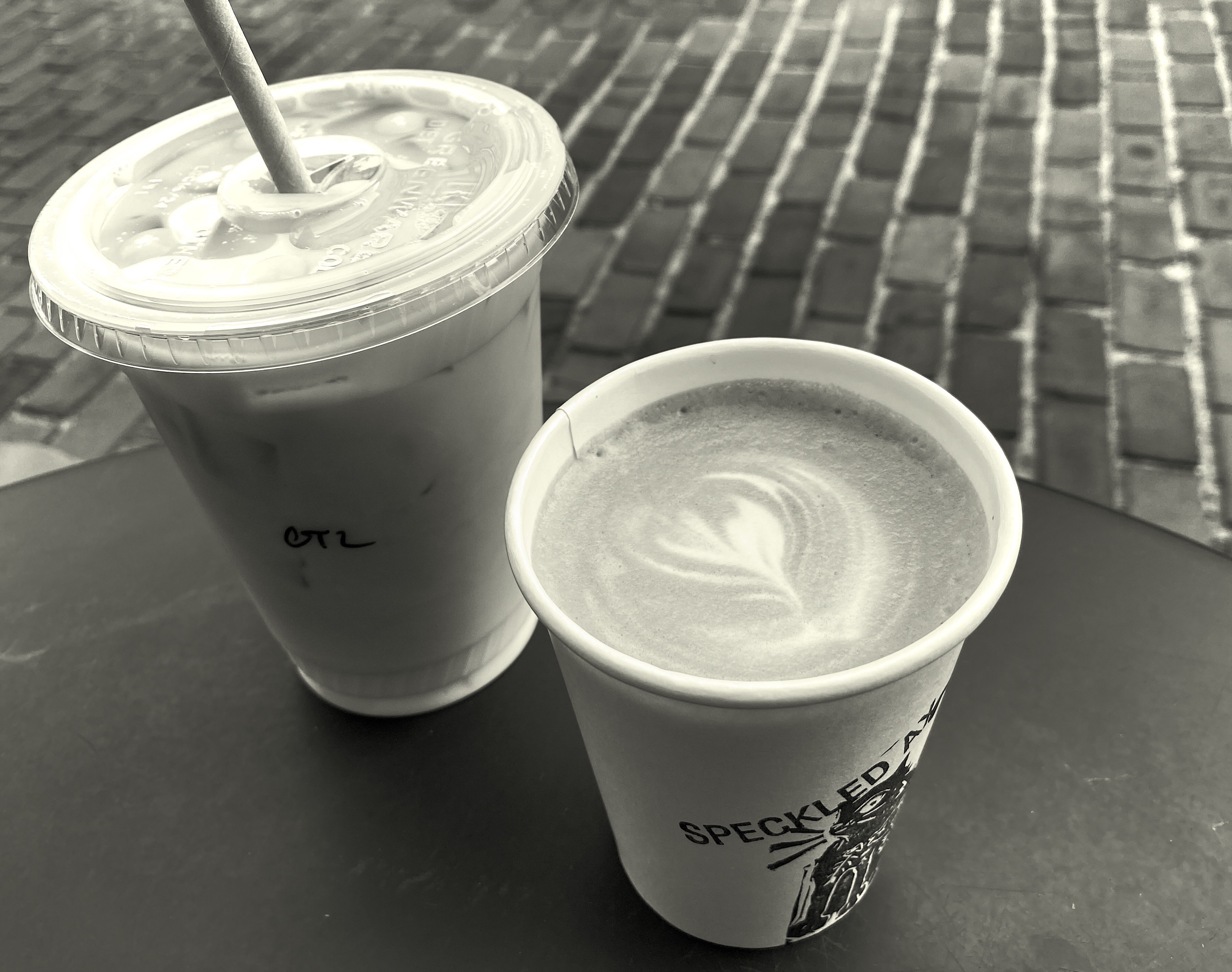
We made our first visit to Speckled Ax Coffee. This roaster and cafe operator opened in 2012. The coffee is excellent. Speckled Ax is unique in that they wood roast their coffee – not a common or easy way to roast coffee – but they have certainly mastered the technique.

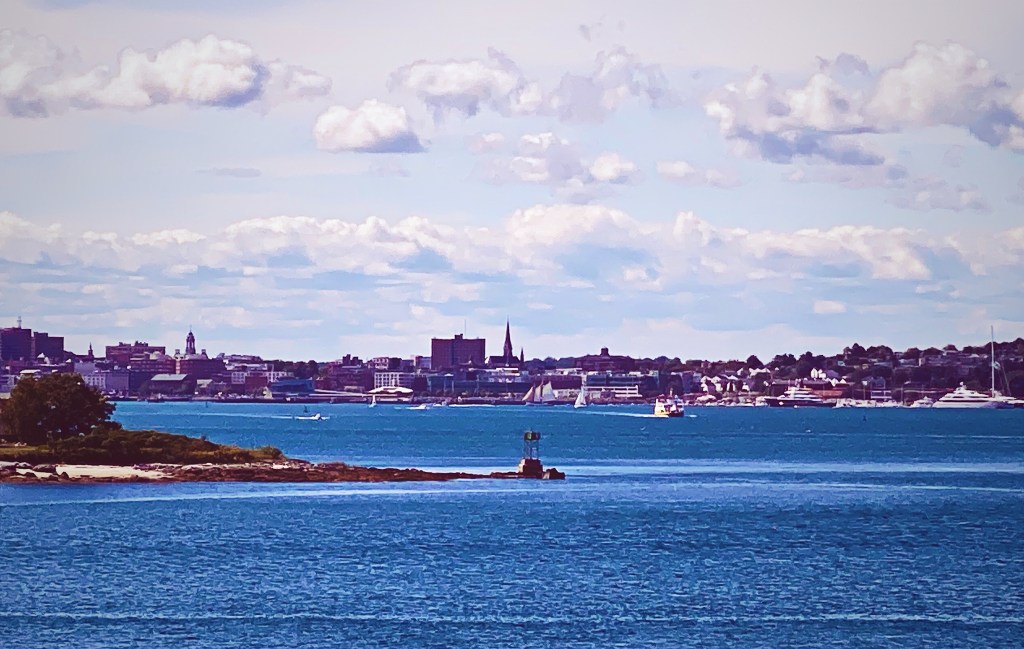
Casco Bay, Portland, Maine

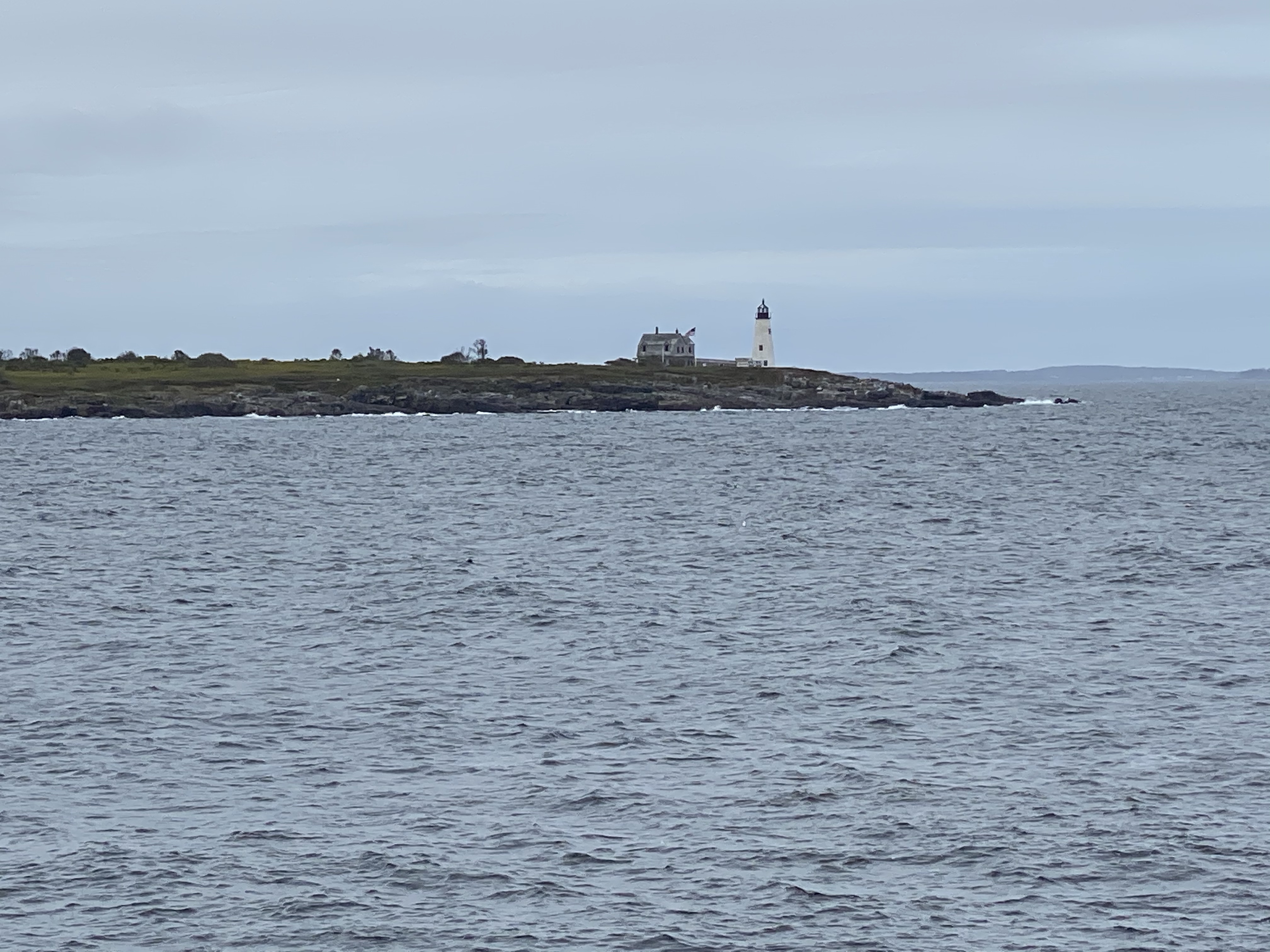
After taking in a nice sample of the street art and coffee scene we took advantage of the wonderful weather to ride the Casco Bay Ferry across the bay to Peaks Island. The island is about three miles off shore from the Portland waterfront and the ferry ride is just 20 minutes.

Peaks Island is part of the city of Portland but does have its own police station, post office and elementary school. Post elementary students ride the ferry to and from the mainland to attend school.

The full time residents of the island have a long history of trying to secede from the city – most recently in 2011 when the city reevaluated properties on the island and property taxes increased by over 200%. As with previous attempts to secede the Portland City Council Council voted no.

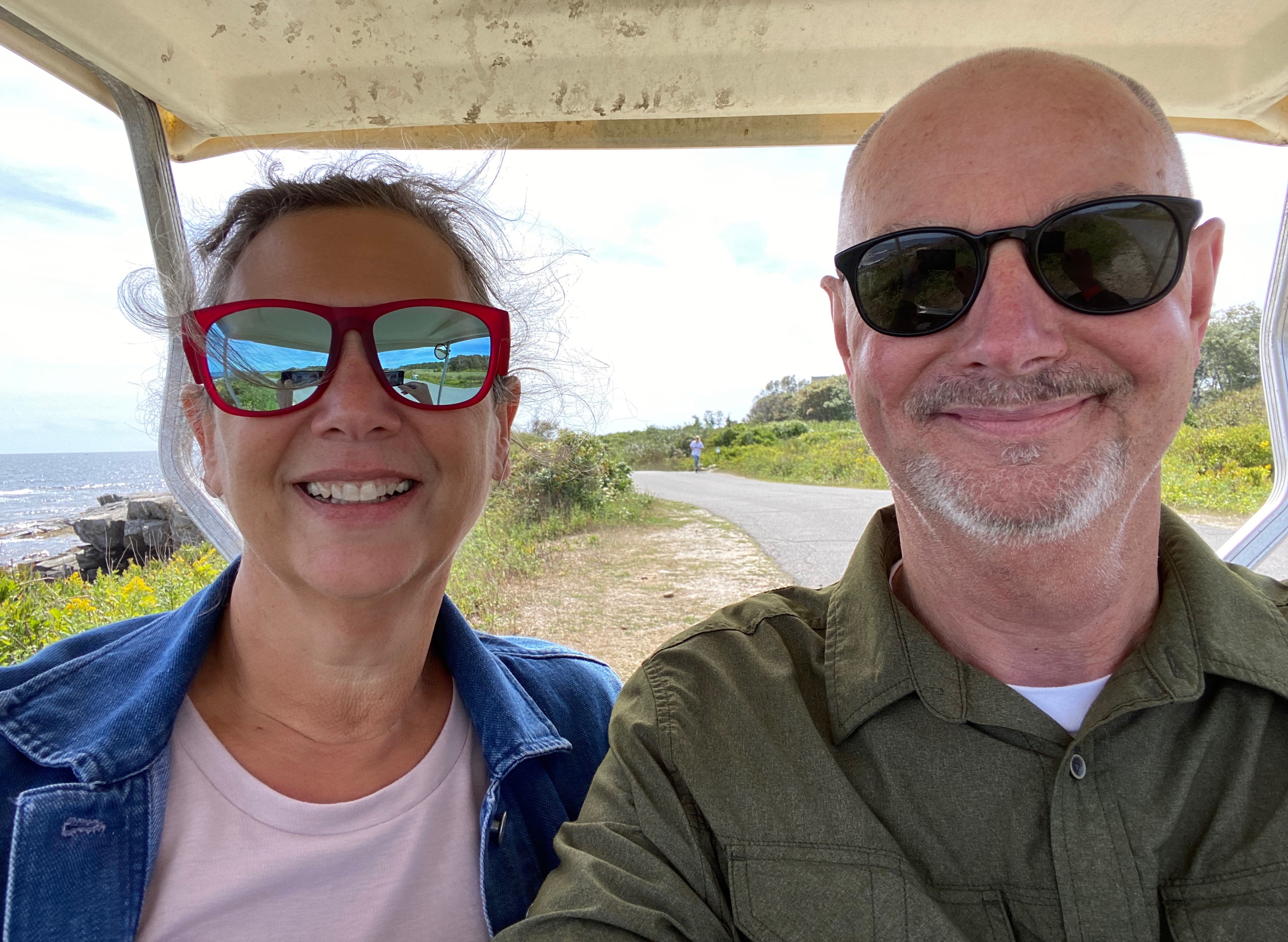
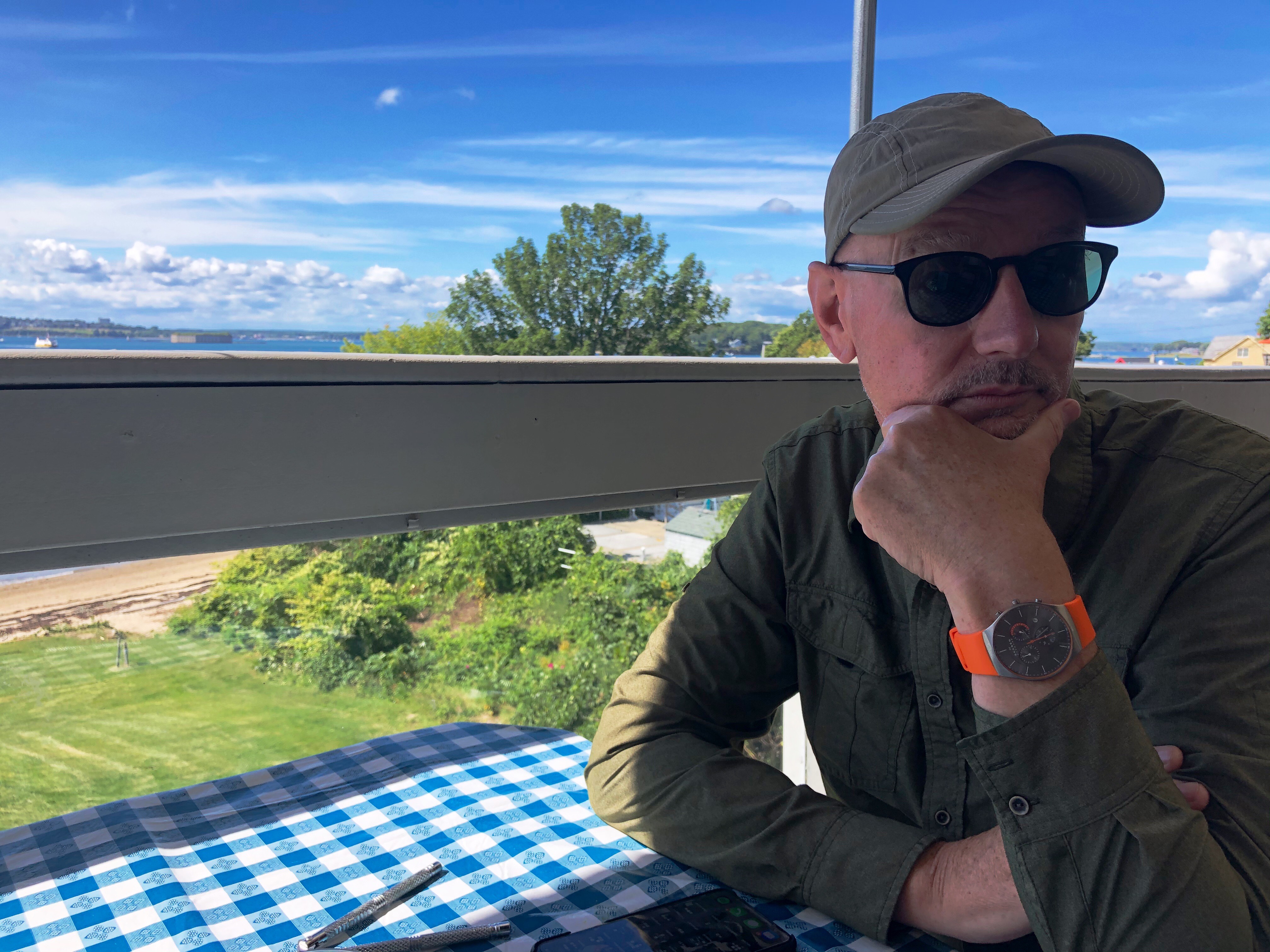
Ah well, a beautiful spot to visit even if you cannot afford to own a house. We took in the island scenery on a rented golf cart and dined on fresh sea food before returning to Portland

Portland happily is as handsome and interesting as we remembered. From Portland we meandered along the coastline and stopped for a hike as we made our way to Portsmouth for our final overnight before returning to Connecticut.

Susan Bartlett Rice, Biddeford, Maine

Our final day on the road required a short detour to Dover to check out locally renowned Flight Coffee and fuel up for the final leg to The Fort. A nice cafe for planning your next adventure! https://www.flightcoffeedover.com/

We thoroughly enjoyed our brief swing through Maine as the final segment of our brief return to the road. While all aspects of travel are not back to pre-pandemic conditions we think the country has opened up enough to allow life on the road to be enjoyable and safe. To that end we plan on departing The Fort in October for a fall tour of West Virginia and Virginia.

The Grid, Worcester, Massachusetts

We could not actually make it back to Connecticut without more coffee and tea so we ventured into The Grid district of Worcester for fika and found several fantastic murals to boot. Life is good.

Be seeing you!
Street Art From The Road: OTR 5.1

Our recent trip took us through portions of Massachusetts, New Hampshire and Maine. We have included a sample of some of the street art and murals that we found along the way. We appreciate the range of emotions these very different works of art evoke in us. Please let us know what you think.

Stay tuned for another post on OTR 5.1. Of course you can see more of our street art photographs on @streetartfromtheroad.

Be seeing you!

Northampton, Massachusetts

Mona June, Littleton, New Hampshire
XB-500, Location: Portland, Maine

Damien Mitchell @damien_mitchell Location, Worcester, Massachusetts

Ryan Adams @Ryan Writes on Things, Portland, Maine
Flyn Costello @flyncostello, Black Elephant Hostel, Portland, Maine
George Floyd by Ryan Adams, Jason McDonald, Mike Rich, Aura, Portland, Maine
Lola by Matt Bassett @mattbassett.mojodesign, Littleton, New Hampshire

Clam Diggers by Susan Bartlett Rice, Portland, East Bayside, Maine

Biddeford, Maine
By Susan Bartlett Rice, Biddeford, Maine
Portland, Maine
Rest Easy, Portland, Maine
Mary Mitchell Gabriel by Abigail Gray Swartz, Portland-East Bayside, Maine
By Greta Ault Van Campen @gretavancampen.art, Bayside Trail, Portland, Maine
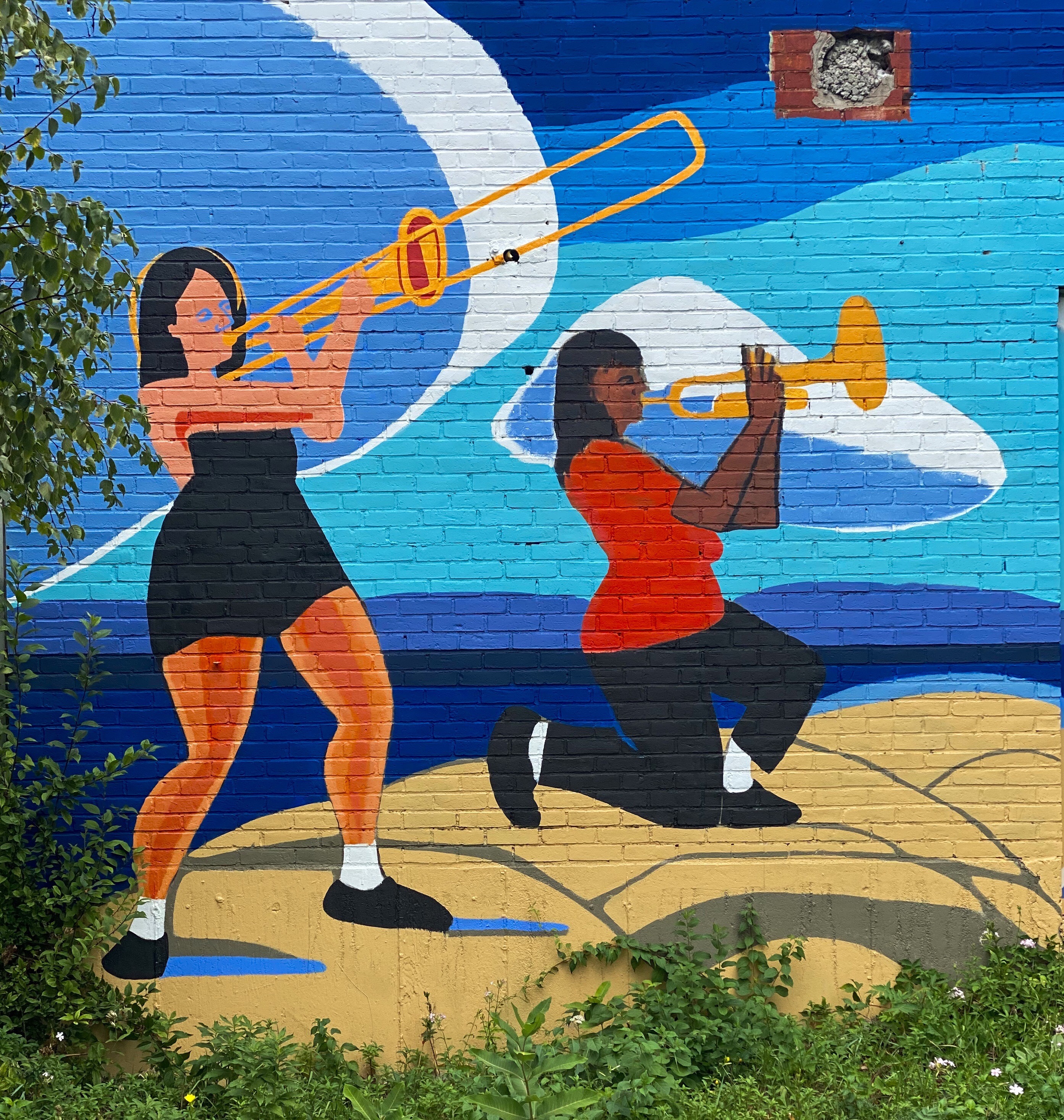
Musician Mural, Bayside Trail, Portland, Maine

King Ember by Tim Clorius @timclorius aka SUBONE, Bayside Trail, Portland, Maine
Portland, Maine
By Insane 51, Worcester, Massachusetts
Portland, Maine

New Hampshire: On The Road 5.1

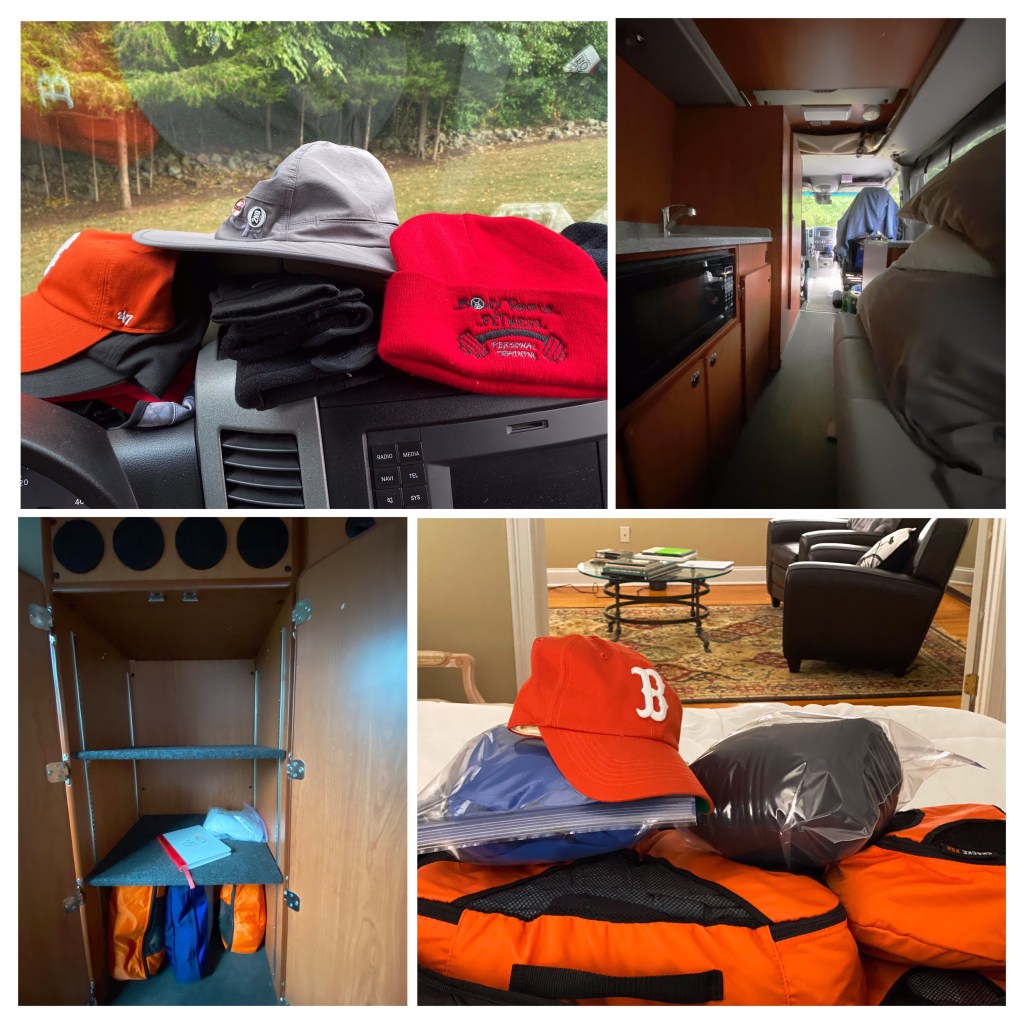
Loading the Beast
Pandemic Travel Wardrobe

Howdy! After shortening our winter/spring roadtrip by about 50% we finally got back on the road for a short adventure. Based on the title above you have probably figured out that we journeyed up the road apiece from our home base in Connecticut to the Granite State, New Hampshire. This trip was intended to “test the waters” for travel conditions in the new normal of the forever pandemic. Our choice of New Hampshire reflected its proximity, the fact we had not visited the state in some time and the state is welcoming visitors from all of the other New England states.

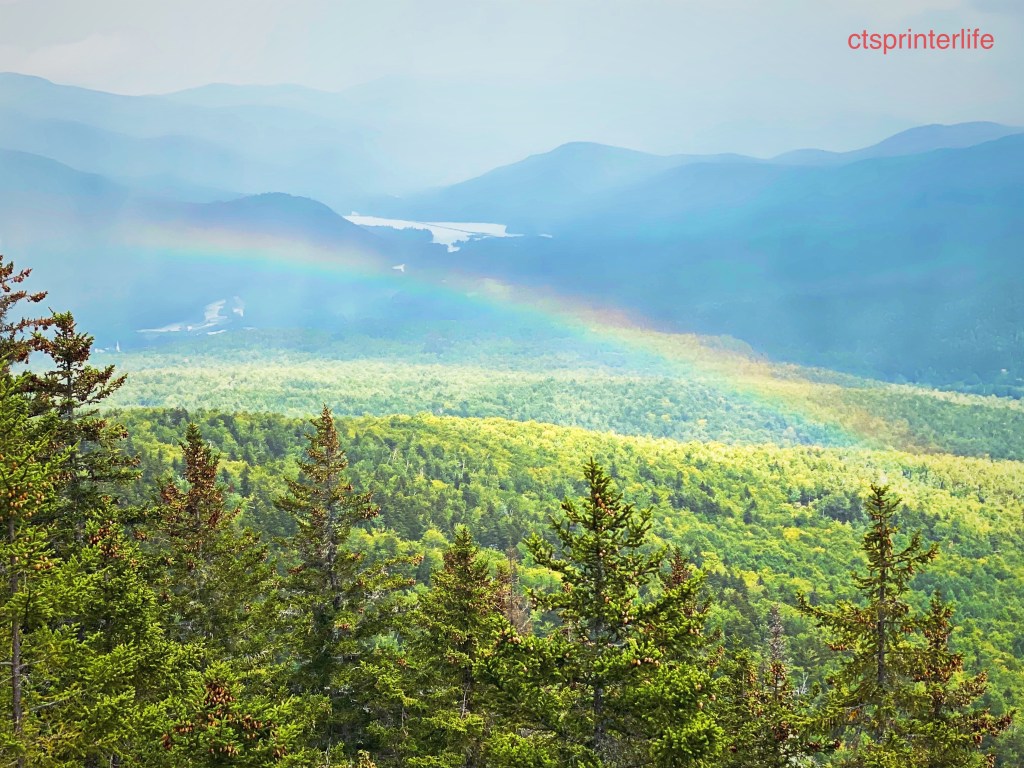
View from Bald Mountain, Franconia Notch

We visited Nashua and Manchester briefly on our trip north to the White Mountains but our main focus in New Hampshire was on camping and hiking.

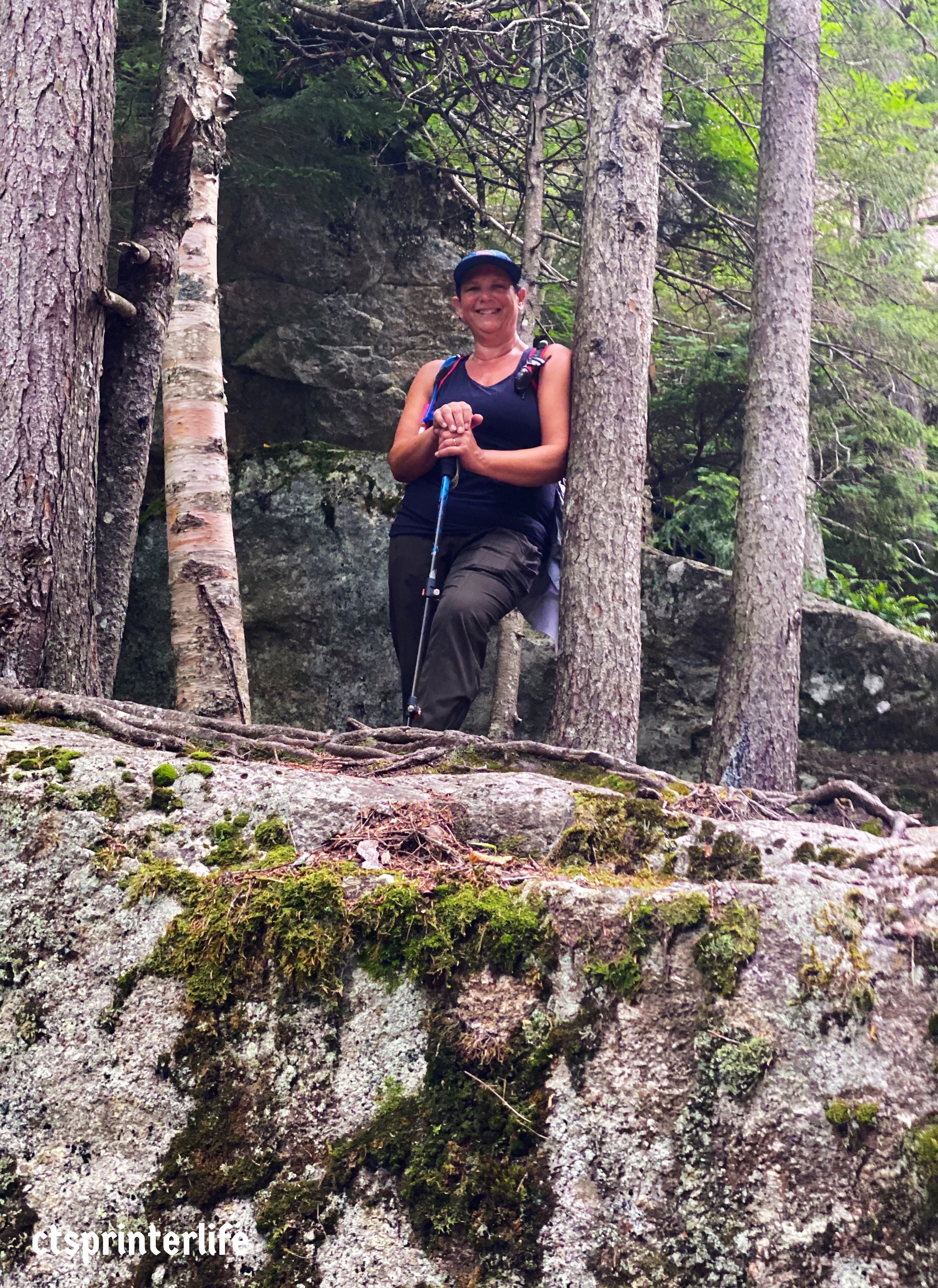
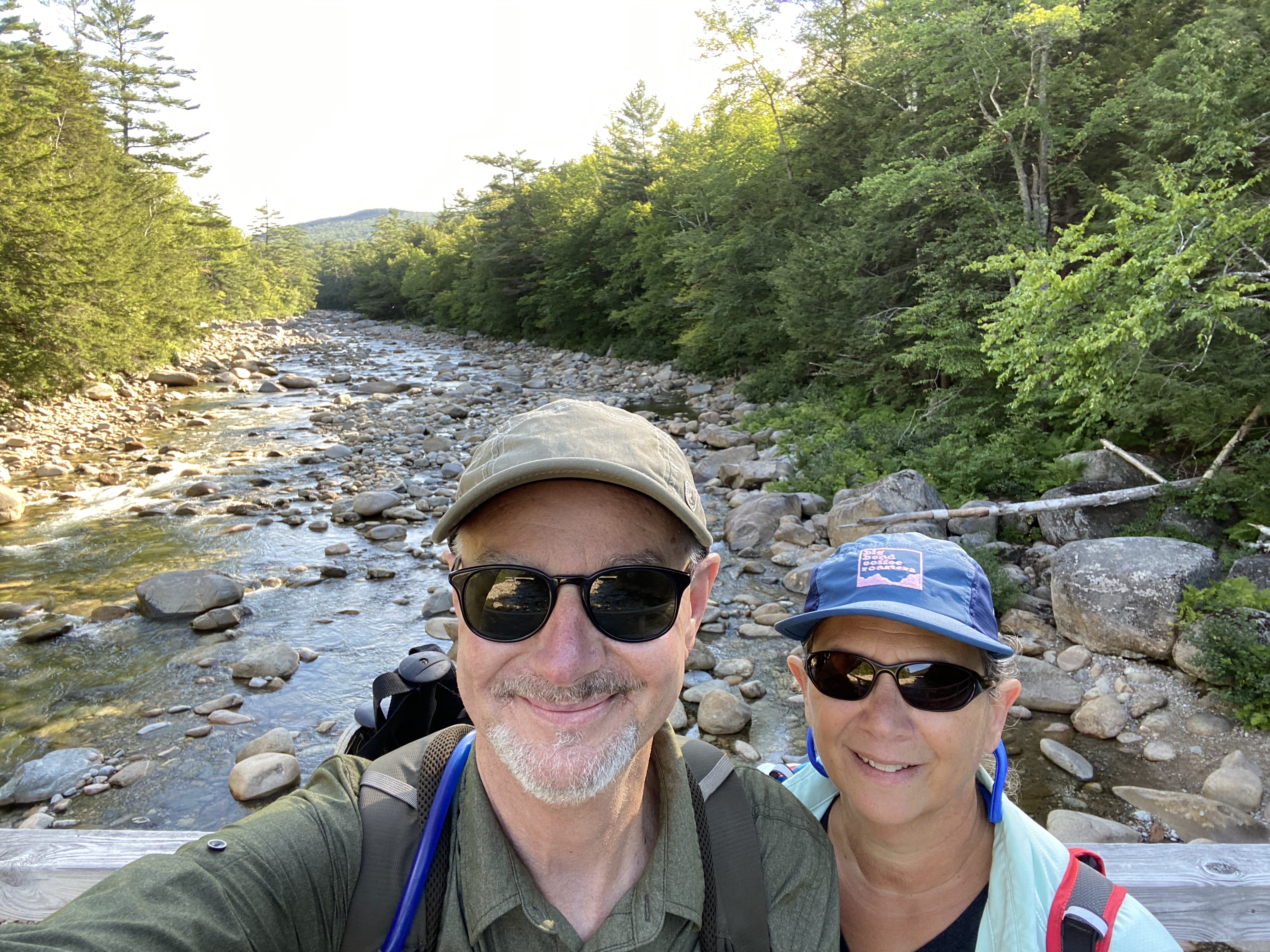
The White Mountain National Forest offers significant camping options as well as a seemingly infinite amount of hiking options. We were fortunate to have very comfortable and mostly sunny weather which made for some wonderful (and occasionally strenuous) hiking.

Hiking in New Hampshire is so rewarding with its abundance of streams, rivers, lakes and waterfalls to be found along the way not to mention the views from the ridgelines and summits.

Franconia Falls, Lincoln, New Hampshire
View from Pine Mountain, Gorham, New Hampshire
Cherry Lake, Pondicherry National Wildlife Refuge
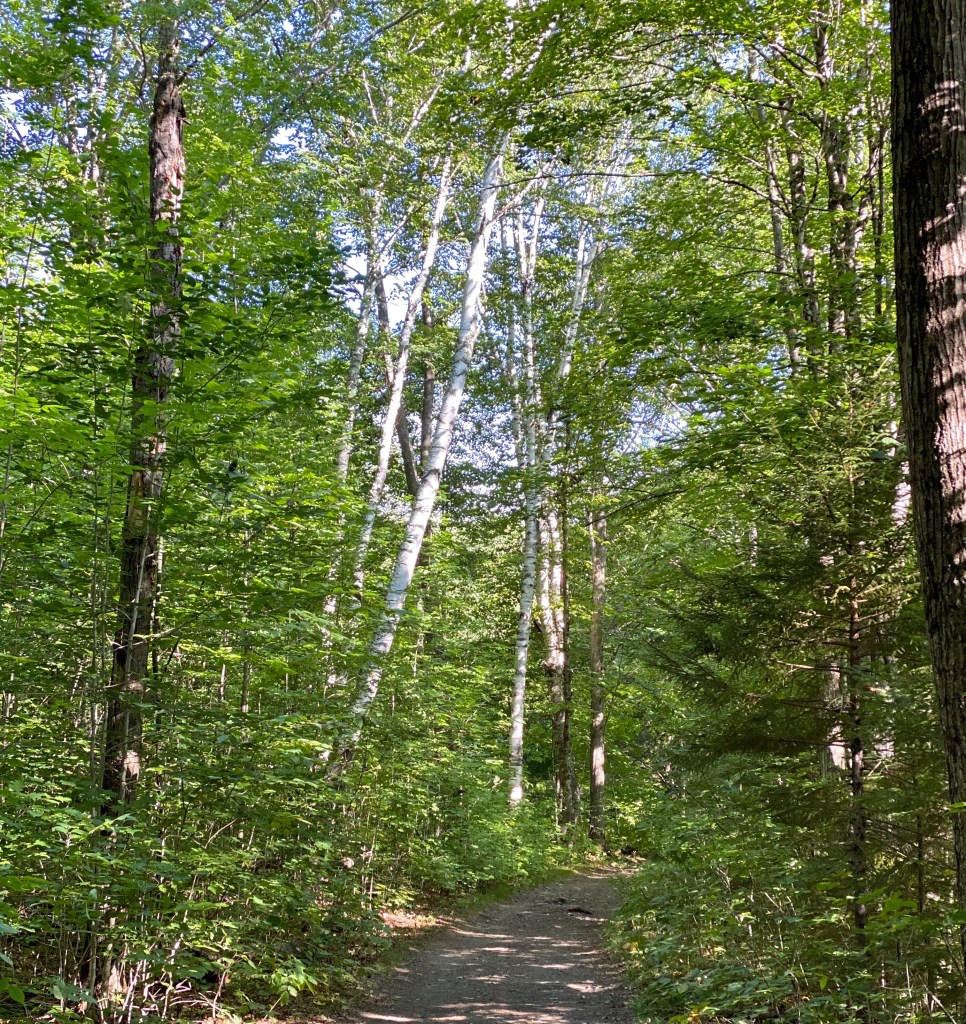
Beautiful Stands of Birch Trees are Scattered Throughout the Forest
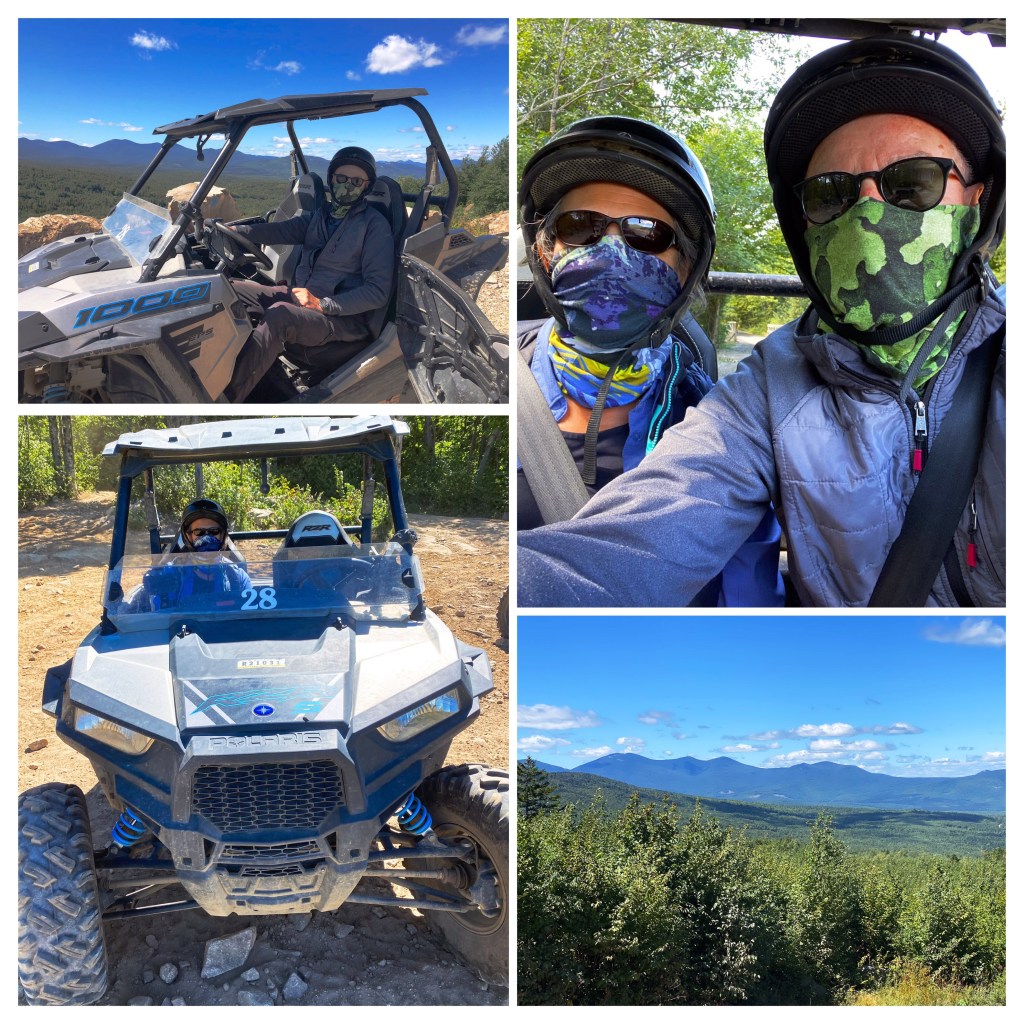
Riding the Trails near Gorham, New Hampshire

Littleton, hard on the Ammonoosuc River, was one of our favorite small towns in the Franconia Notch area. It has a well preserved downtown with a variety of shops as well as a number of eateries right along the river. Of course, best of all there was an excellent coffee shop with ooutdoor seating on the riverbank (Inkwell Coffee & Tea).

Bridal Veil Falls, Moultonborough, New Hampshire
Franconia, New Hampshire

We thoroughly enjoyed our time in New Hampshire and plan to explore all of northern New England on a more comprehensive basis at some point in the future. Next stop: a short swing into Maine to visit friends in Boothbay Harbor and then visit the beautiful city of Portland.

Be seeing you!

P.S. Don’t forget to check out the art and coffee photo galleries in the sidebar.

Mostly Foreign Travel Adventures from the Archives

While we are doing our best to be productive and helpful to others during our time at home our thoughts invariably turn to travel: over coffee we began to reminisce about trips we have taken over the years. This post is a photo essay of some of our favorite trips. We hope you enjoy the photos and are inspired to make the journey to a place you have dreamed of visiting.

New England Bike Tour
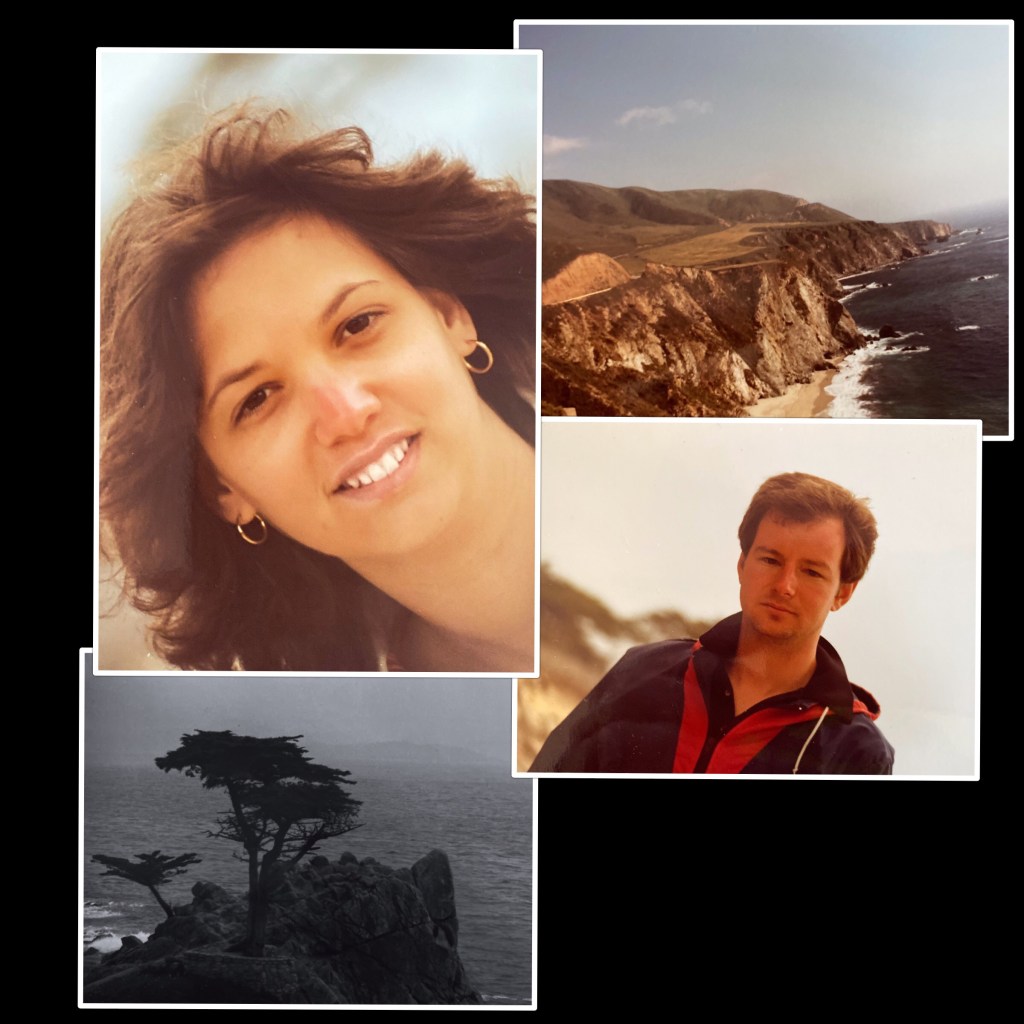
California Coast
London, England
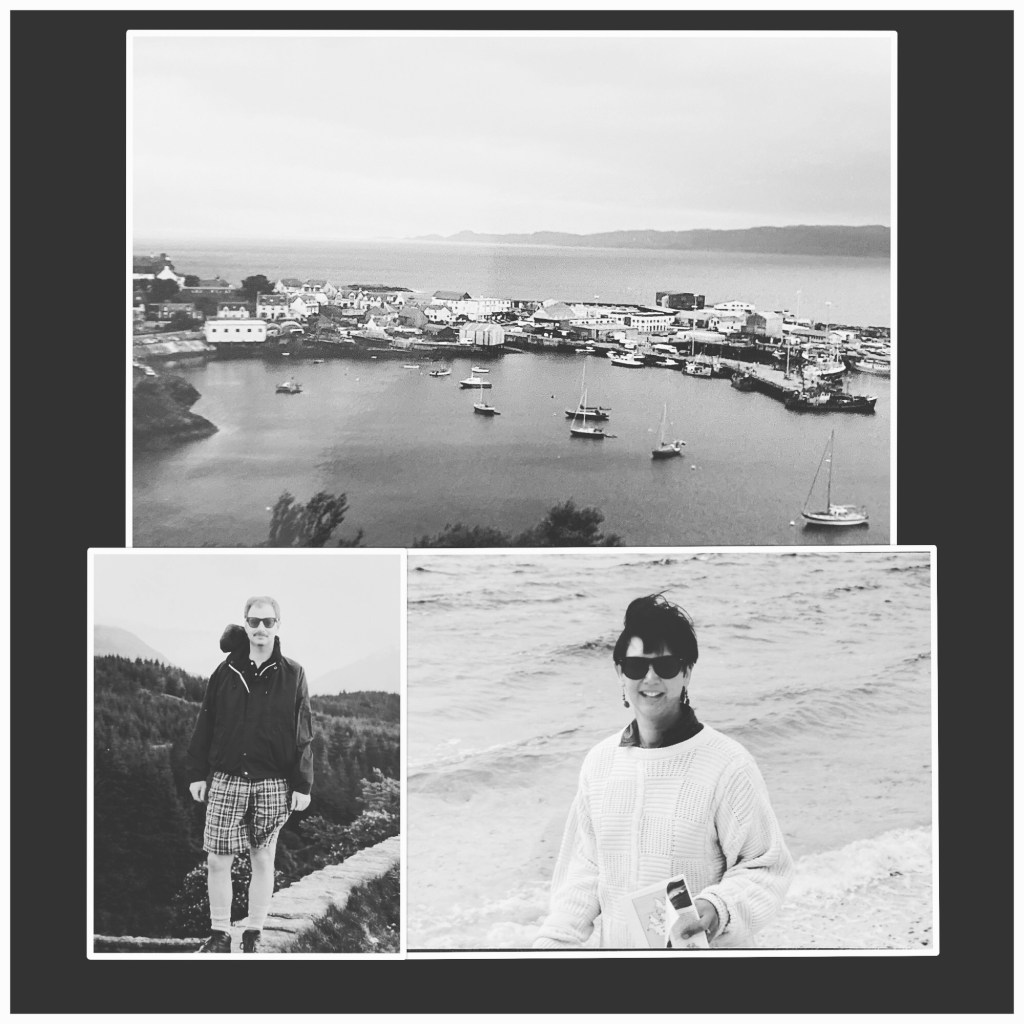
Scottish Isles
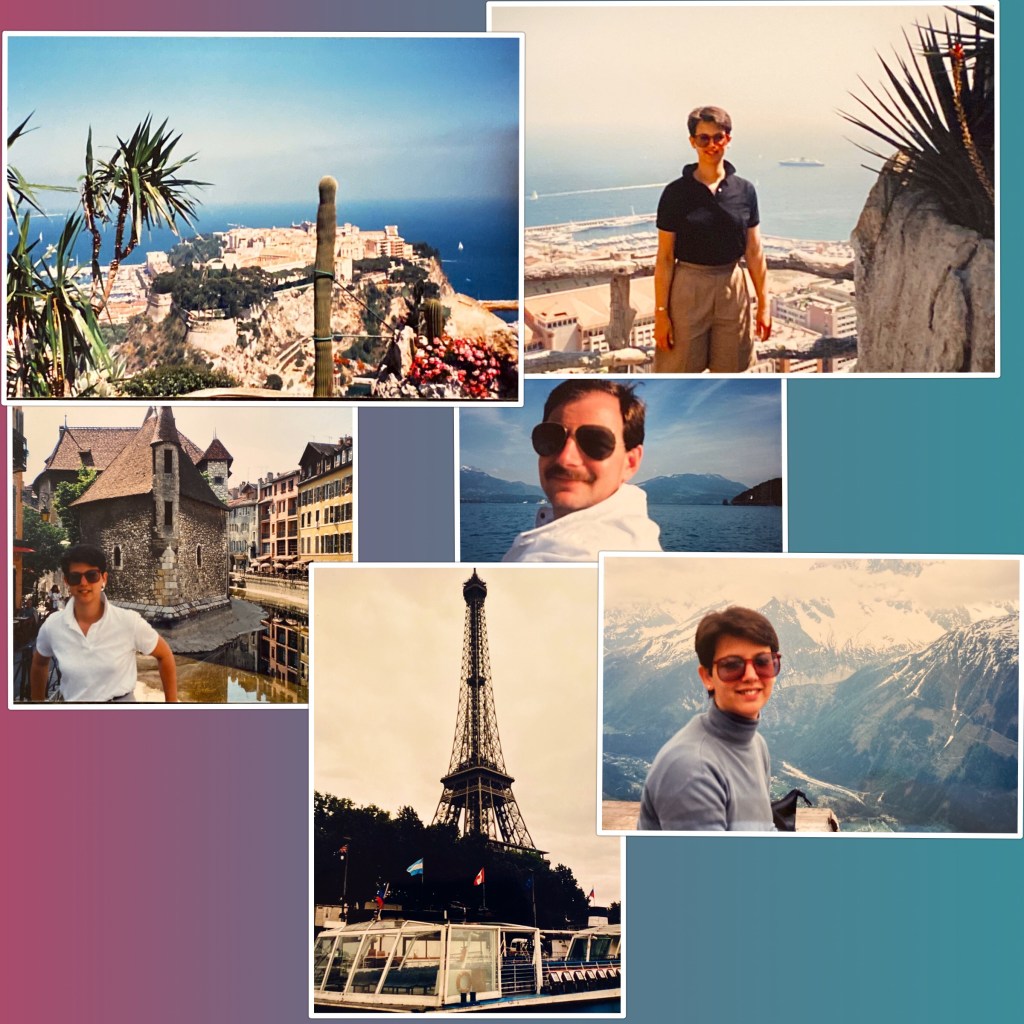
France and Monaco

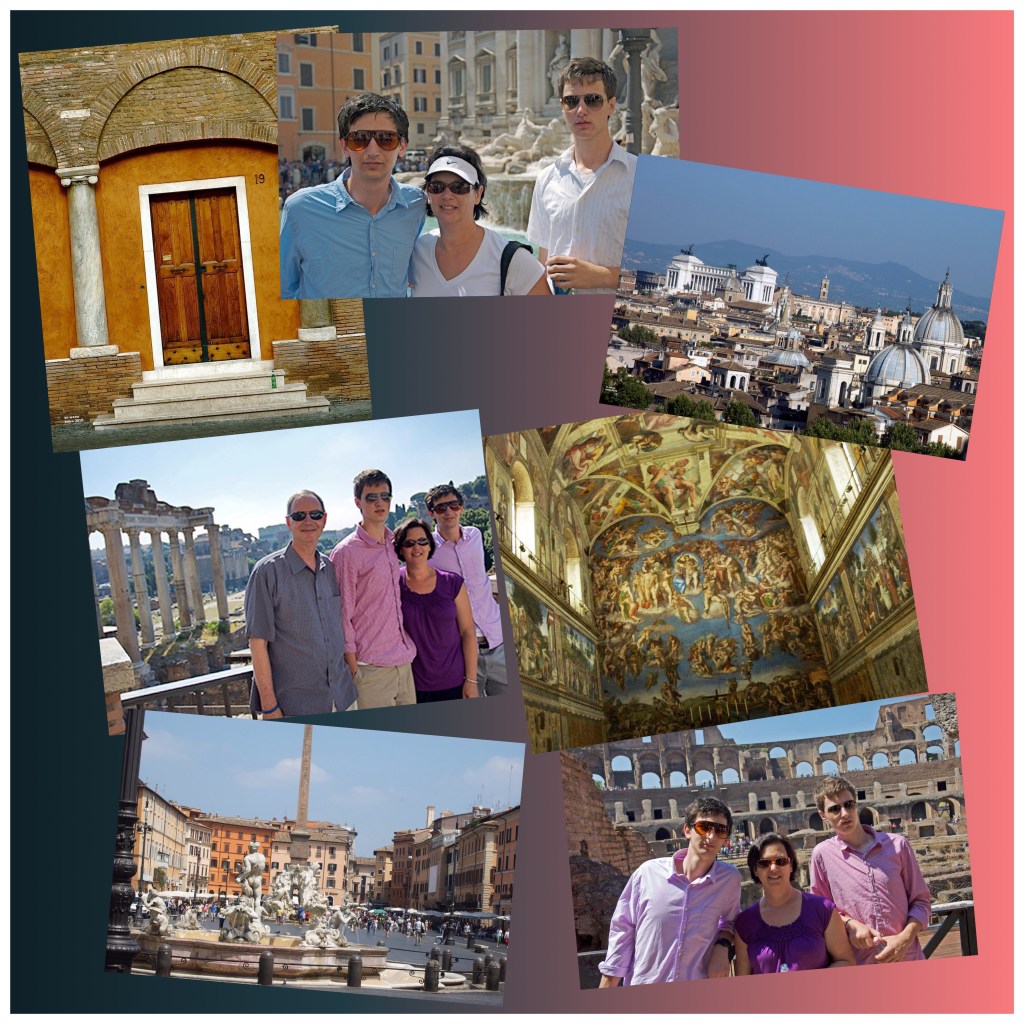
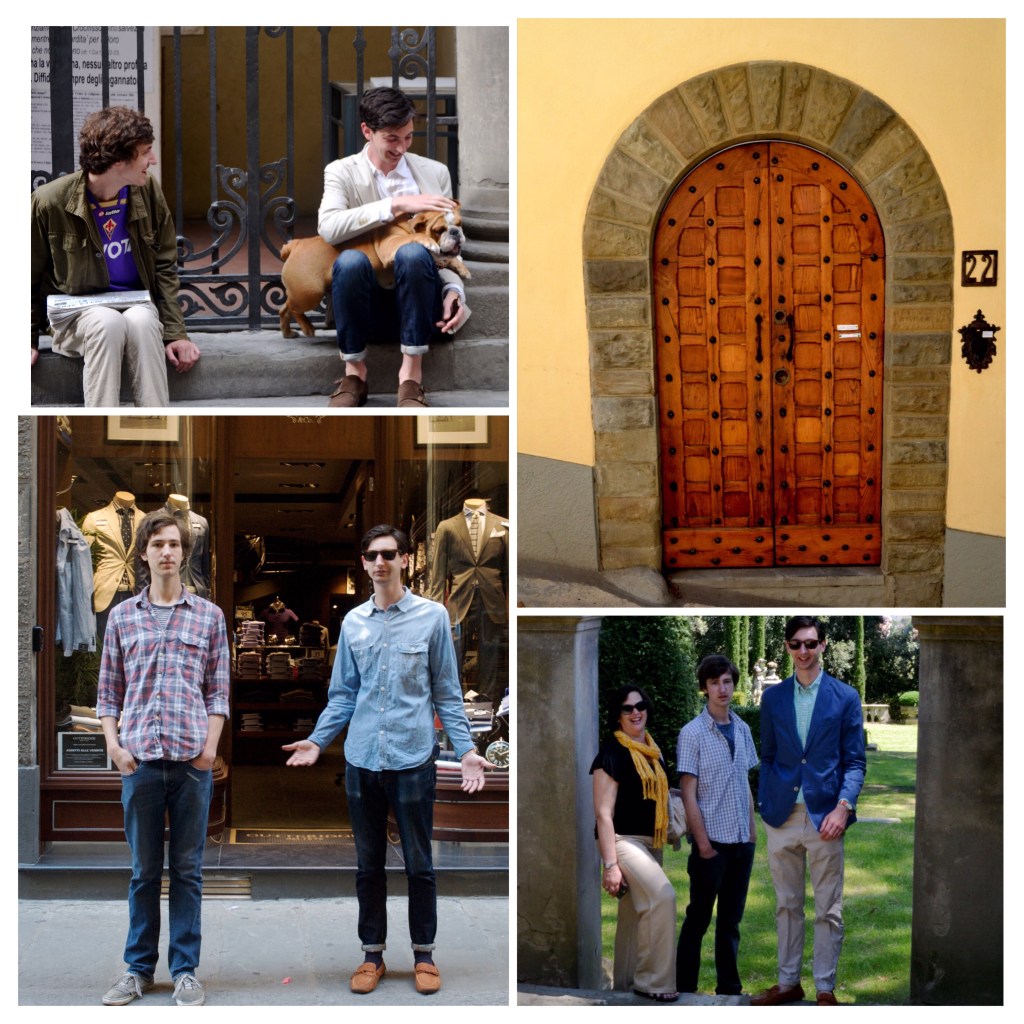
Our Italian phase with the men!

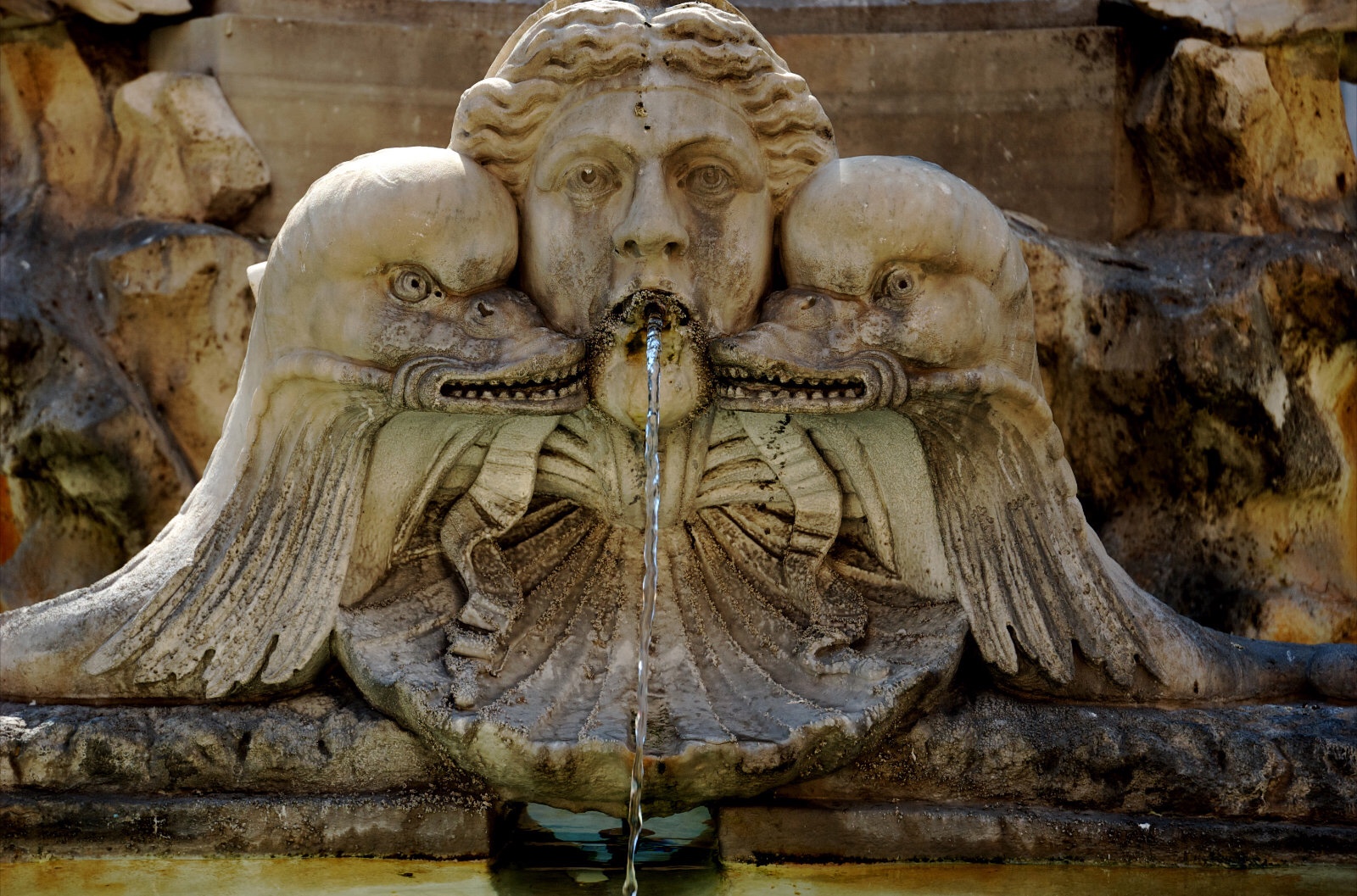
Roma
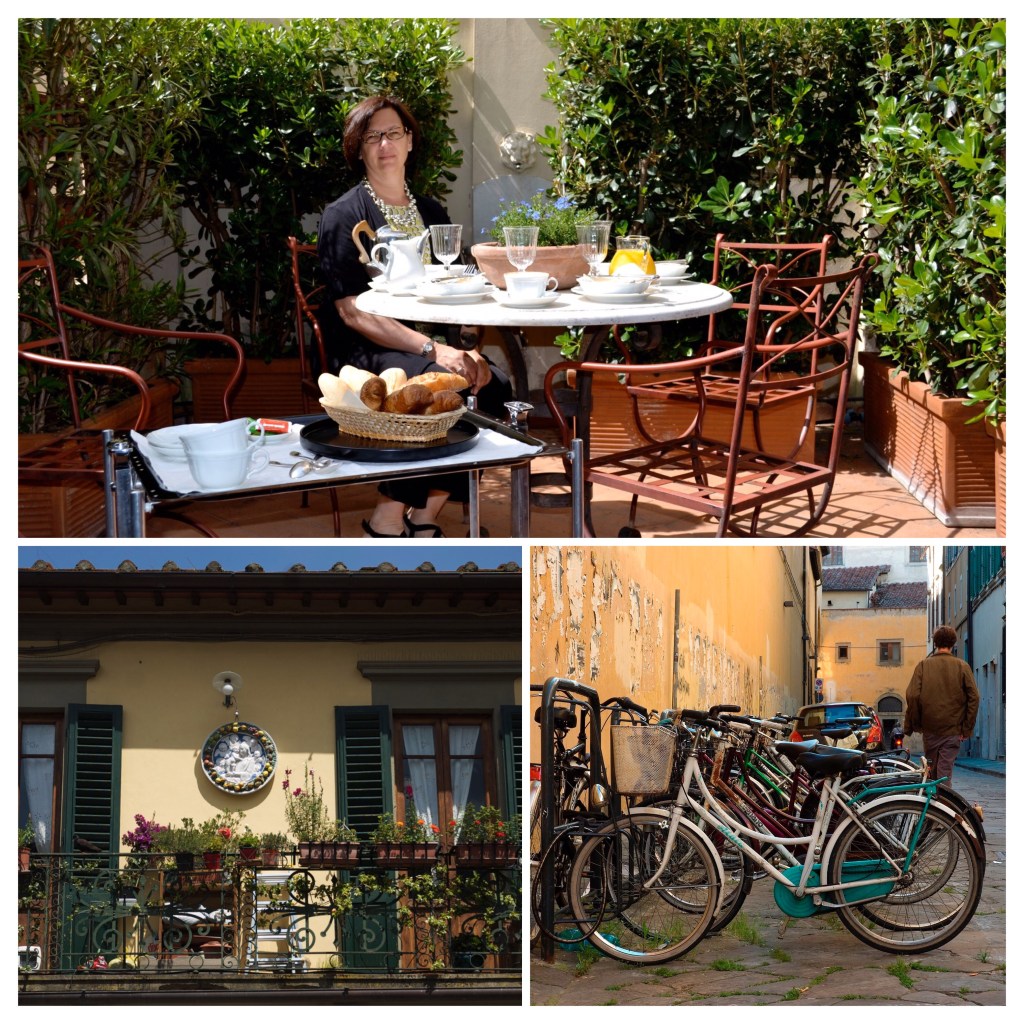
Firenze
Firenze
Firenze and Bologna
Firenze

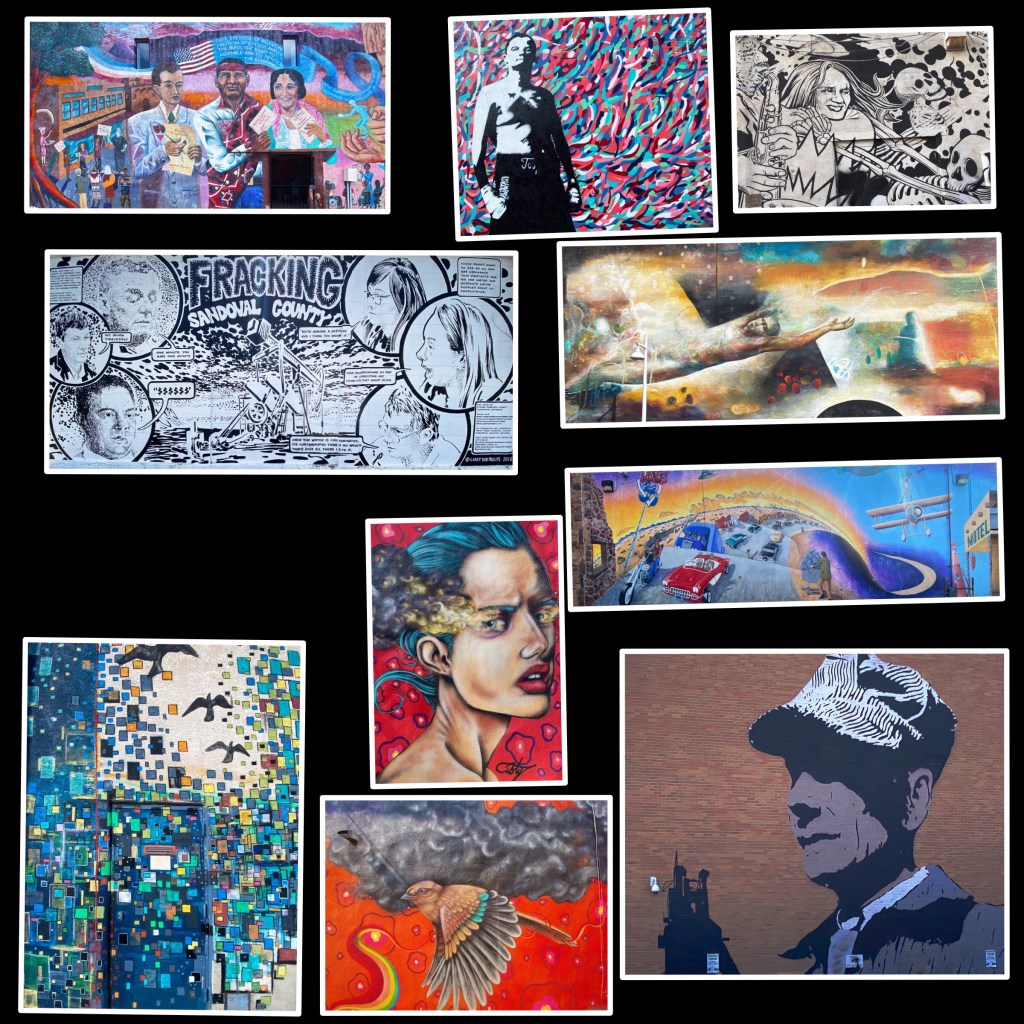
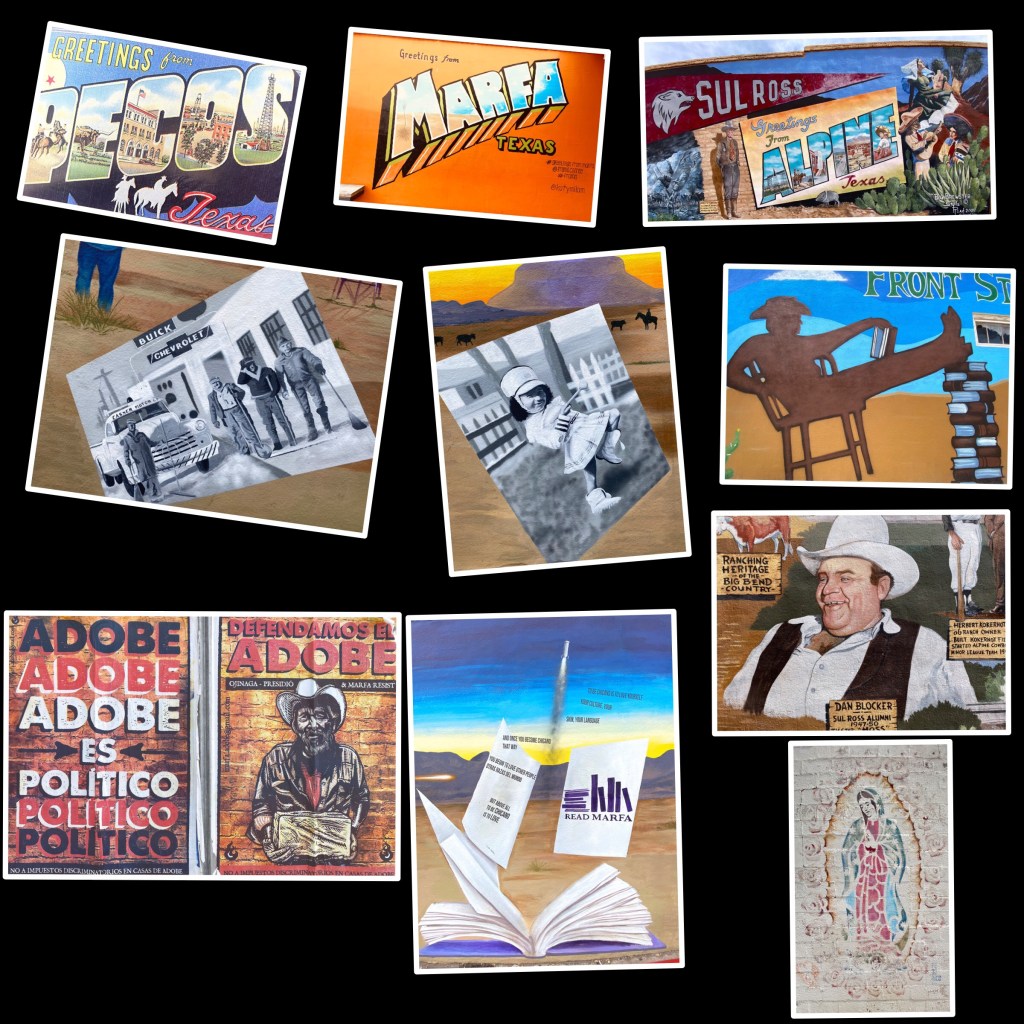
Street Murals: OTR 4.0

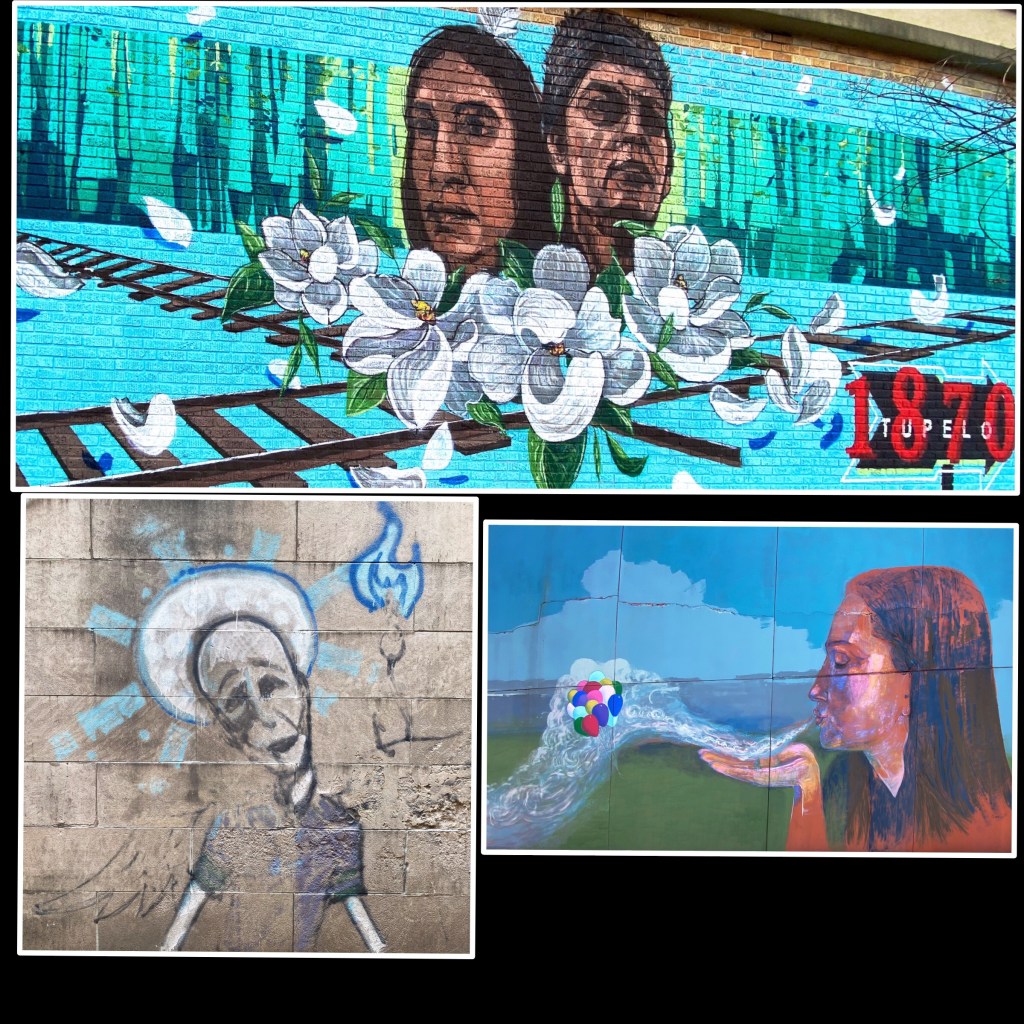
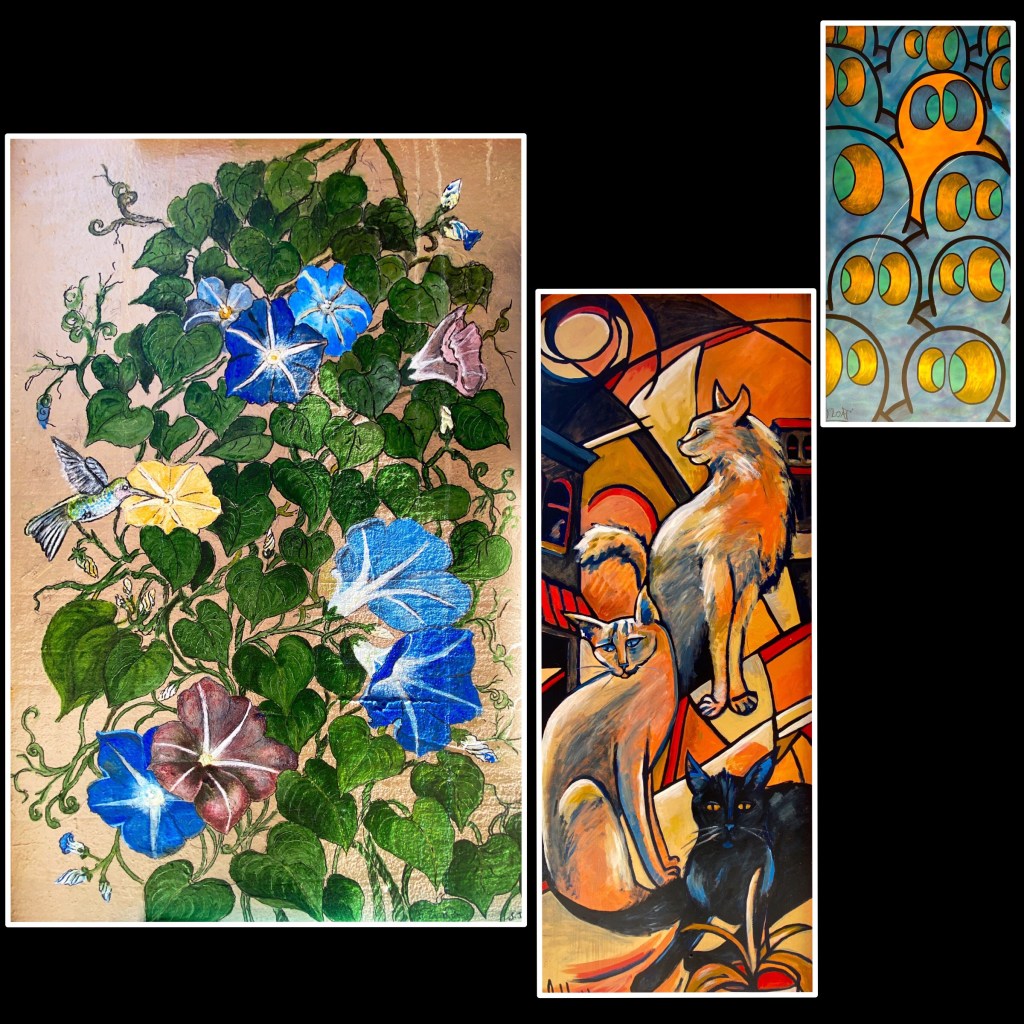
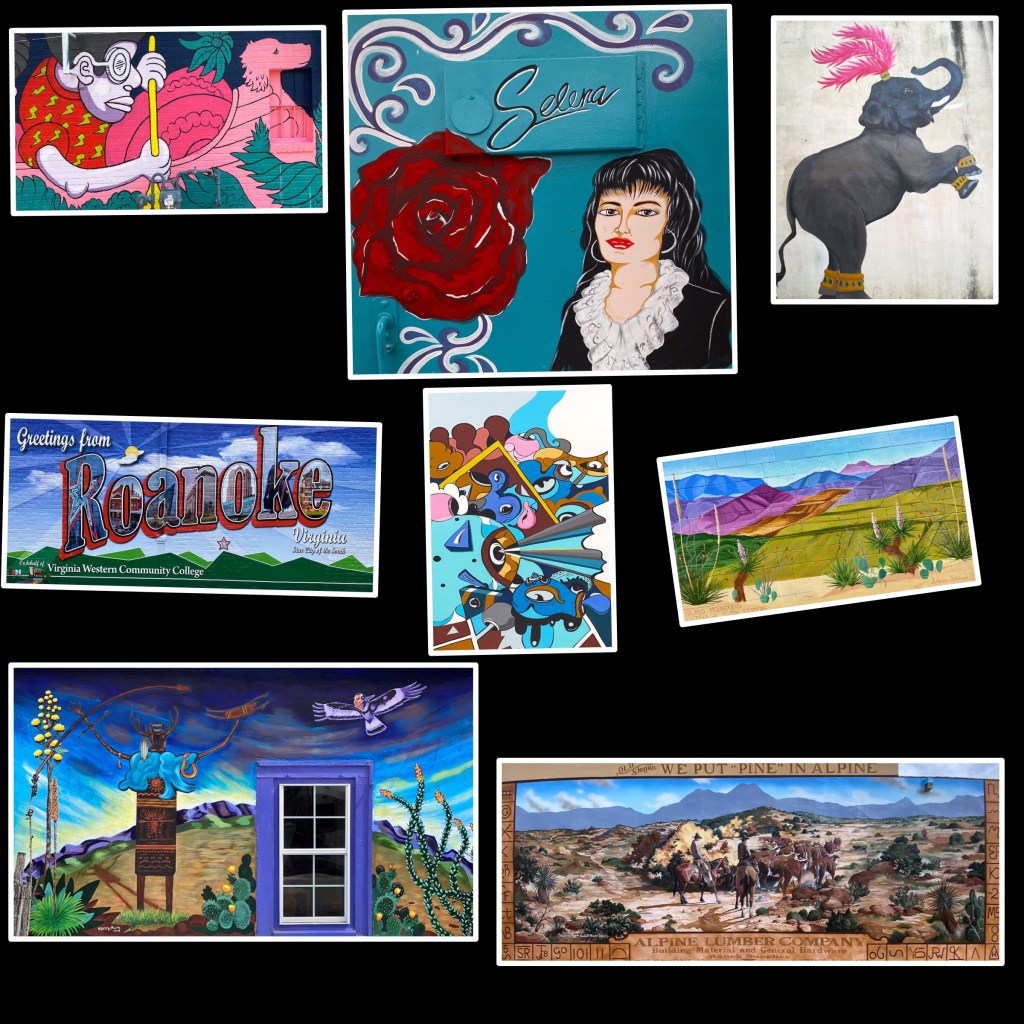
A collage of our favorite street murals from On The Road With MARIA + STEPHEN

See more street murals @ #streetartfromtheroad

Be seeing you!
Utah
Farmington and Santa Fe, New Mexico
ABQ, New Mexico
ABQ and Truth or Consequences, New Mexico
Pecos, Marfa and Alpine, Texas
Terlingua and Houston Heights, Texas
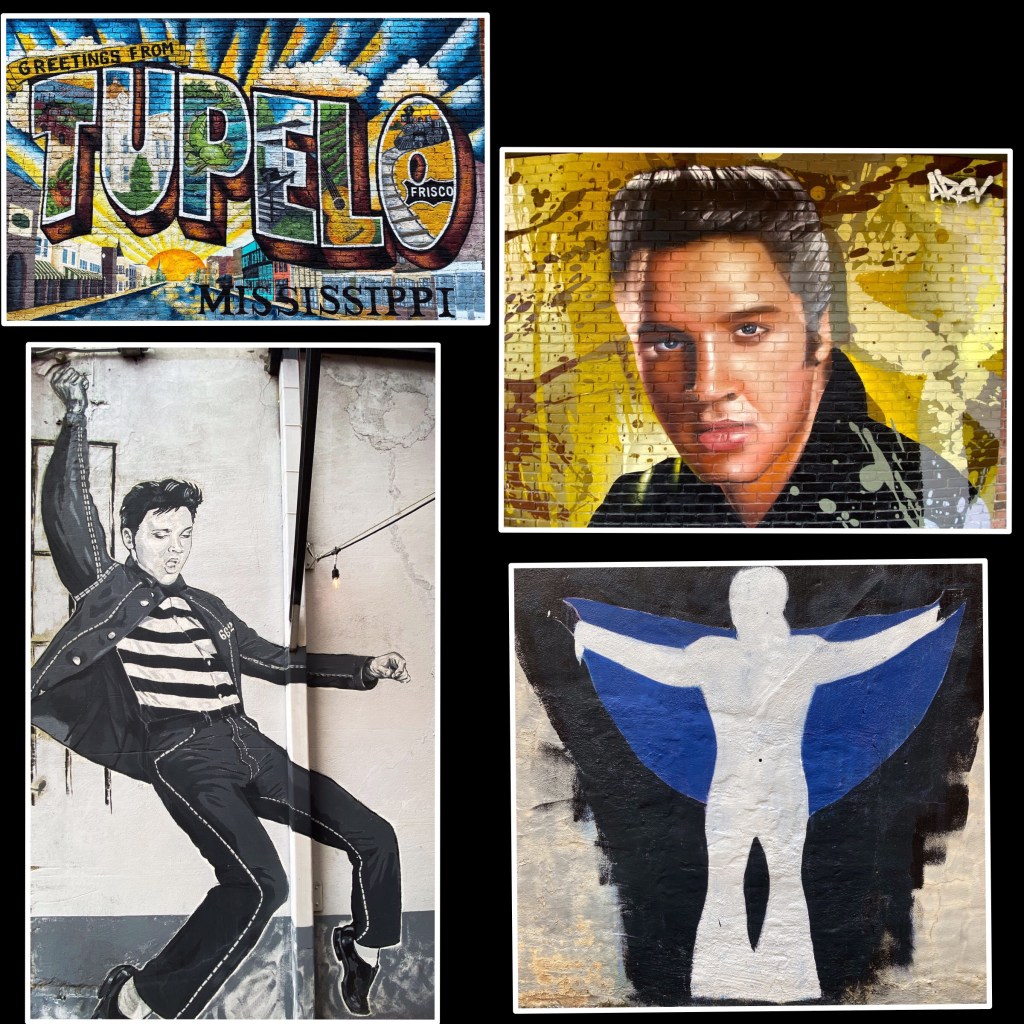
The King
Huntsville, Alabama
Del Rio and Alpine, Texas
Roanoke, Virginia

Big Bend Ranch State Park or The Other Side of Nowhere!

We spent four days camping and hiking in the interior of Big Bend Ranch State Park. This park encompasses 300,000 acres of rugged and beautiful mountains, canyons and high desert. The park land was formerly a cattle ranching operation but when repeated droughts brought about the demise of the ranching operation the state of Texas acquired the land for recreational purposes and created BBRSP.

This park is very primitive. There are no paved roads – many of the roads are single track roads that require 4WD and high clearance. There are no water, elctricity or toilet facilities within the park except at the Sauceda Ranger Station.

We were able to camp on a vista at an elevation of 3600 feet above sea level with a 360 degree view of the surrounding mountains including Mexico to the southeast. The night sky is a Class 1 Dark Sky – the darkest rating – spectacular.

The hiking opportunities are numerous with a range of hikes from desert floor hikes to canyon rim views. We had complete solitude on most of our hikes as the many of the trail heads require a 4WD vehicle for access.

This park is probably not for everyone because of the primnitive and rugged conditions. Having said that this park is a treasure – a place where you can get off the grid and enjoy beauty, silence, incredible sunrises, sunsets and night sky.

Big Bend National Park is our next stop.

Be seeing you!

P.S. We have included two photos of the Green Strawberry Hedgehog Cactus. This a variety of cactus that we had never seen before. The flowering leaves are edible and are supposed to taste like strawberries. This cactus is found predominately in this part of Texas and a small area of southern New Mexico. We think it will be a beautiful specimen when it fully blooms.

Camping on Vista Del Bofecillos, BBRSP

Bofecillos Mountains

Bofecillos Mountains

Bofecillos Mountain

Fresno Canyon and Flat Iron Mountains

Green Strawberry Hedgehog Cactus

Sunrise from Vista Del Bofecillos