
After departing the bustle of Halifax we made our way east to tour the island of Cape Breton. We had become quite enamored of the beauty of the island and friendly folks we met along the way, we stayed two weeks before crossing back over the Canso Causeway onto the mainland of Nova Scotia. One of the major tourist draws is a loop auto route around the island known as the Cabot Trail (CT). While we drove the majority of the CT during our stay we spent considerable time poking around on the numerous side roads and back roads that led us to many scenic and uncrowded places.

The morning after crossing onto the island we met Bill who asked us if we were going to drive the CT. We said sure – he replied that you will miss a lot of the beauty and culture of the island if you just follow the trail. We assured him that we would explore well beyond the trail. In retrospect, it was excellent advice – Bill had grown up on the island and moved away to serve in the military and was back visiting family – some of our best experiences were in little harbors and settlements we happened upon while rambling off the main roads.

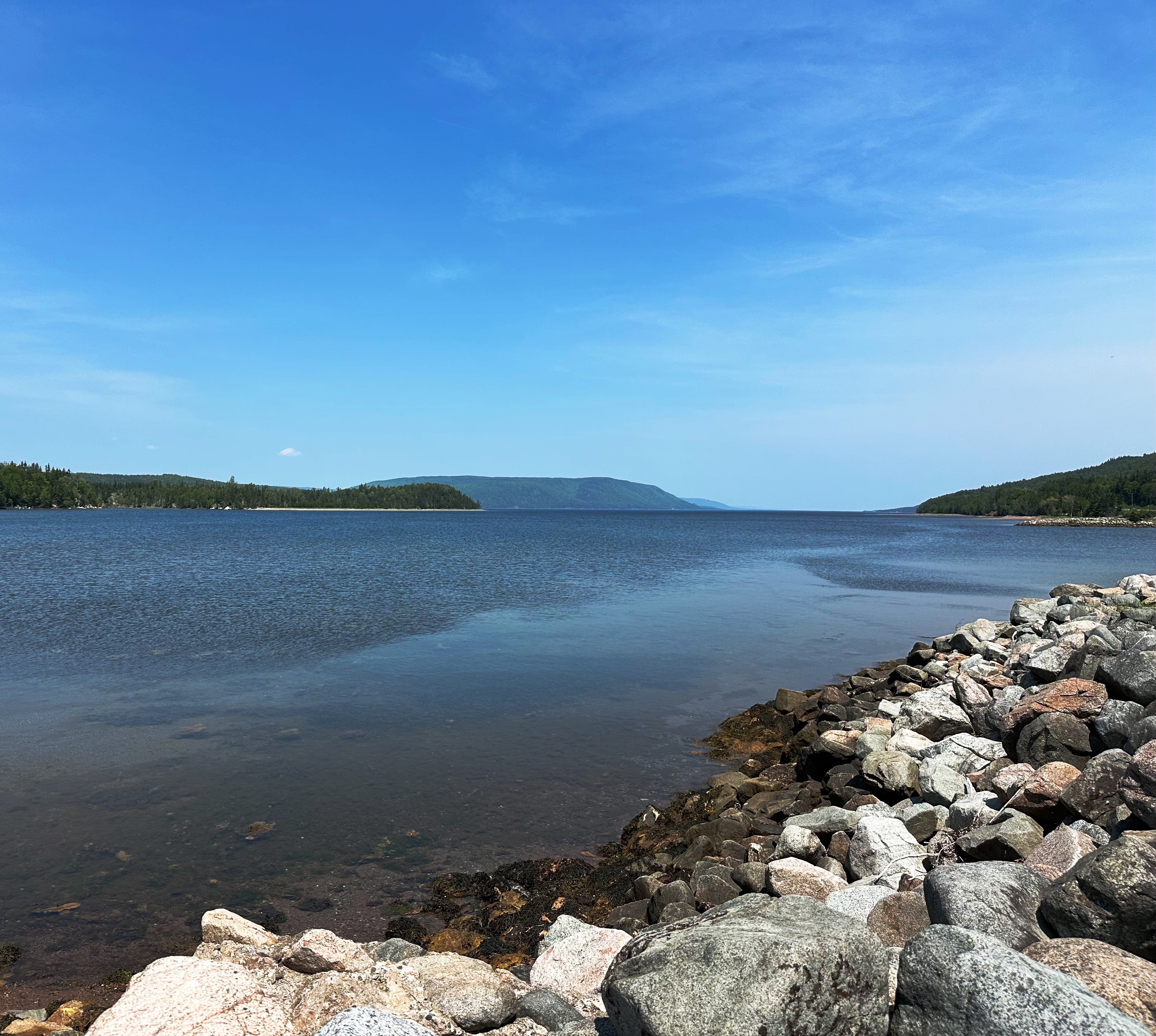
After spending our first night camping at Whycocomagh Provincial Park, we drove a few miles along the coast and joined the CT at St. Anns. After a bite at the Lobster Gallery (with a view up St. Anns Harbour- photo above right) we drove up and around the bend to visit the Great Hall of the Clans at the Gaelic College (Colaisdena na Gaidhlig).
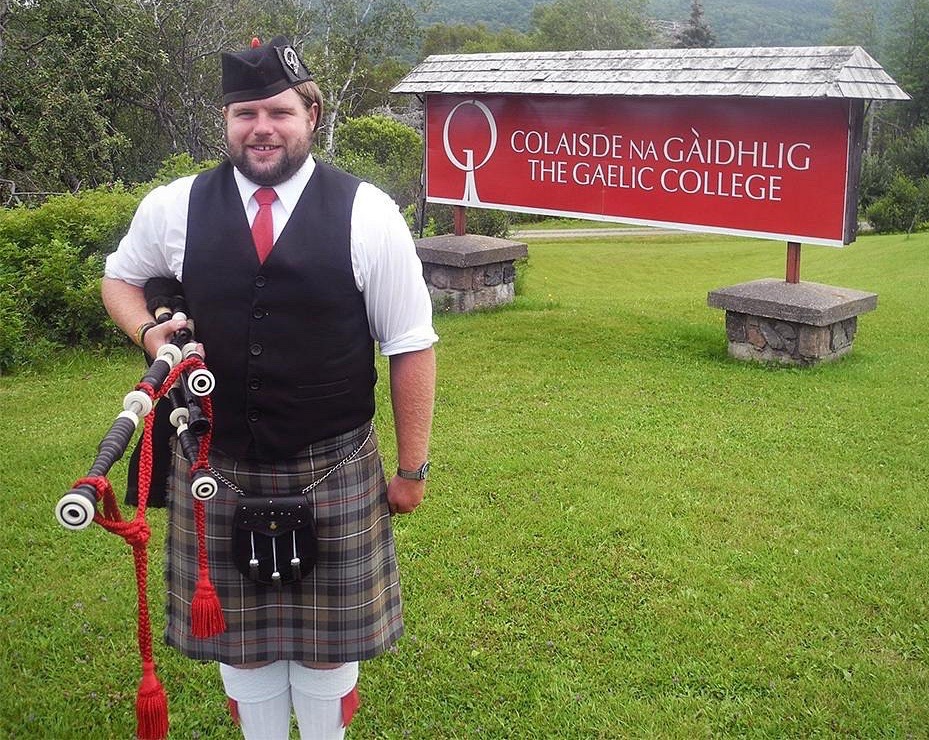
We toured the exhibits in the Great Hall and we were also treated to several demonstrations and performances taking place in the hall. There was of course, the obligatory Bagpiper along with a kilt maker. The kilt maker demonstrated with another guest how to properly put on and wear a kilt along with the appropriate accessories – actually quite interesting. We also watched a demonstration of a milling frolic and, finally, some good Cape Breton fiddling. We have included below background on the milling frolic (courtesy of Gaelic.com).
A milling frolic is a social event that was born of necessity, and is carried on today for enjoyment. After wool cloth is woven on a loom, it is necessary to shrink the cloth in order to make it warmer and more watertight. In the Scottish Highlands [in pre-industrial times], cleansing and shrinking the newly-woven cloth was done by hand in local communities. It was a social event of shared labour, made enjoyable by singing songs which maintained the work rhythm, preserved traditions, and encouraged original compositions with jokes about local events and personalities.
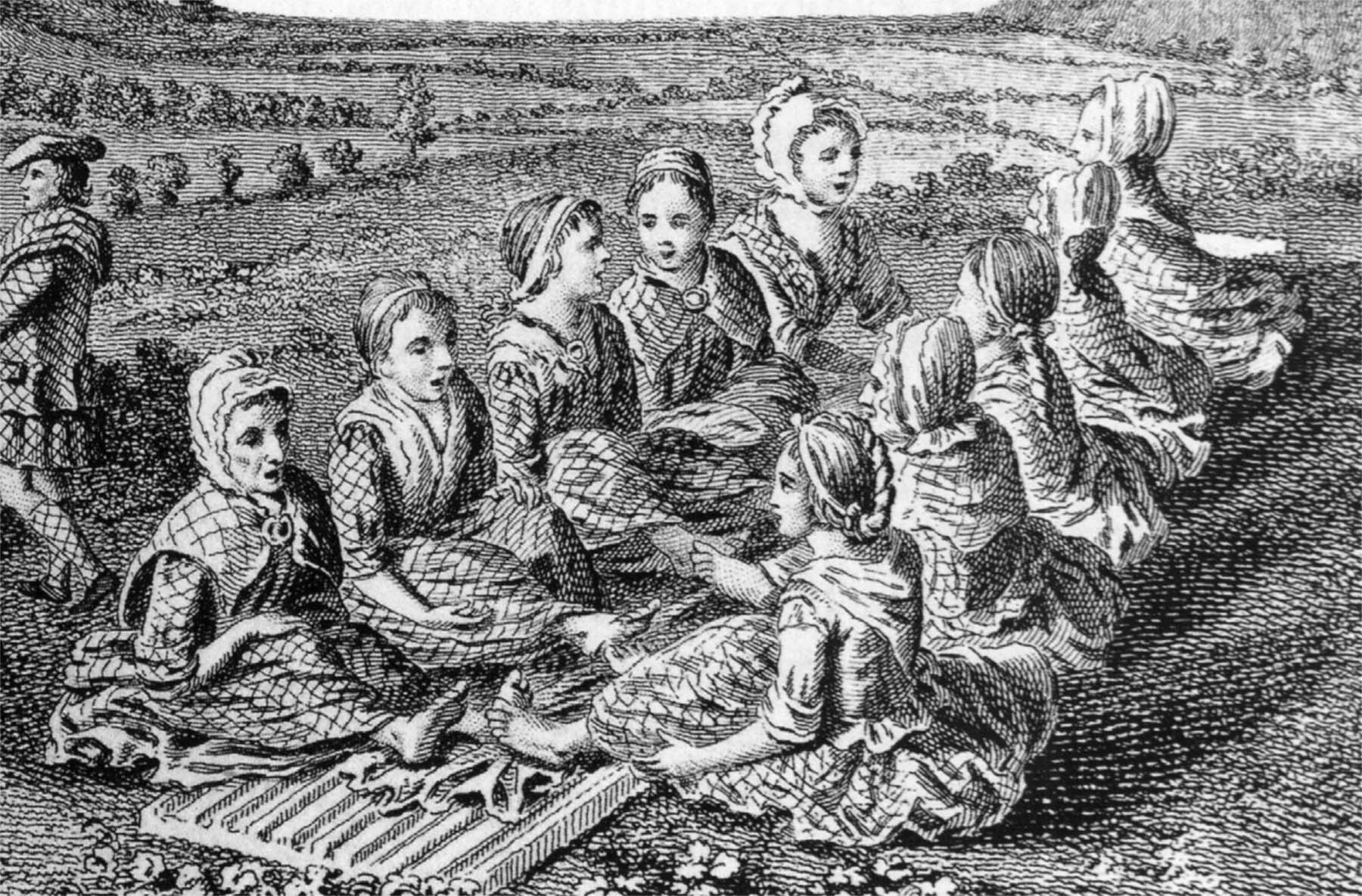
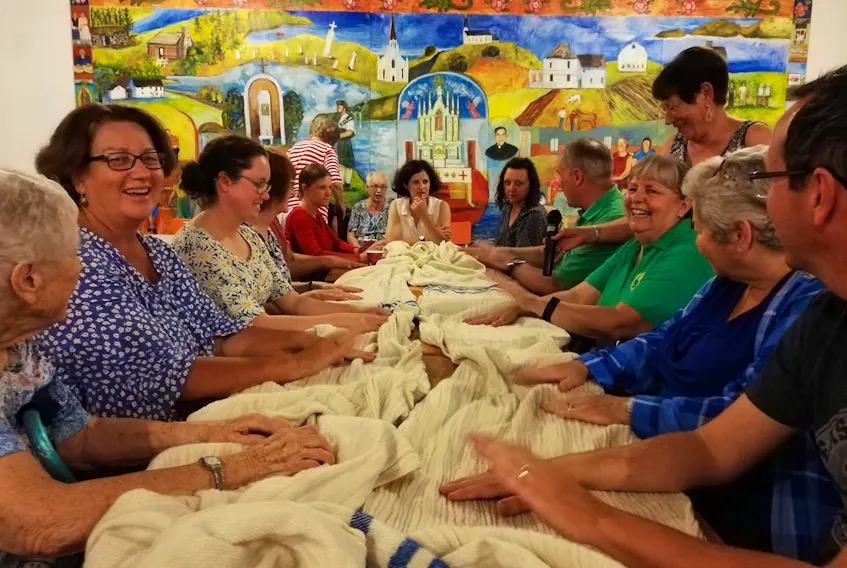
Nowadays the real milling is done in factories, but the milling frolic has continued as a social event in Nova Scotia Gaelic communities. This contrasts with Scotland, where you might see a milling frolic performed on a stage or as a historical re-enactment, but not as a social event in the village or church hall. Milling frolics involve special work songs which are known as “milling songs” in Nova Scotia (and “waulking songs” in Scotland). Some milling songs are shared with Gaelic Scotland, but quite a few were indigenously composed in Nova Scotia. There is a good but short collection of these songs on a Memorial University folklore website.
From the college we followed the CT along the breathtaking coast on a day made even more beautiful by blue skies, white puffy clouds and brilliant sunshine. Wow!

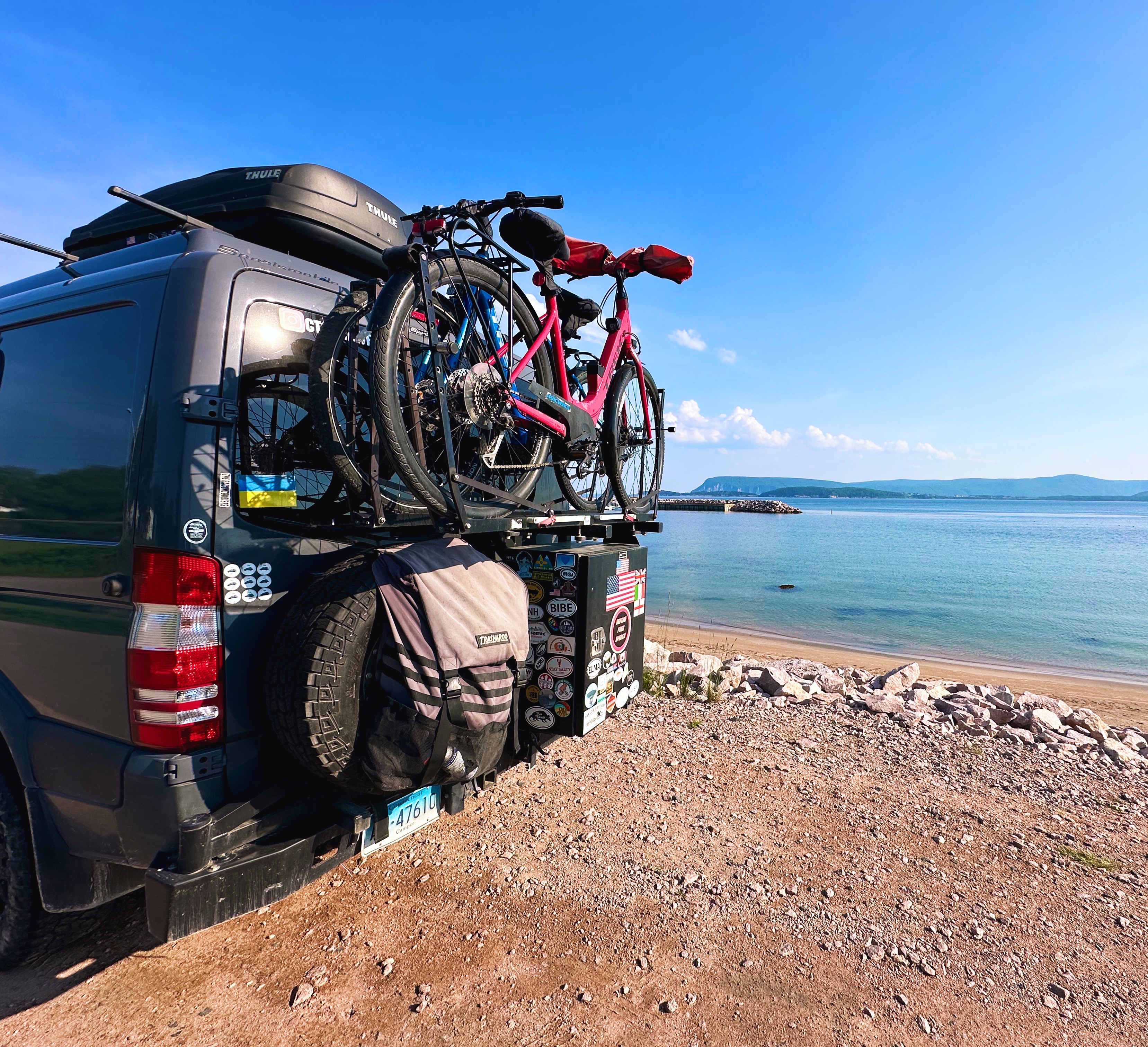
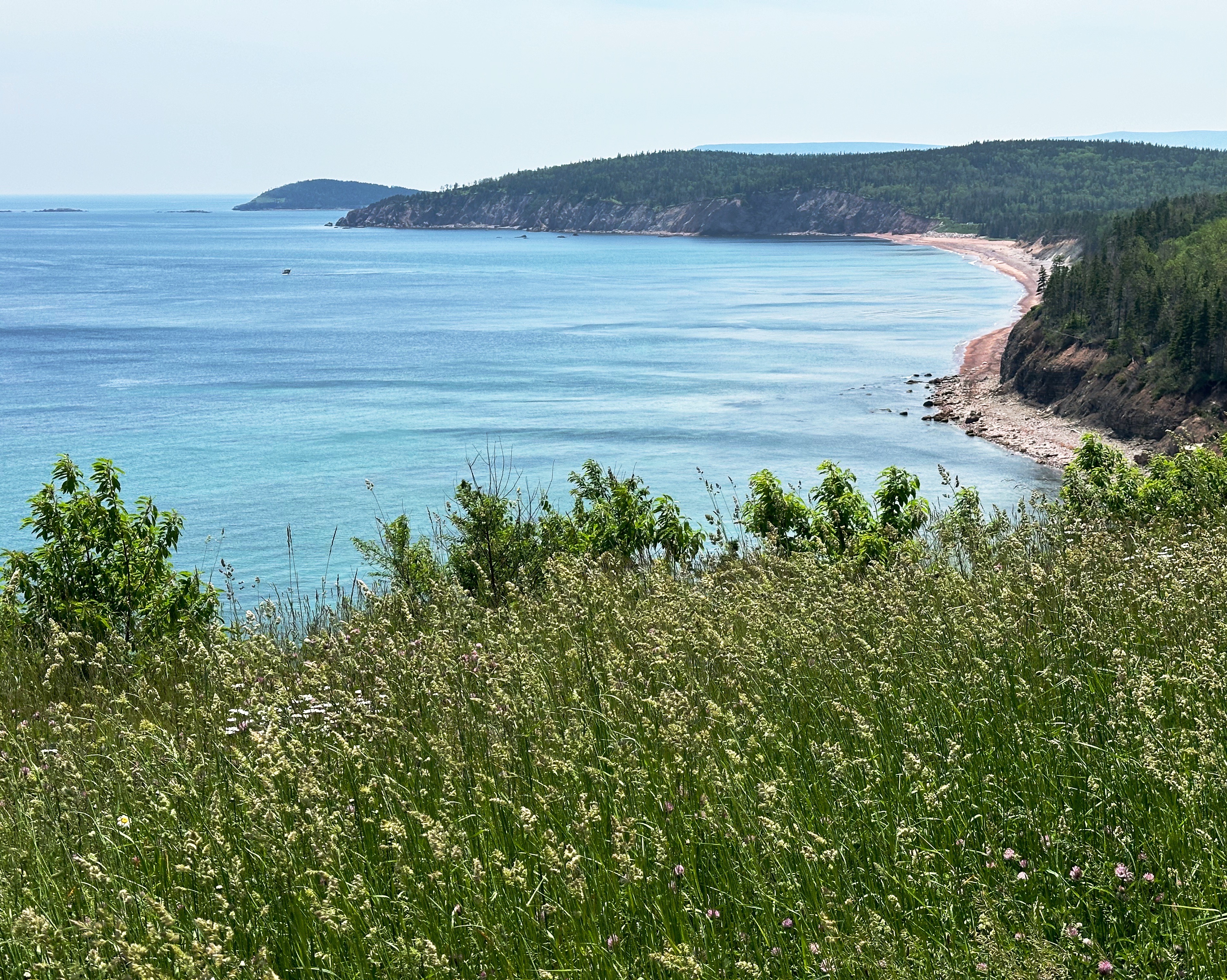
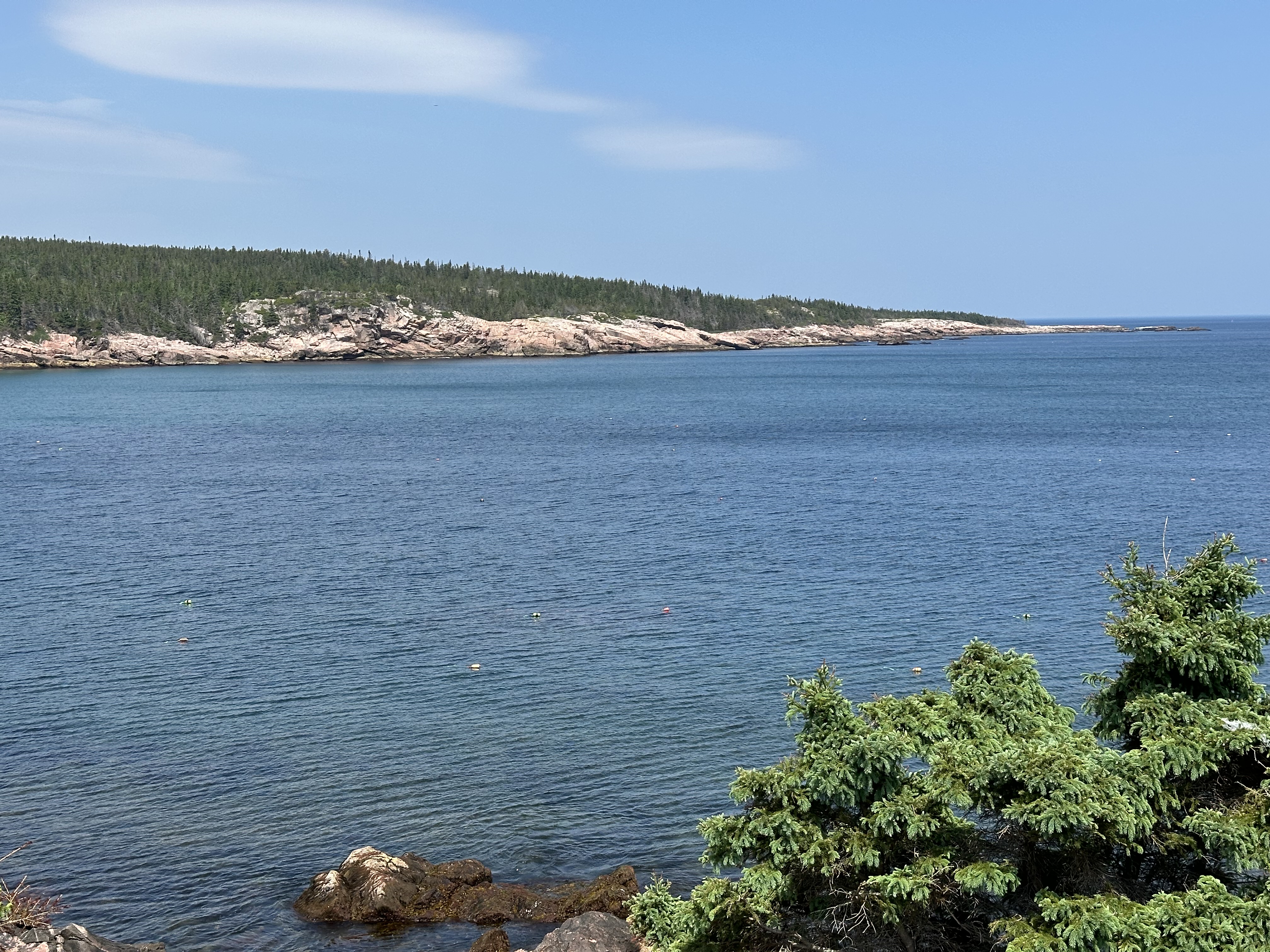
We camped for the next four nights at the Broad Cove Campground within the Cape Breton Highlands National Park (CBHNP). The site was on an open field (not great) but we were just a ten minute walk to the spectacular Broad Cove Beach (photos below). The location was also a great base for some nearby hiking and exploring back roads. Most importantly, it was under a ten minute drive to first rate coffee and “brekkie” sandwiches in Ingonish. Hot diggity!
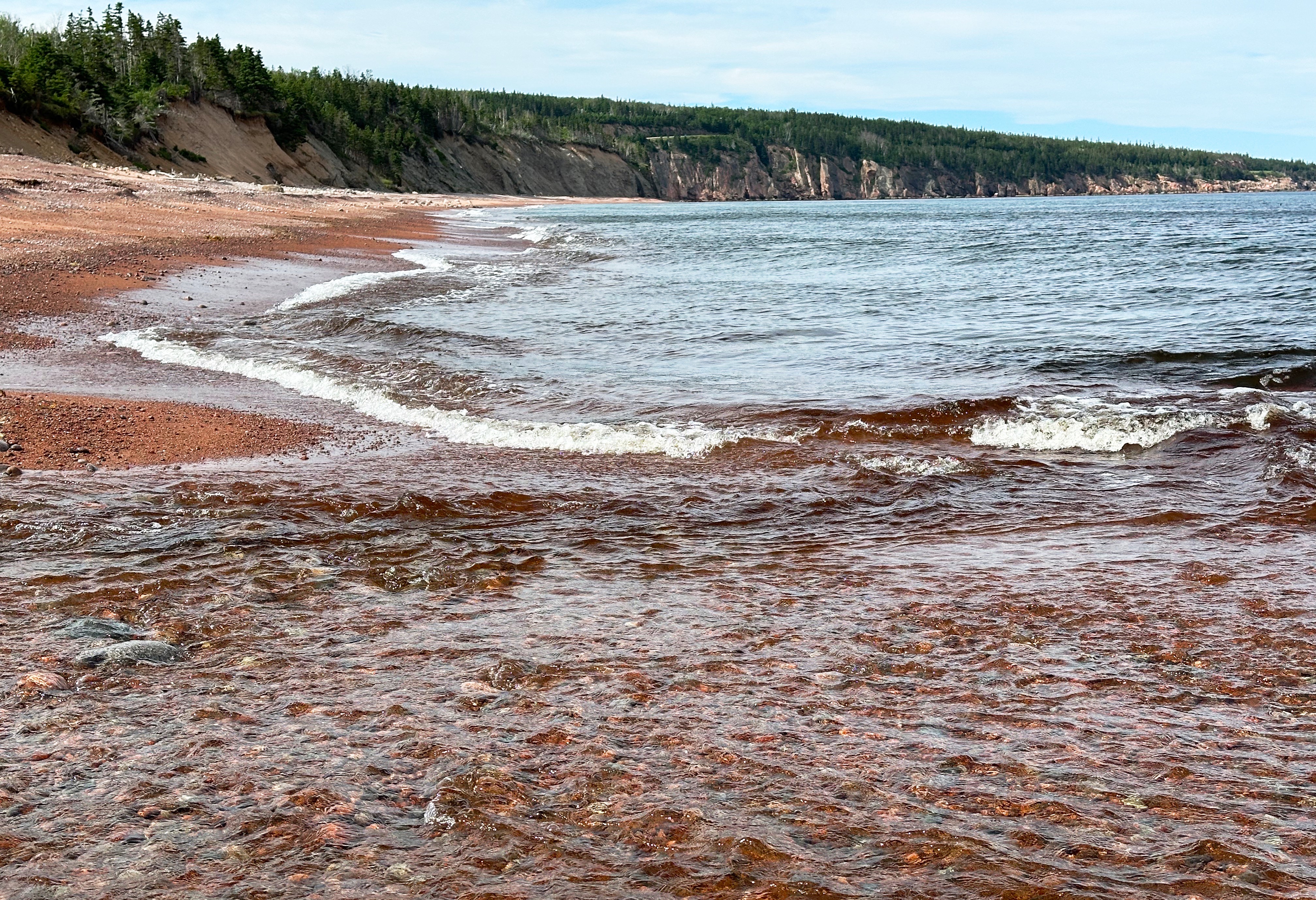
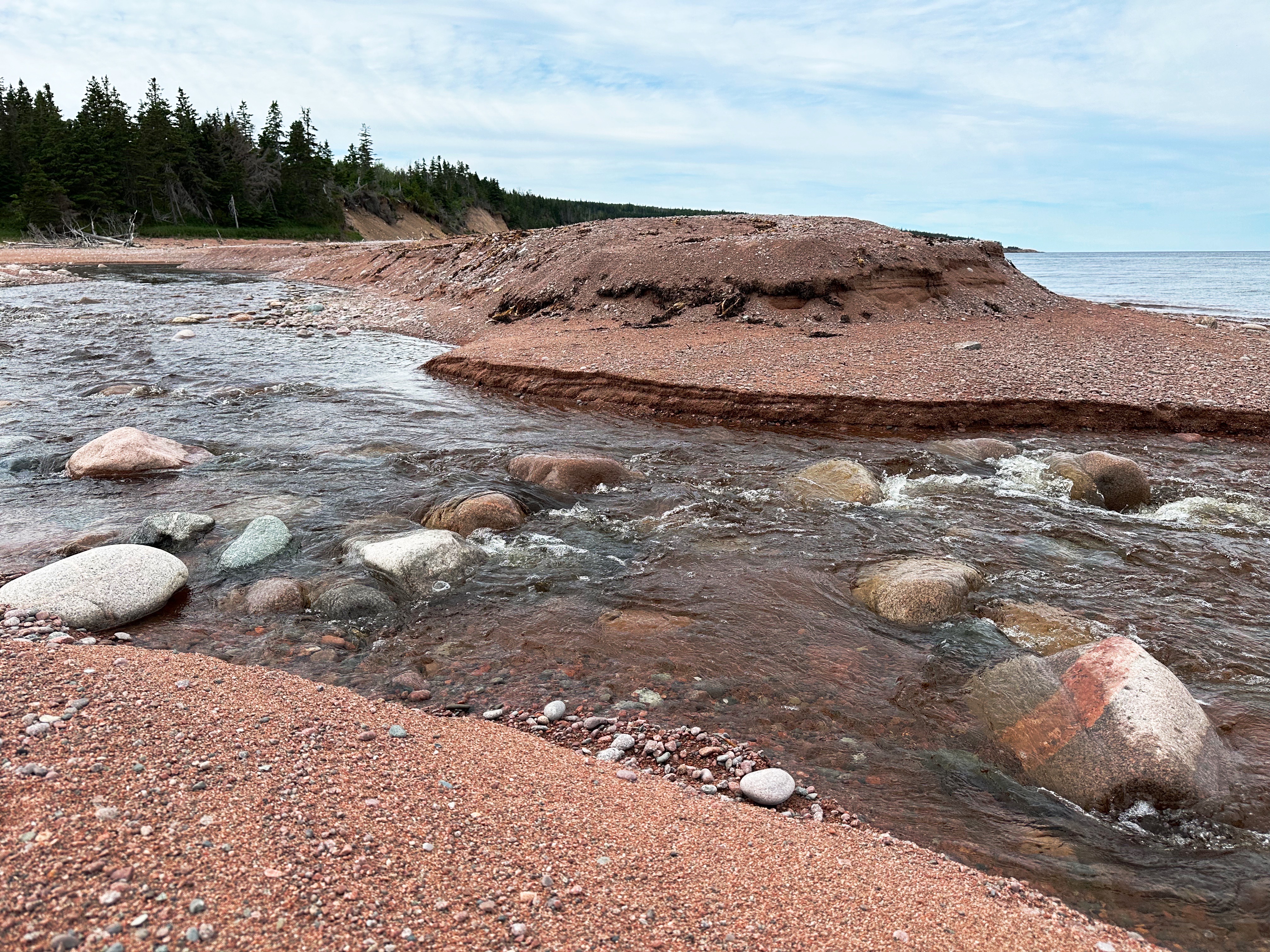
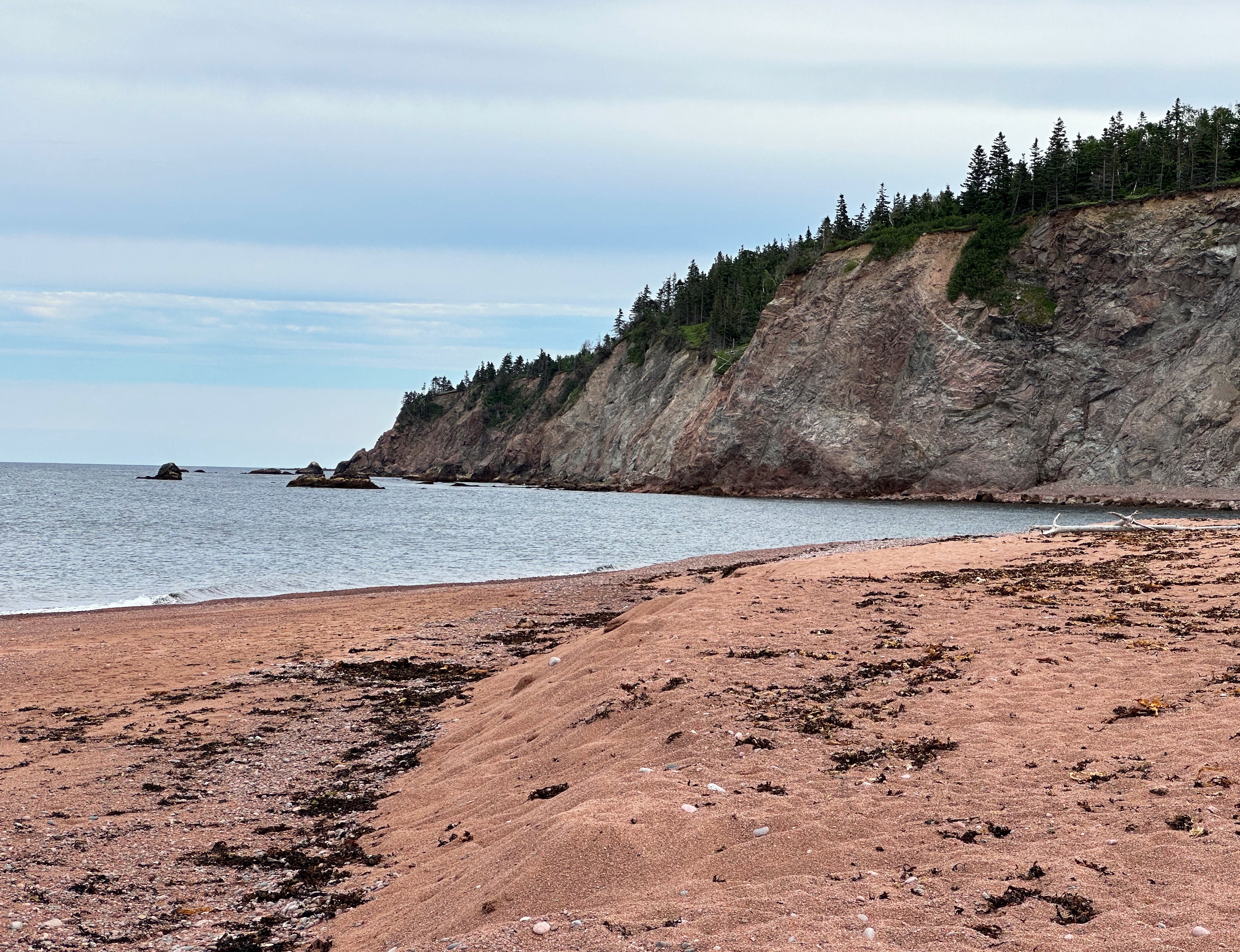

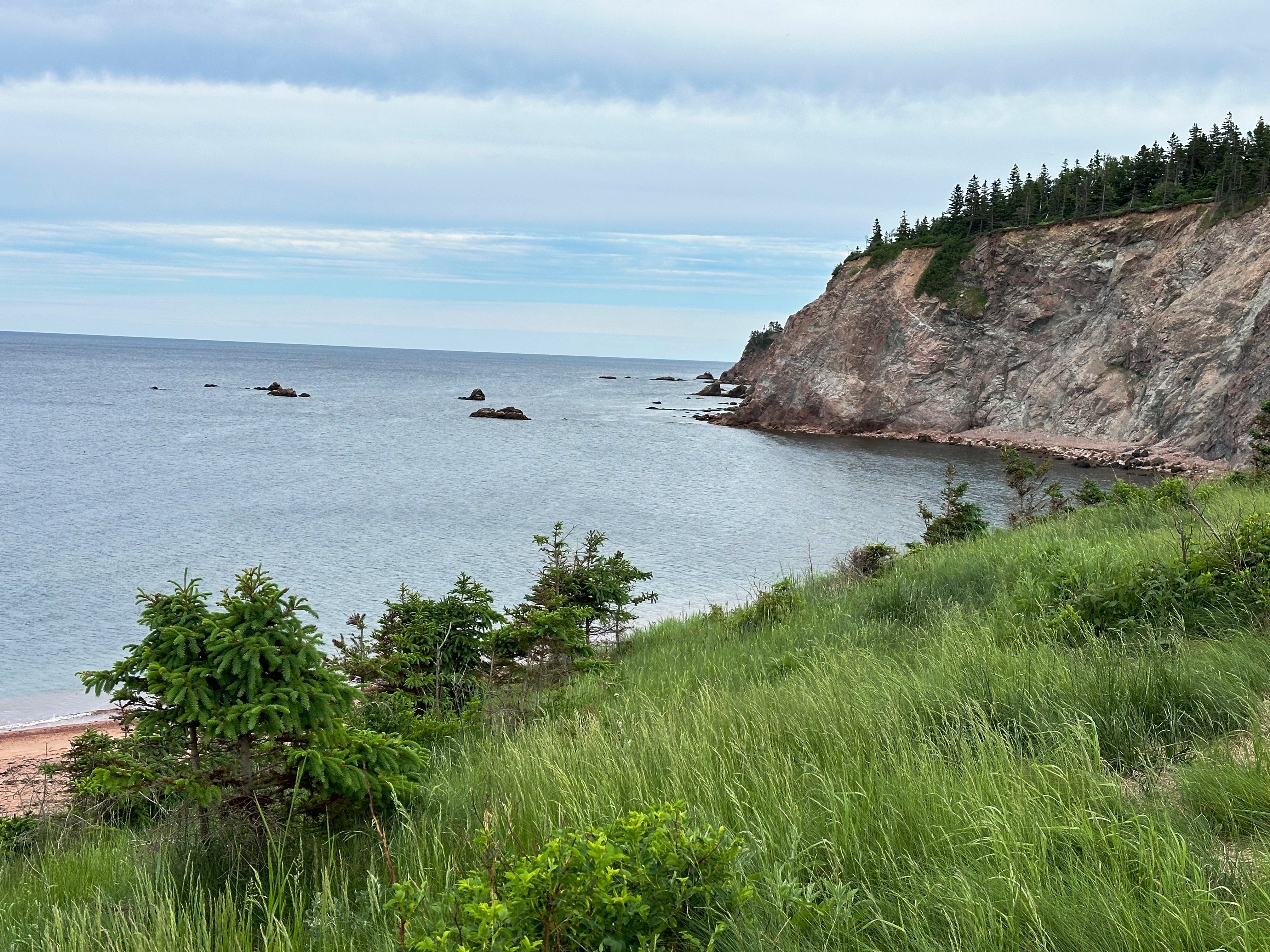
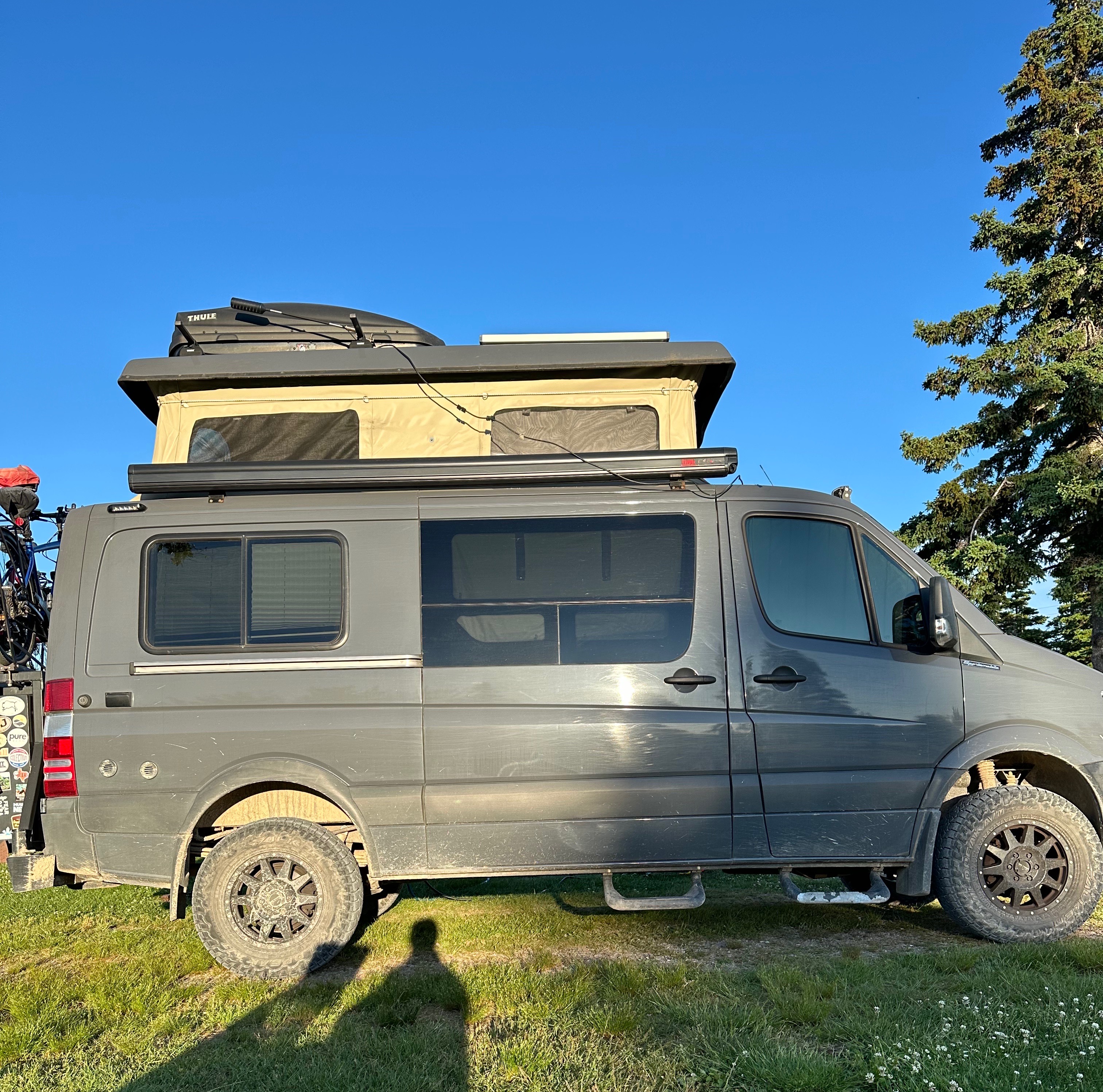
Periwinkle Cafe, Ingonish (Ingo) – pre and post activity base camp while camping at Broad Cove.




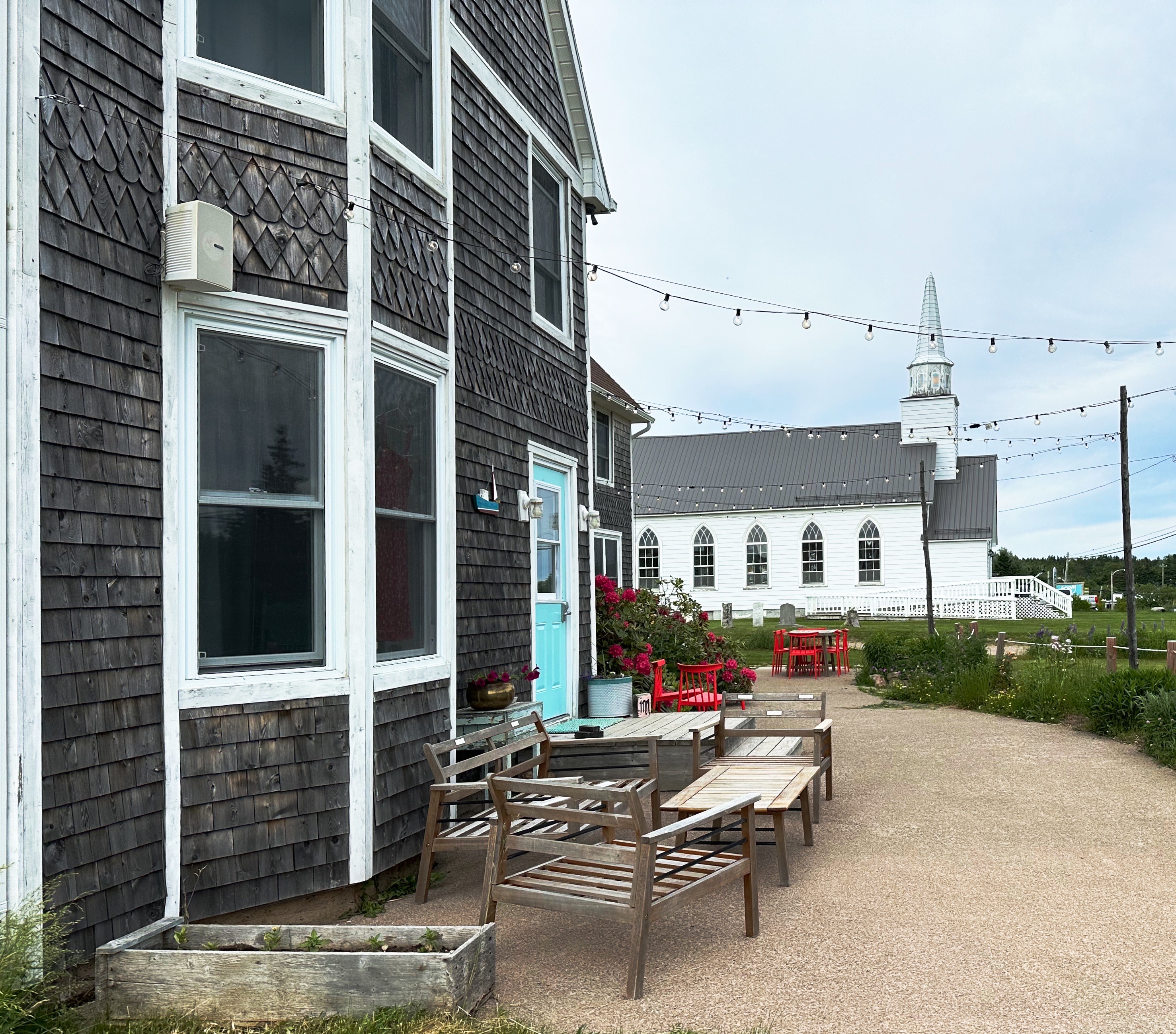

While camping at Broad Cove we hiked at nearby Warren Lake which sits at the base of Broad Cove Mountain. Warren Lake is the largest lake in the park. The trail closely follows the shoreline providing views of the lake from varying perspectives. It was a scenic hike with easy terrain albeit lots of water crossing and muddy patches. No bears or moose spotted during our hike but plenty of waterfowl and birds.


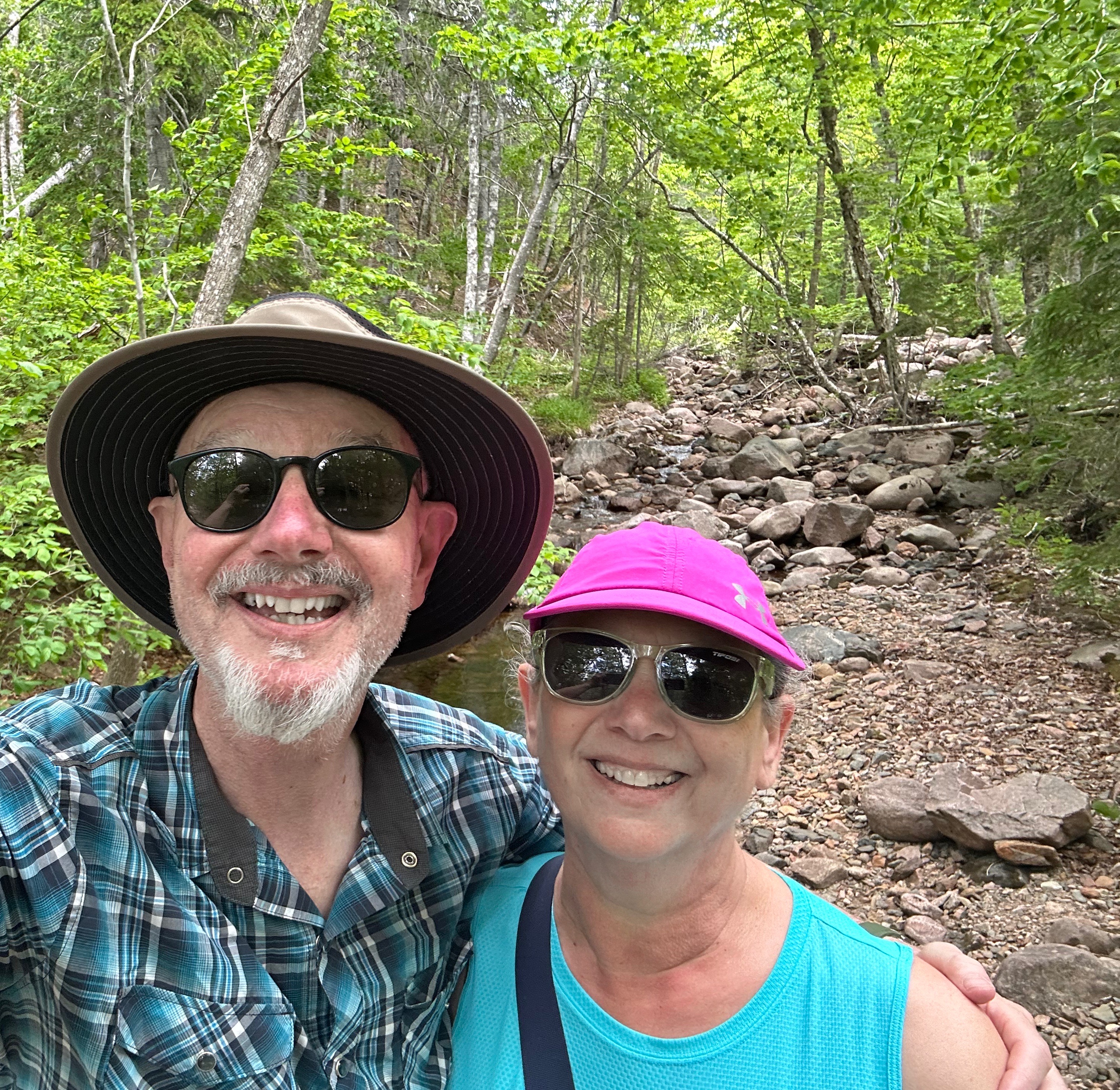


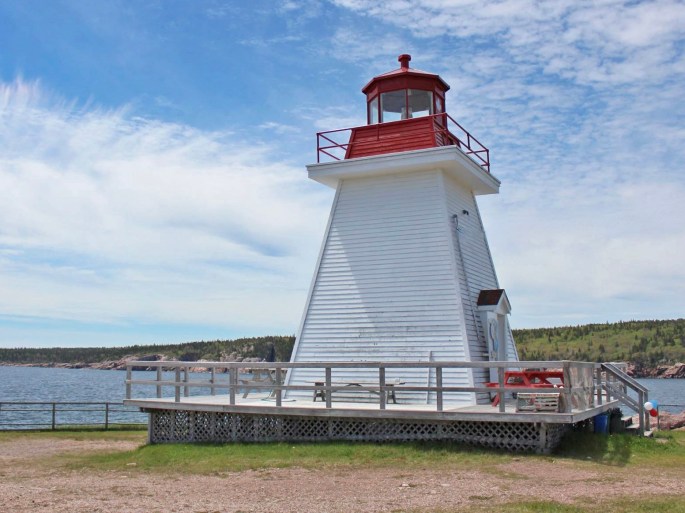
Always in search of the best chowder, we headed to Neils Harbor to sample the best chowder on Cape Breton. Neils Harbour is just off the CT at the beginning of New Haven Road. What a surprise awaited us when we came around the bend – another tiny, picturesque fishing village! Alas, the real surprise was that the Chowder House was not open! Thankfully, salvation was at hand because the ice cream parlour in the base of the nearby lighthouse had just opened for the season.

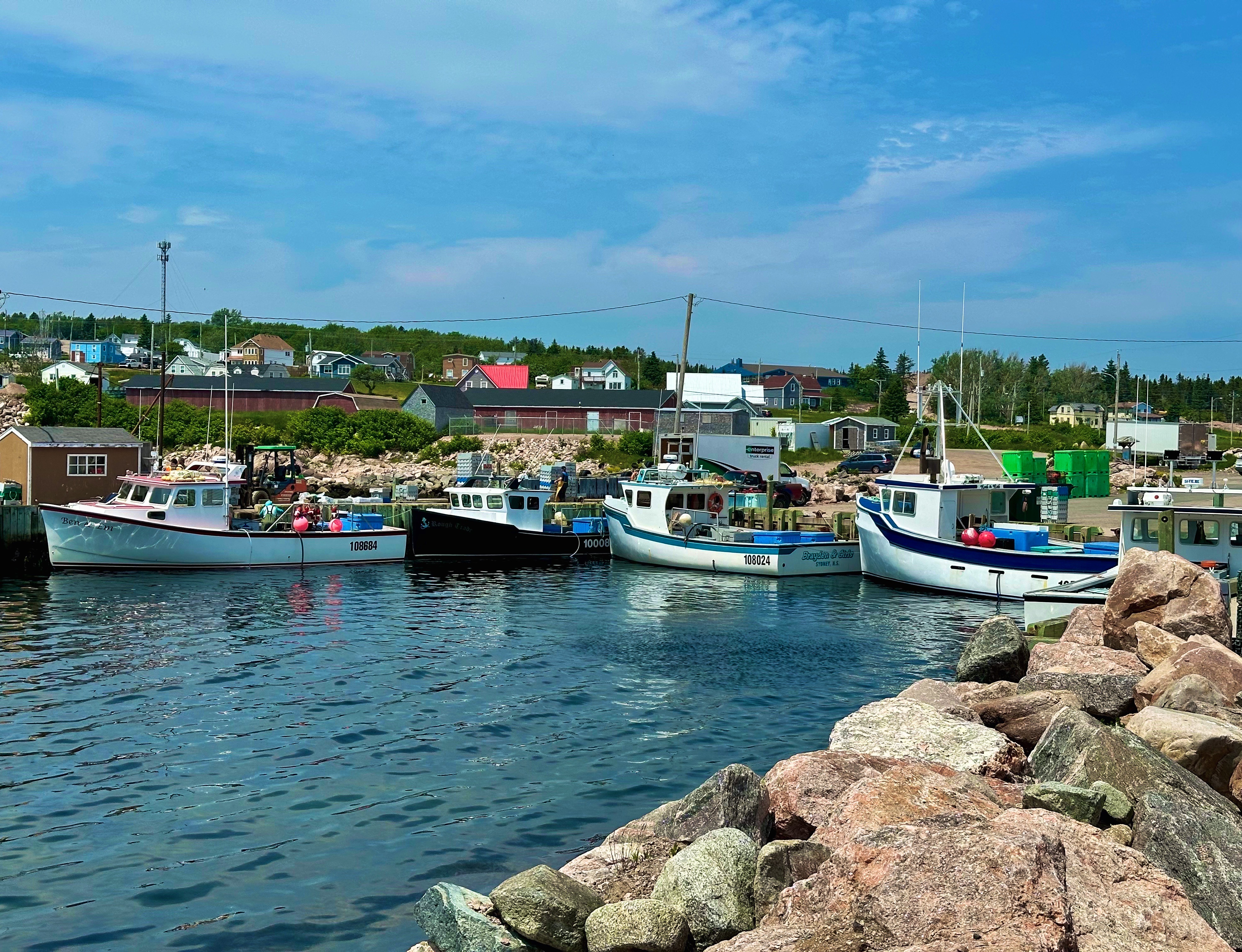
The settlement at Neils Harbour (pop. 300) has been occupied since the 1700s onward by French and Scottish settlers drawn to the close by and plentiful fishing grounds, as well as the protected cove (photos above). The lighthouse was constructed and began operations in 1899. The lighthouse was automated in 1956 and is still operational today; it is currently owned by the local community development agency. It is a Heritage Lighthouse which means it will be preserved in its current state.


After finishing our delicious ice cream and looking around the harbour we decided to push on further up the New Haven Road to explore a bit more. This road led us to White Point Road which runs parallel to the coast and provides wonderful view from a vantage point a couple of hundred feet above the shore. We spotted a bay below and turned down the winding White Point Road which took us down to the harbour.
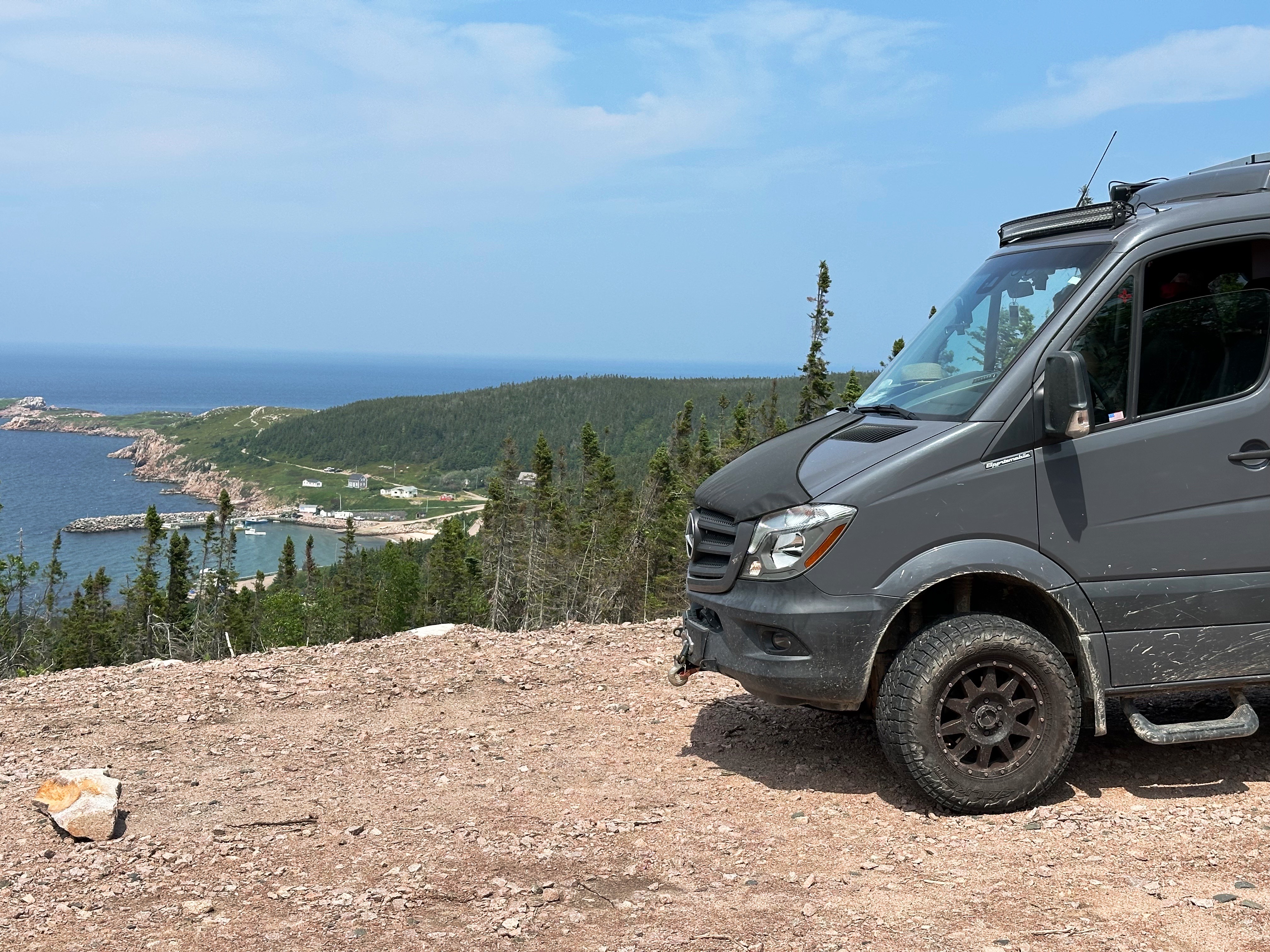
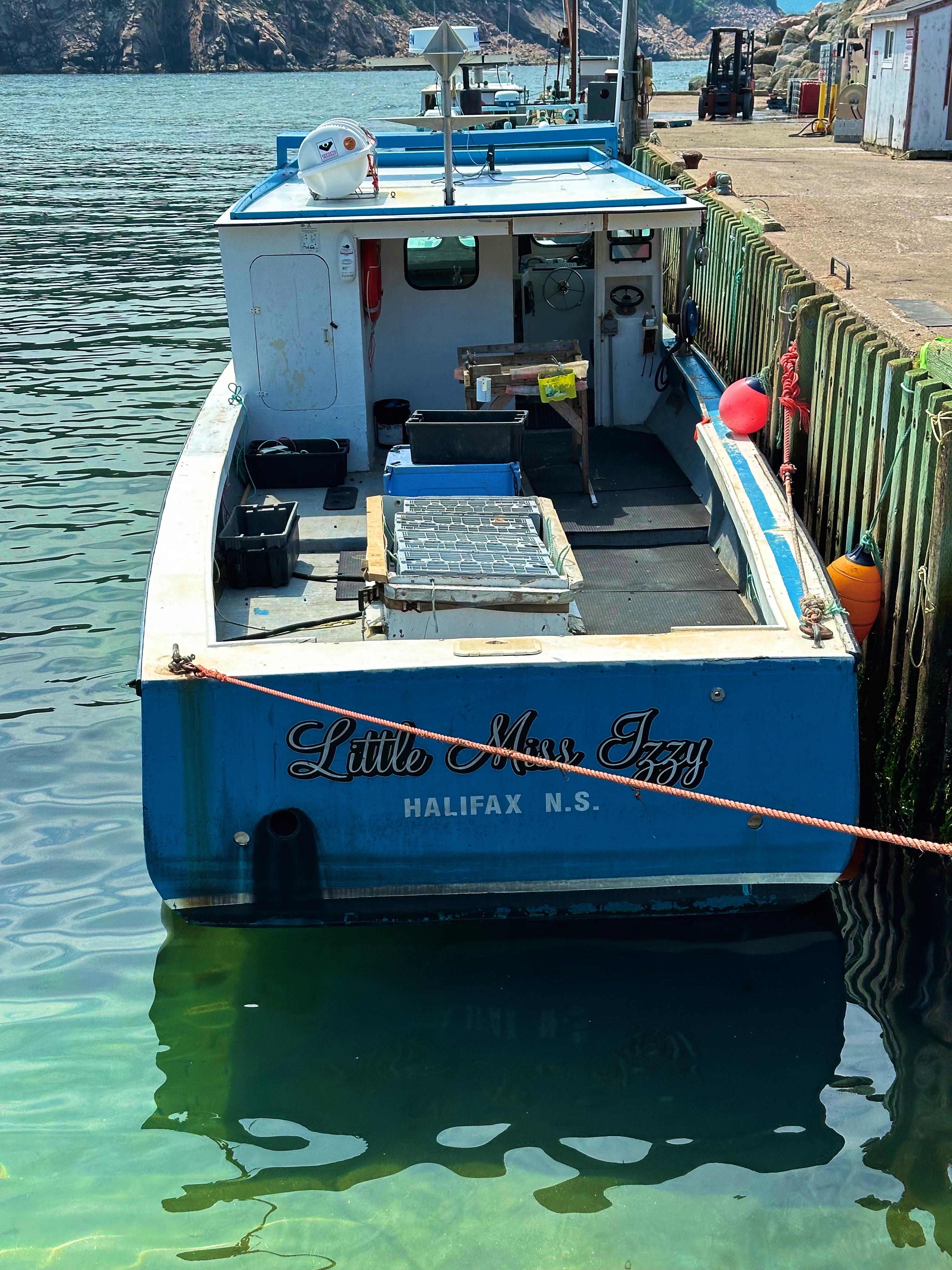

There is a tiny settlement of houses sitting on the hill just above the harbour. The larger body of water beyond the breakwater is Aspy Bay which has been fished seasonally by Europeans since the 1500s (and before that by the Mi’Kmaq). The permanent population here is estimated at 100 people today. The point that extends out into the ocean is spectacular. We are so glad we spotted this gem!
Our last ramble before breaking camp and heading around the bend onto the Sunset Side of the cape was to Meat Cove (don’t ask – okay we will tell you – the local inhabitants used the beach pictured below to butcher whale and moose carcasses).

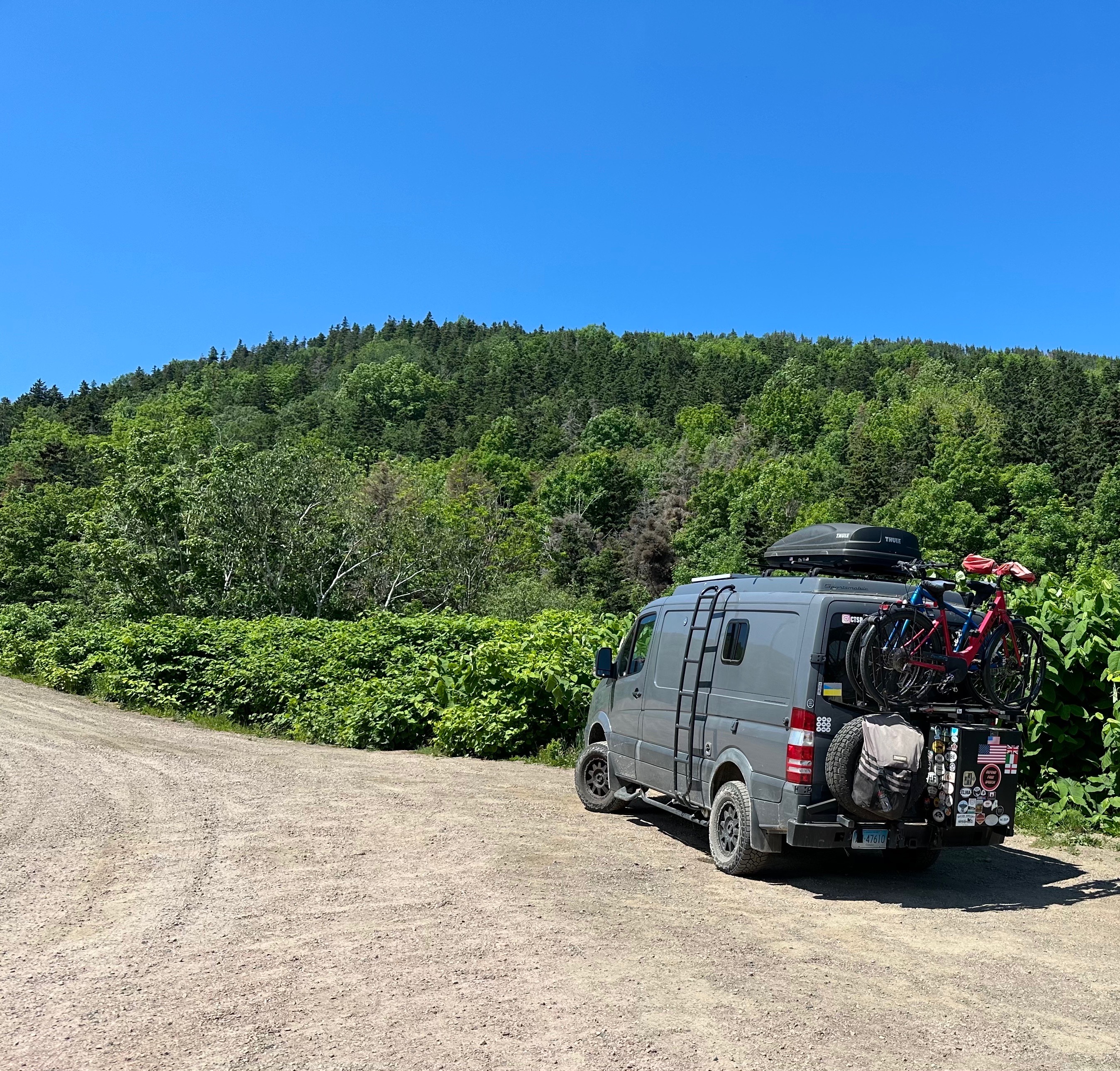
Meat Cove is another end of the road settlement at the extreme north of Cape Breton. We would have to say getting there is half the fun with the twisty dirt road scraped out of the mountainside providing fabulous views of the coastline and mountains. And yes, at the very end of it, just like in a dream (only real) is a seafood stand selling delicious seafood chowder and other goodies fresh from the ocean!


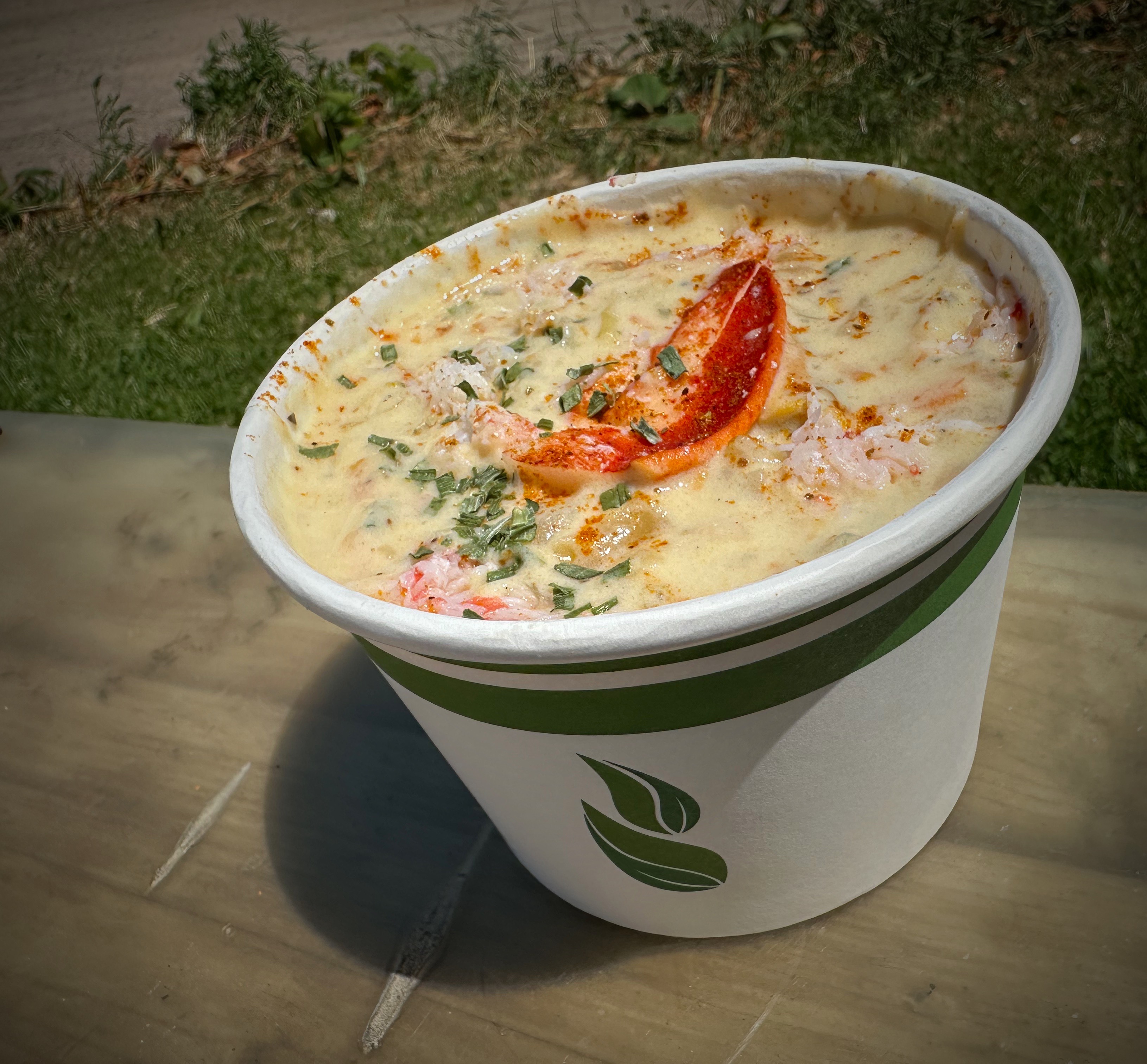
After taking in the astounding views and consuming our delicious fish chowder, we backtracked down the road and popped into the tiny fishing village of Bay St. Lawrence. This area is know as the Top of the Island because it is literally as far north as you can go. Longtime locals call the area Down North because rivers and streams here run northerly down from the mountains to the ocean.
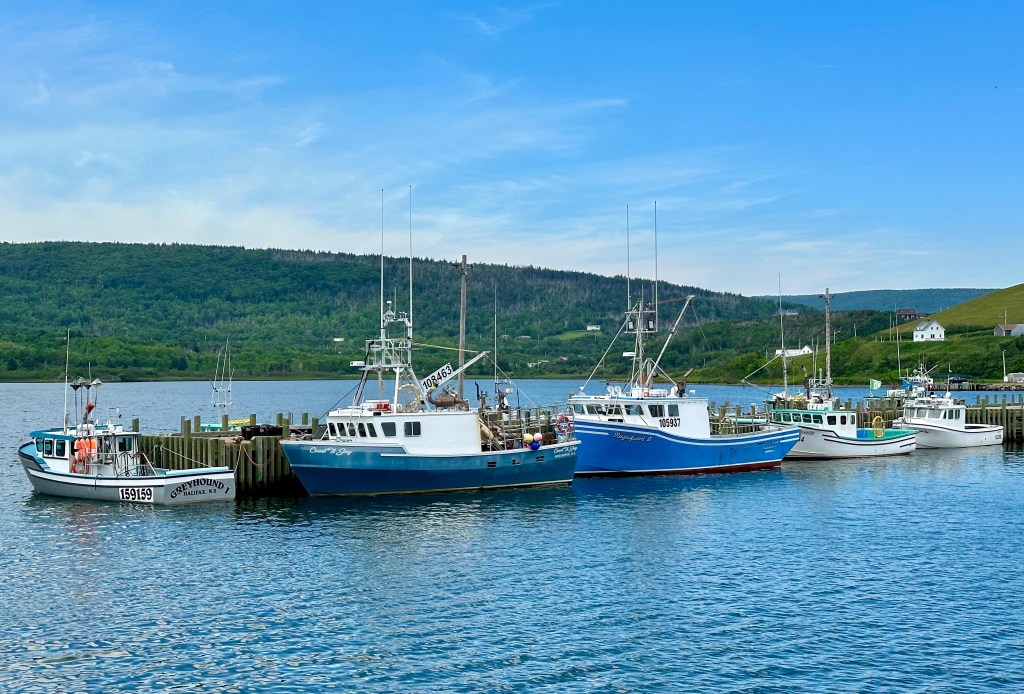
The village was settled in the 1850s by Scots and retains its Gaelic heritage to this day. Some of the folks fishing out from this bay are fifth generation and direct descendants of the original Scottish settlers. There is no official census because the village is not officially recognized as a municipality – officially it is just an area within Victoria County. We found one estimate from 2022 which puts the local population at 400 although you could not prove that by us. The Bay Cafe in the community centre was not open so we unfortunately did not get to meet any local folks ( we hear they are very friendly). In fact, we did not see a single sole besides two fishermen cruising by the wharf on their boat (maybe they saw the van coming and took cover).

After our visit to Meat Cove and Cape North we traveled back to Broad Cove for our final night of camping at CBHNP. The following day we traveled the CT up through the highlands and followed the trail along the sunset side of Cape Breton. We are going to wrap up this post here because we have quite a bit more to share about our time on Cape Breton in our next post.
Be seeing you!


 ON THE ROAD with Maria + Stephen
Ferry to NL?
LikeLiked by 1 person
Unfortunately, the brand new ferry was taken out of service and when it went back on line passengers were rebooked by original date. We could not get a space for the van until July 10. Next time! How are you?
LikeLike
Aww, next time. I’m doing great. Enjoying your travels. Just returned from Scotland.
LikeLike
Scotland — gorgeous!
LikeLike