The Cornhusker State: Blown Fuses, Hump Yards, Emigrants and Buffalo Bill: Part One

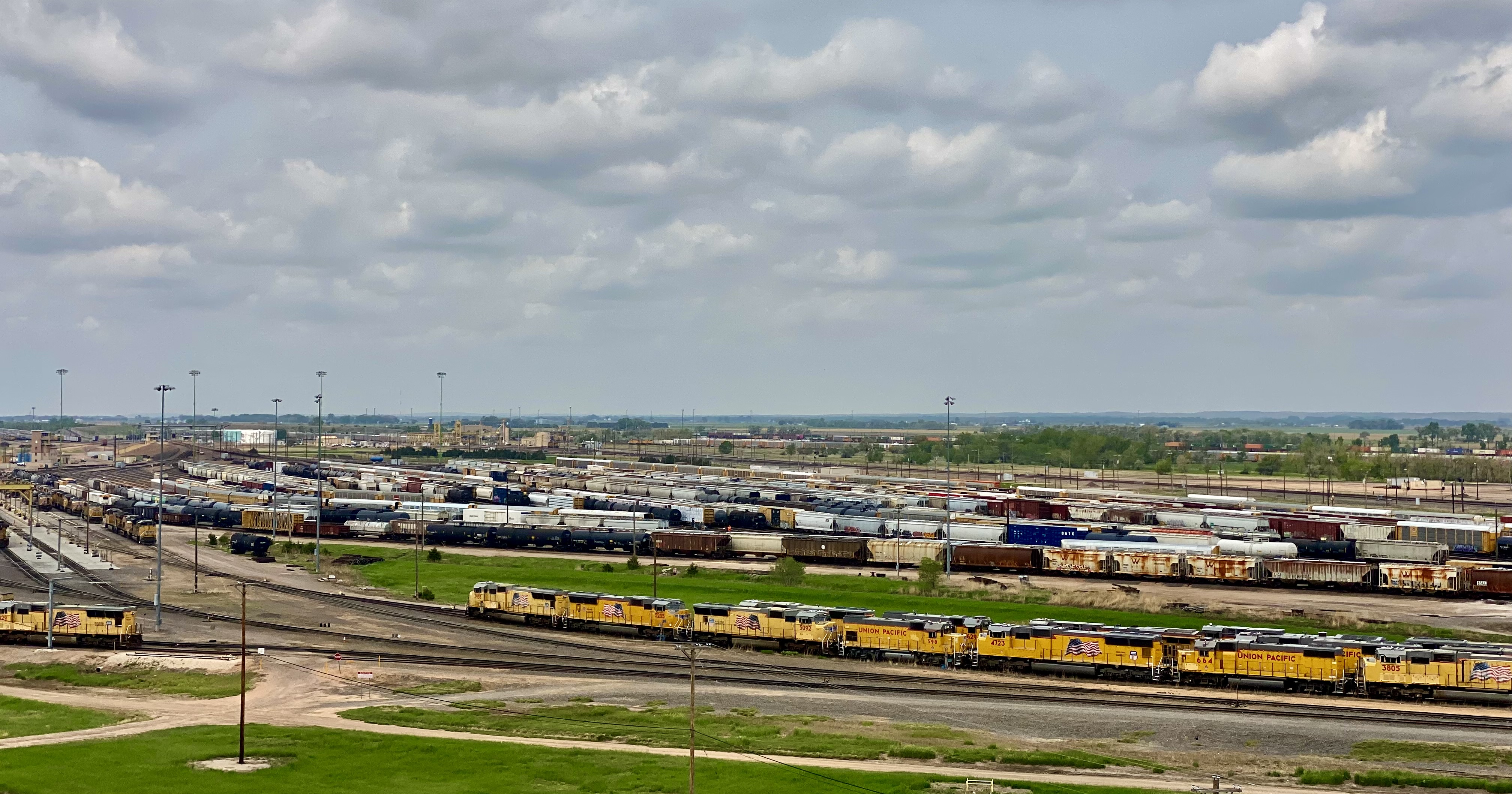
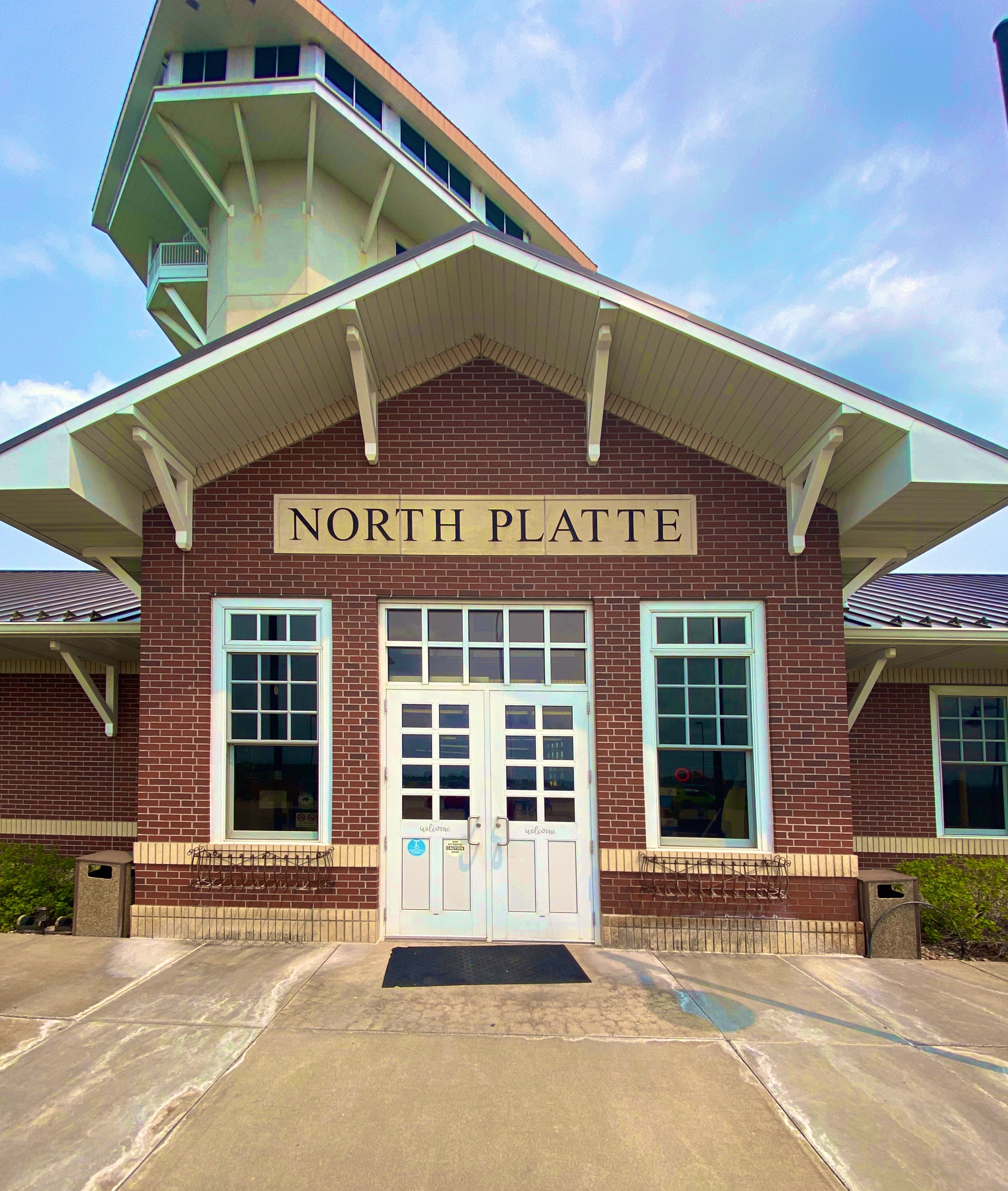
Bailey Yard, Union Pacific Railroad, North Platte, Nebraska
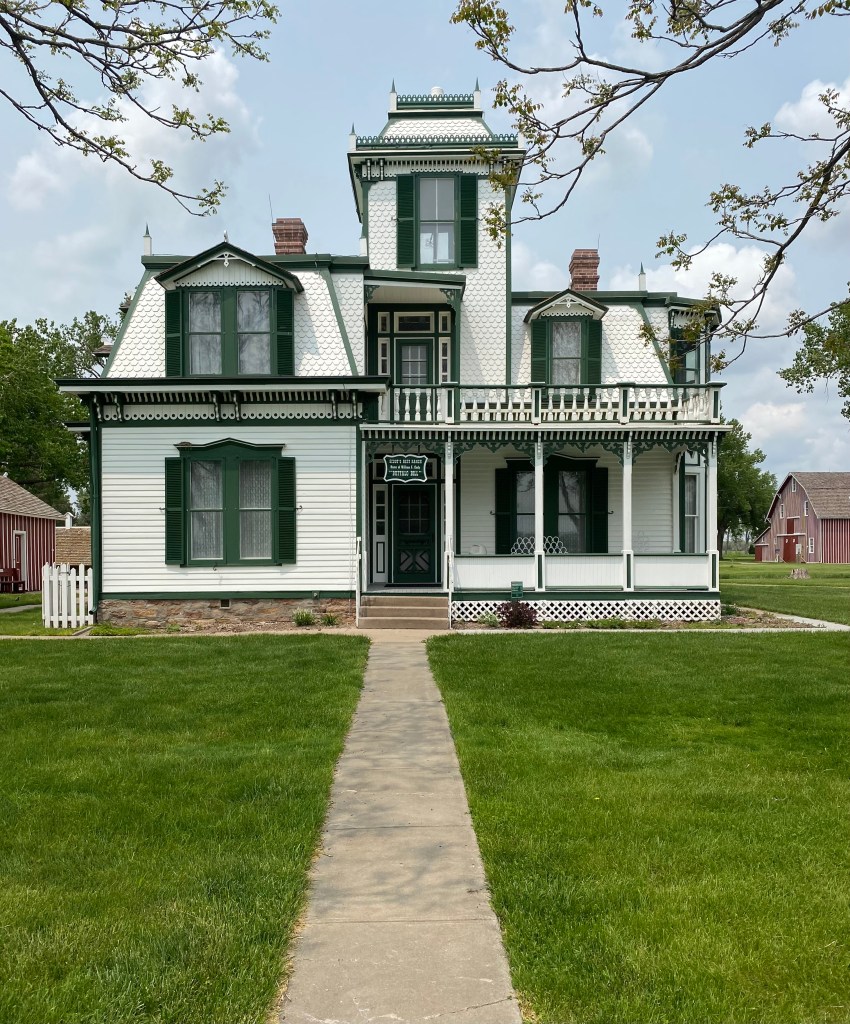
Second Empire Home, William F. Cody, Scouts Rest Ranch, North Platte, Nebraska
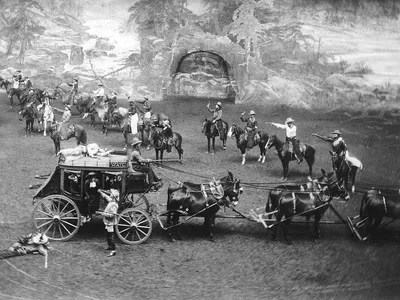
Buffalo Bill’s Wild West Show
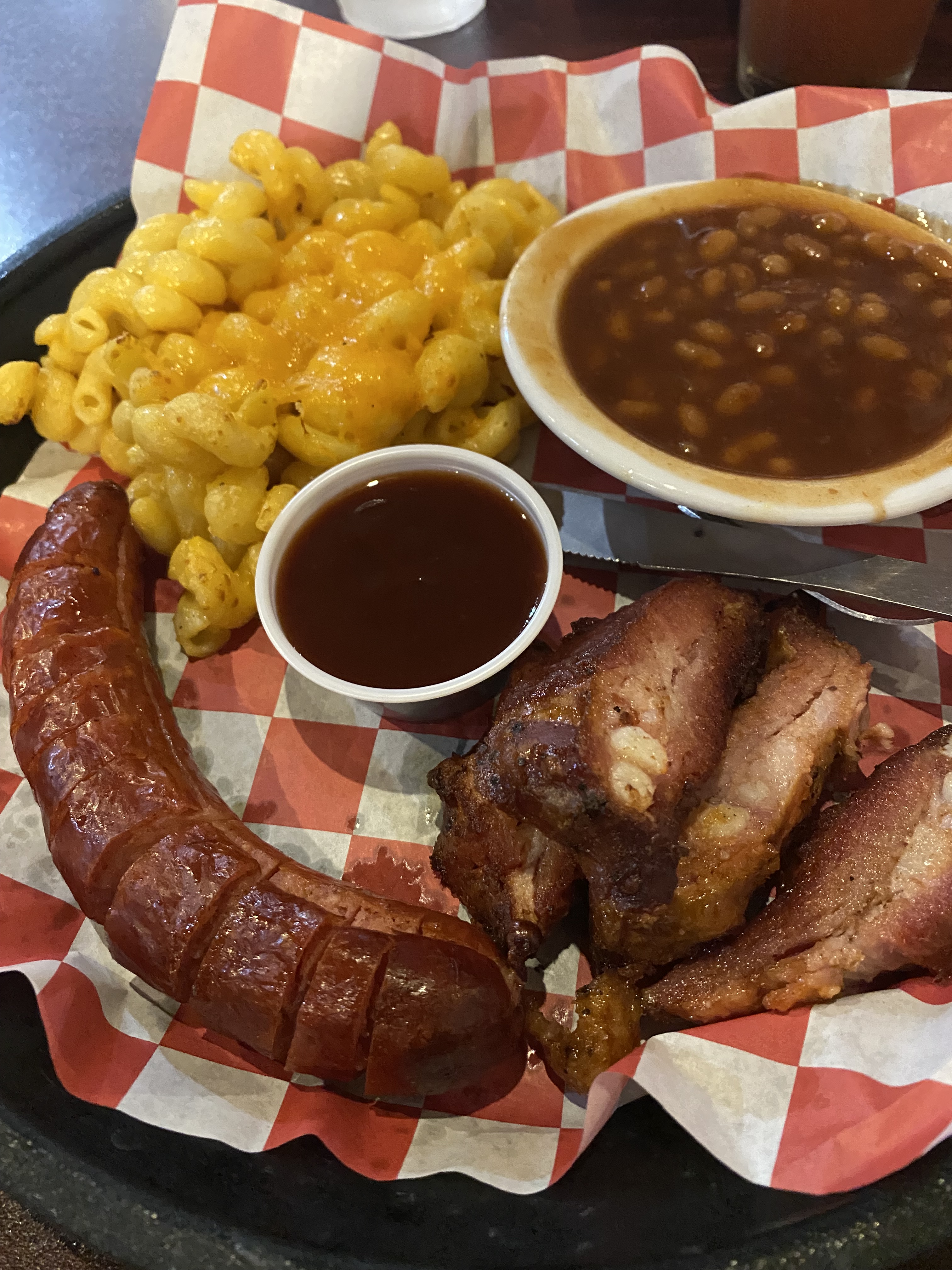
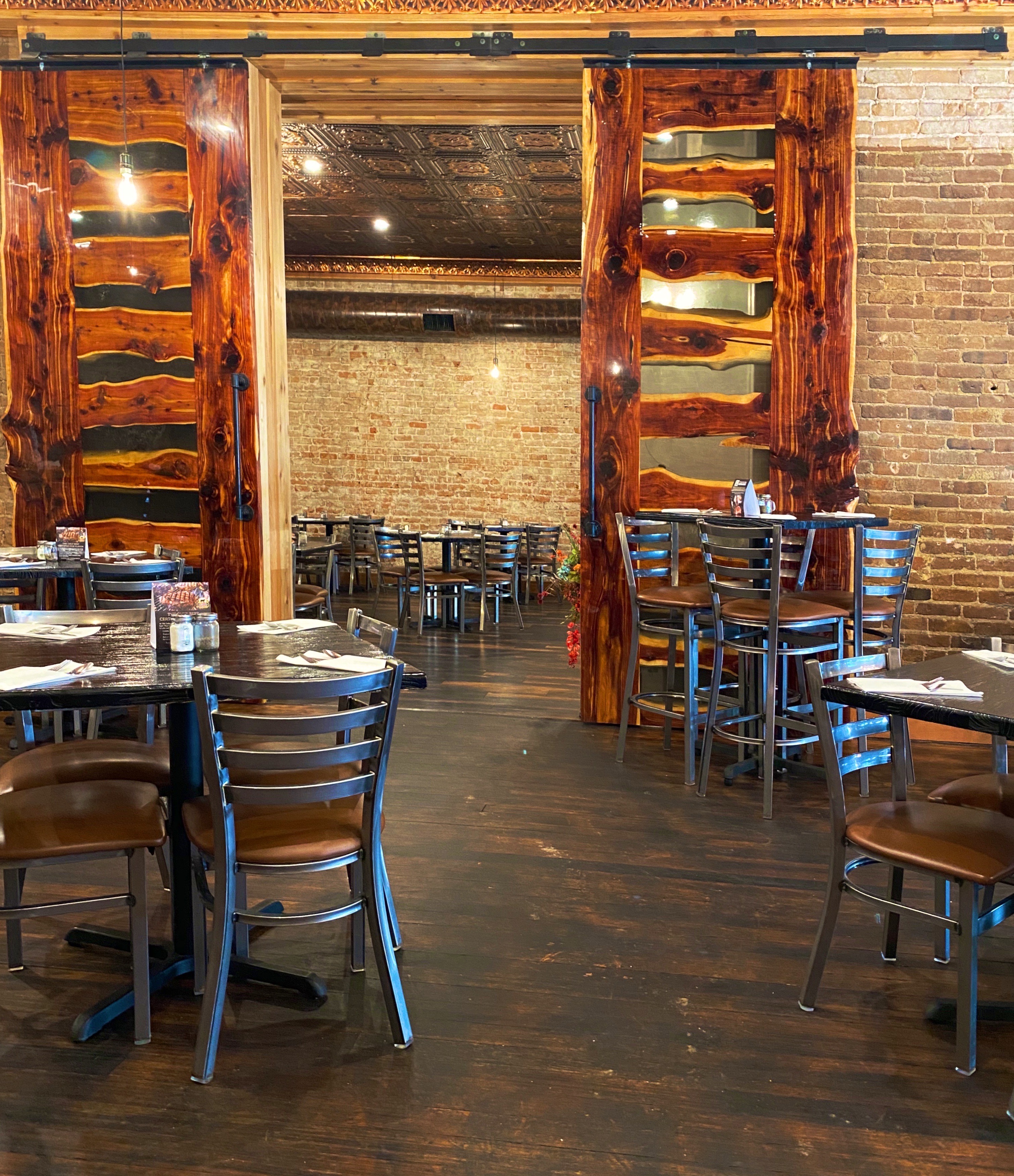
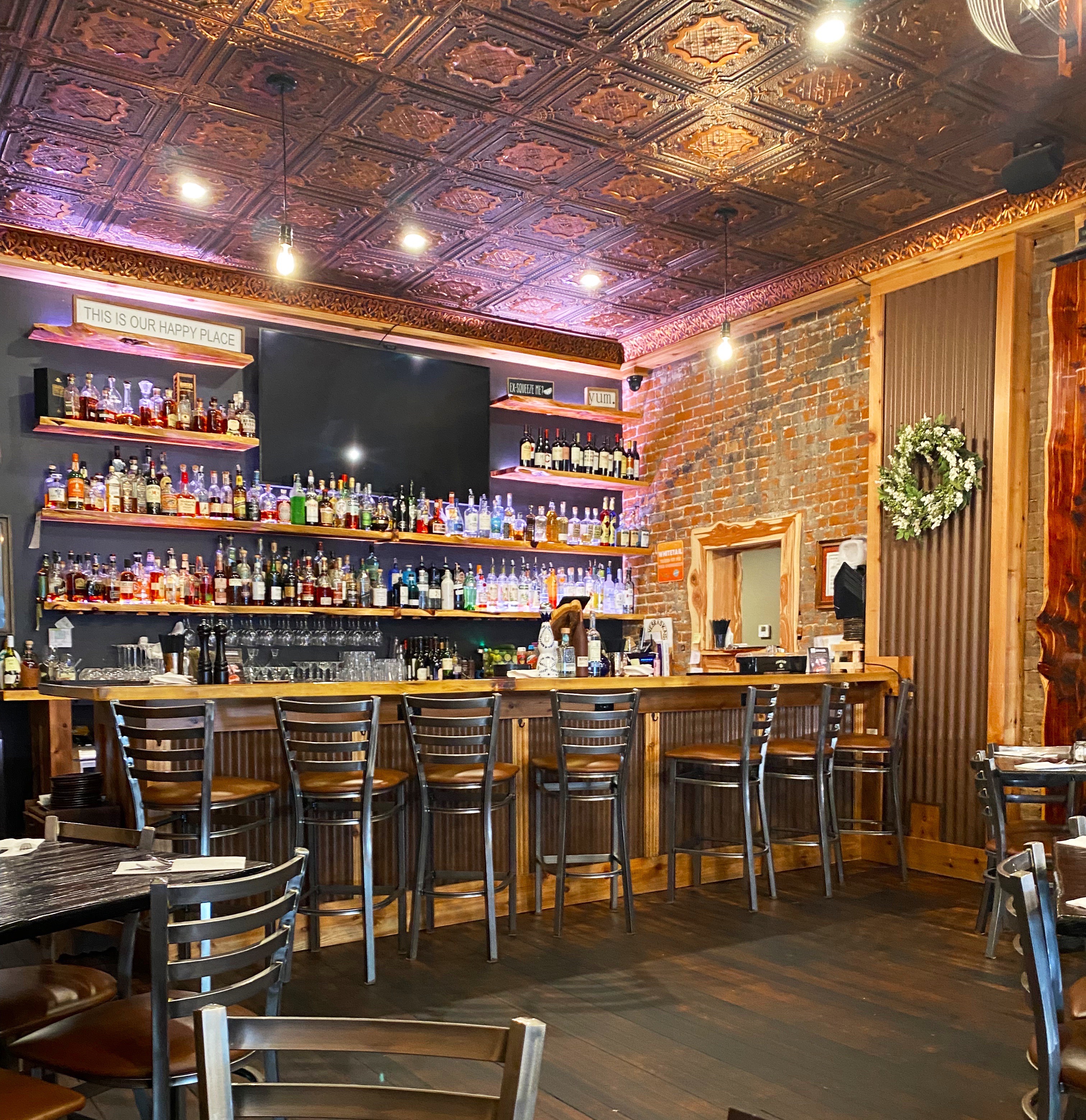
Cedar Room, North Platte, Nebraska
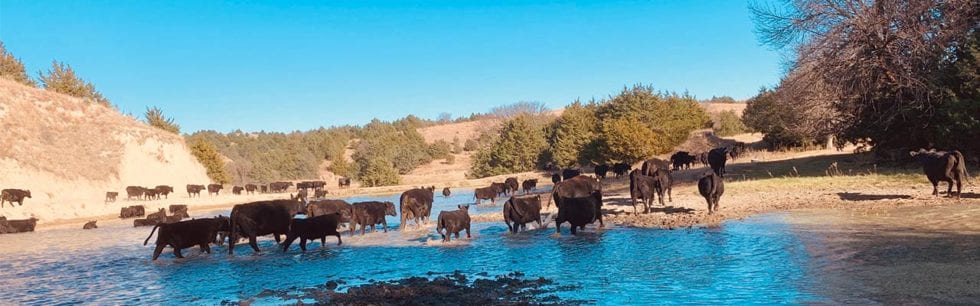
Stenger Ranch, Box Elder Canyon, Nebraska (Photo courtesy of The Cedar Room)

El Paso del Norte

We had been in Texas and New Mexico several times prior to our most recent trip, but for some reason had steered around El Paso (EP). Perhaps the timing was just not right or we were concerned about conditions there based on the reporting regarding the immigration issues at the border. Regardless, we were ready to explore EP as part of our OTR 9.0 adventure and draw our own conclusions about the city.

El Paso, Texas and Juarez, Mexico viewed from Scenic Drive

We made the decision to stay in the city and booked a hotel in the University district for three nights. We are glad we chose this area as it enabled us to walk to a number of casual but excellent restaurants and coffee shops dotting the university neighborhood. This was especially nice as EP is a sprawling metropolis that requires some driving in order to explore the city.

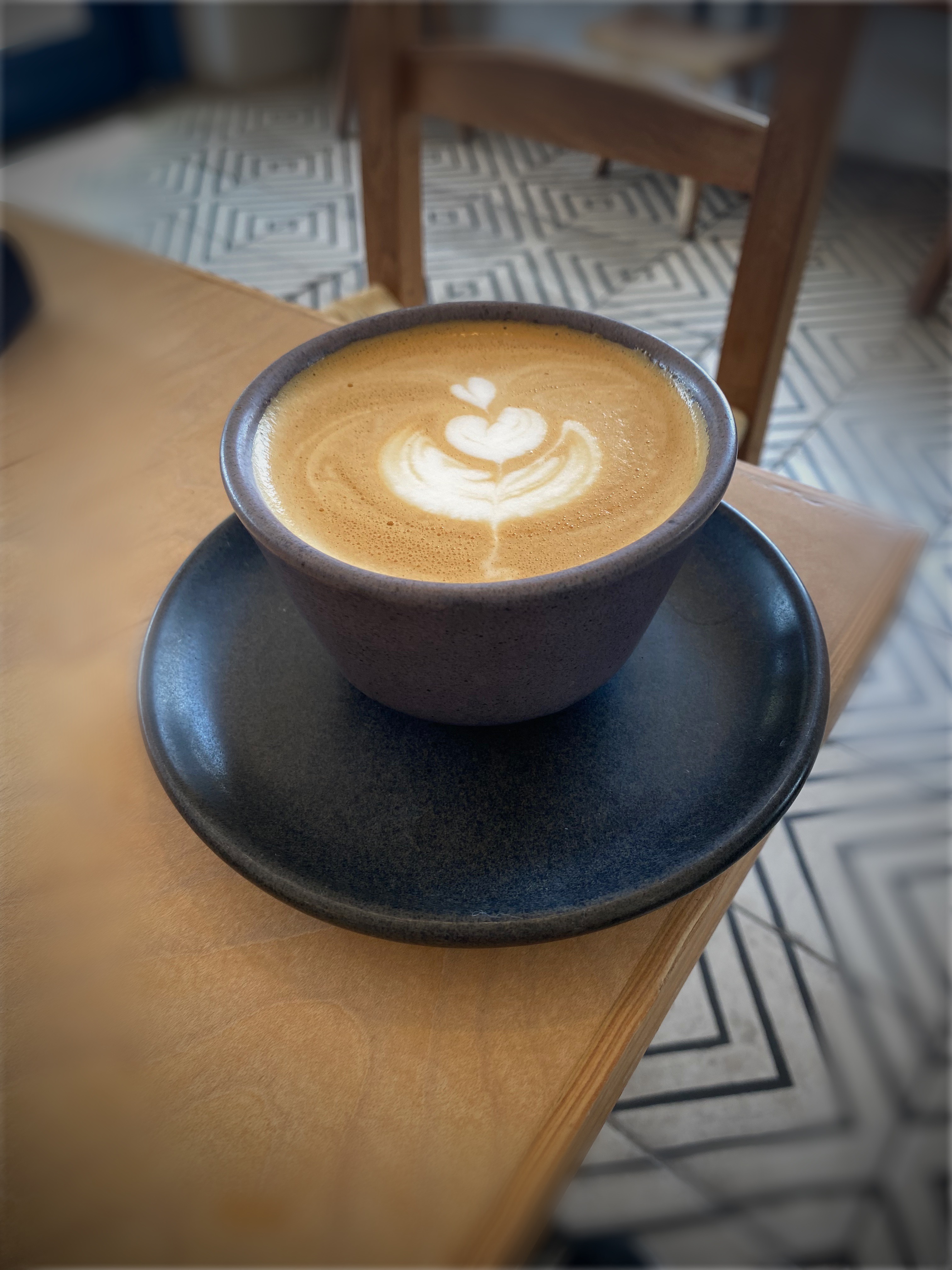
Of course, the first entry point for any worthwhile city visit is COFFEE! We were traveling from the east after our recent visit to Guadalupe Mountains National Park, therefore we were able to vector directly to an excellent specialty coffee shop and roaster on the east side of the city. We were most fortunate that the founder and owner of Global Coffee, Erika, sat with us for quite awhile. She shared with us her family history and the ties with Mexico that exist in a border town that has been a major immigration point for centuries(El Paso del Norte). Erika is a delightful and talented young woman and we wish her all the success she deserves with her business and family. https://globalcoffeeco.com/

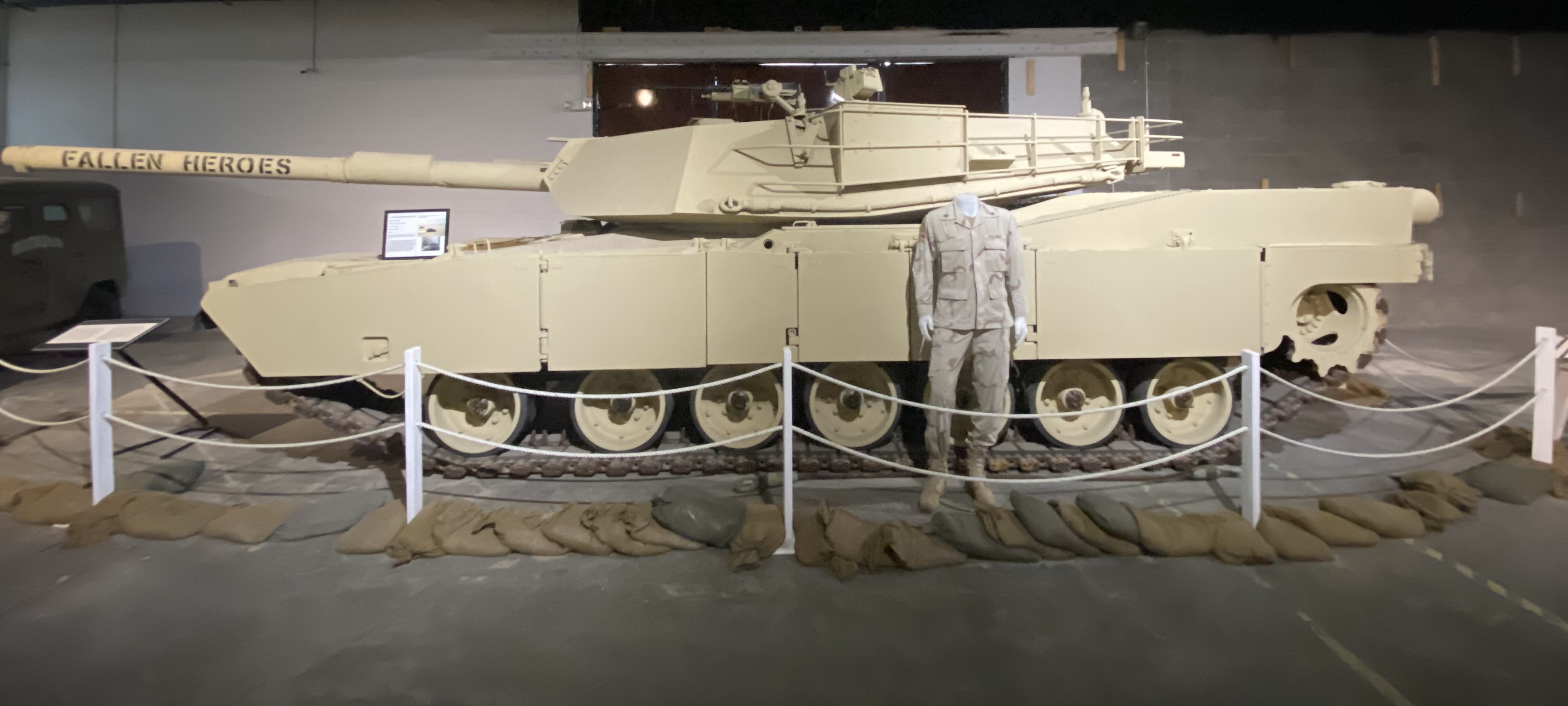
After refueling we went directly to the tank museum, officially known as the 1st Armored Division & Fort Bliss Museum. The United States Army has had a post in EP since 1849, which has served as an infantry post, a cavalry post, an air defense artillery post and currently operates as a maneuver training post. The size of the Fort Bliss training area (965,00 acres) and its mountainous desert terrain have made it a vital training location for the many forces that have been deployed to the Middle East over the last three decades.

Artist: Fremont Ellis, El Paso Smelter at Night, 1919
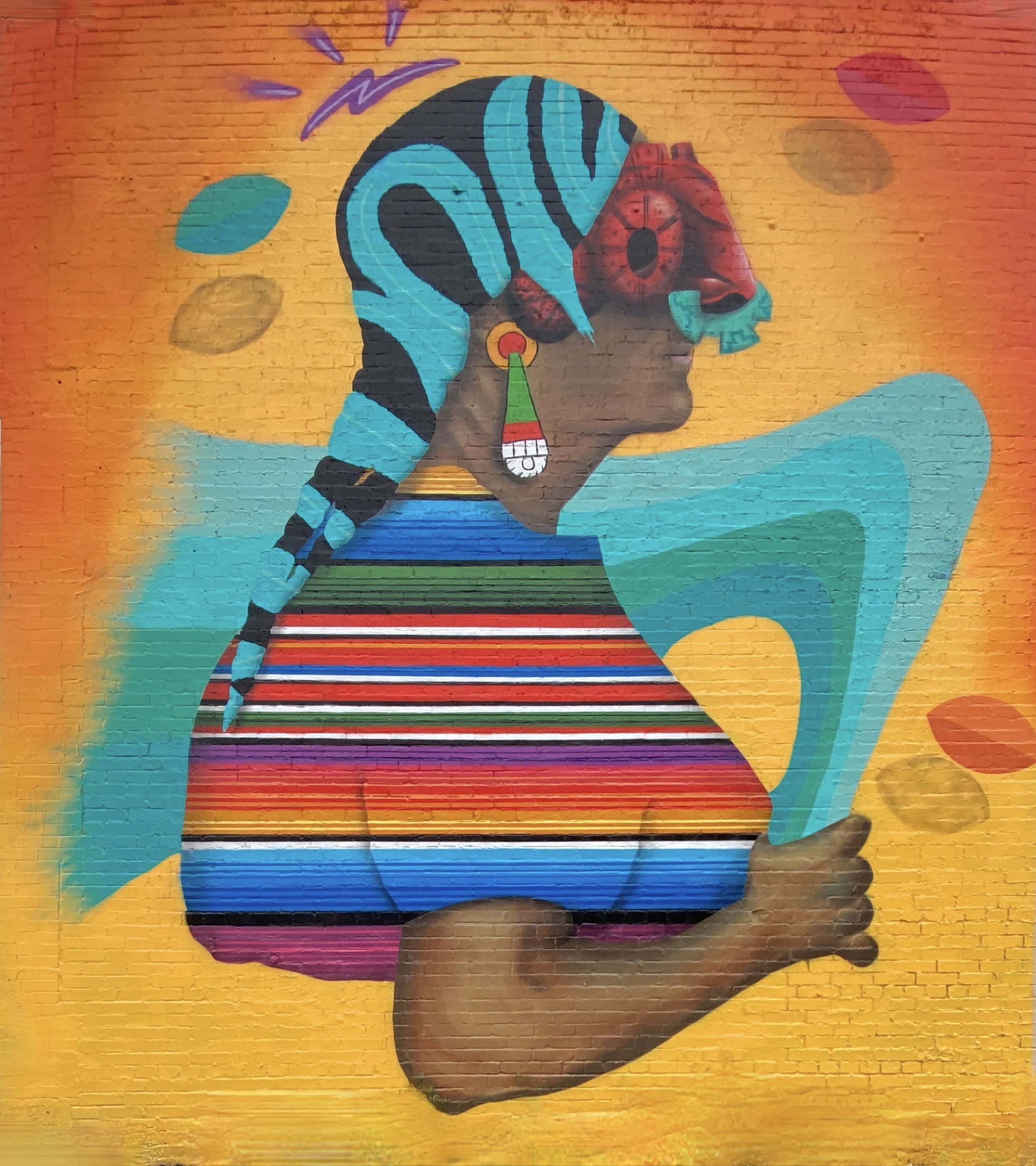
Artist: @DEKO_UNO, Kerby Avenue, El Paso, Texas
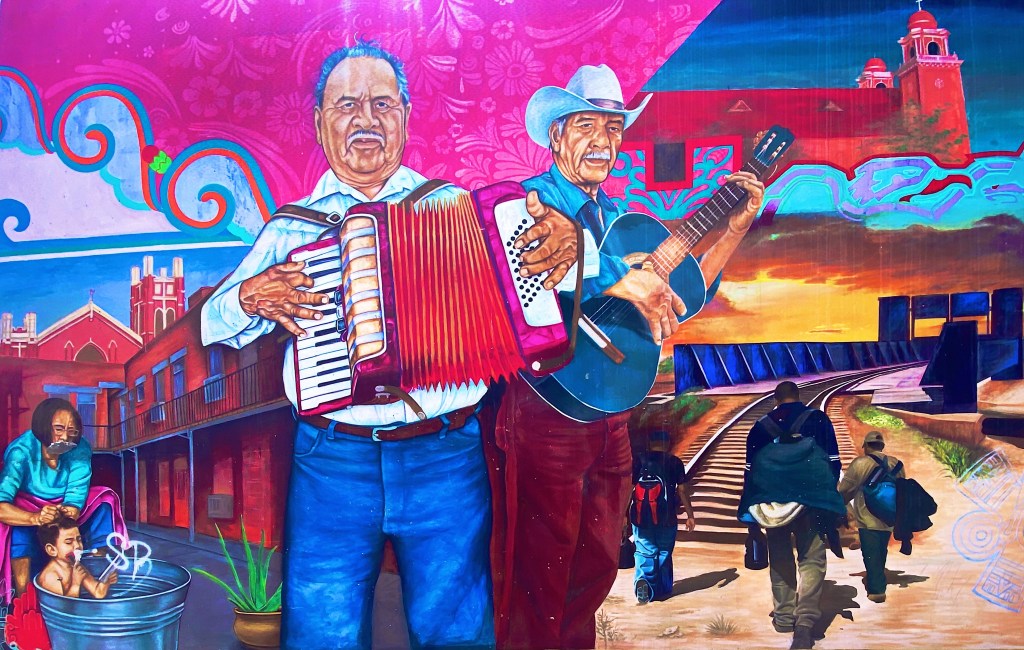
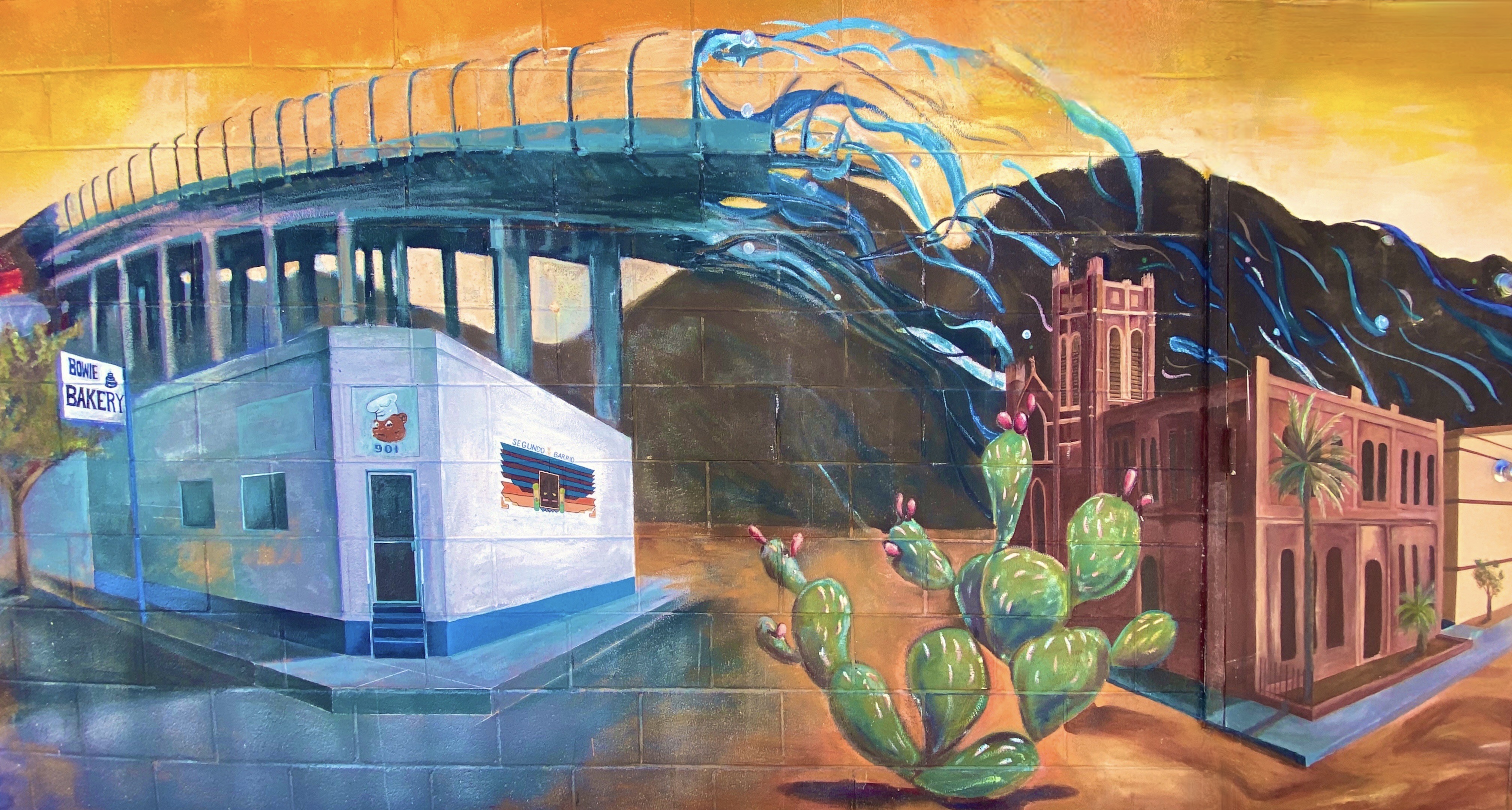
Artists: Jesus Alvarado and Victor Casas, El Segundo Barrio, El Paso, Texas

Far West Texas Cool

Iron Mountain Ranch (Photo Bill Murphree)
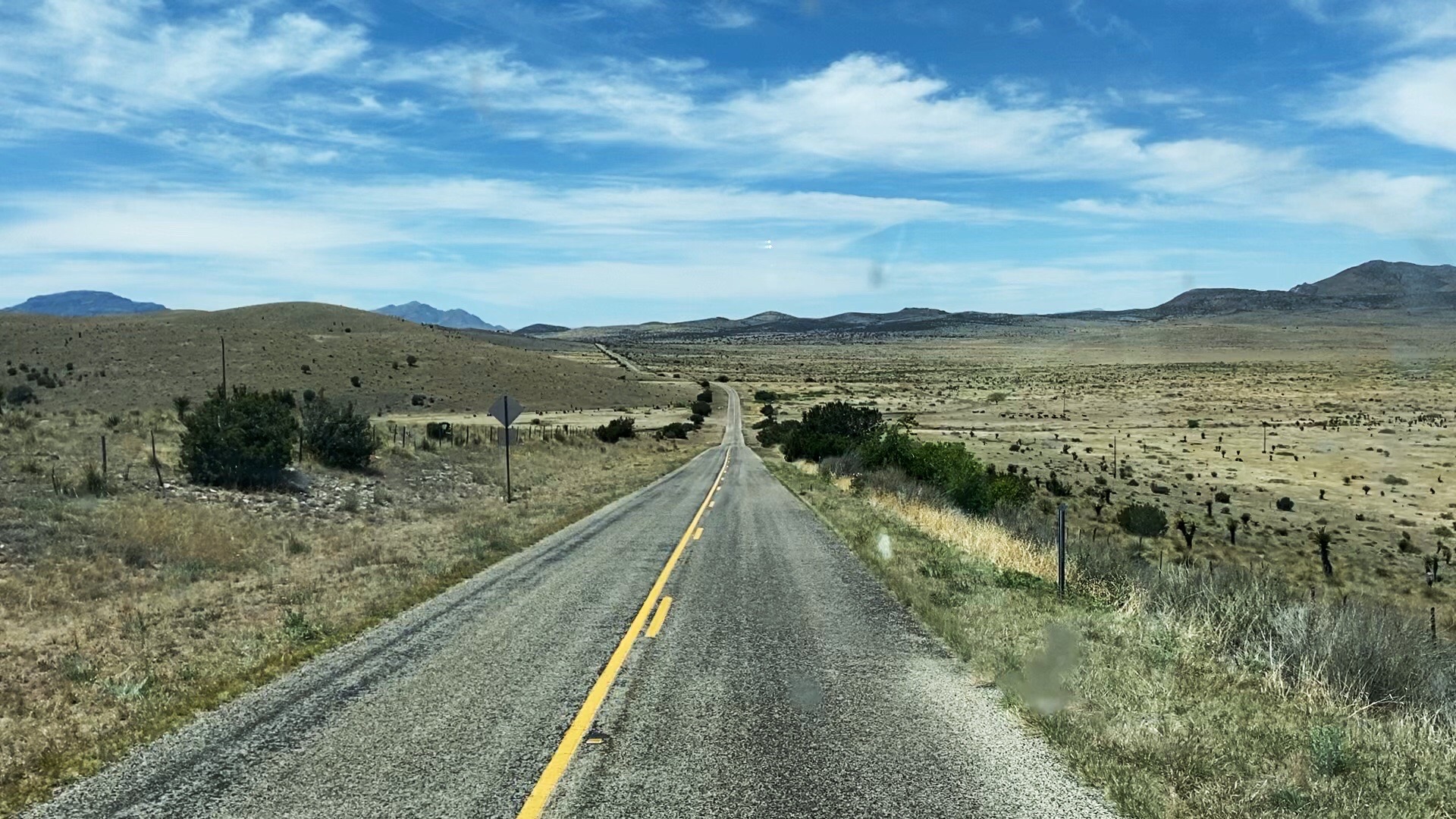
The “Long View” Across the Plains to the Glass Mountains
St. Mary’s Mission (Founded 1908)
Texas State Highway 118

Texarkana to Marathon: Howdy Y’all

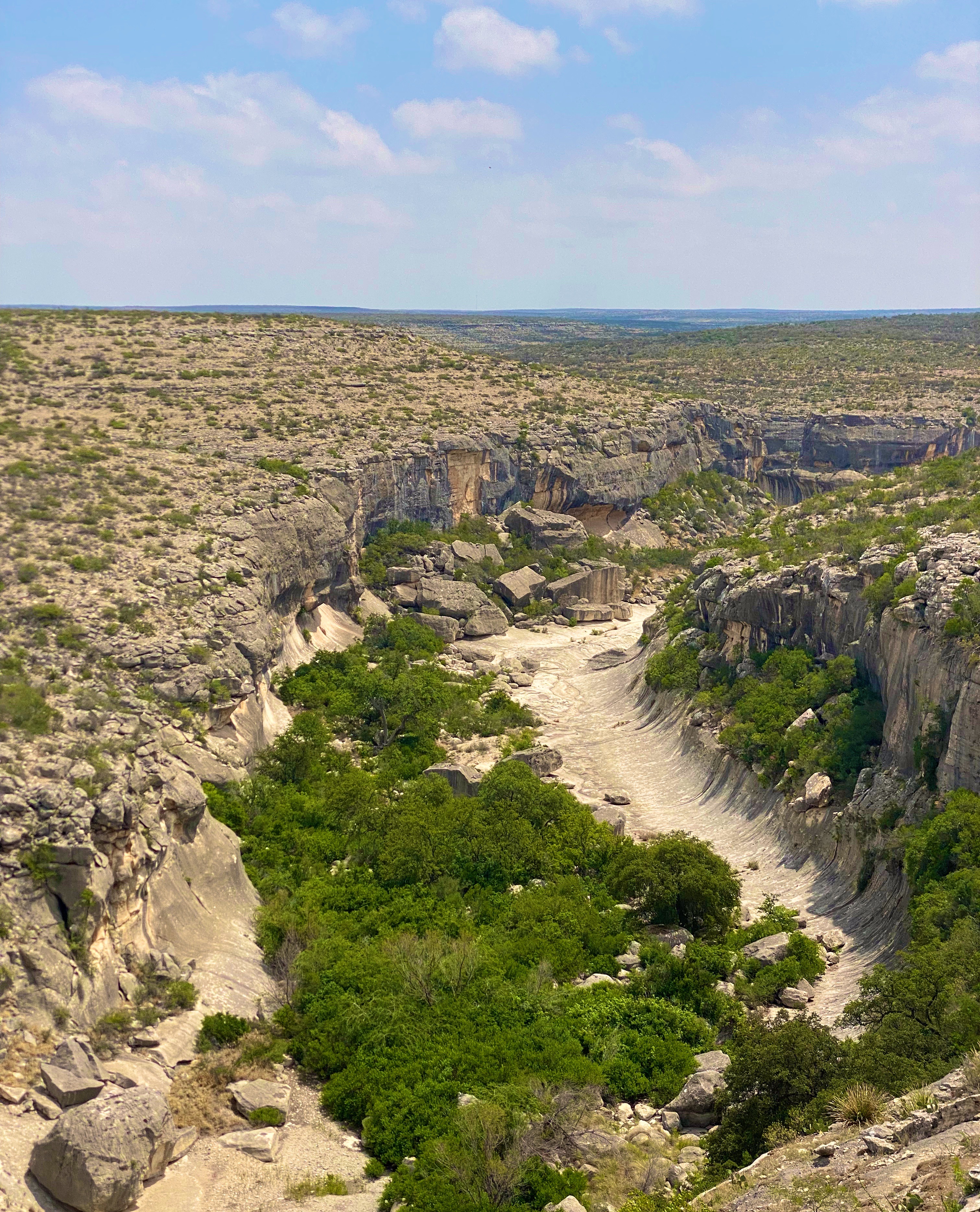
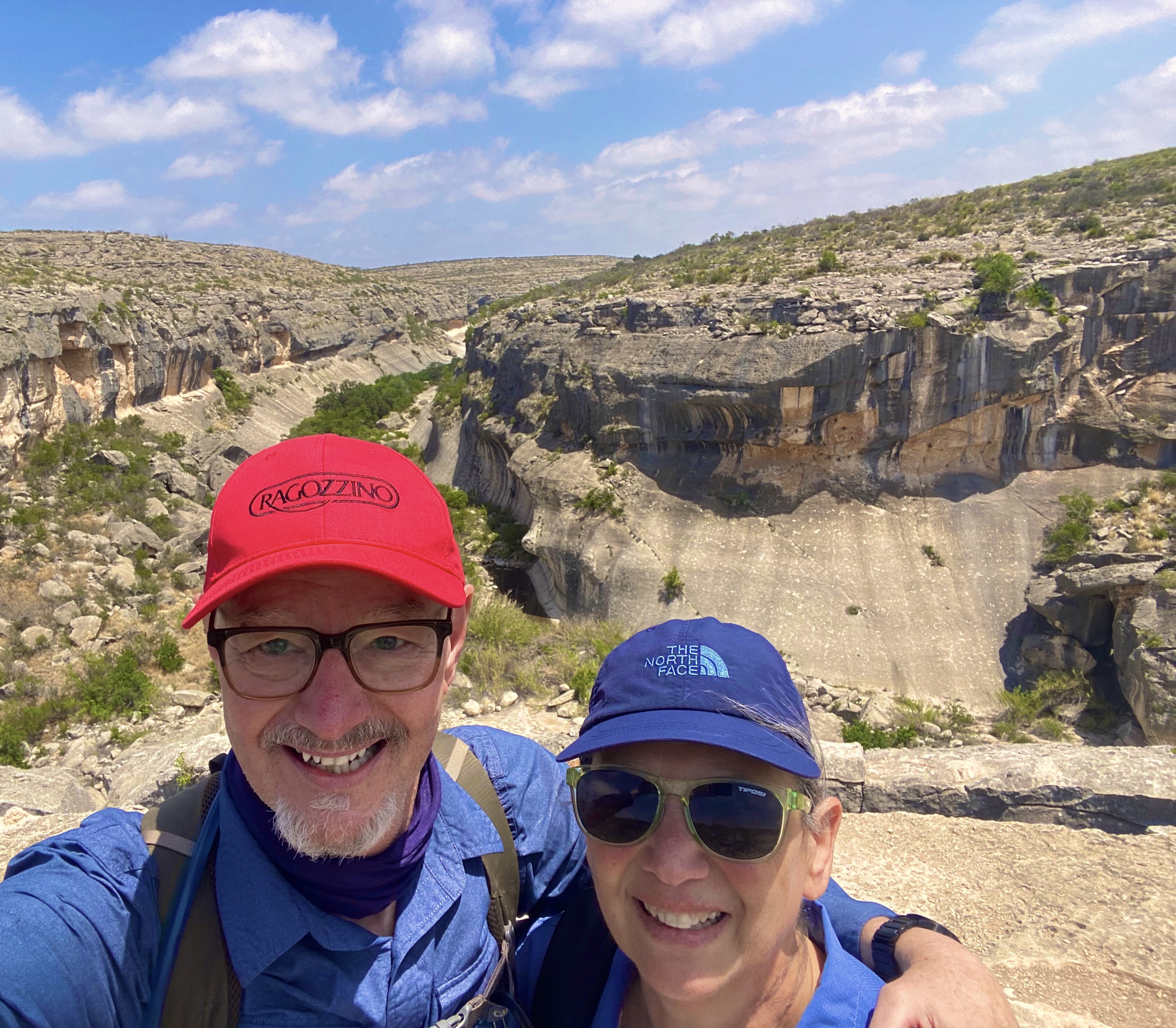
Seminole Canyon, Nine Miles West of Comstock, Texas
Ranch Road Adventure
Gage Hotel, Marathon, Texas

Colorado: Abridged Edition

Durango – Four Corners – Route 550, Colorado
South Fork – Eastern Rockies – Route 160, Colorado

After refueling with burgers and diesel we continued our drive to the town of Del Norte. Prior to Euro-American settlement, this area was occupied by the Utes who migrated to the area from the south during the warmer months of the year. When this territory came under Mexican rule during the early 19th century, Hispanic settlers migrated north to take advantage of land grants offered by the Mexican government. Subsequently, this area was ceded to the United States by Mexico.

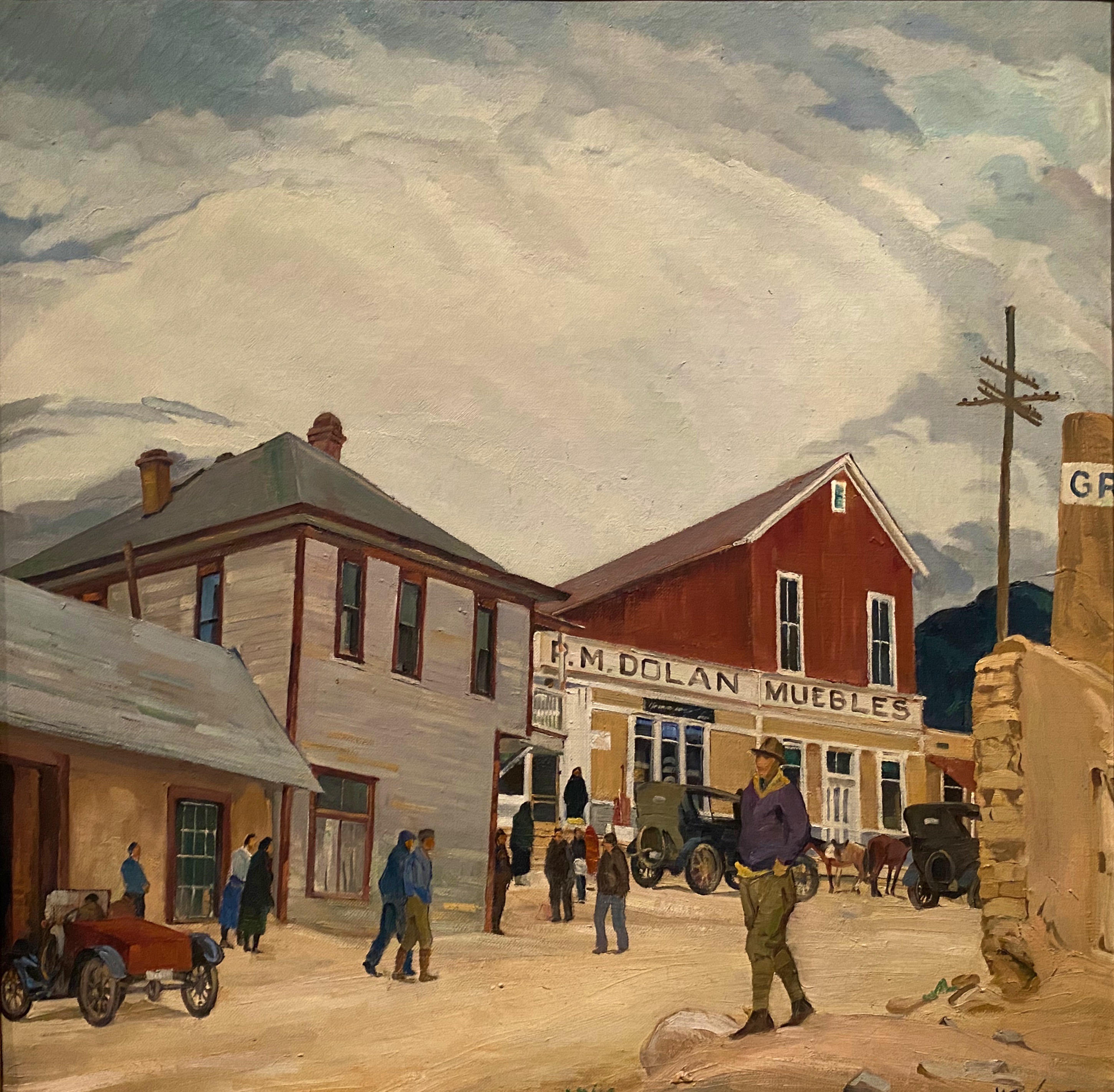
Del Norte, Photos, Courtesy Denver Public Library

After a quick tour of the small downtown we headed west a short distance to find a camping spot in the Rio Grande National Forest. We found a great spot in a meadow which afforded us a panoramic view of Del Norte Peak.

Rio Grande National Forest
Del Norte Peak, Elevation 12,400′
Great Sand Dunes National ParkSangre De Cristo Mountains

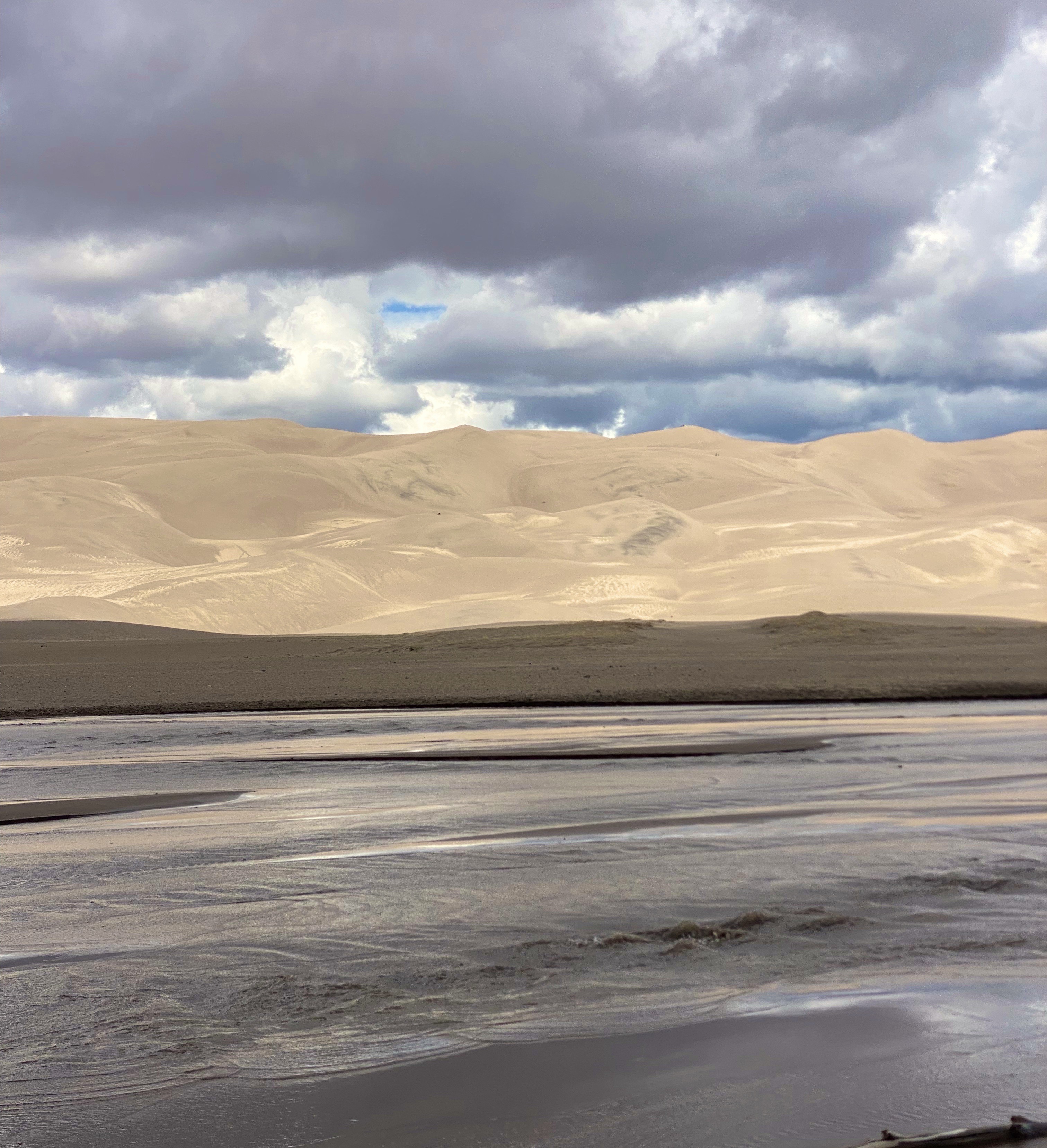
GSDNP presents a fascinating landscape with grasslands separated from a thirty square mile sand desert by Medano Creek. The dunes are tucked in against the base of the Sangre de Cristo Mountains–quite spectacular! The sand dunes at GSDNP are the tallest in North America. Some are as high as 700 feet (Star Dunes is the tallest at 750 feet).

Medano Creek
Medano Pass Primitive Road
Walsenberg, Colorado
The Broadmoor

Colorado Springs sits at just over 6000′ above sea level at the eastern base of the Rocky Mountains. Snow covered Pikes Peak (14,100′) looms over the city to the west creating a stunning backdrop. We did not travel up to the peak on this trip as we had taken the nine mile cog railroad trip on a previous visit (we definitely recommend riding the railroad to the top if the weather is clear -which it usually is in this part of Colorado). The train ride is fun and the views are phenomenal.

Pikes Peak
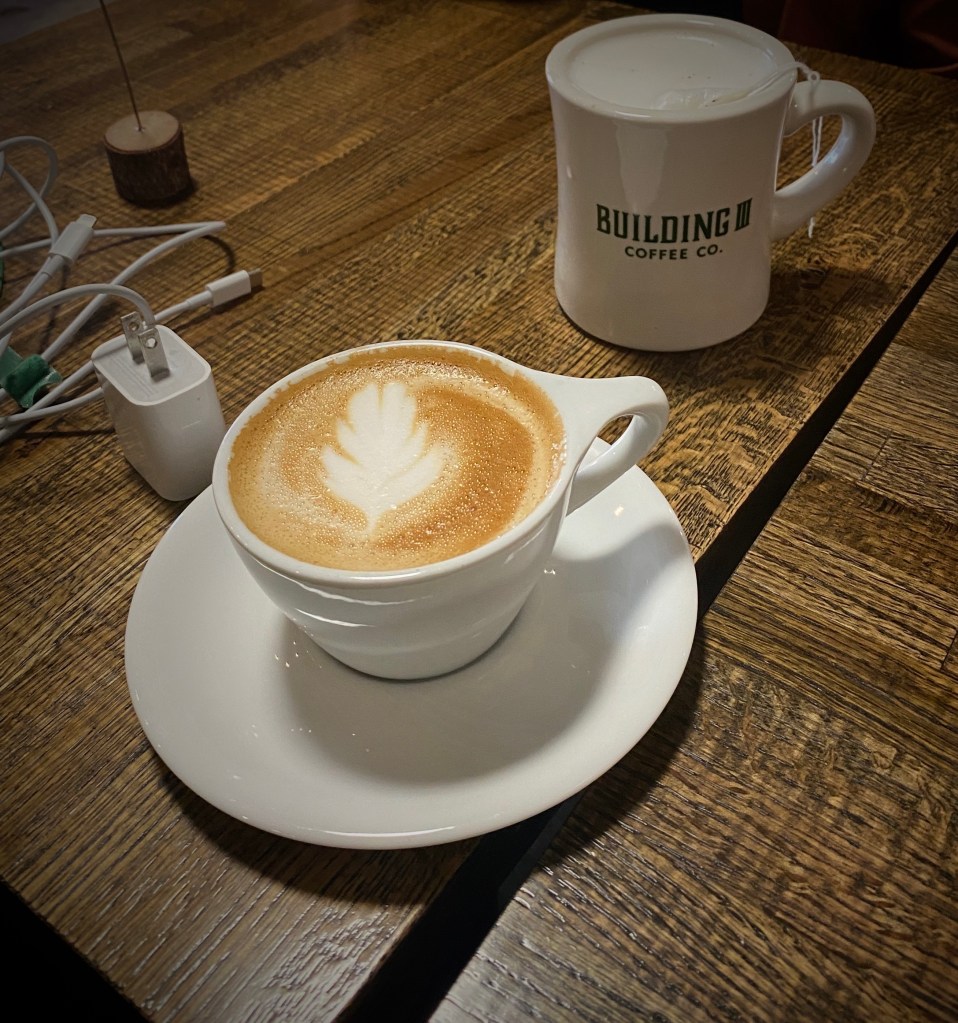
Building Three Coffee

With the cloudy, drizzly weather persisting into our second day in Colorado Springs (coincidently nicknamed “Little London” although not for the weather – there was a large British population in the 1870s) we decided to visit the Fine Arts Center (FAC) at Colorado College. The FAC is located in the Old North End neighborhood – an area of stately late 19th and early 20th century homes and tree lined boulevards.

Charles R. Bunnell (1897-1968) March Snow, 1940, Oil on canvas
Victor Higgins (1884-1949) Santa Fe Hills, Date Unknown, Oil on canvas

As with many museums of this size, the collection is regionally (although not exclusively) focused. We have included photos of several paintings which reflect the southwestern focus (and which we really liked). The museum is definitely worth a couple of hour visit when you visit “Little London”.

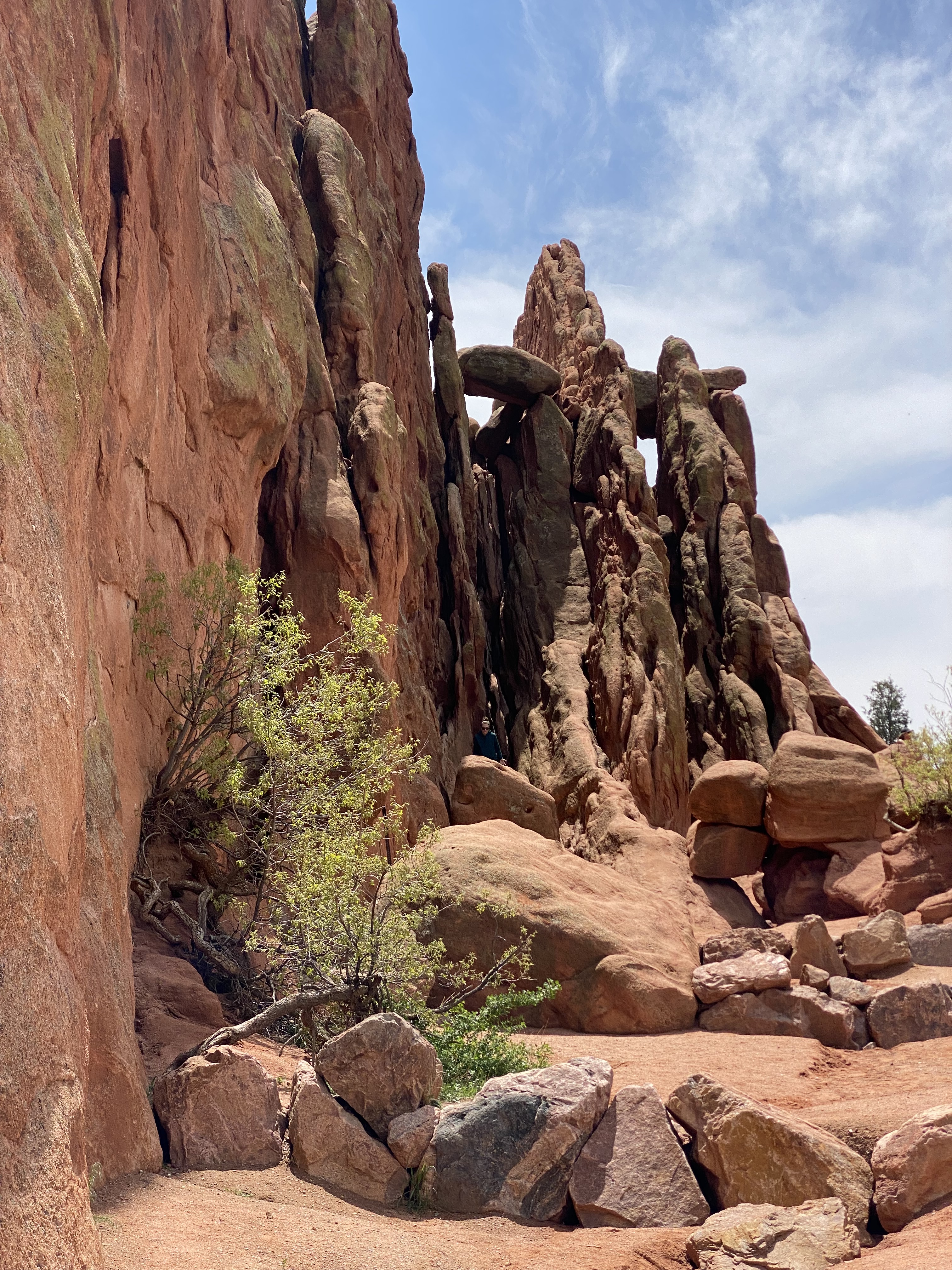
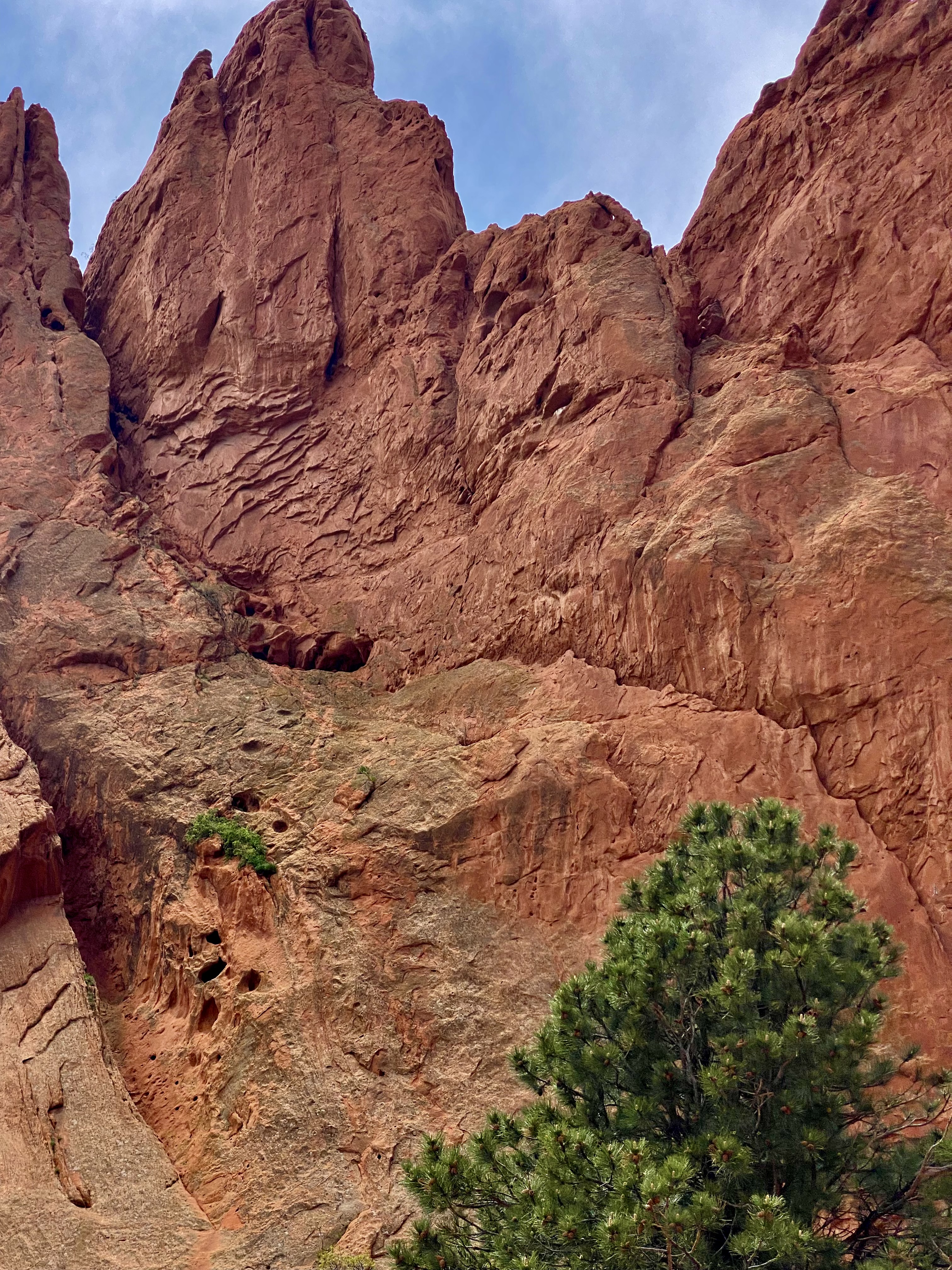
On our final day in Colorado Springs we ventured out to Red Rock Canyon. We had held off visiting earlier in our stay due to some cloudy weather. Unfortunately, it appeared that everyone else in Colorado Springs had done the same (it was also the weekend) and this popular open space was quite crowded.

Interestingly, Red Rock Canyon is a city park consisting of 1474 acres of land. The park was pieced together with the multiple purchases of parcels over a period of years during the 1920s and 1930s by private citizens. It was acquired by the city in 2003. What makes the park’s history all the more remarkable is that many of the parcels were formerly quarries, gravel pits and industrial sites which have been reclaimed. There is little evidence of the past use of the space – without reading about the history you would most likely not think that to be the case.

From Colorado Springs we traveled north – camping near Sterling, Colorado for our last night in the state. In future posts we will chronicle our trek across the midwestern plains en route to Connecticut.

Be seeing you!

Silver City: Feel the Love

As the name infers, precious metals are at the heart of the existence and development of this area of New Mexico. Long before the Spanish arrived the Native Americans were making use of the abundant copper found in the area. The Spanish brought more scale to the mining operations with their “technology” utilizing horses to power the machinery (below) to extract the gold found in the Pinos Altos Mountains .

Spanish Gold Mining Machinery, Pinot Altos Mountains, Gila NF

Today the Central Mining District is still a major precious mineral producer. The St. Rita Copper Mine pictured below is one of the world’s largest open pit mines. It is 1.5 miles wide and over 1500 feet deep.

St. Rita Copper Mine from the Route 152 Overlook

While one of us might find the major extractive industries fascinating, it was not our primary reason for visiting Silver City (SC). The elevation (5900) and surrounding Gila NF meant more comfortable temperatures than we had been experiencing in Texas and Southern New Mexico. Additionally, SC has a reputation as an artistic community where we might find music, coffee, art, history and friendly folks. Happily, SC provided all of these things in abundance.

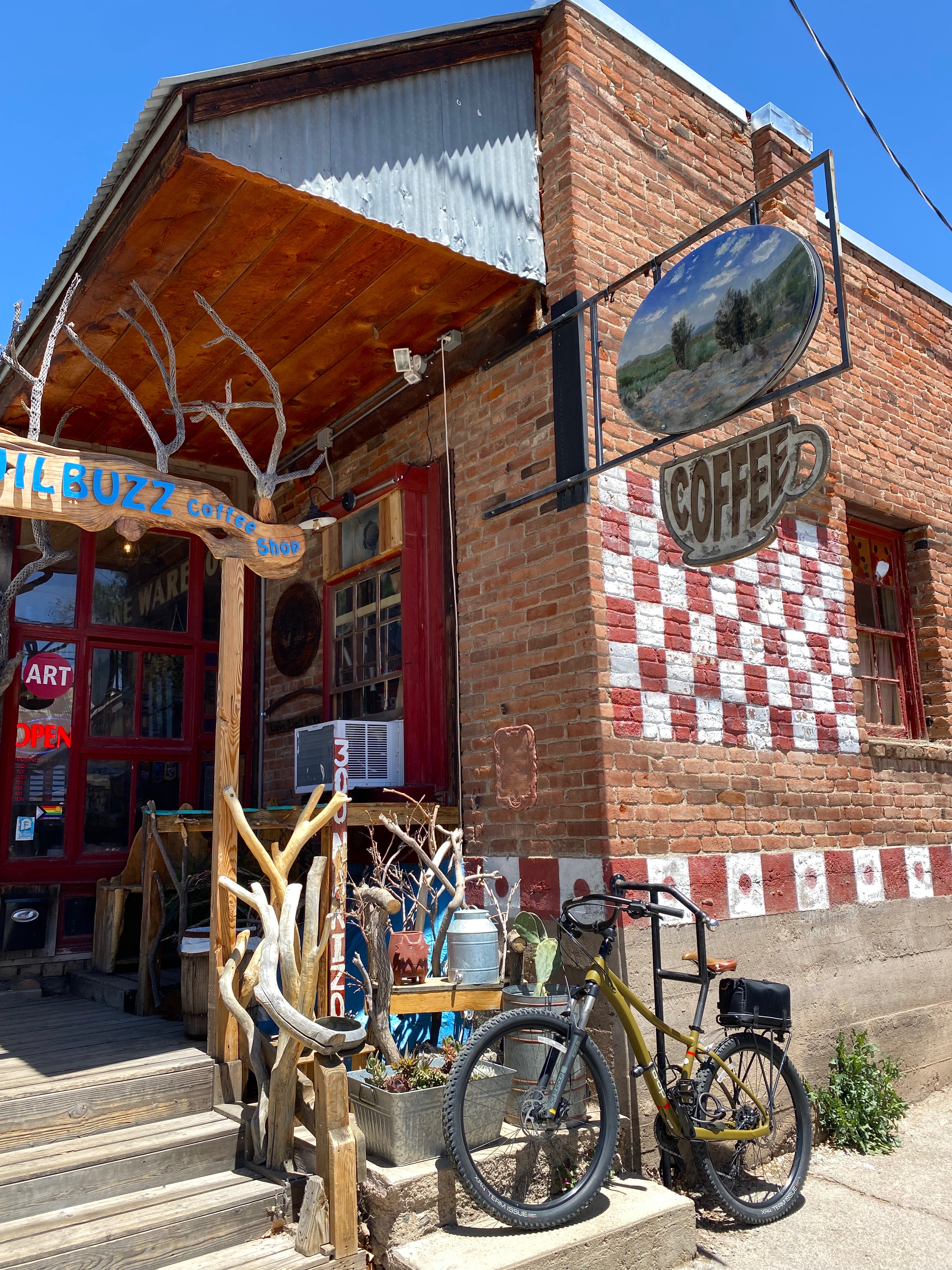
SC has become a draw for the artistic community. We met many folks who found their way to SC to be part of a very open and welcoming community. We started each day at the Buzz to fuel up and invariably met several new folks (many of whom are artists and musicians). SC is definitely a fun town for a two to three day visit and also a good base for exploring the surrounding area.

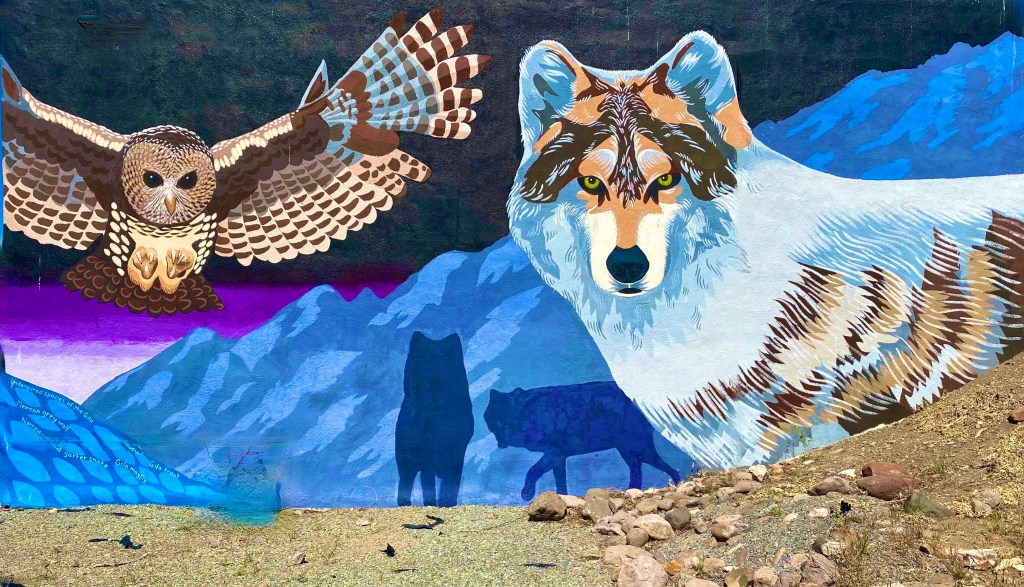
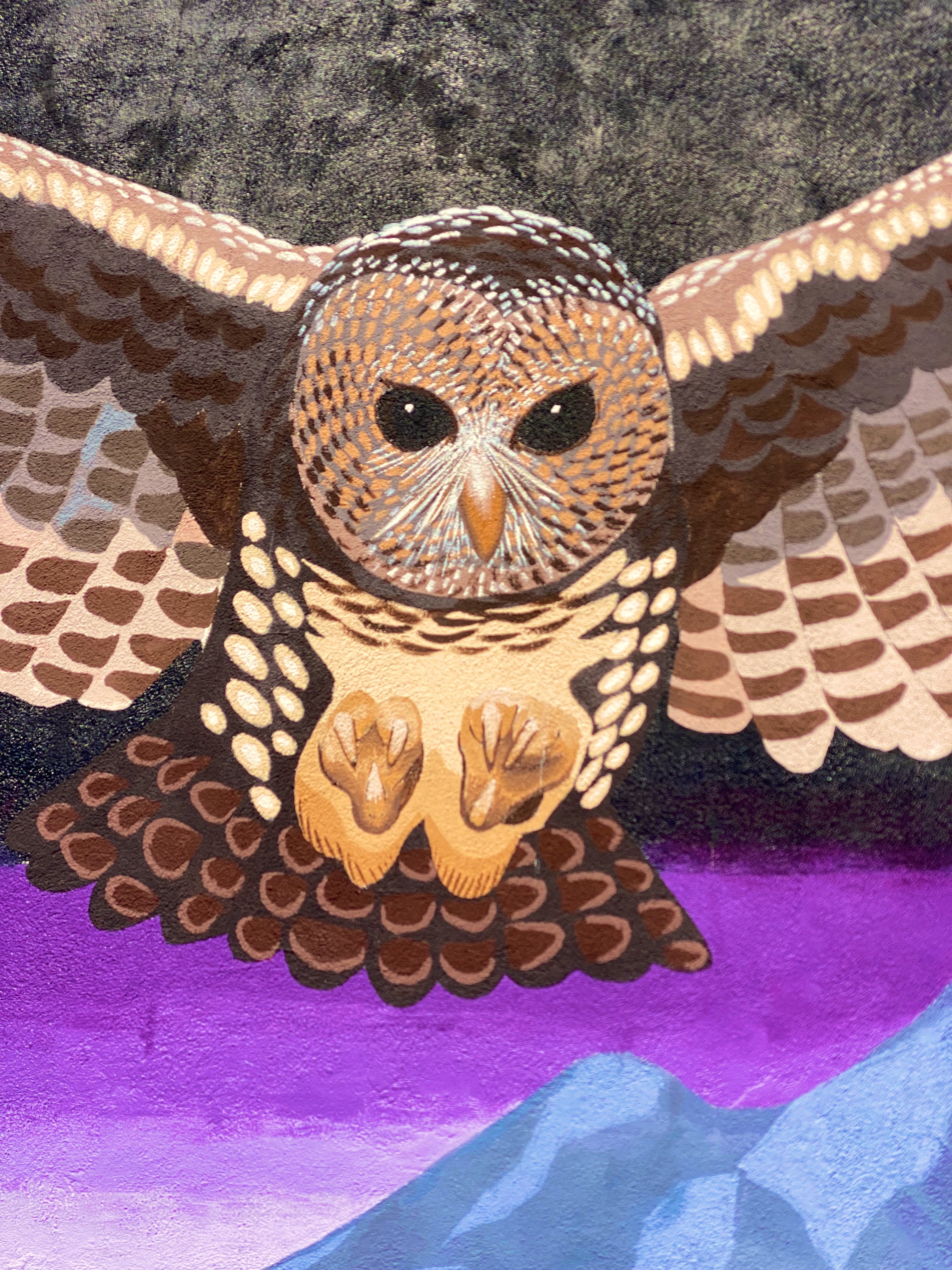
Endangered Species Mural, WNMSU

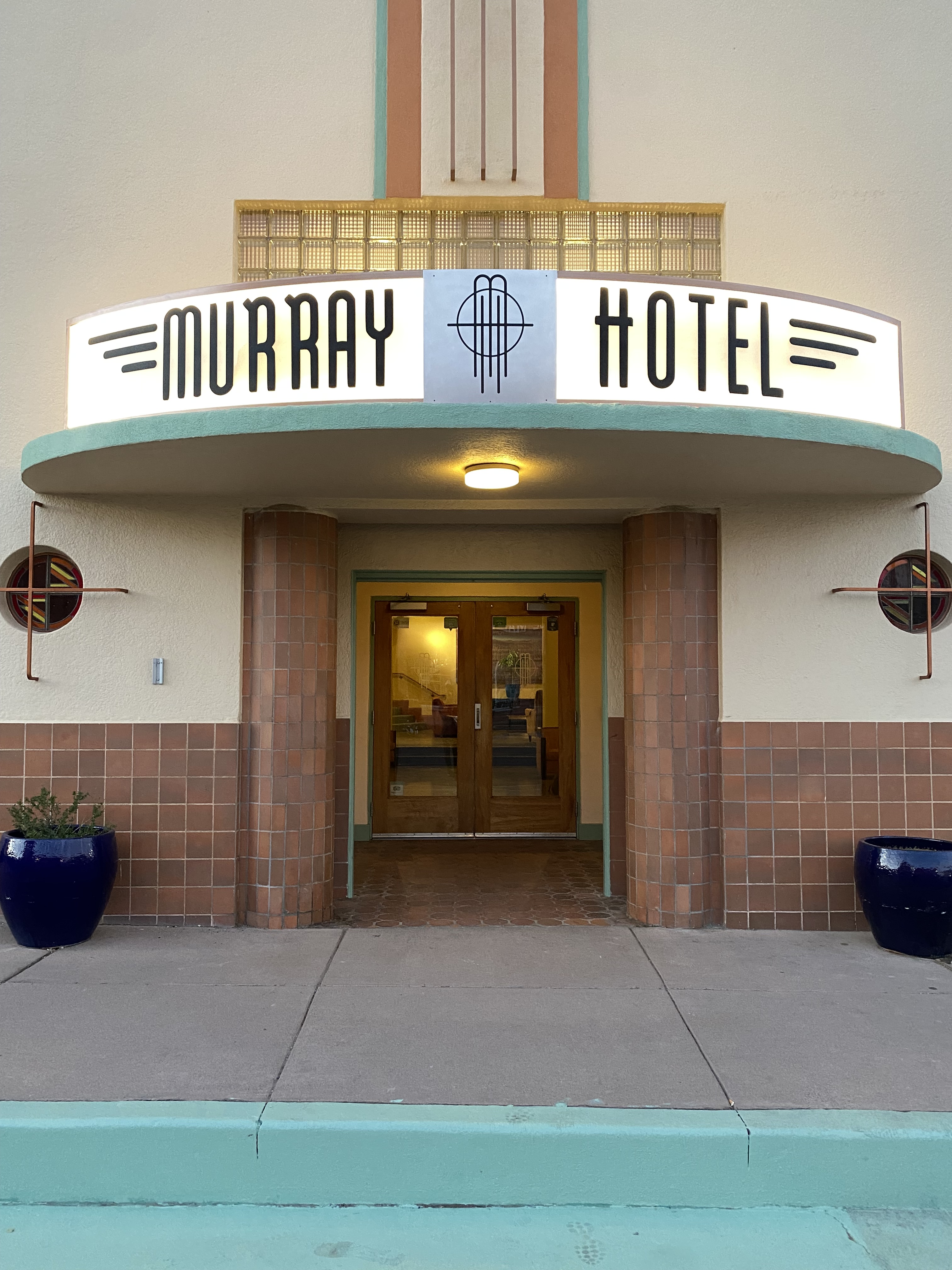
When not sleeping in the Beast, we try to find a local hotel with history and style. In SC we stayed a couple of nights at the Murray, a classic Art Deco hotel. The hotel opened in 1938 and was considered the height of luxury (in the southwest) at the time. It closed for several decades but was renovated and reopened in 2012. The hotel is perfectly situated in the middle of downtown, enabling us to walk everywhere and leave the Beast parked for the duration.

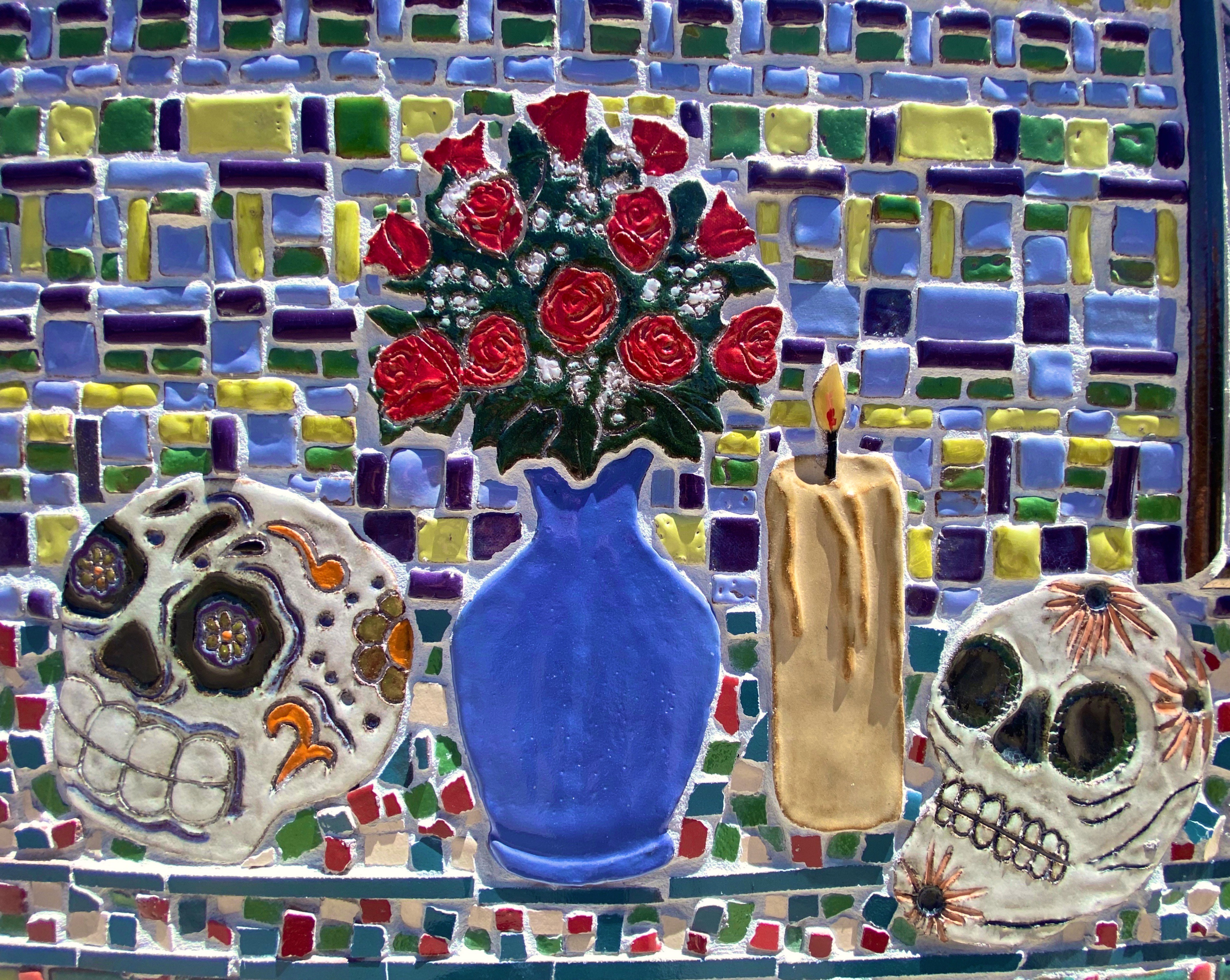
The photographs above are of tiles from the “Dia de los Muertos” mural located on the side of the Silver City Museum. The tile medium is quite popular in the southwest and, along with the subject matter, it reflects the heritage of this area. There is art everywhere in this town – not surprising that SC was named one of the top 100 art towns in the United States.

Just north of SC sits the small town of Pinos Altos (PA as it is called locally). The town was formally organized in 1860 after the discovery of gold by three men stopping for a drink of water in a local creek. The population quickly grew as word of the gold discovery spread.

However, the local Apache people were not pleased to see hundreds of miners descend on what was their homeland. A band of 400 Apache warriors, joined by the great chief Cochise, attacked the settlers in what became known as the Apache War of 1861. Hostilities went on for several years until the cavalry built a fort at Bayard and a treaty was negotiated (we know who got the better end of that deal).

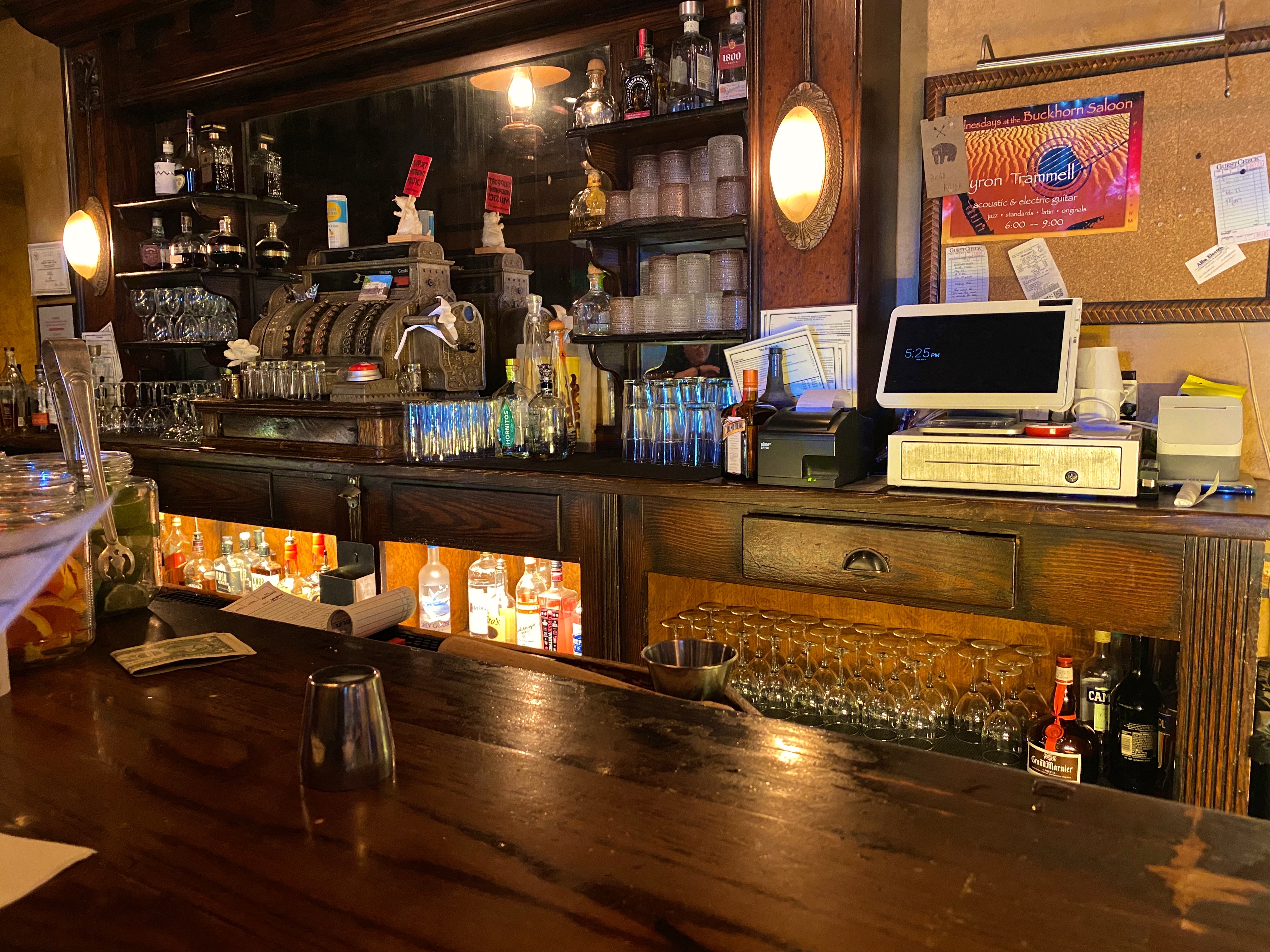
Today the town has 300 or so residents after having been abandoned for may years. Fortunately, many of the original buildings remain, and that in conjunction with the Buckhorn Saloon, engenders a fun, old west atmosphere. Besides, who can resist a town where Main Street is still a dirt road!

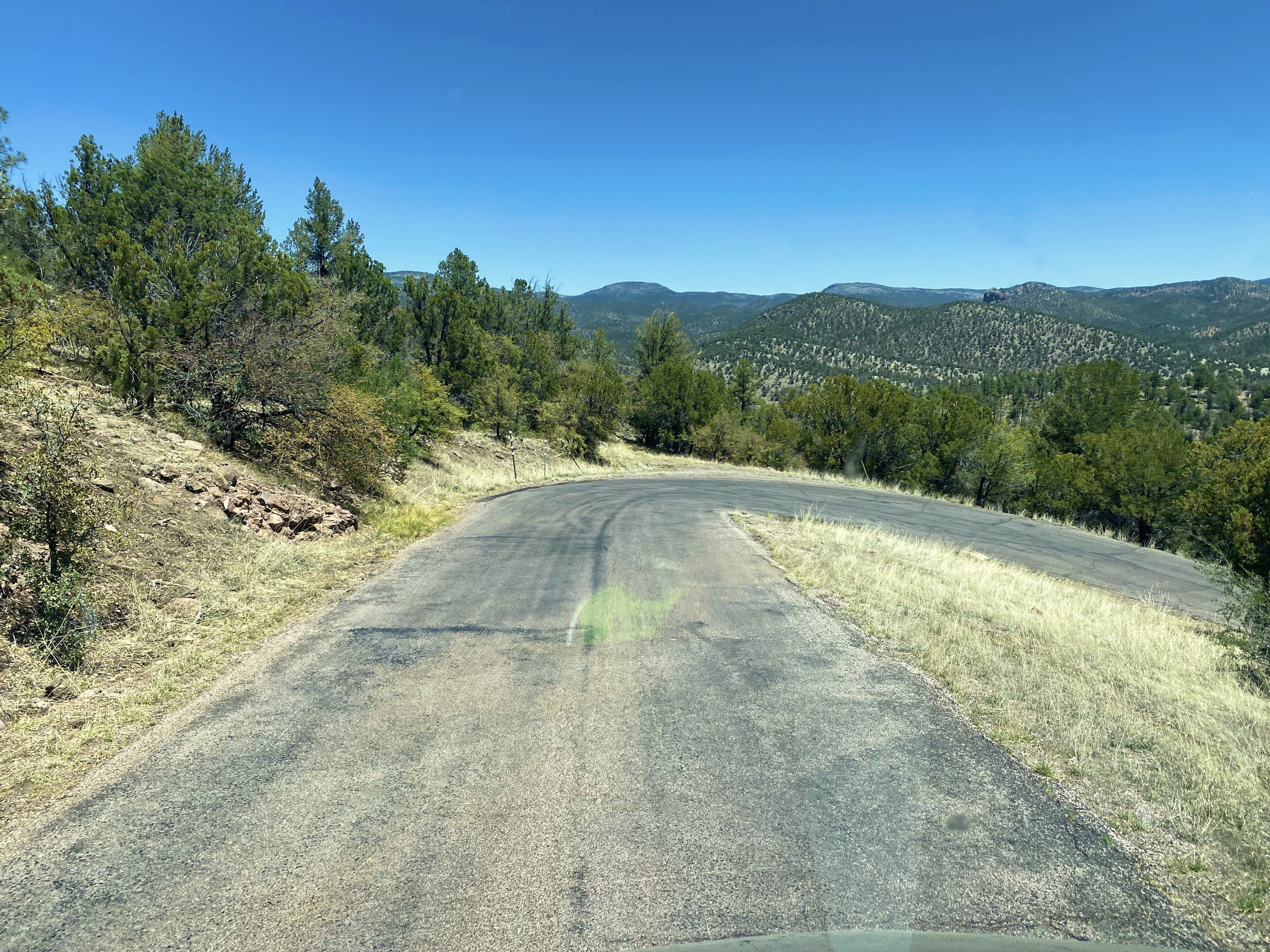
We used SC as our base from which to visit the Gila Cliff Dwelling NM. The drive is only 45 miles as the crow flies but the Pinos Altos Mountain Road (Route 15) is a winding, narrow climb up and over the the Pinos Altos Mountain Range. The 45 mile journey took us about 90 minutes. We had a sunny, clear day so we had great views of the landscape to the north and west once we reached the upper portion of the route.

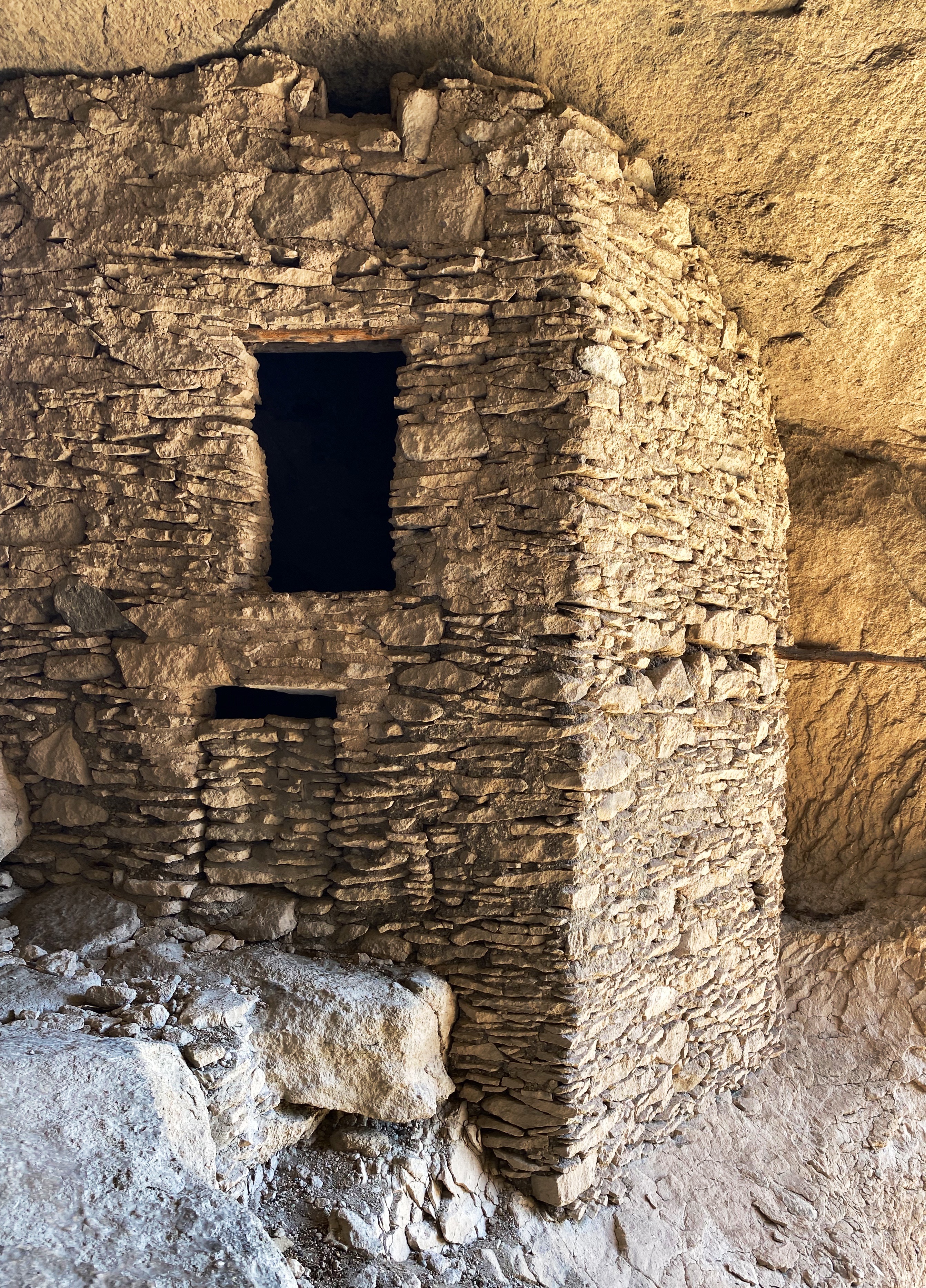
Once we arrived at Gila Cliff we spoke with the ranger to get oriented and then set off on the hike up the canyon and the switchback that leads to the caves. There are five caves here of which three are accessible. The cliff dwellings here are quite impressive, although on a much smaller scale than those we have previously seen at Mesa Verde and Bandolier.

The caves here were used as shelter by nomads for many centuries. In the 1280s the Mogollon People took up residence here and built the 44 rooms that exist today. The 1280s timing is based on tree rings on the wood framing which is original and shows a range between 1260 and 1280. It is thought by archeologists that 10 to 12 families resided in these dwellings. It appears that by the early 1300s the Mogollon had moved on to parts unknown. Why they left is unclear.

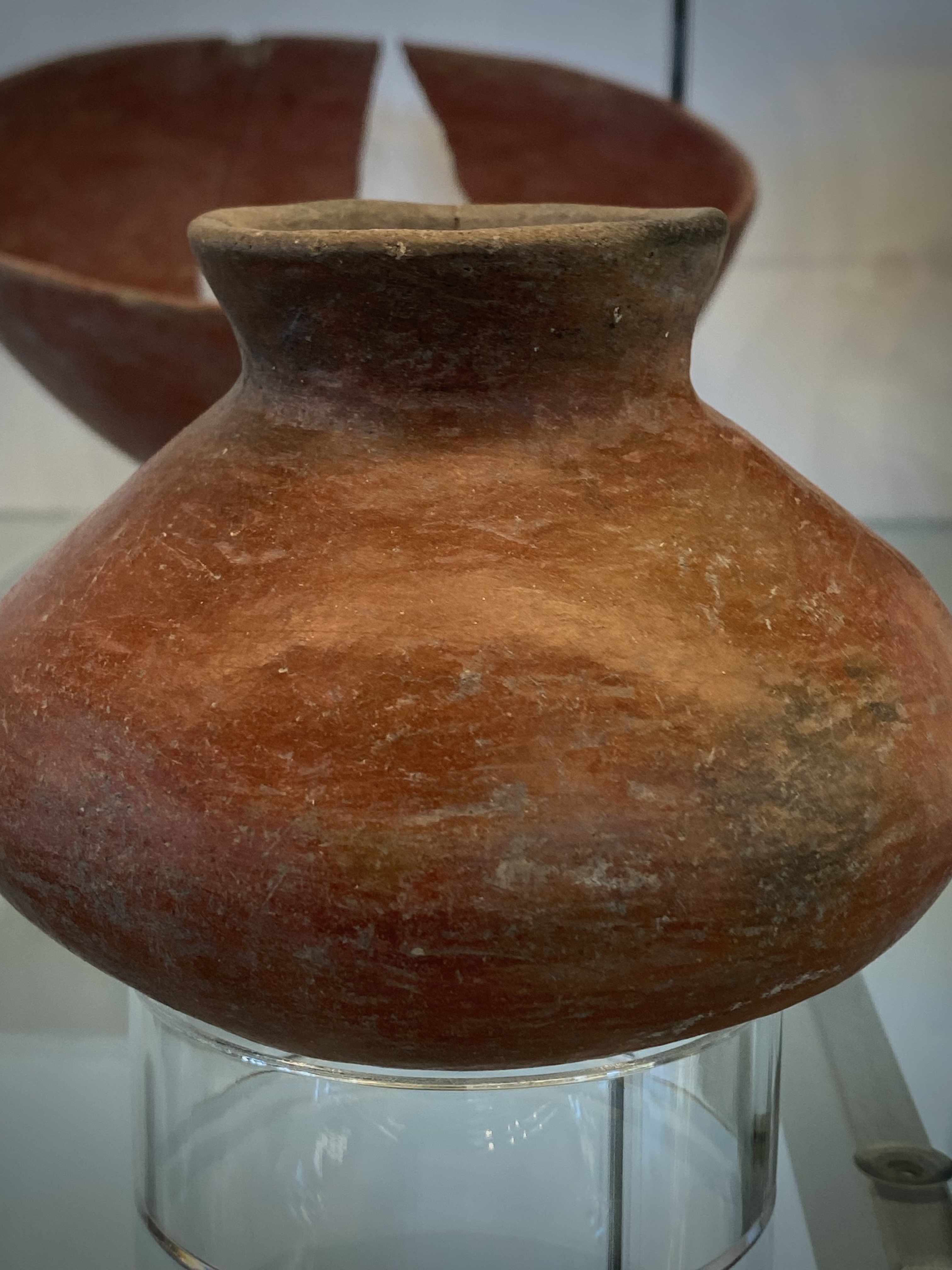
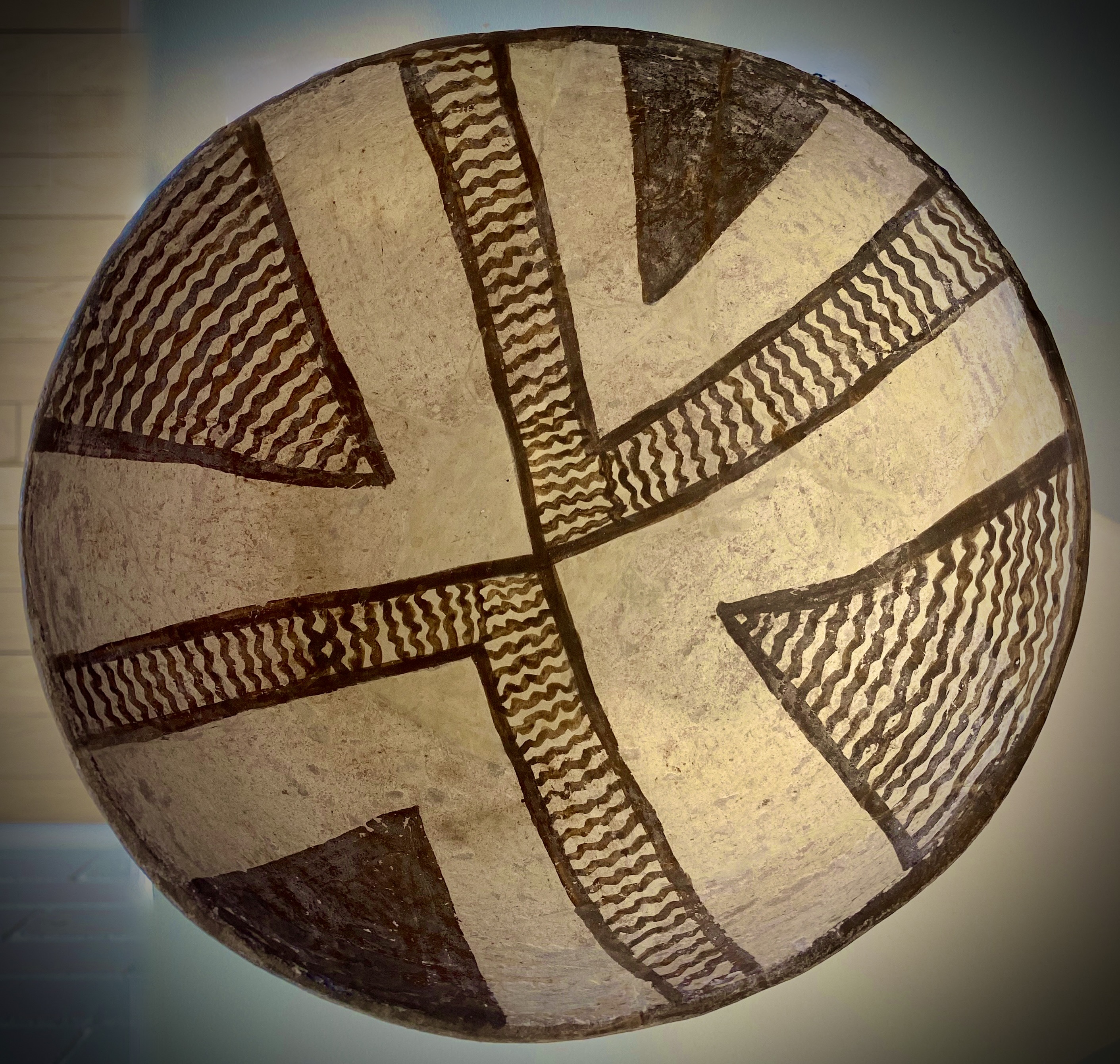
The Mogollon Peoples, in addition to being skilled builders and farmers, were outstanding potters. As a follow up to our visit to the cliff dwellings, we visited the Western New Mexico University Museum located conveniently (for us) on the campus in Silver City. The museum houses the world’s largest collection of pottery made by the Mogollon Peoples. Much of the pottery was discovered by ranchers who settled in the Mimbres Valley. Fortunately, a significant portion of the pottery was well preserved and the ranchers donated it to the museum. We have included several photographs below so that you might get a sense of the beautiful craftsmanship.

We had a great stay in SC. Our next travels will take us north through western New Mexico where will hike on a catwalk, visit a ghost town in the mountains, look into deep space and eat pie!

Be seeing you!

El Paso to Silver City:Desert to Mountains

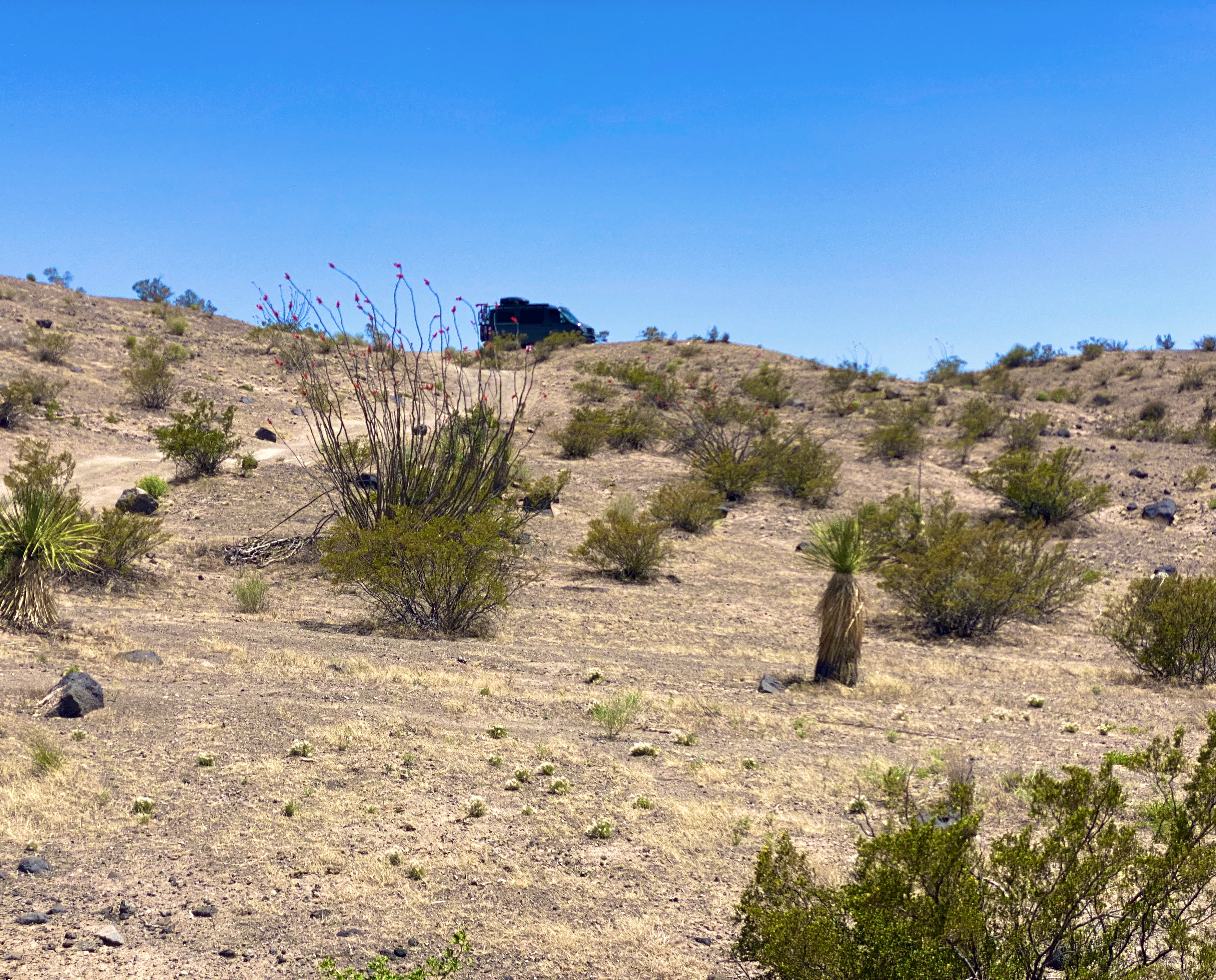
After our three day stop in El Paso we continued our journey west driving through the Chihuahuan Desert in New Mexico. Our plan was to cross a good portion of the state via the desert—intersecting with Route 11 before turning north and exploring the western portion of the state.

Chihuahuan Desert, New Mexico

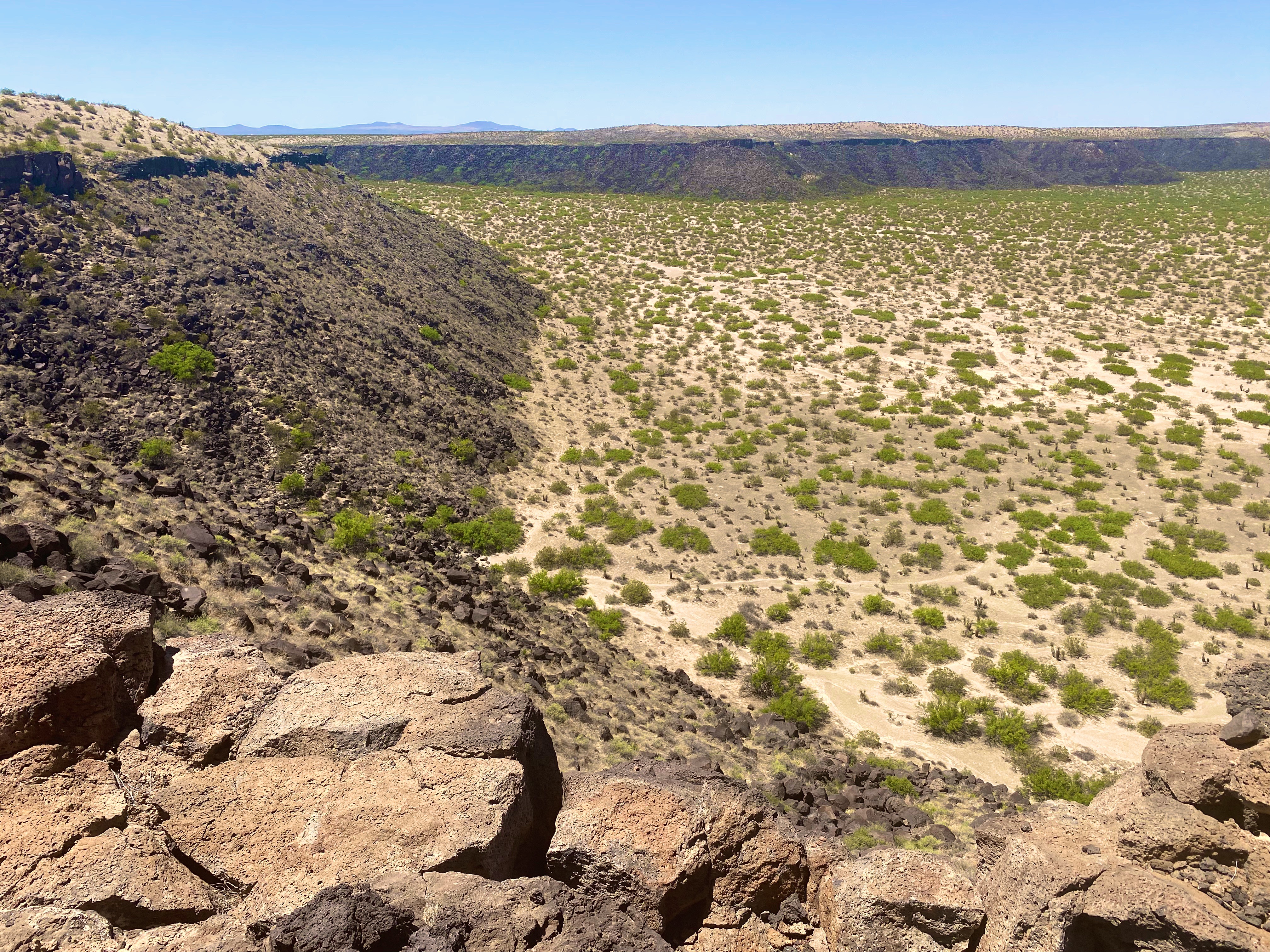
As part of the crossing we wanted to find the KIlbourne Hole. The Hole is a volcanic crater estimated to be between 24,000 and 100,000 years old and in the middle of the Petrillo Volcanic Fields. The crater is 1.7 miles long, a mile wide and from 300 to 400 feet deep. The crater was caused by a massive volcanic explosion which occurred when the underlying magma heats groundwater to the point where the resulting pressure literally blows the ground upward hundreds of feet into the air.

While it may sound funny, finding the hole required Maria’s expert navigation skills. Yes—the hole is over a mile long and wide—but driving on the flat desert floor provides no landmarks or rises from which to visually identify the crater.

Kilbourne Hole

The crater is impressive for both its physical size and the sense of complete isolation that you feel while gazing out from the rim. The force of nature required to create this crater boggles the mind.

From there we continued west along the boundary of the designated wilderness area. As mentioned earlier, we were hoping to cross the desert until we intersected with Route 11 which is the north/south route from Chihuahua. The road became particularly rough and we opted to find a route south to connect with the pavement of Route 9 — so we fell about 20 miles short but had no regrets about our decision.

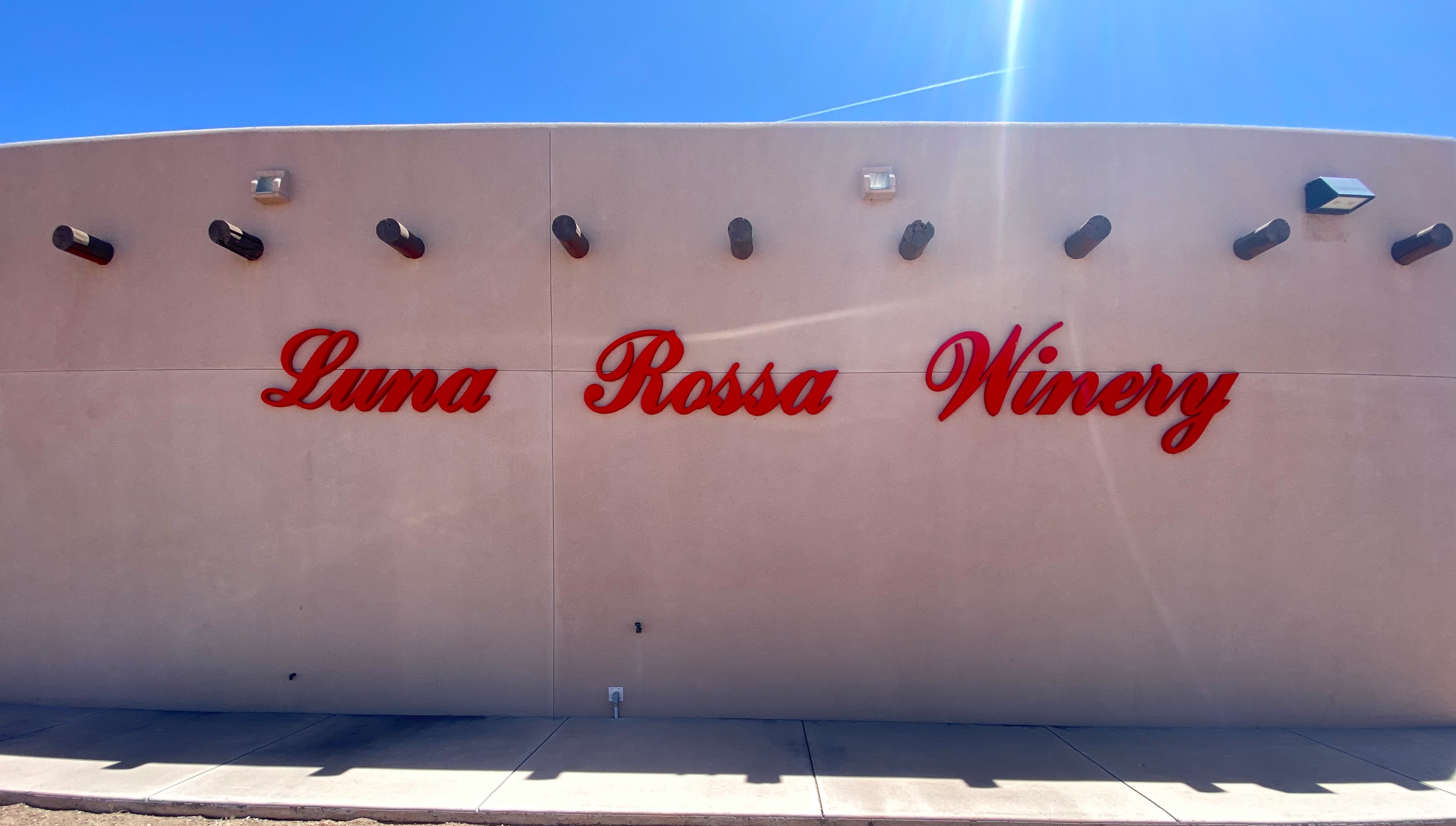
After reaching Route 11 we turned north for our night’s destination. Having worked up a thirst in the desert we decided that a bit of hydration was required. Fortunately for us, the Luna Rossa Winery is located in Deming along the way.

Paolo D’Andrea emigrated to the United States in 1986 from Italy and founded Luna Rossa Winery in 2001. The winery specializes in Italian varietals, and currently produce about 8000 cases of wine per year. In addition to the winery, they own and operate a pizzeria in Las Cruces, New Mexico.

We enjoyed a tasting of a number of their wines (purchasing several) and meeting some fellow travelers from Louisiana before departing for Rockhound State Park.

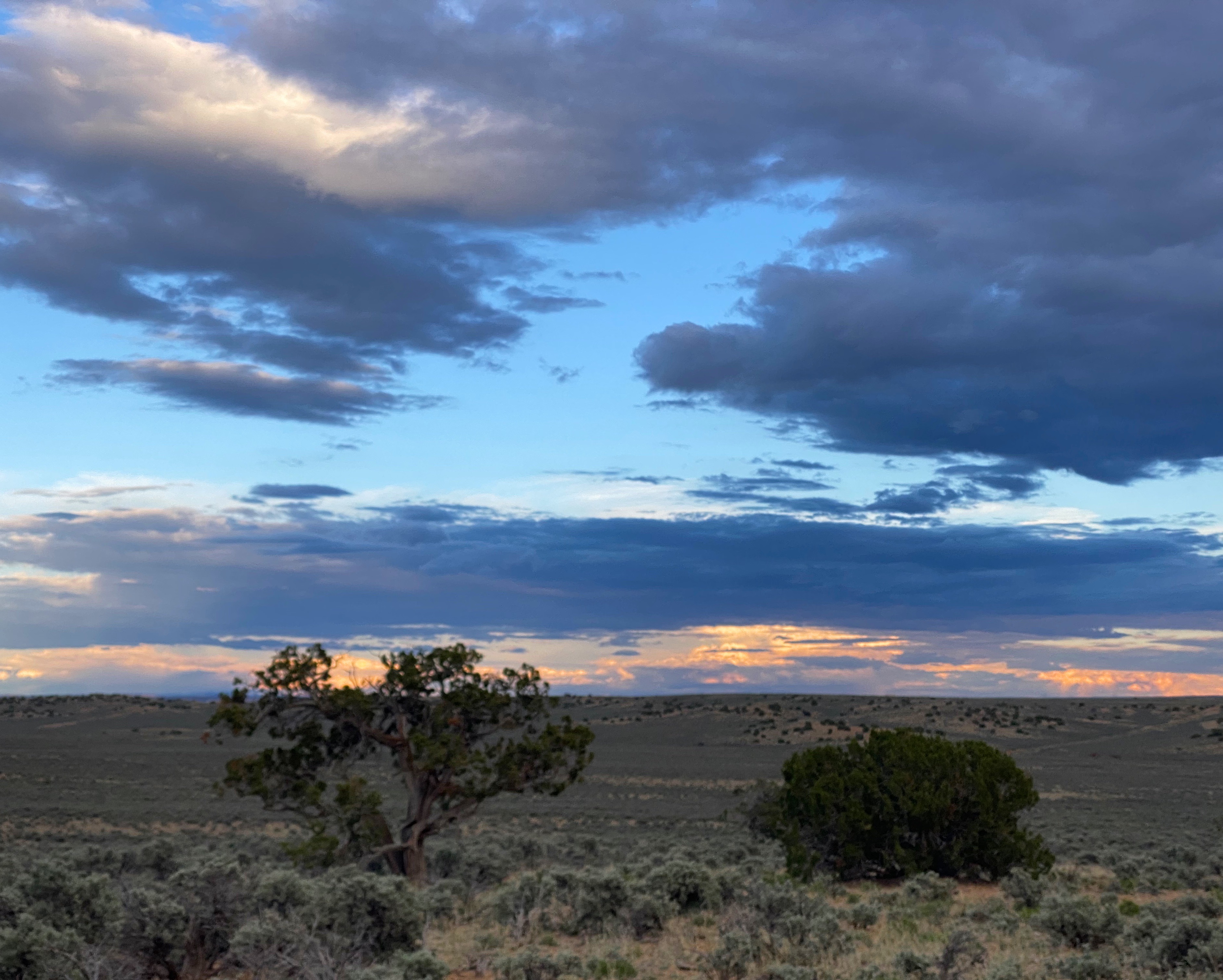
Florida Mountains, Camping with a View!

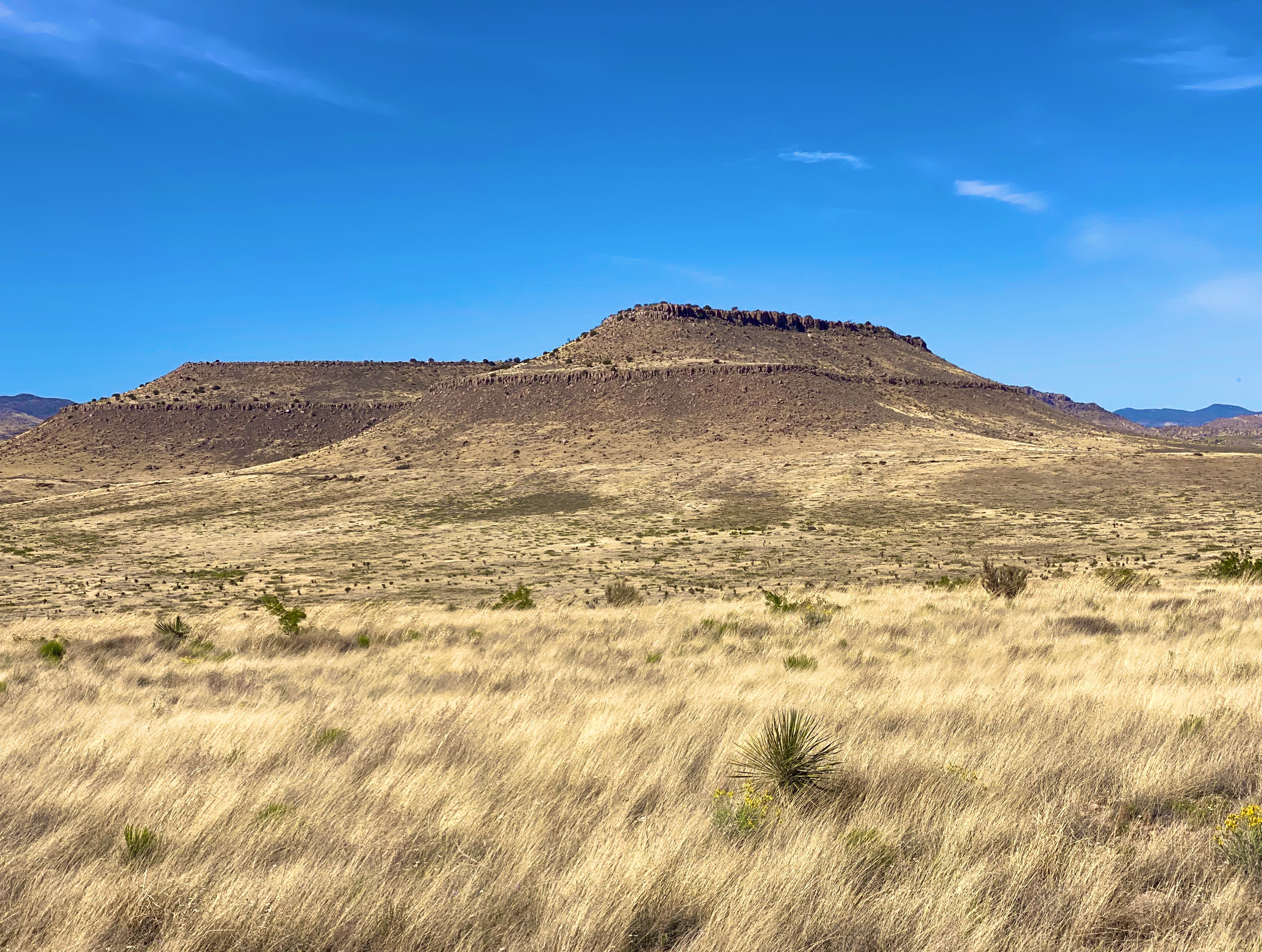
Rockhound State Park sits at the northern end of the Florida Mountains and in the foothills of the southern end of the Little Florida Mountains providing impressive views across the canyon in between. The Florida range is only twelve miles long but nonetheless quite impressive with peaks that sit at 5000 to 7000 feet above sea level. The surrounding flatlands serve to accentuate their prominence. Our campsite provided us with a spectacular view of the northern most peaks in the range.

The next morning we drove across the valley floor to access the Spring Canyon Trailhead. The Spring Canyon Trail winds its way up through the canyon until you reach the spring. But alas, the spring was already dry for the season. Nonetheless, it was a good hike providing solitude and great views to the north on the return back to the trailhead. The site of the spring where we stopped climbing is at approximately 5700 feet above sea level. Breathing hard!

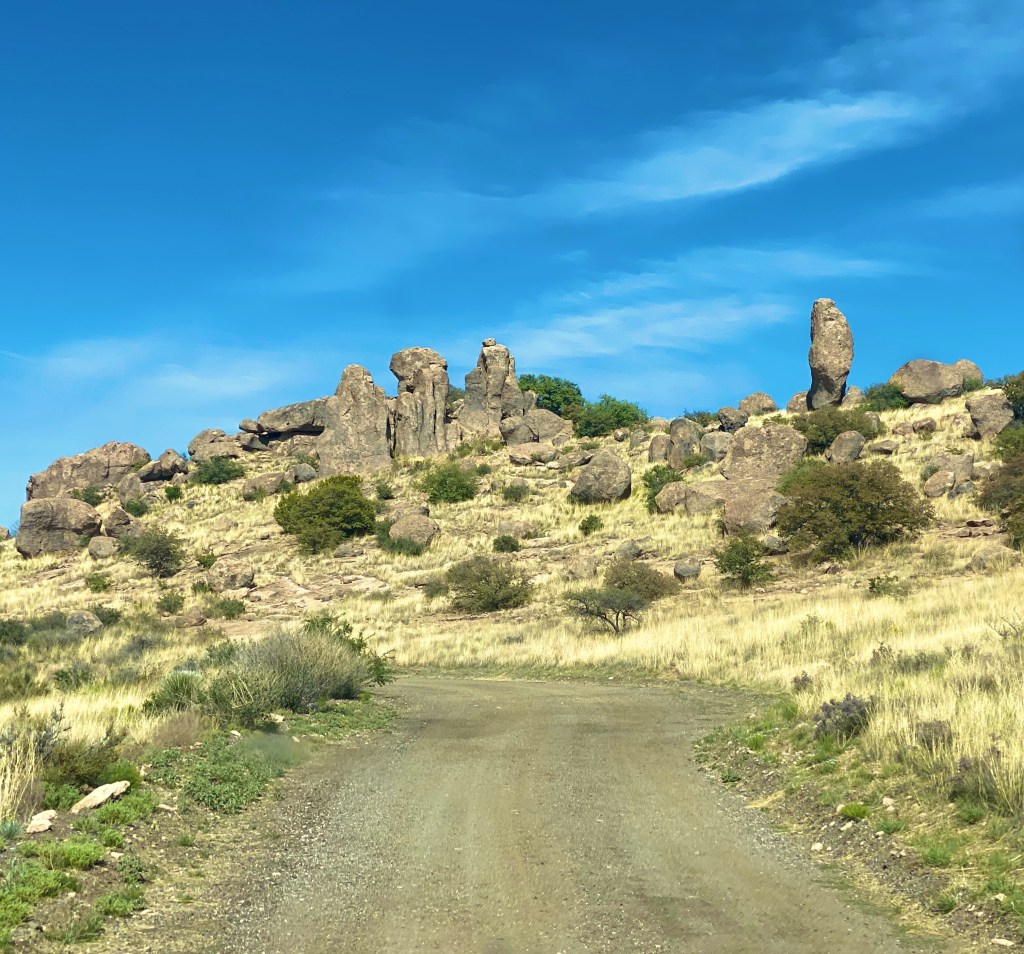
Our next stop was in Maywood at the City of Rocks State Park. The City is just one square mile in size and sits at 5200 feet above sea level in the northern reaches of the Chihuahuan Dessert. This area surrounding the rock formations is more reminiscent of grasslands than what we usually think of as desert. The rock formations are the result of volcanic activity 35 million years ago and the subsequent erosion of the rocks creating the pinnacles that exist today.

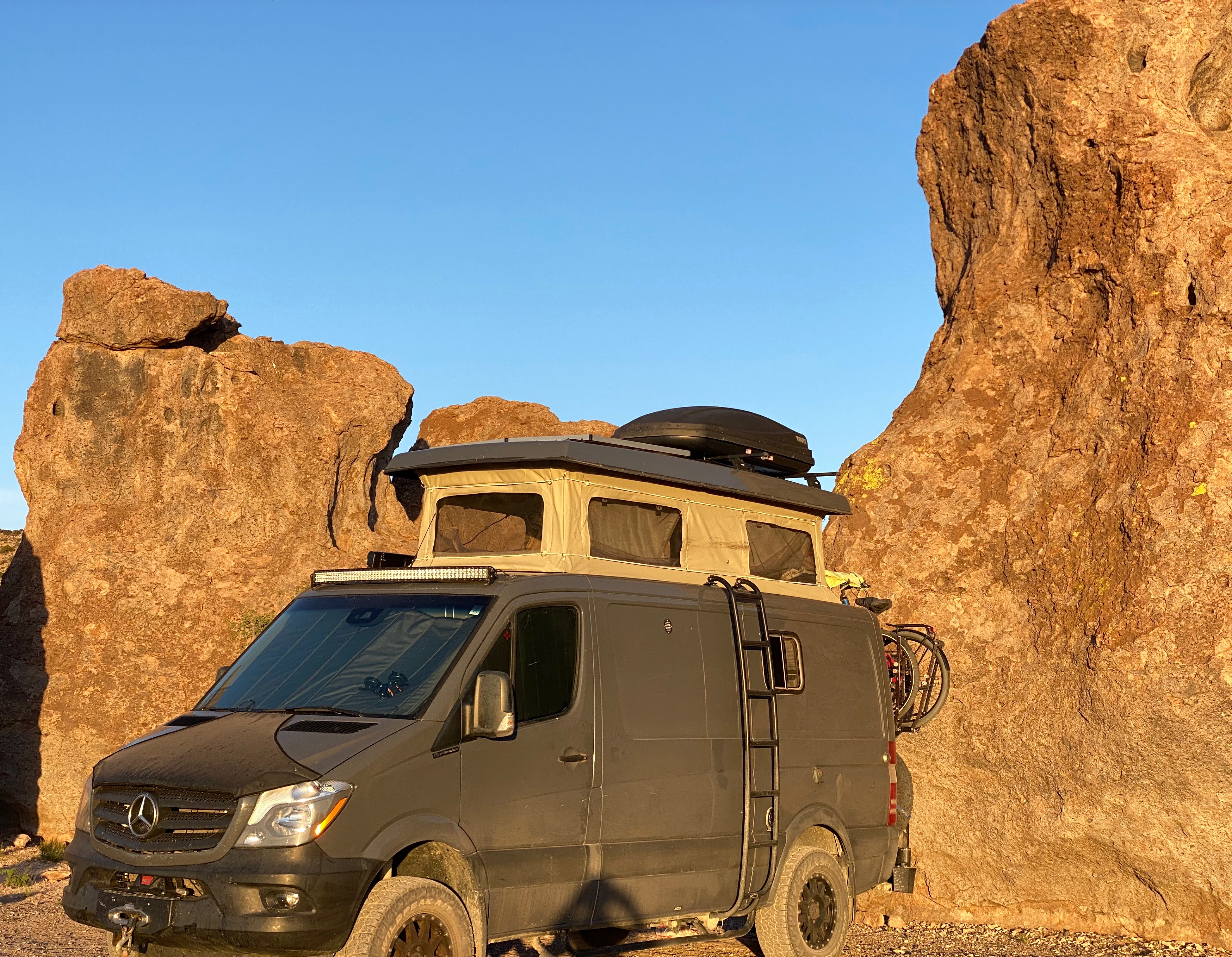
This state park offers primitive camping among the rock formations. We enjoyed a beautiful sunset and night sky before turning in for the night.

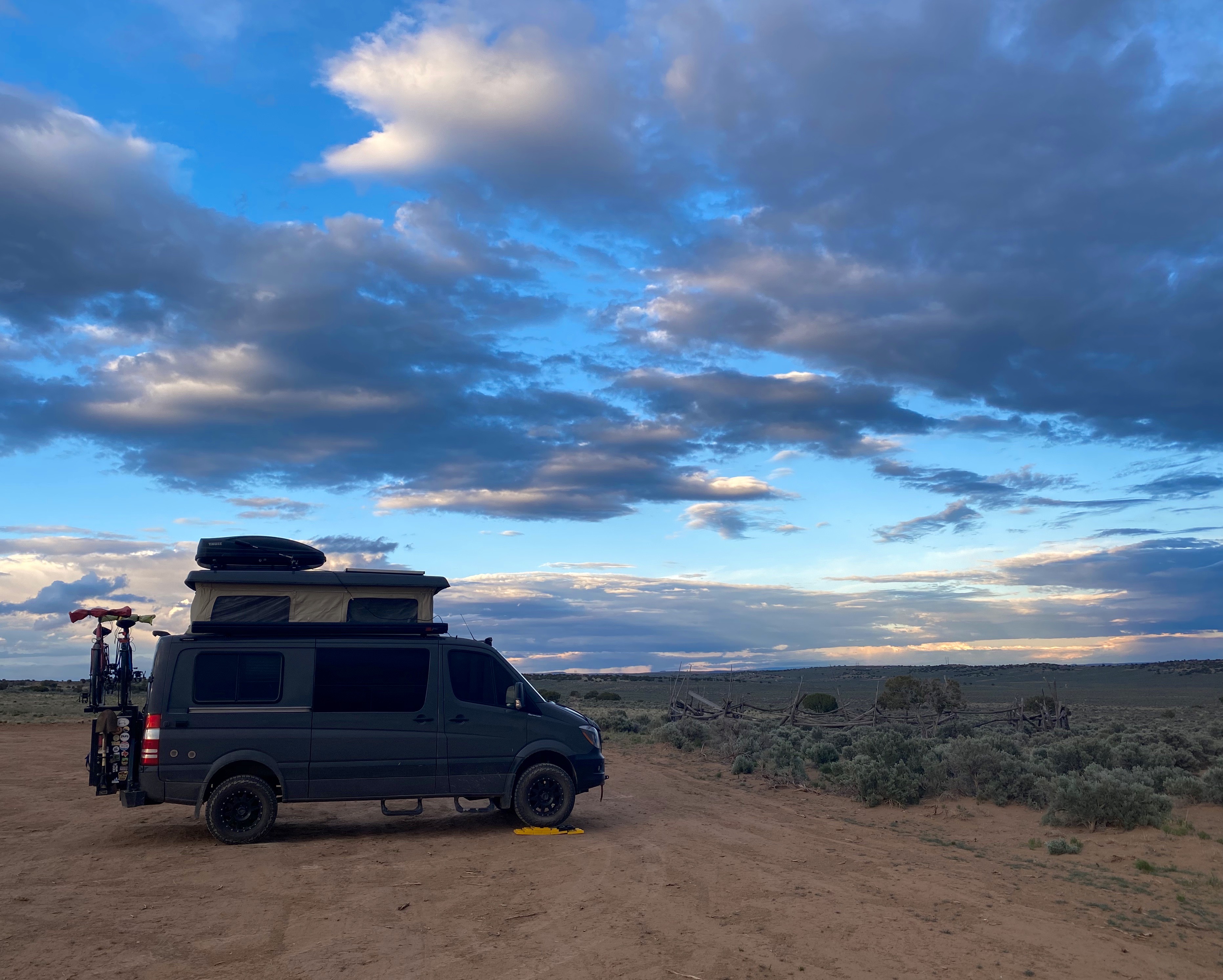
The Beast Sporting Desert Pinstripes

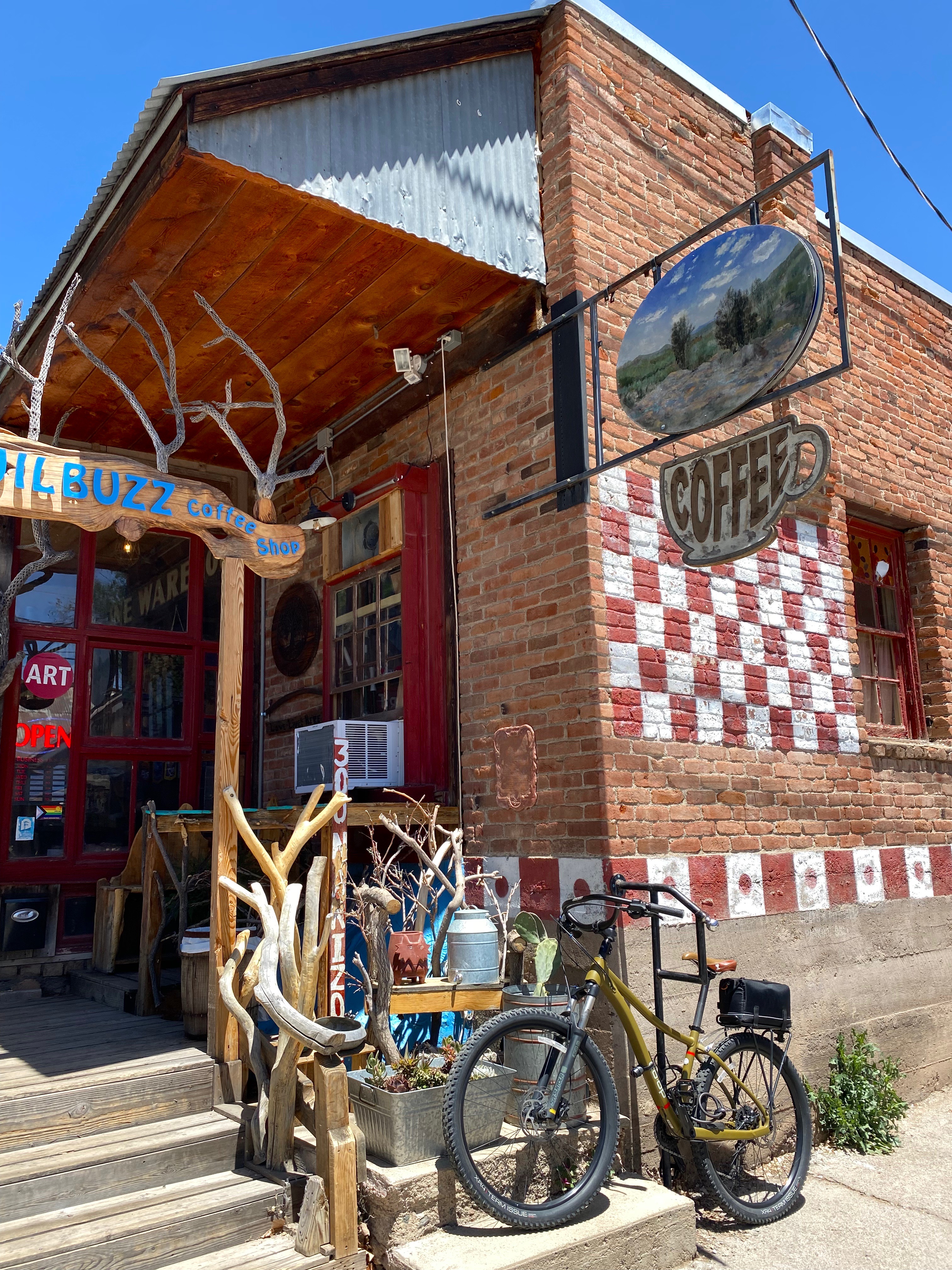
The following morning we traveled to Silver City – as the name infers, this area is a mining district. We spent the afternoon at the Tranquil Buzz Coffee Shop drinking coffee, meeting local folks and listening to live music. Eventually, we made our way outside of town to boondock in the Burro Mountain area of the Gila National Forest.

Dispersed CampingGila National Forest

In our next post we will chronicle our stay in Silver City and our journey northward in scenic Western New Mexico.

Be seeing you!

Pinto Canyon—Rugged and Beautiful Texas—But First, Food!

While visiting the towns of Marathon and Alpine we met several people that recommended we eat at Bordo if we were going to be in the vicinity of Marfa. We were fortunate that the eatery was open on Sunday from 11:00AM to 3:00PM as were going to be passing through Marfa that day on our way to drive the Pinto Canyon.

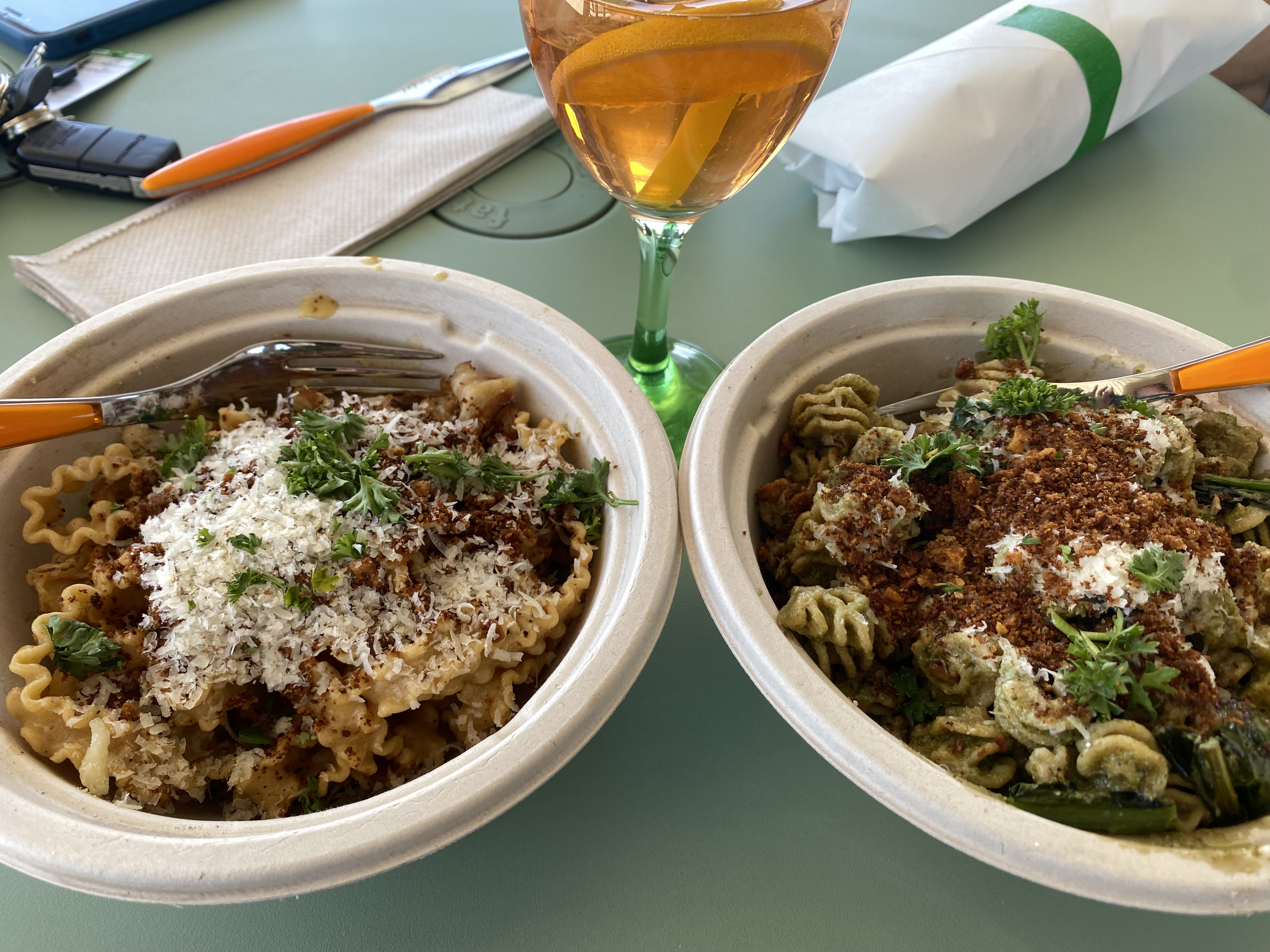
Bordo opened in March. It is an Italian market and retaurant serving house made pasta and sandwiches. They bake all of their bread in a brick oven which sits outside on the patio. We had a delicious meal which prepared us well for the adventure ahead. If you plan on visiting Marfa we highly recommend Bordo be on your food itinerary!

Pinto Canyon

We drove south from Marfa for about thirty miles on a ranch road where the pavement ended. We found ourselves sitting at the top of the spectacular Pinto Canyon.

Pinto Canyon

We have wanted to drive the Pinto Canyon since we read an article entitled The Road to Nowhere which chronicles the experience of the author tackling the canyon road. Finding this article was quite fortuitous — otherwise we would never known about the canyon.

The canyon has an interesting history. The first people arrived here around 13,000 years ago. These hunter-gathers were eventually displaced by the Apache that were dominant in the Big Bend.

Pinto Canyon Road

Texas authorized settlers to buy as much as 5000 acres of land in the ealy 1900s which brought a number of families into the canyon. The combination of drought, the Spanish Influenza (1918), the Mexican American War, the 1929 market crash and the ensuing depression sealed the fate of the settlers and the canyon. A handful of the settlers persevered but the canyon was all but abandoned.

Impressive Longhorn at Pinto Canyon Ranch

Today the vast majority of the the 15 square mile canyon is owned by one person — a retired CEO — and the canyon is a working cattle ranch (see photo above). We find the fact that one person can own all of this beauty in the middle of the Chinatti Mountains hard to fathom, but we are glad that you can at least traverse the canyon on the road (which is owned by the county).

The Un-cooperative Horse

After making our way down through the canyon we turned west and followed FM 170 to the end of the pavement in Candelaria. The FM winds through the Chihuahuan Desert along the U.S. side of the Rio Grande. The 50 mile road from Presidio to Candelaria was not paved until 1985.

At one point Candelaria was an agricultural town — growing crops in the wet areas along the Rio Grande. However, after the Mexican American War the army abandoned their encampment in Candelaria and the farmers had no buyers for their crops and no way to get their product to Presidio 50 miles east on a rough dirt road that often flooded.

Saint Theresa Church, Candelaria

Subsequently, the population declined from a high of about 300 to the current population estimated at 75 people. The only non-residential structure that we could see in Candelaria is the Catholic church pictured above. This small settlement is literally at the end of the road and looks and feels very much an off the grid enclave.

At Candelaria we had a decision to make — attempt to cross 40 miles of desert to connect with Route 90 or circle back around on the pavement. Based on the time of the day and the amount of rough road we had already covered we opted for the longer mileage but comfort of the pavement.

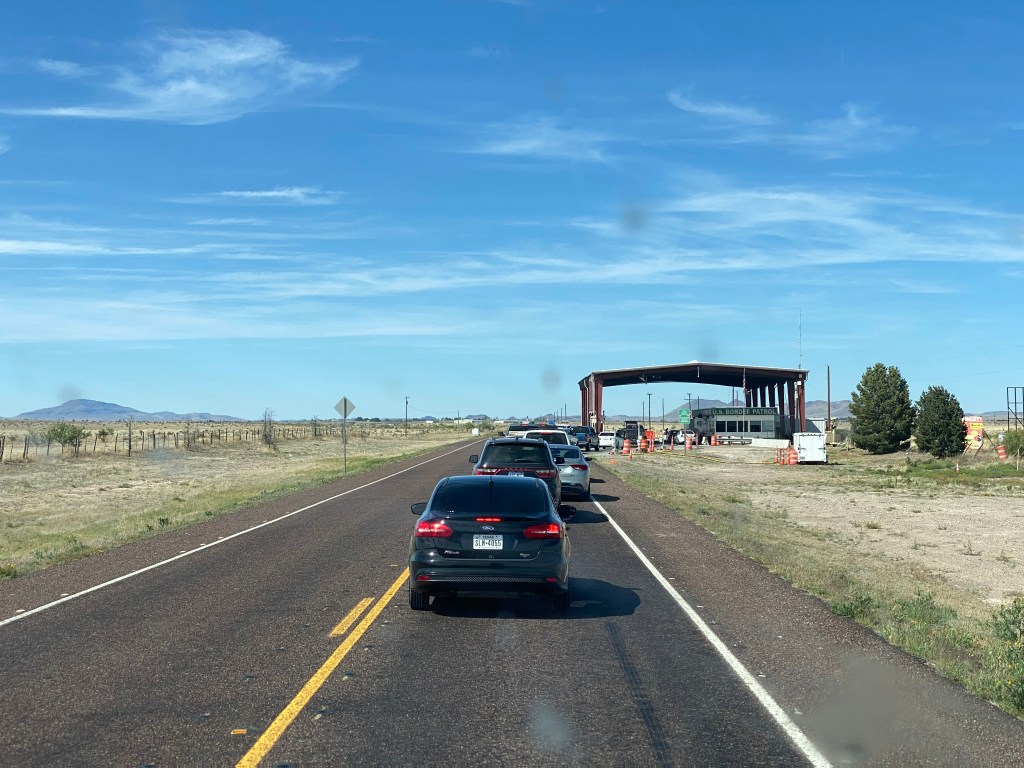
Border Patrol

As we turned north to head for our hotel we unsurprisingly encountered a Border Patrol checkpoint. We have been through dozens of checkpoints in our travels in Texas, New Mexico, Arizona and California.

Some of the checkpoints are permanent while others are mobile. The Border Patrol only stops and inspects vehicles heading north as their only purpose is to stop illegal imigrants entering from Mexico.

We think the checkpoints are a bad use of taxpayer money—regardless of your view on immigration—the investment in technology and people to staff these checkpoints is significant. The payback is small as the vast majority of people attempting to enter the country illegally are not hitching rides in the automobiles of U.S. citizens.

Valentine

Our journey north took us through the town of Valentine. The town’s origins, like may others in this part of Texas, rests with the railroad. Crews from the Southern Pacific Railroad laying track from the West stopped here on 14 Feb 1882 to rest. Subsequently, the town became a layover point for train crews and a cattle shipping point.

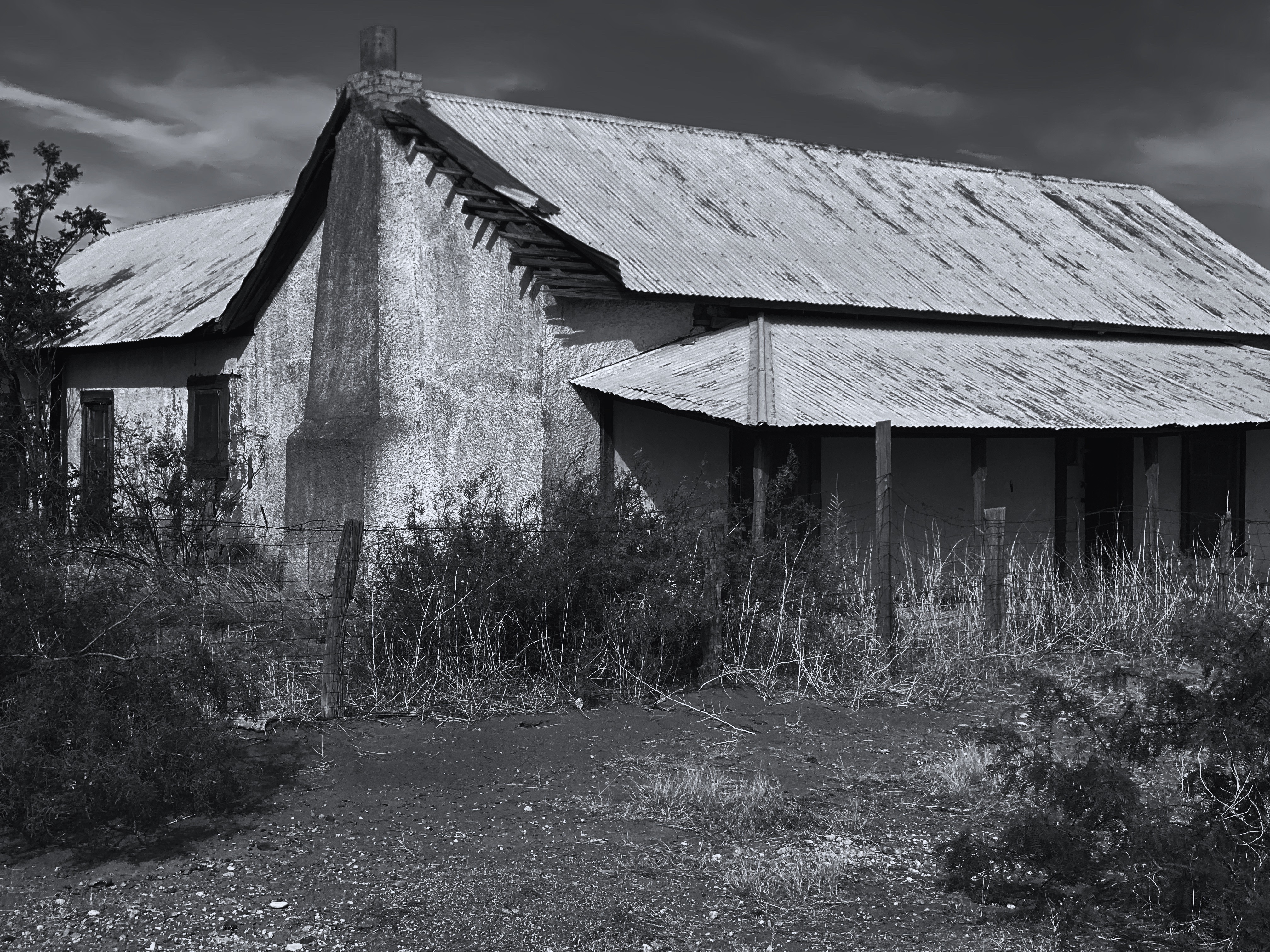
With the building of Ranch-to-Market roads livestock began to be shipped by truck and the town’s fortunes along with the population declined. Many abandoned buildings still stand in testament to the past. As you can see the church (below) has been well maintained despite the hard times. The current population is estimated at 134. Why people stay is a mystery but we were not disposed to ask any of the remaining residents.

Valentine Community Church

Valentine does have one big event that draws folks from many points on the compass. Every year on Valentine’s Day there is a festival in town to celebrate the town’s namesake holiday. And, of course, the Post Office does a booming business postmarking Valentine’s Day cards!

Prada “Installation”

By pure chance we happened on the Prada “Installation” which sits on the side of US Route 90 about 1.4 miles north of Valentine. As you may know, Marfa has become an unlikely art hub in the far west reaches of Texas. We have visited Marfa and it is a fun town to visit. There are a number of excellent restaurants and the Paisano is a great hotel. However, the minimalist art of Donald Judd and others does not resonate with us, although it clearly does with others far more knowledgable than us.

The Prada installation pictured above was placed on the side of Route 90 in 2005. On the first night after completion the installation was vandalized. The shoes and purses were stolen and the building was spray painted with the word “Dumb”. Apparently, not everyone agreed with the artists’ description of the work as “pop architectural land art”. While we do not support the vandalism we do not see any meaningful conceptual or artistic value to building a replica of a Prada store on the side of a rural highway.

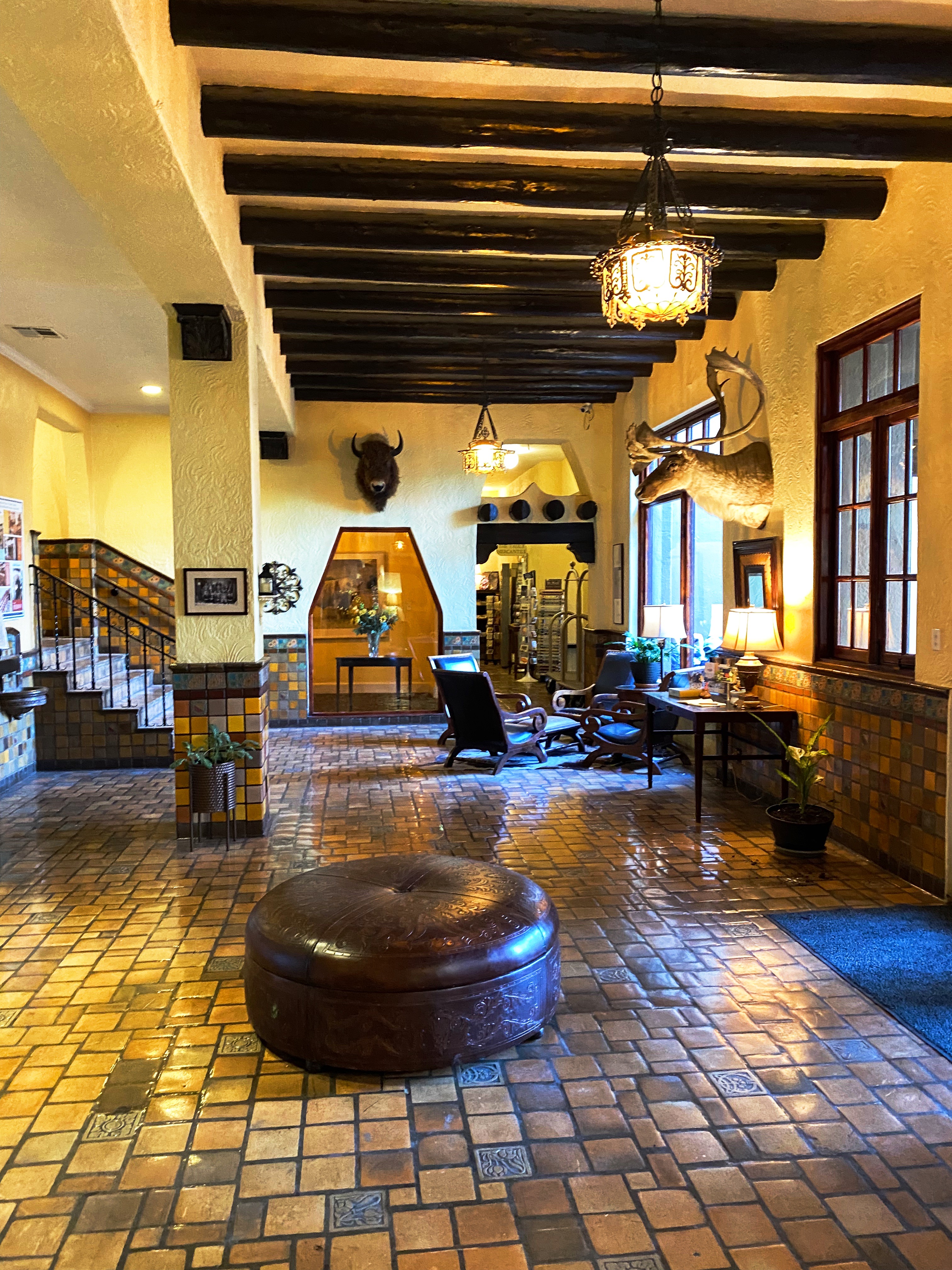
After our brief contemplation of the merits of the Prada installation, we completed our day’s journey in Van Horn with a stay at the El Capitain. The hotel is a classic Spanish style western hotel. We really enjoy the feel and look of this style hotel (a future post will showcase several of our hotel stays in Texas).

Our next destination is Guadalupe Mountains National Park. Pictured below is El Capitain—the first mountain you see in the range as you drive to the park from the south.

Be seeing you!

Chaco Culture National Historic Park: Stepping Back in Time

Chaco Canyon is a place we have wanted to visit for some time. During our 2020 roadtrip we were unable to get there as a winter storm rendered the roads in impassable. There are two unpaved roads into the park – both are rough, heavily washboarded affairs. From the north, County 7950 is 13 miles from pavement end to CC while Route 57 is 21 miles coming in from the south.

In order to optimize our time at the park we decided to take advantage of the camping opportunity at the Horse Thief Camp. The ranch property is on County 7950 and is the closest option outside the park.

HORSE THIEF RANCH

The ranch is owned by Wayne and Yolanda Beyale, and has been owned by Wayne’s family for many generations. The ranch sits amongst a patchwork of properties owned by the Navajo Nation and various federal agencies. The area that Wayne has set aside for camping provides panoramic views and and very dark skies (we also saw several wild horses).

Wayne is Navajo and graciously shared the history of his family and the ranch. He and his seven siblings spent summers living in a single hogan in the spot where we camped. The outdoor oven they used to bake and cook still stands intact. Two of the photos above show the circle corral where Wayne tamed wild horses that they captured (hence Horse Thief Camp).

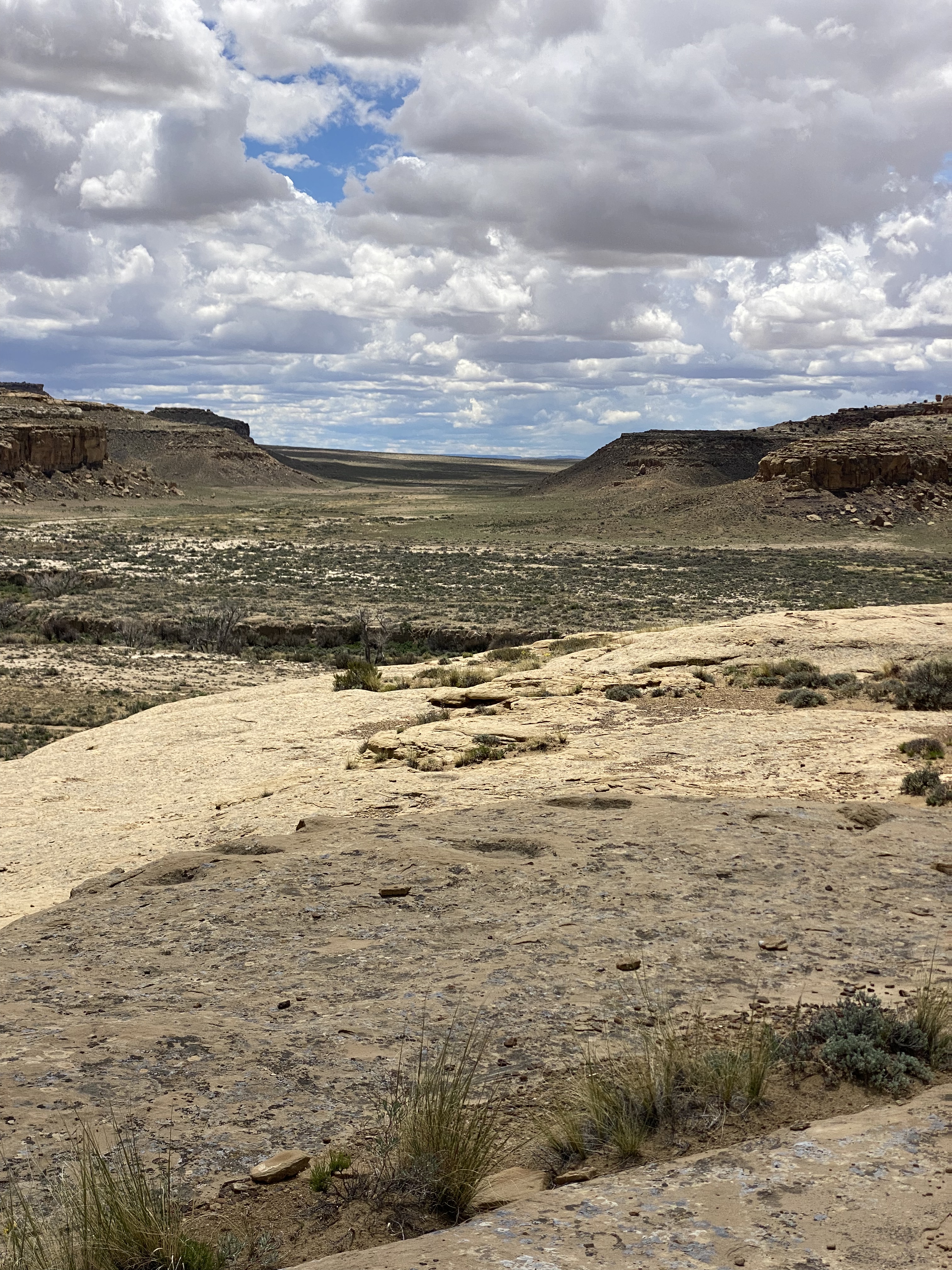
Chaco Canyon

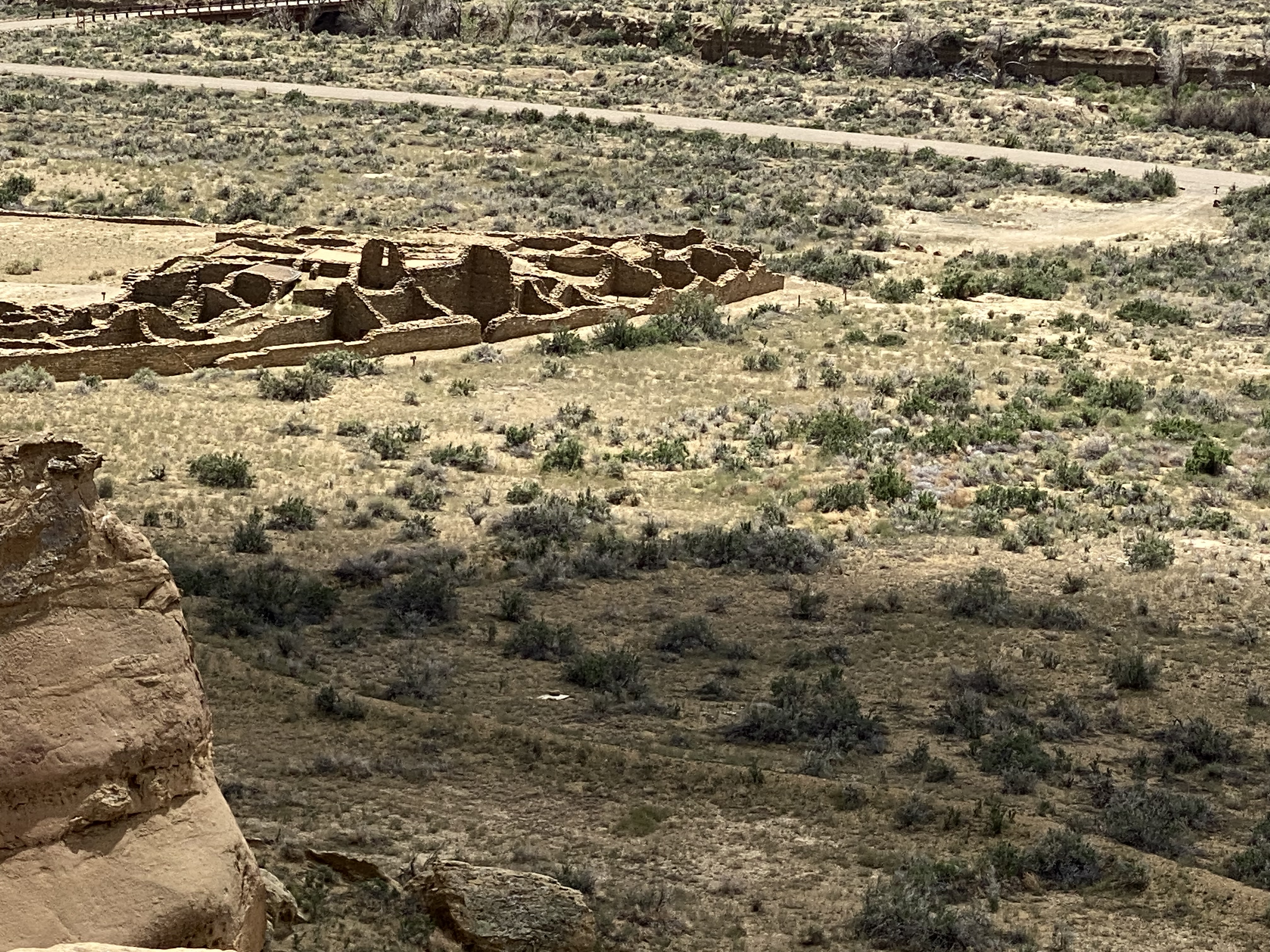
Chaco Canyon was a major center of Ancestral Puebloan Peoples between 900AD and 1150AD. The scale of the great houses and ceromonial sites here is larger than anything else to be found in the Southwestern United States. Within the canyon there are 15 major complexes. The largest of the structures — Bonito Pueblo — contains over 500 rooms!

Chaco Canyon is located in Northwestern New Mexico near the Four Corners. It is very remote — the first record of European people visiting the canyon is not until 1823 when New Mexican governor José Antonio Vizcarra led an expedition through the canyon. At that time this area was still under Mexican rule.

The Chaco Canyon National Monument was formally established on 11 March 1907 by President Theodore Roosevelt. This act preserved the canyon and the structures from any future development or extractive industries. The park was officially designated a national park in 1980 and an additional 12,500 acres was added to bring the park to the current total of 34,000 acres. There are over 4000 archeological sites within the 34,000 acres.

The structures at Chaco provide evidence of a very advanced civilization. The architecture, engineering and construction techniques are quite sophisticated. A number of the Great Houses were five stories tall. The structures were anchored by deep foundations which demonstrate the planning which took place prior to construction. The majority of the Great Houses were built on the north side of the canyon to optimize heat and light from the sun.

There is also evidence that the Chacoans built dams on side canyons to funnel water to the Great Houses and to the fields in order to irrigate crops. Additionally, the remnants of a road system leading away from the canyon in all four directions is still discernable.

Of course, the final question is why this great center was abandoned. And as is usually the case — no one really knows. There are a number of theories ranging from an extended drought, deforestation rendering the canyon unsustainable and political power struggles causing people to flee.

Hiking at chaco

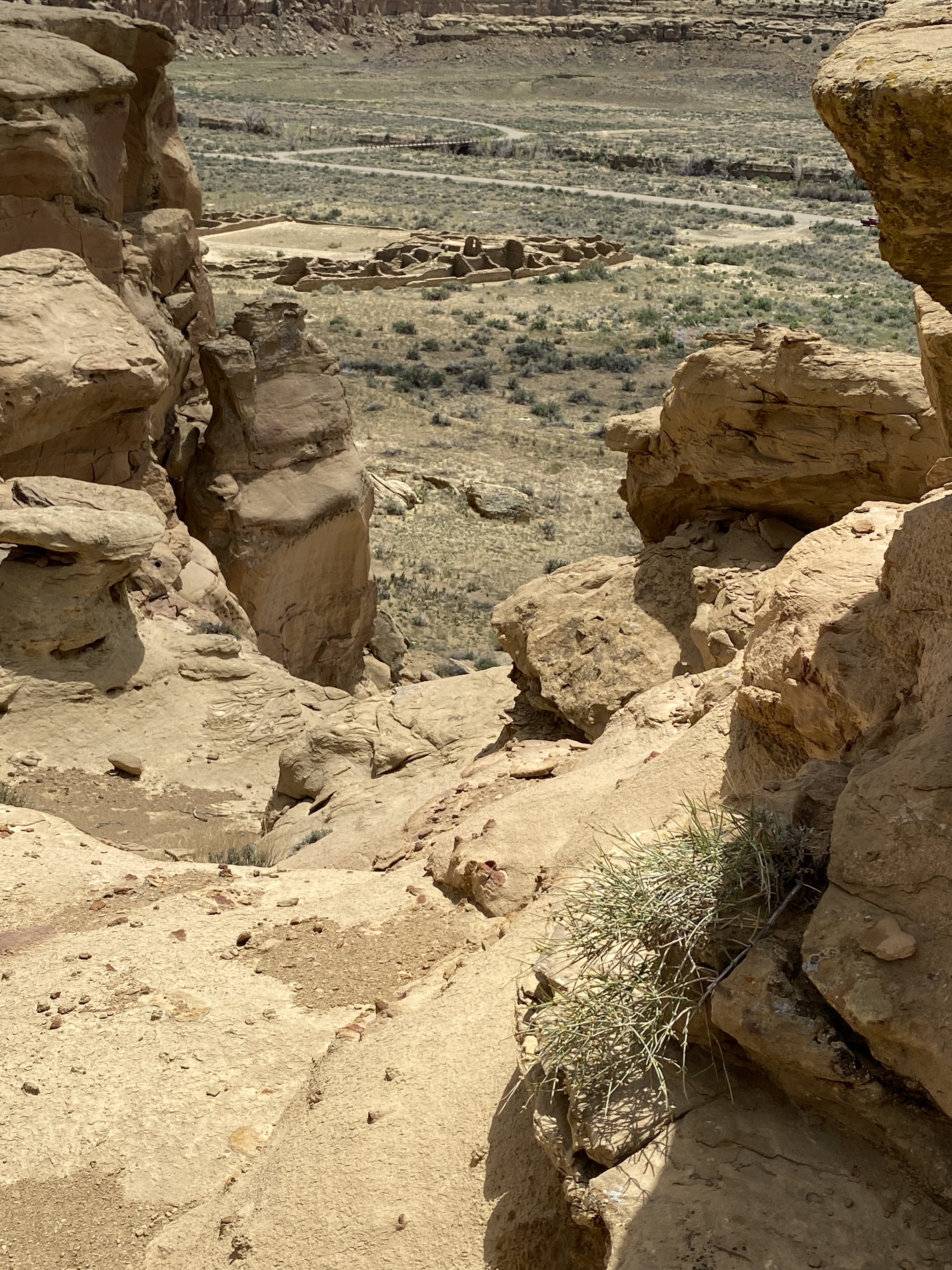
One of the great features at Chaco is the ability to tour the inside of the pueblos and explore the connected rooms, but the canyon rim above also provides a terrific overhead view. So we made the climb up on the Pueblo Alto Trail to see views of the pueblos and the canyon from above.

Pictured are three items we observed along the canyon rim. Starting from the left: a pecked basin — circle carved into the stone by the Chacoans as repositories for offerings; clam shells and shrimp burrows respectively. The clam shells and shrimp burrows testify to the canyon having been an inland sea during the Cretaceous Period (75–80 million years ago).

DEPARTING CHACO CANYON: ROUTE 57

After a full day of touring the pueblos and hiking along the rim of the canyon we set out for the Bisti/Da Nae Zin Wilderness. In orded to reach the Bisti we needed to travel south out of the park on the notorius Route 57. The 57 is a 21 mile stretch of rutted and washboarded dirt that runs through desolate ranch land.

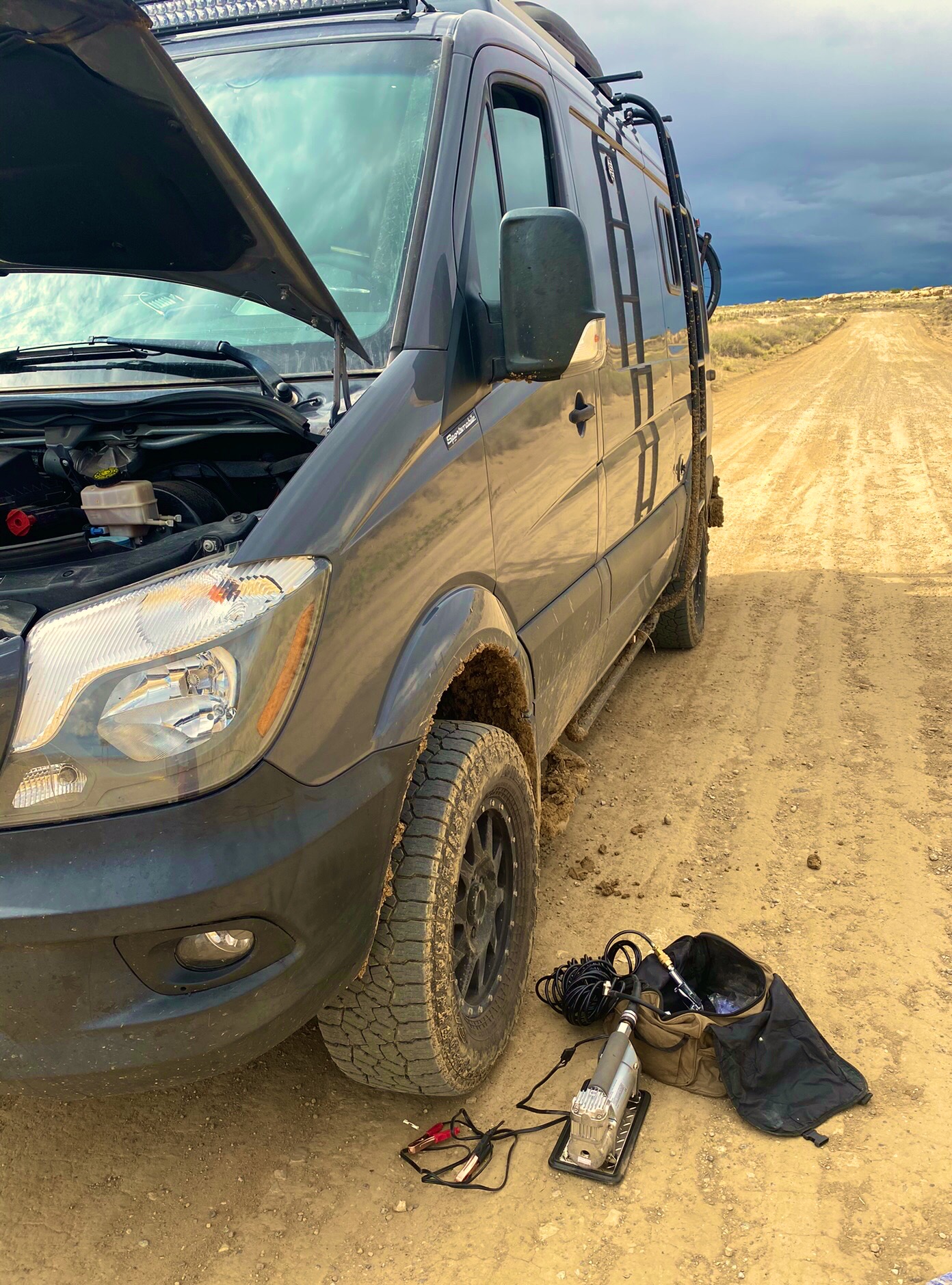
Route 57 is considered impassable when wet. When we left the park there were storms to our east — unfortunately, as we headed south a storm crossed our path and we found ourselves on the muddy and slippery version of the 57 (see video below).

Route 57

Fortunately, we were able to make it through — only sliding our back end into a ditch once — but we decided not to venture into the Bisti Wliderness as the road conditions there are as treacherous as the 57. In the photos below, we are airing up for our return to paved roads.

We highly recommend a visit to Chaco if you have the appropriate vehicle to handle the conditions and the patience to travel at very slow speeds for an extended period of time. Also, if you are interested in gaining further knowledge about this remarkable civilization we recommend Chaco Culture: A Complete Guide by Gian Mercurio and Maxymilian L. Peschel.

Be seeing you!

Three Nights in the Backcountry: Big Bend National Park(BBNP)

In March of 2020 OTR made our first visit to BBNP. Unfortunately, our timing was bad — the Covid Pandemic had finally made its way to Texas and the park closed the gates. We needed to leave the park after just two days.

BBNP was created in 1944 by Congressional Act and signed by then President Franklin D. Roosevelt. The deed for the park covered 700,000 acres of Chihuahuan Desert along the Rio Grande. Today, the park encompasses a little over 800,000 acres.

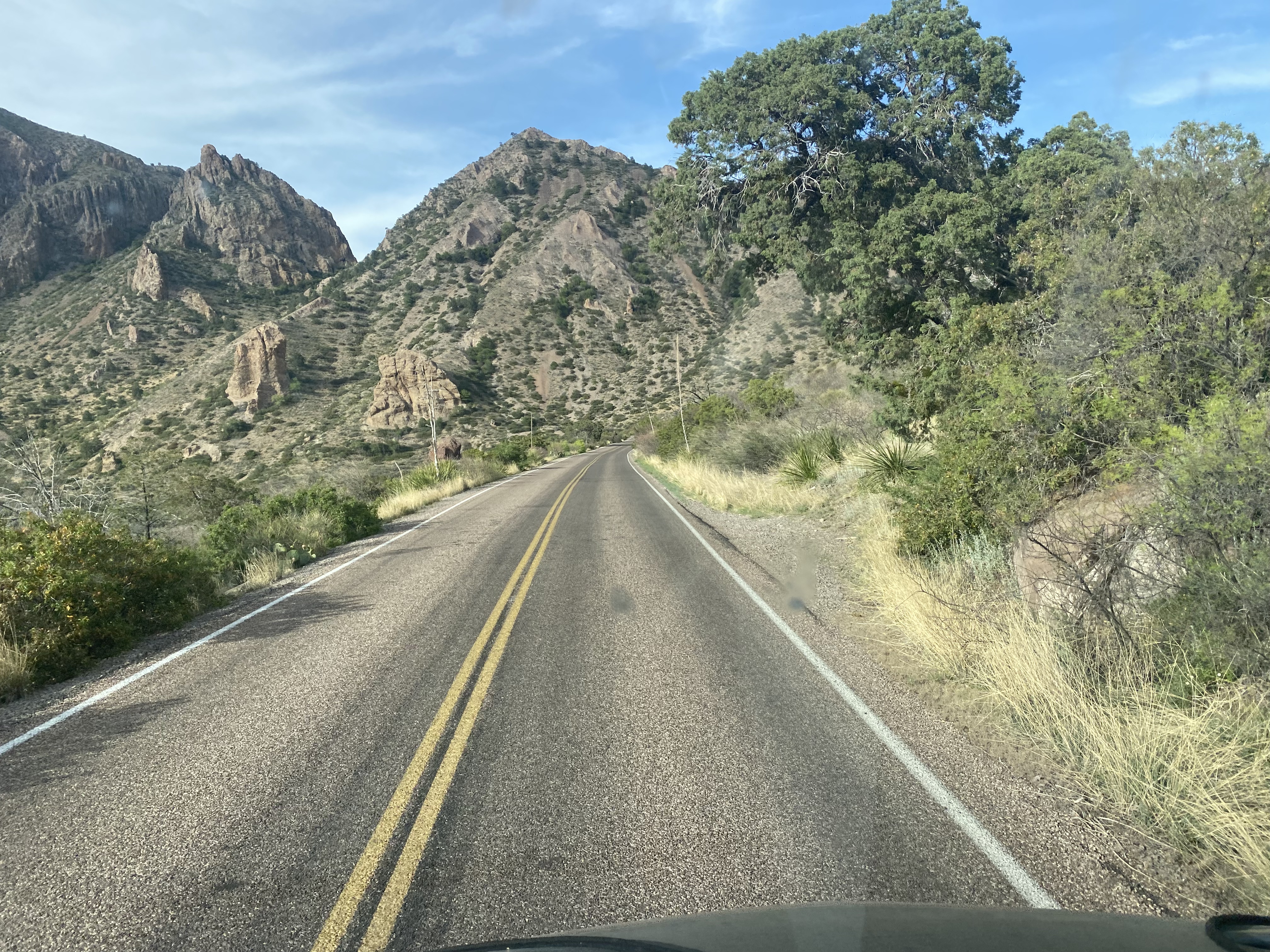
The park is one of the least visited National Parks, although it had its highest visitation in 2021. We can only surmise why this would be when this park offers so much stunning beauty – the Chiso Massive, desert, canyons and dark sky. There are probably several reasons – its remote location in Far West Texas abutting the Mexican border, the heat for much of the year and a lot of terrain accessible only by very rough roads.

Dagger Flats, BBNP

Day one

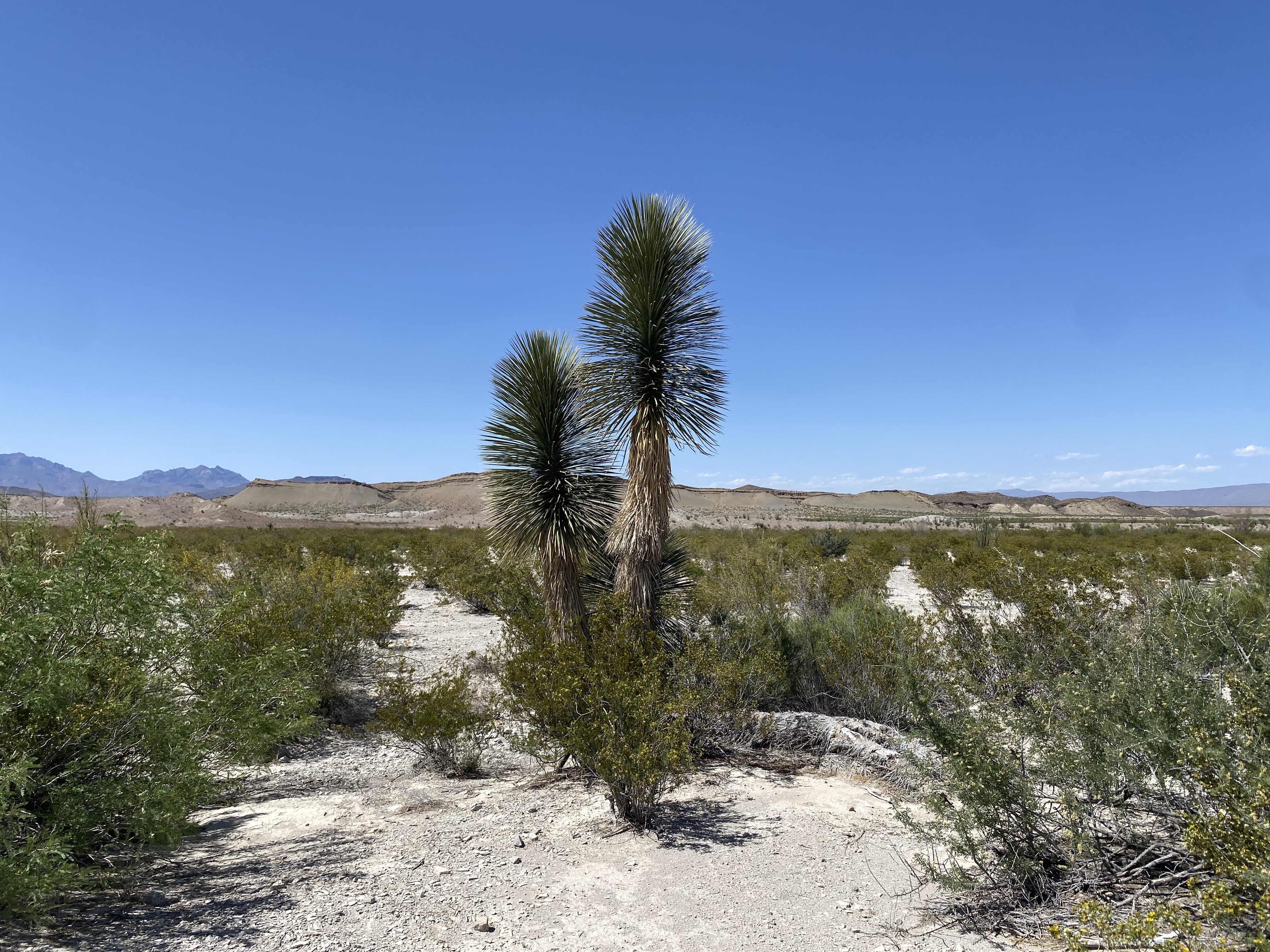
Because we were entering the park from the north we decided to immediately drive the backcountry loop out to see the Dagger Yuca Forest. Fortunately, our timing was perfect— the Yucca were blooming.

From Dagger Flats we needed to secure our permits for camping in the backcountry. Backcountry camping in BBNP requires traversing rough 4WD drive roads and means that you will be on your own and in some cases in a very remote area of the park.

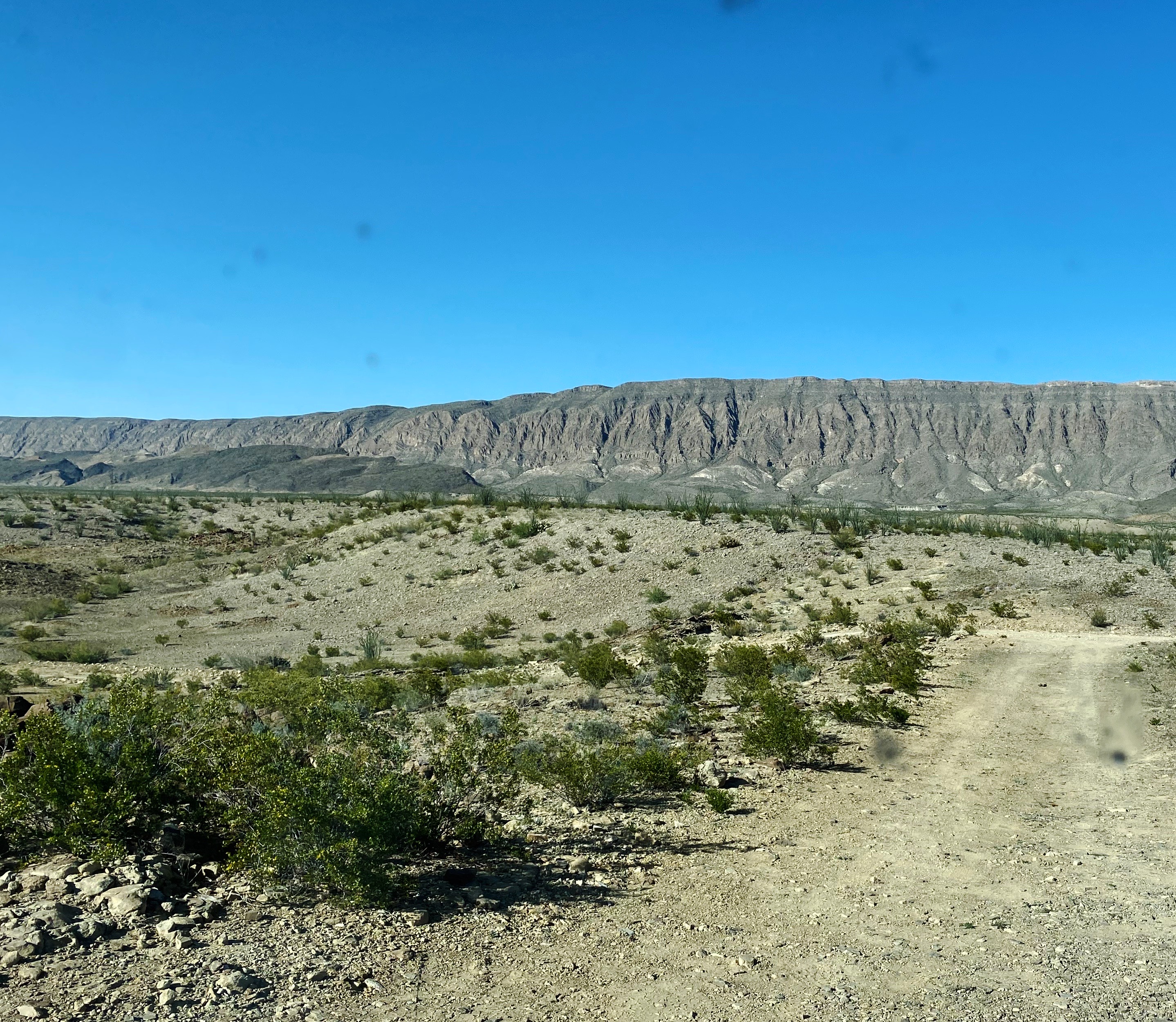
For our first night of camping we selected an area deep in the southeastern area of the park which is the desert floor (1700 feet above sea level). We followed the River Road East to its terminus a few miles north of the Rio Grande; the 25 mile journey took about 2.5 hours (slow going but exciting).

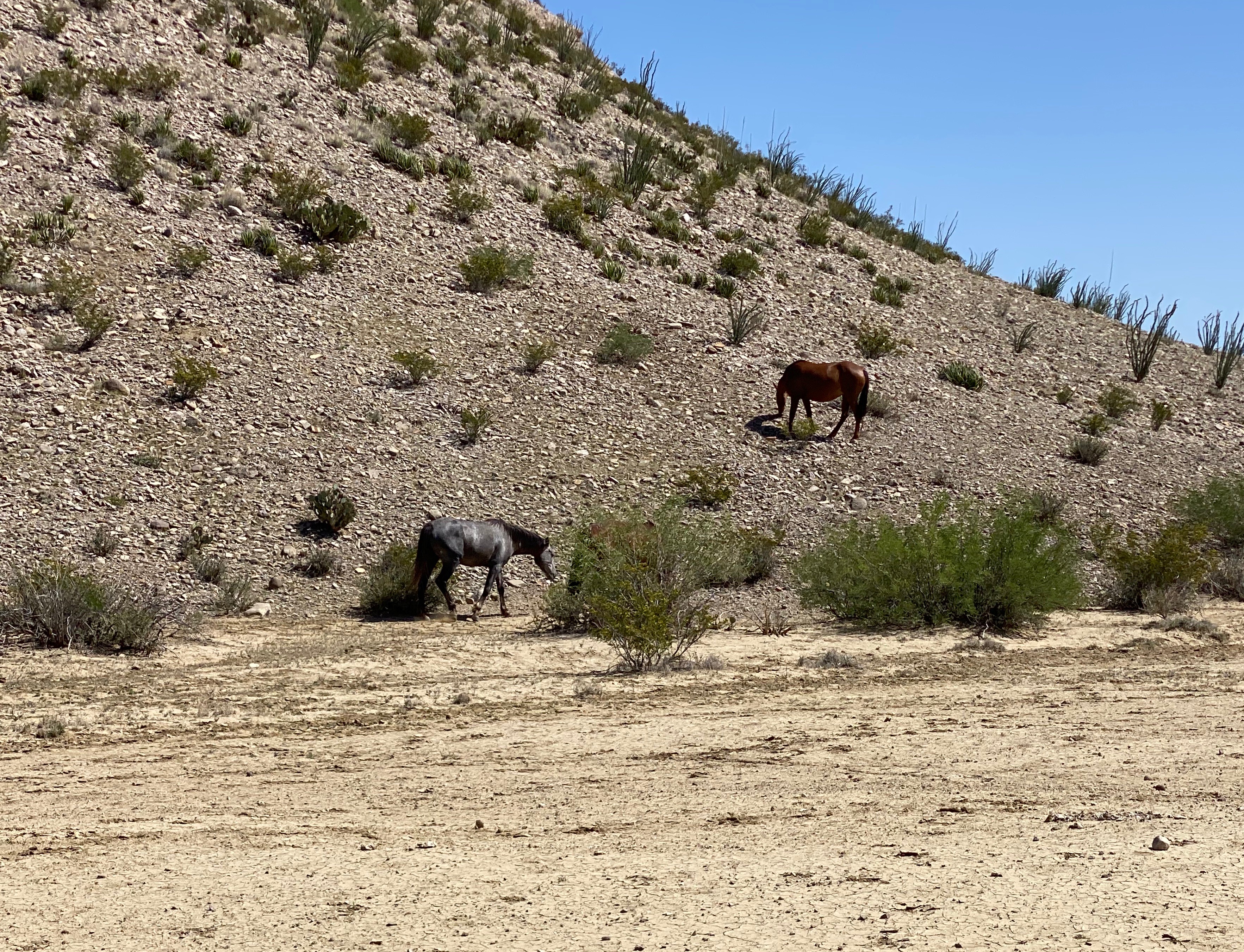
Our journey took us past an abandoned (but still toxic) mercury mine and provided phenomenal views of the Chisos Mouontains. Additionally, we encountered a herd of horses that we thought were feral but later learned are horses from Mexico that wandered across the border.

Day two

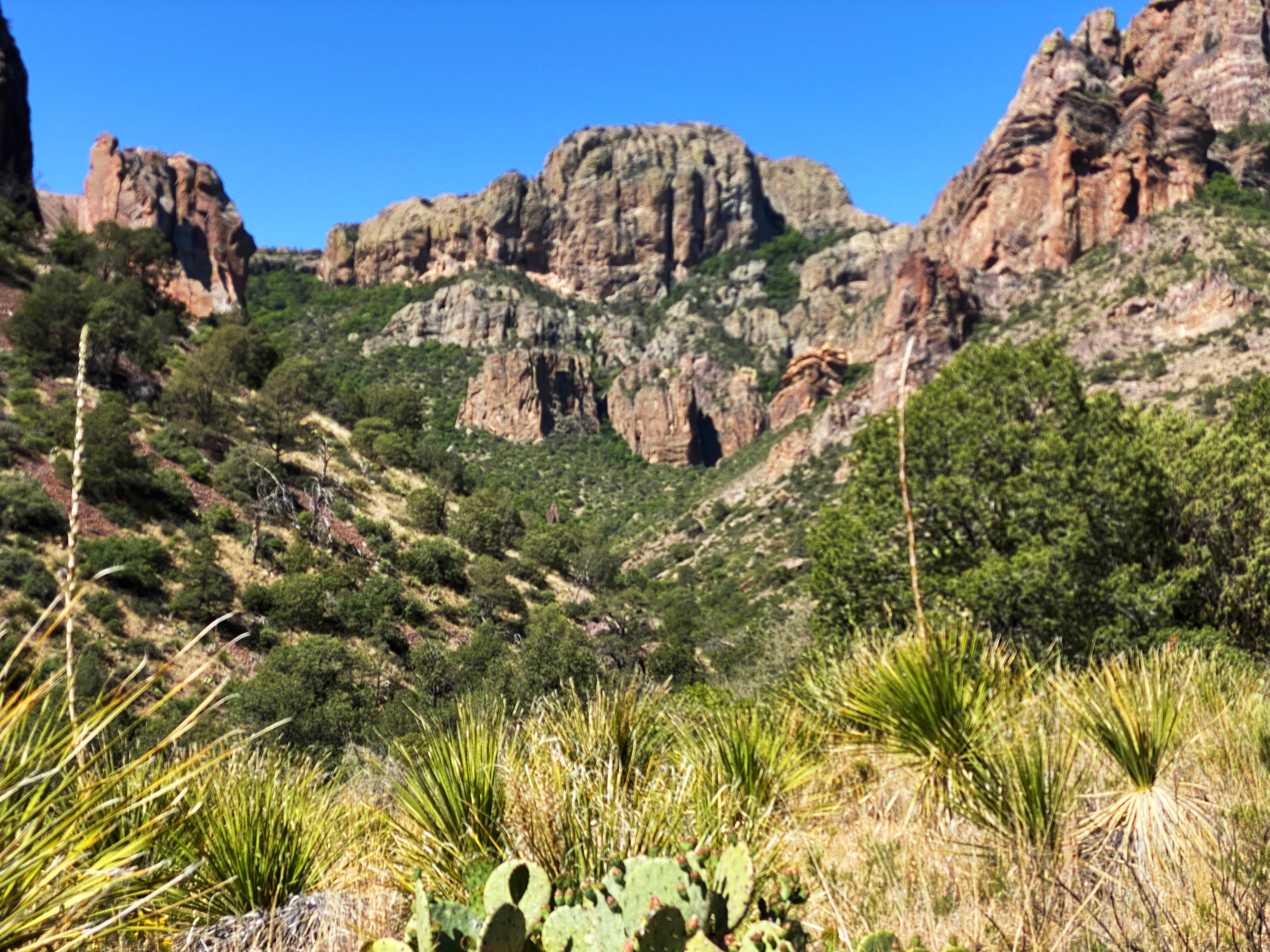
Our camping perch was a short distance from the Mariscal Mountains so we were able to get an early start hiking in the Mariscal Canyon and avoid the afternoon heat where the temperatures reach 95F this time of year.

We also learned that in addition to horses plenty of cattle from Mexico have found there way across the Rio Grande. When we later asked a ranger about the cattle he indicated that there are over 1000 head of cattle from Mexico in the park.

After our hike we retraced our route back east on the River Road until were back on asphalt and then motored north to drive up through the Chisos and into the Chisos Basin.

Casa Grande, BBNP

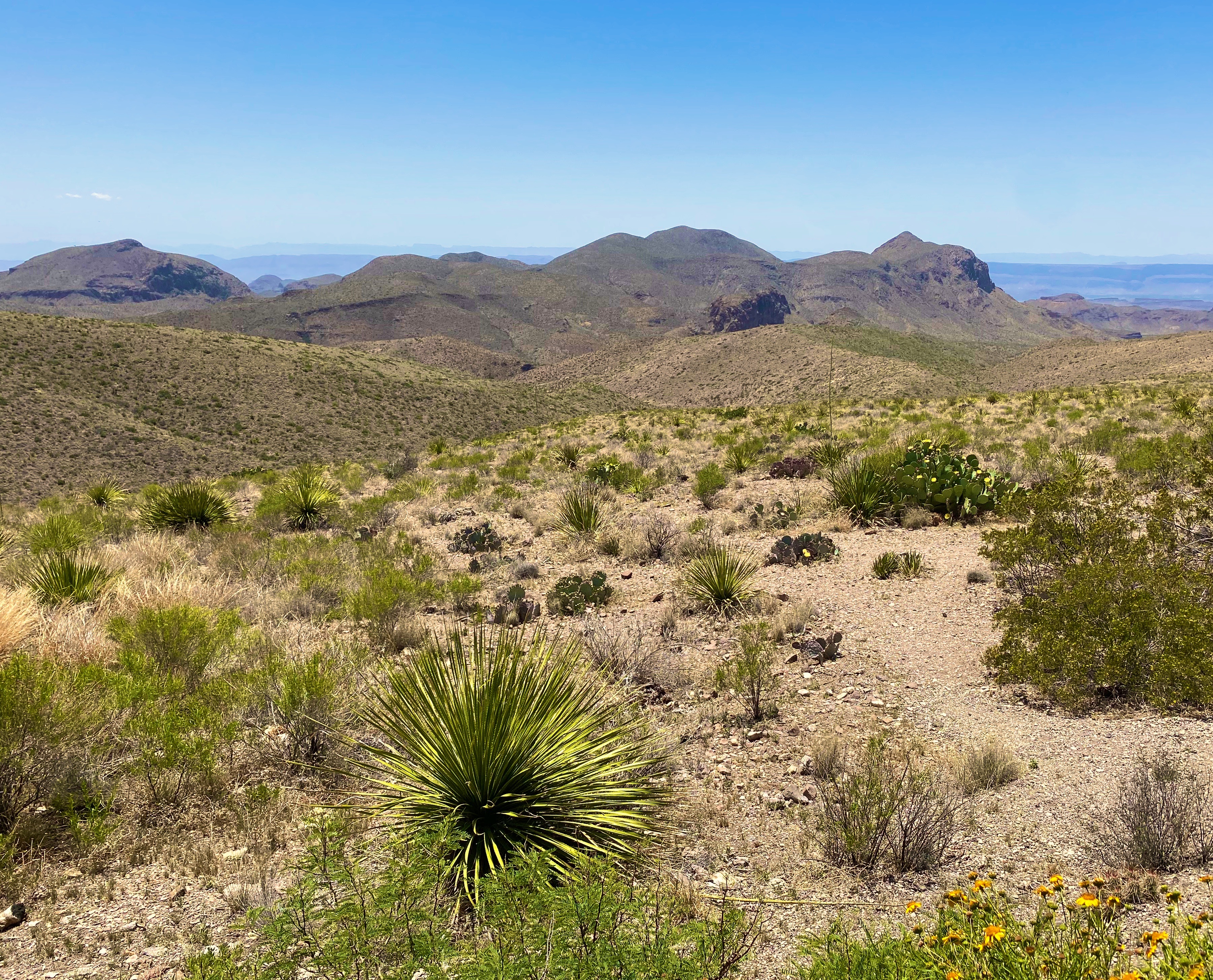
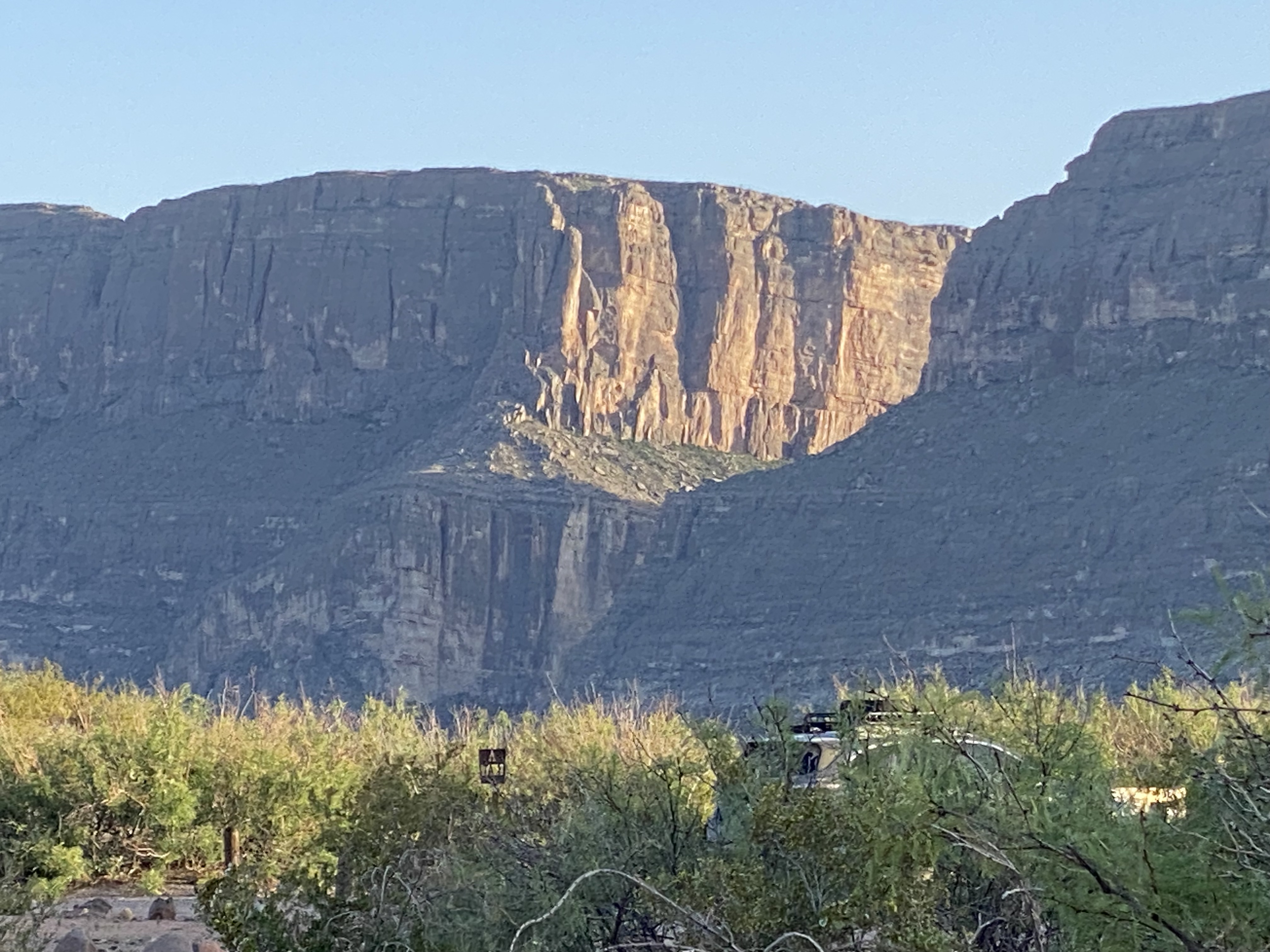
After taking in the views of the Chisos from the basin we headed back south to our camping spot for night two. We had another great camping spot in the shadow of the Chillicotal Mountain. From our camping area we had a 360 degree view – the views to the south were of mountains across the Rio Grande in Mexico.

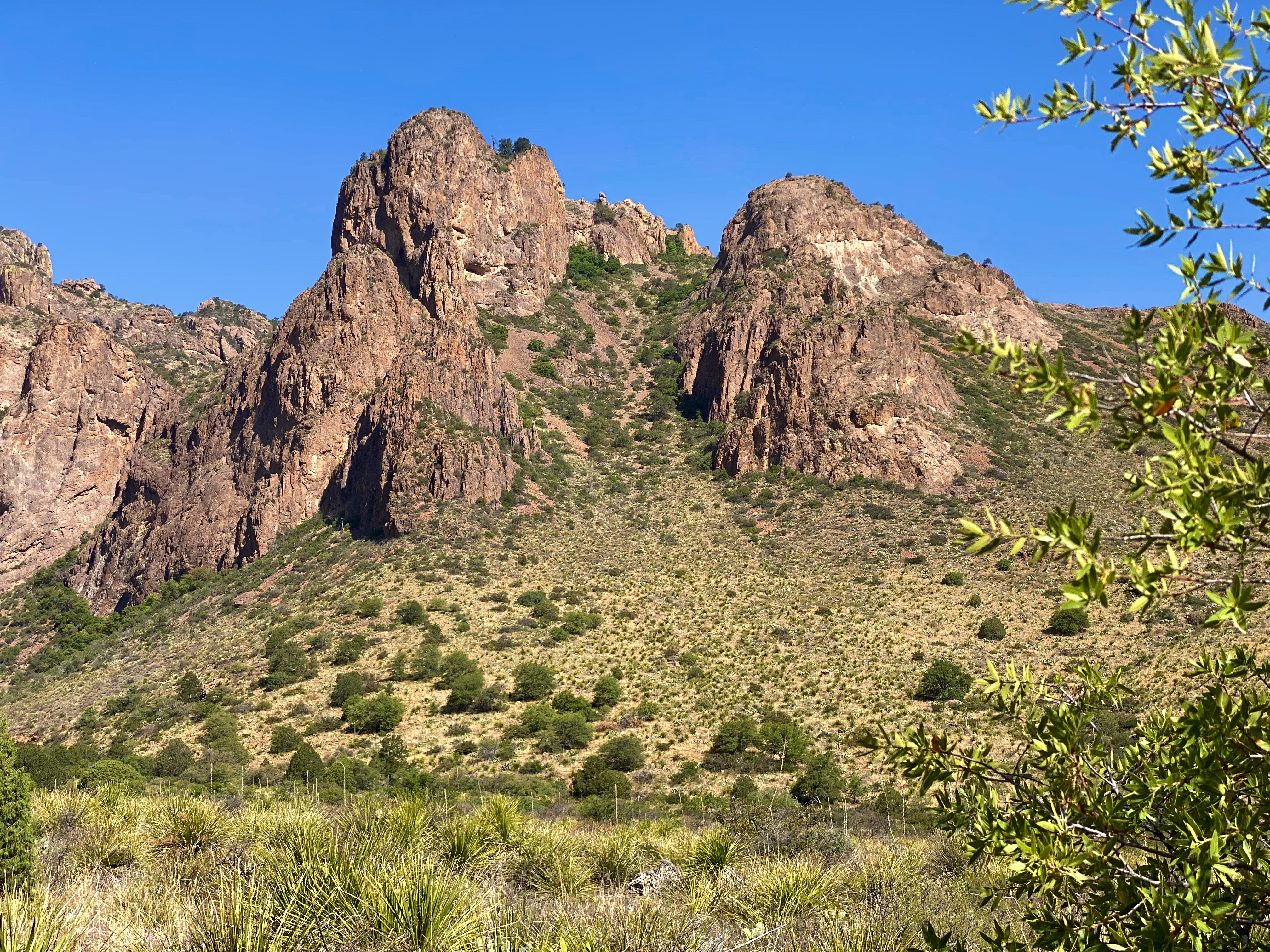
Chilicotal Mountain, BBNP

Day three

Our campsite at Chilicotal was only about four miles from the Pine Canyon trailhead so we again got an early start to be off the trail before the worst of the heat.

Pine Canyon Road, BBNP

After finishing our hike up into the spectacular Spring Canyon we circled up across the northern section of the park to connect with the Ross Maxwell Scenic Drive. The scenic drive connected us to southwestern area of the park along the Rio Grande.

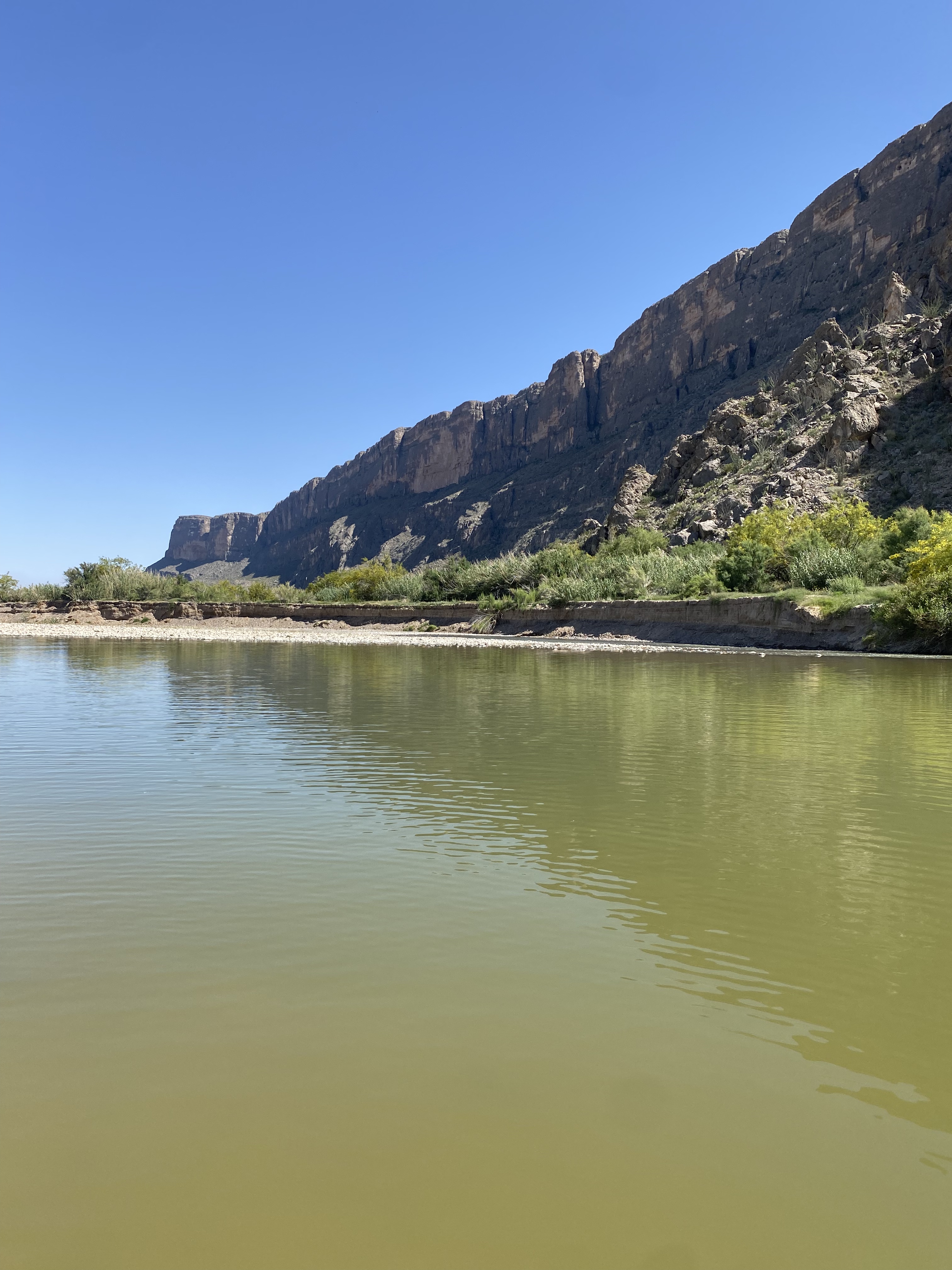
The four photos directly above are the of the Rio Grande. The far shore is Mexico. The canyon in the final photo bottom right is Saint Elena. The left canyon wall is Mexico while the right canyon wall is the United States.

After cooling off in the Rio Grande we connected with the Maverick Road to head north for our final night of camping at a site nearTerlingua Abaya. Terlingua Abayo is an abandoned town on the banks of Terlingua Creek. The town was at one time a thriving agricultural community supplying produce for local ranchers and miners employed by the Quicksilver mines in the area. The town existed from 1900 until around 1930 when the mines ceased operations.

Terlingua Abaya Road, BBNP

day four

On day four we traveled north on the Maverick Road to exit the park and make our way north for a two day stay in Alpine. Before heading to Alpine we spent part of the day in Terlingua Ghost Town — home to Espresso Y Poco Mas — our coffee hangout from our previous visit to BBNP.

We hope y’all enjoyed this post. Be seeing you!

BBNP: 26–29 April 2023