Hello everyone. This is our first post of OTR 8.0. Our plan for this trip is to travel throughout the Southeast. We spent several several days in Knoxville and Chattanoogaduring our first two weeksof the journey; neither of us had visited either city previously.
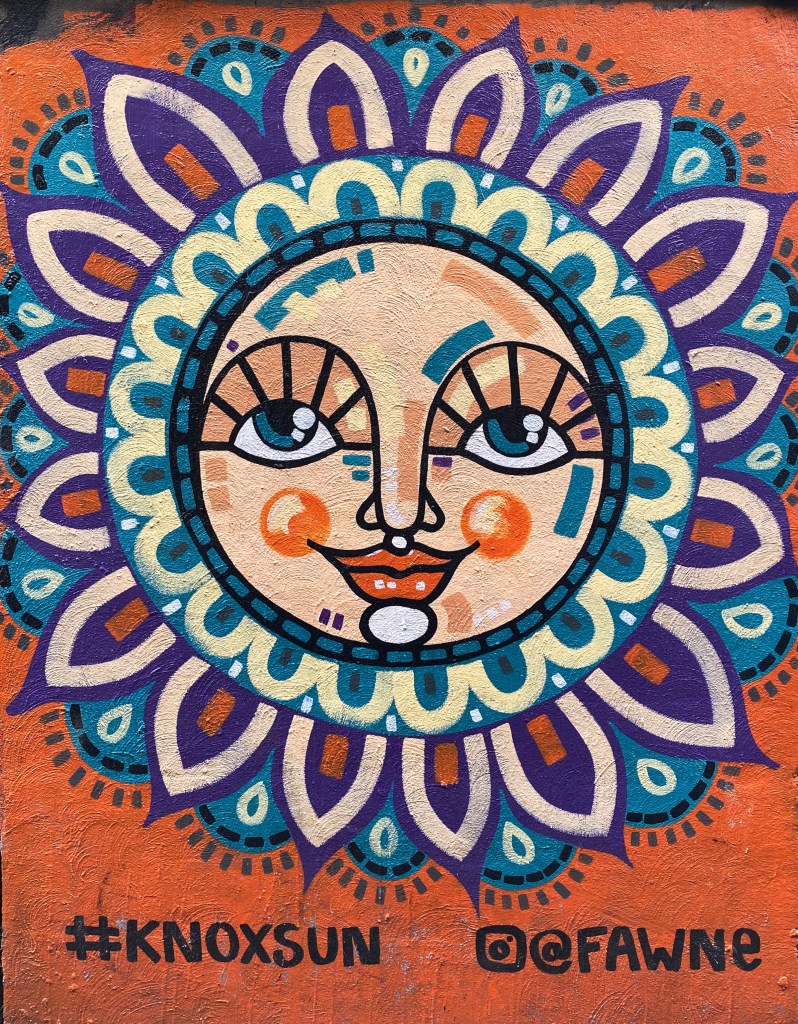
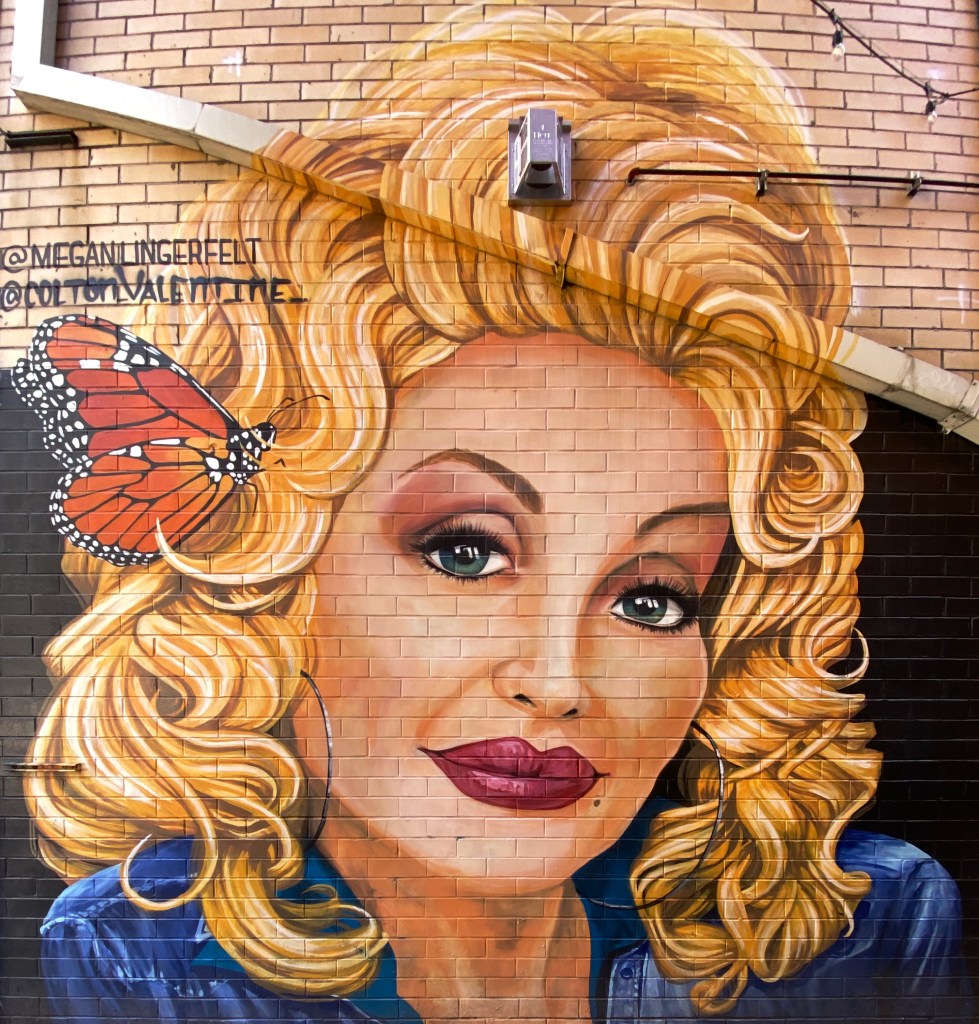
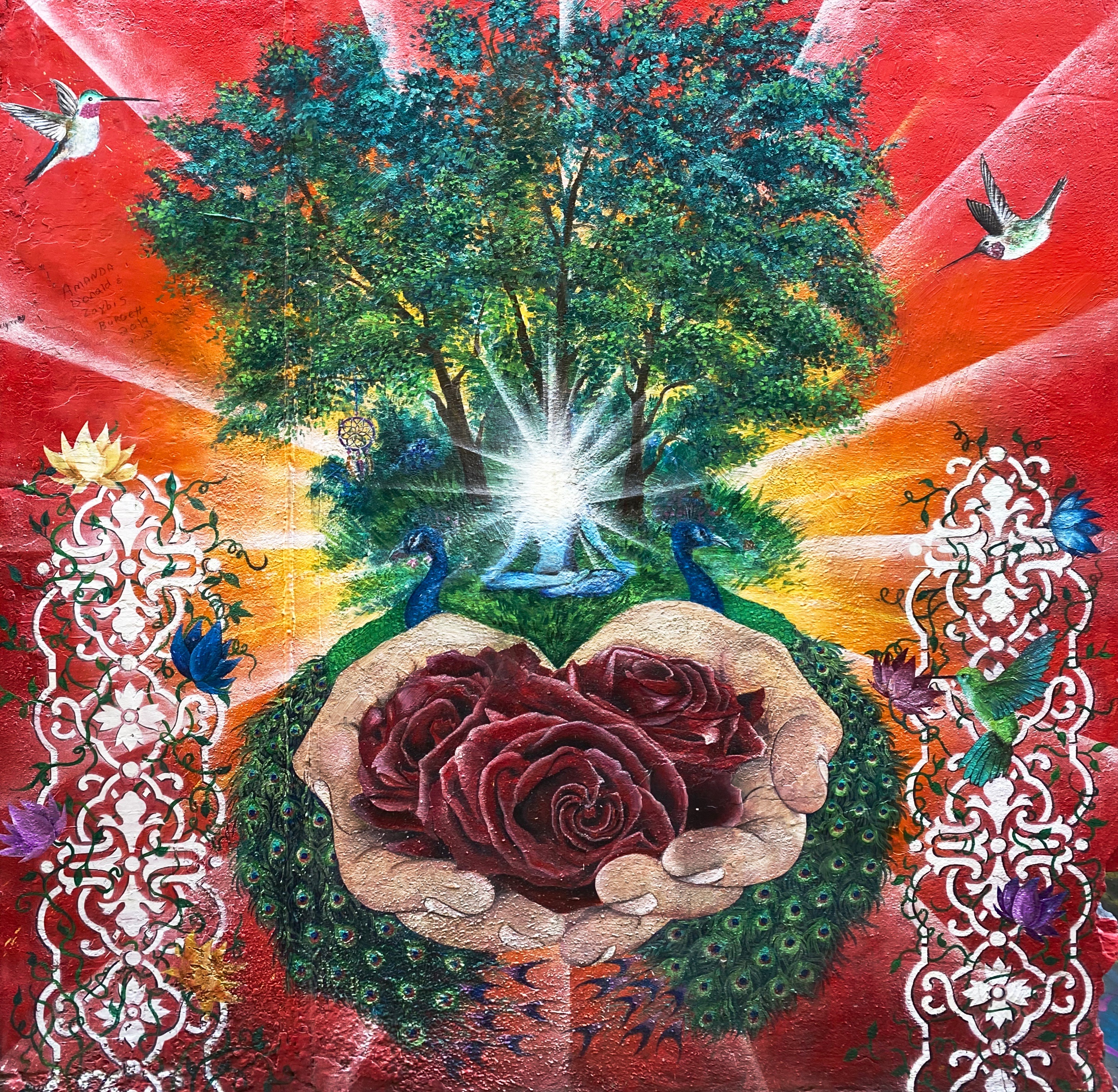
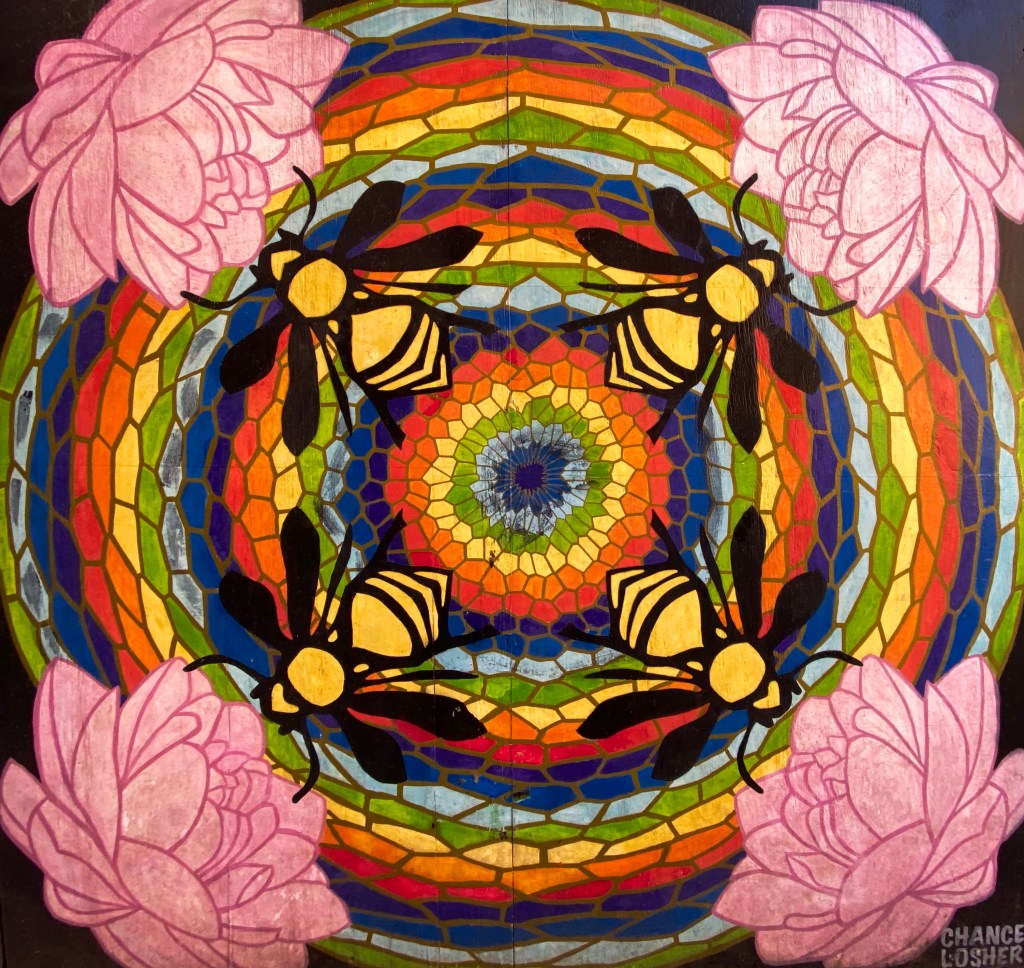
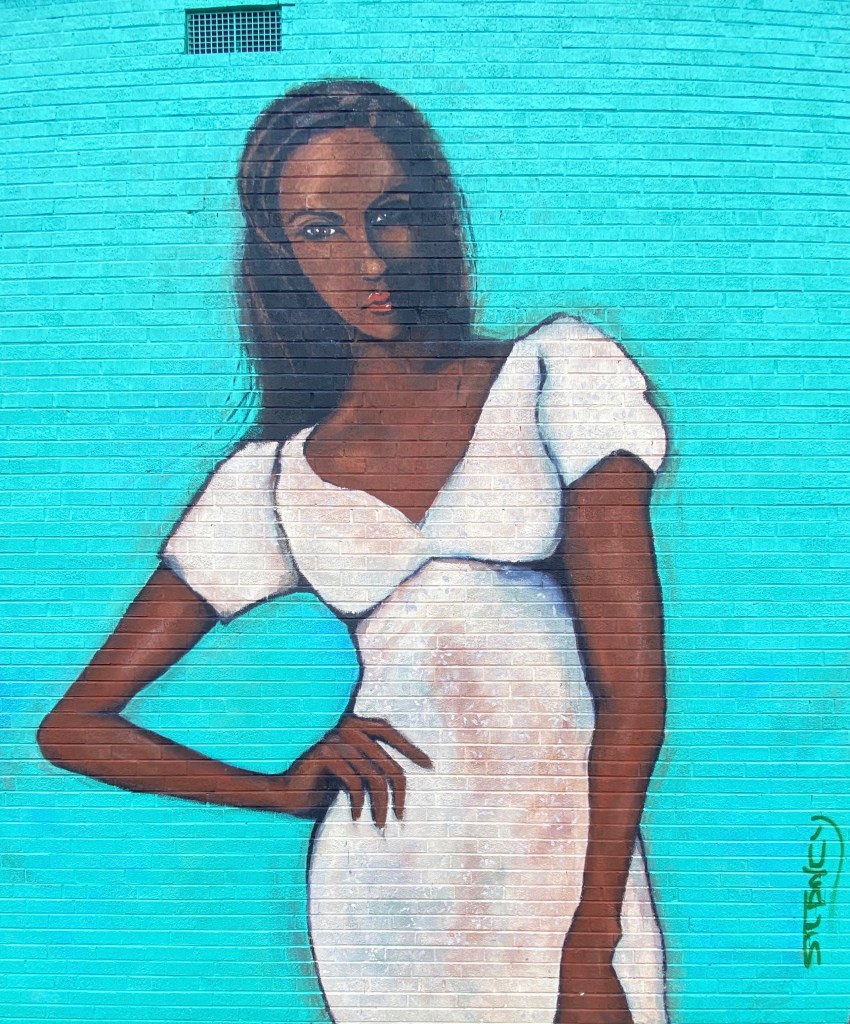
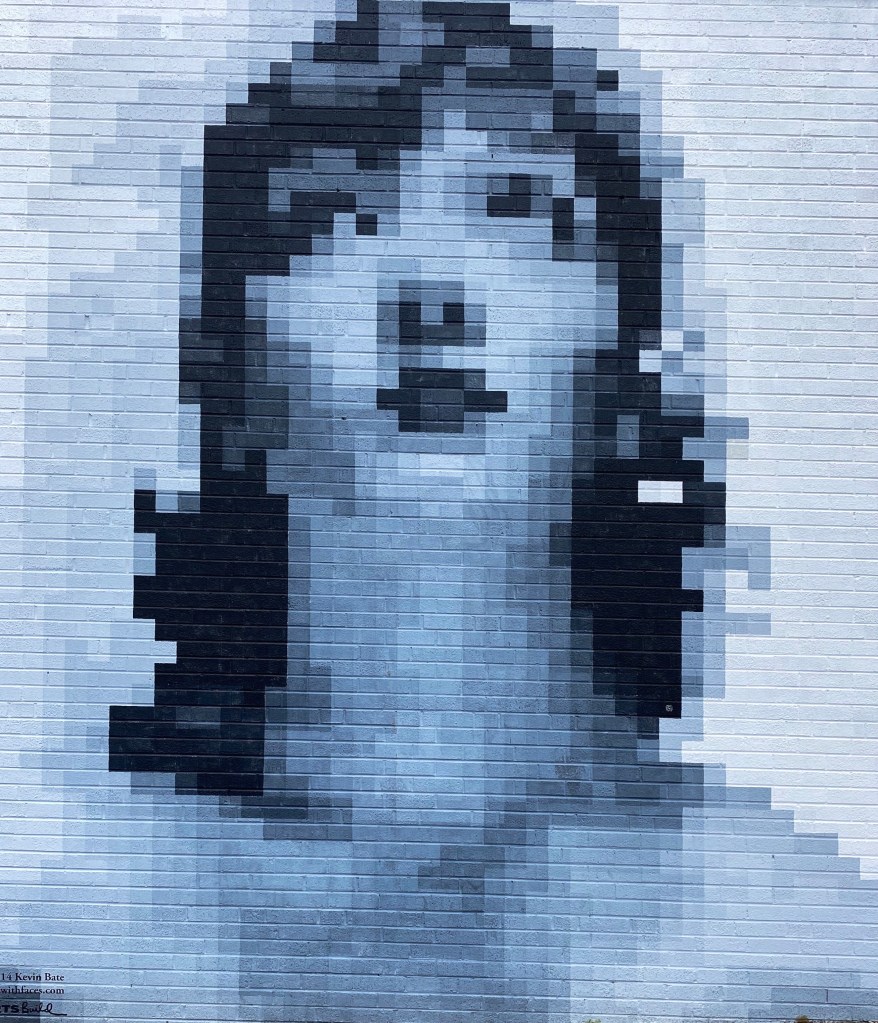
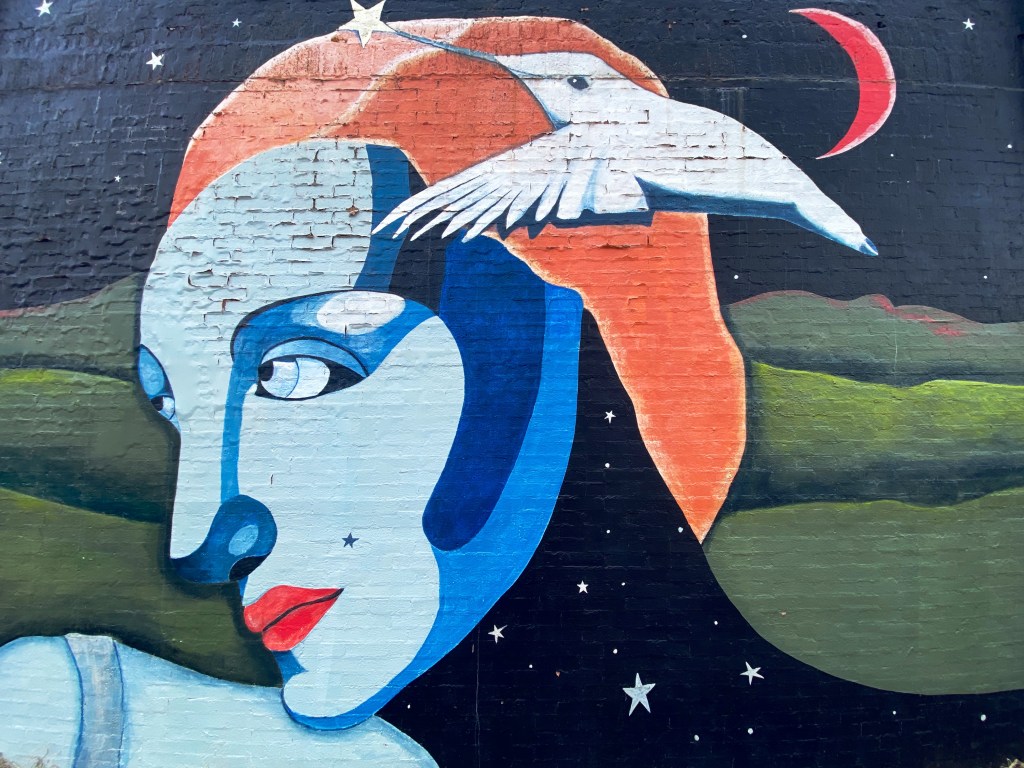
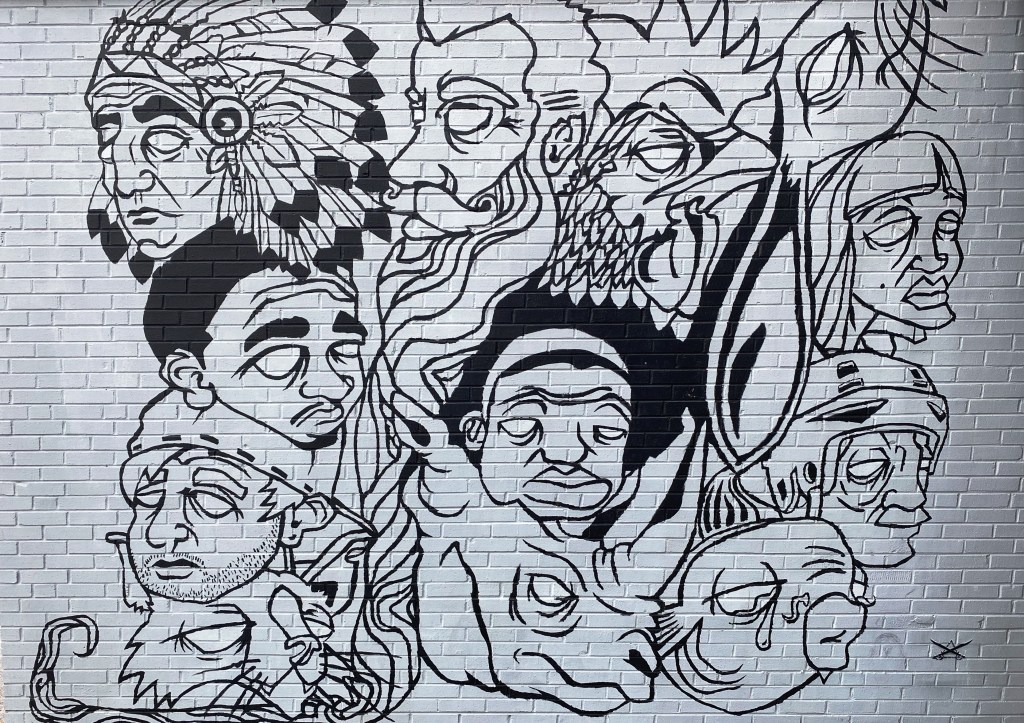
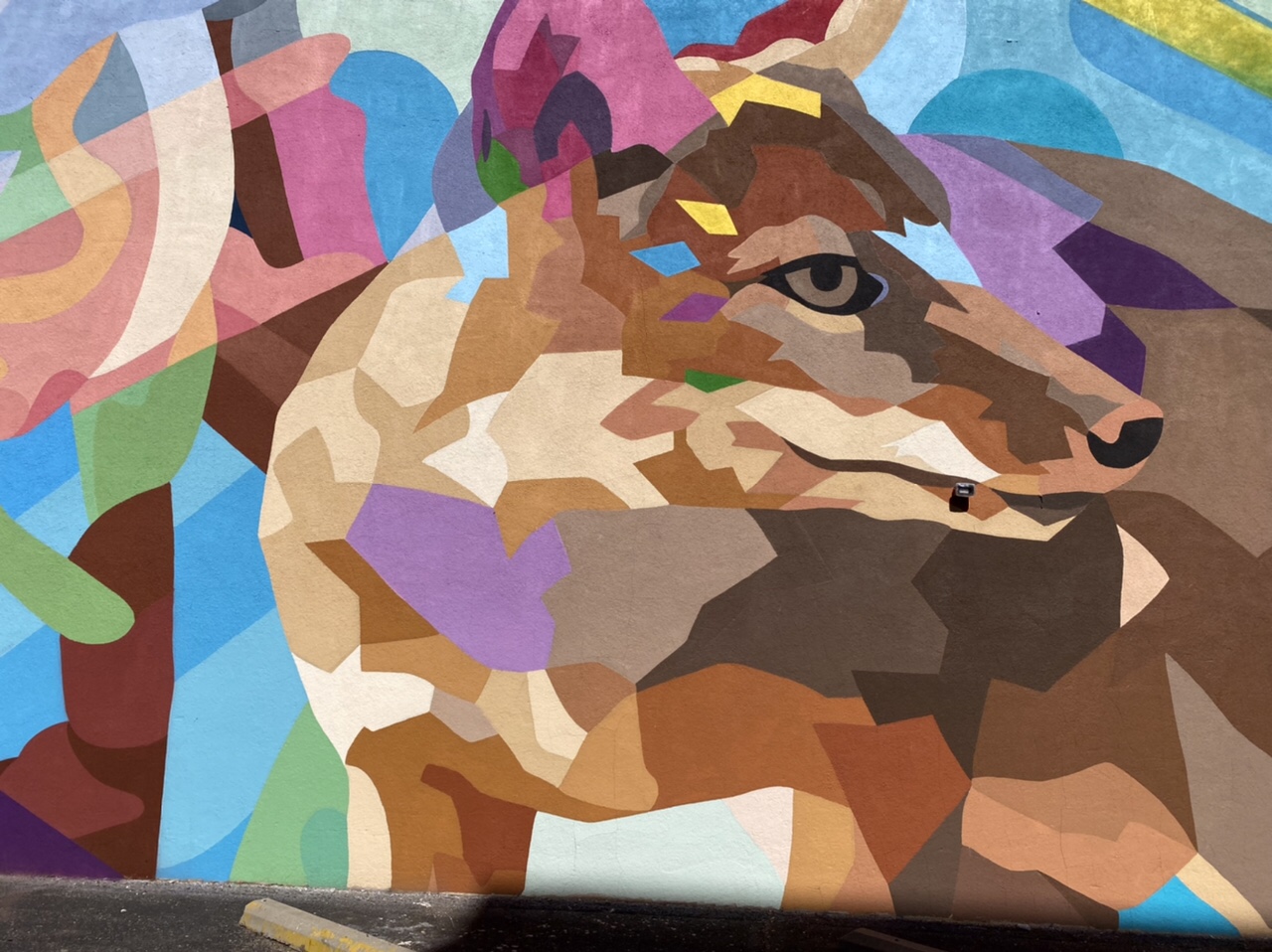
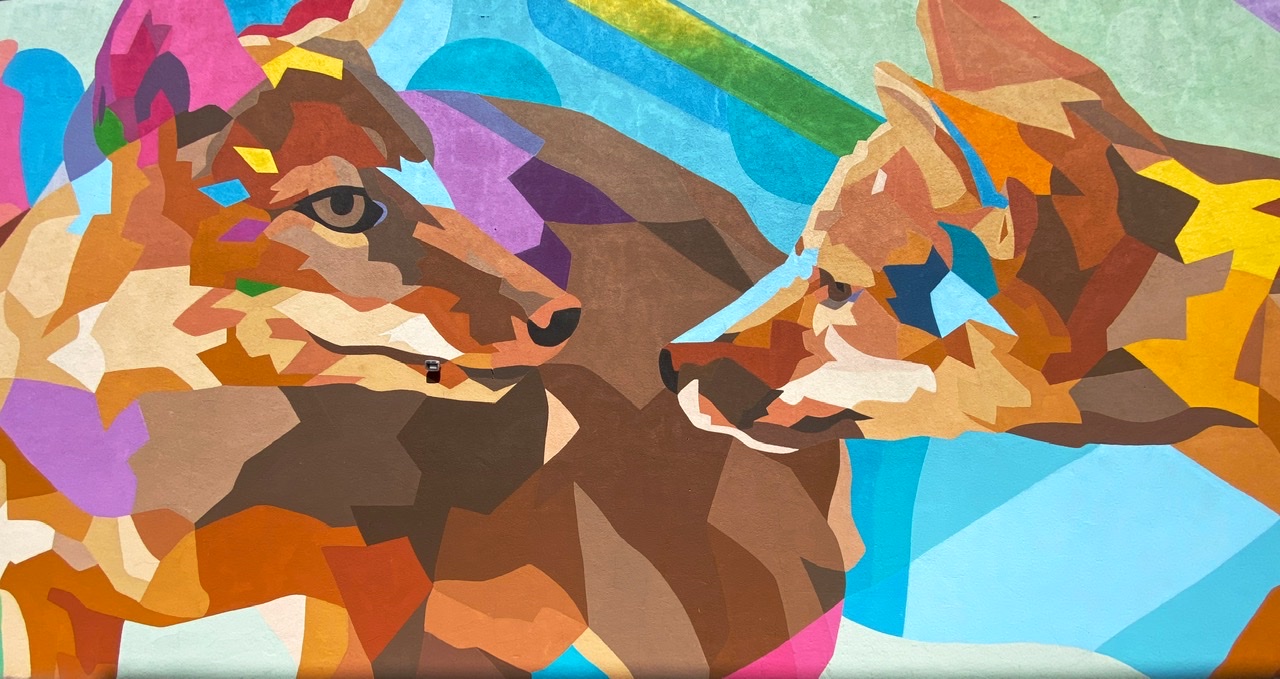
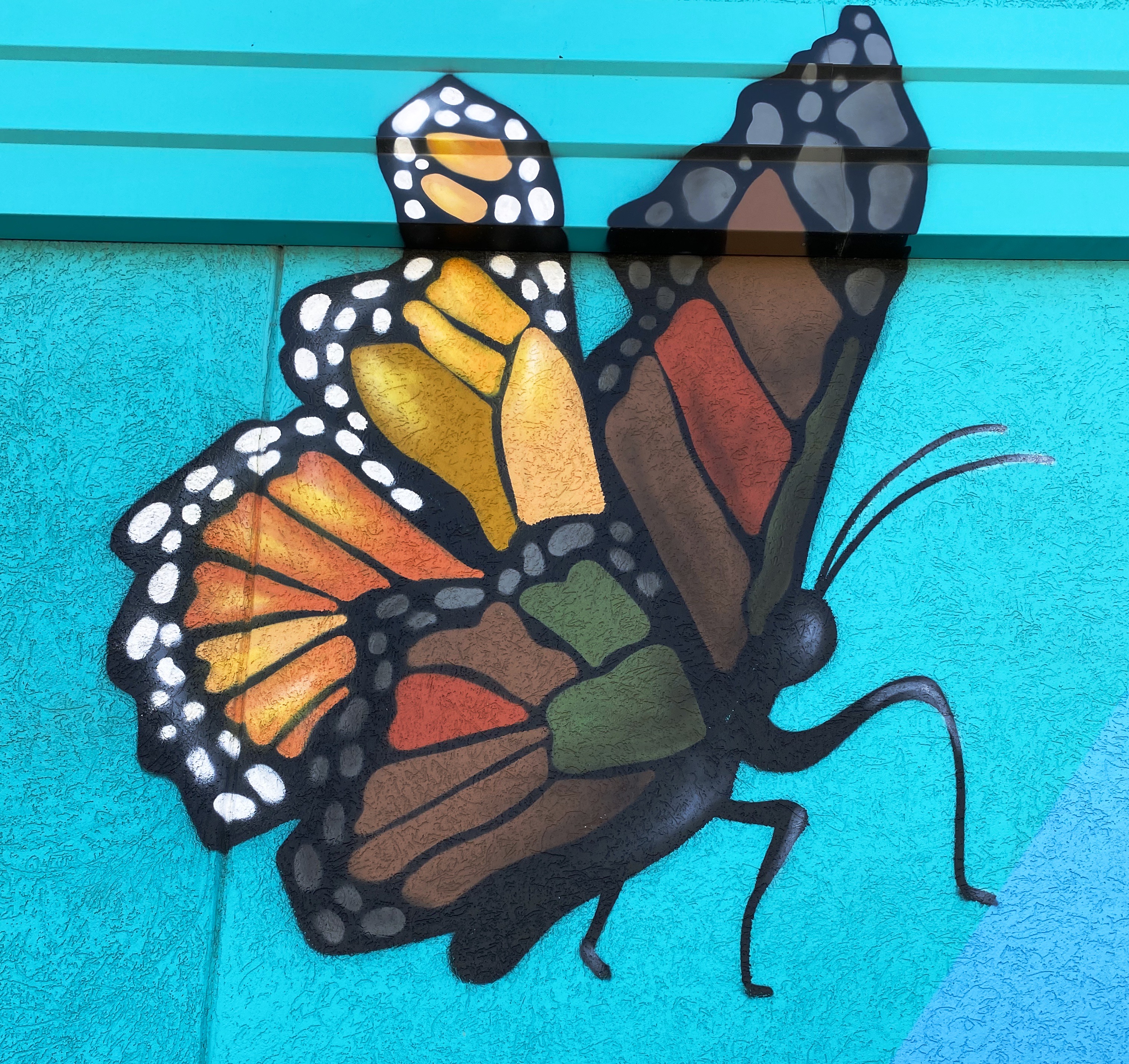
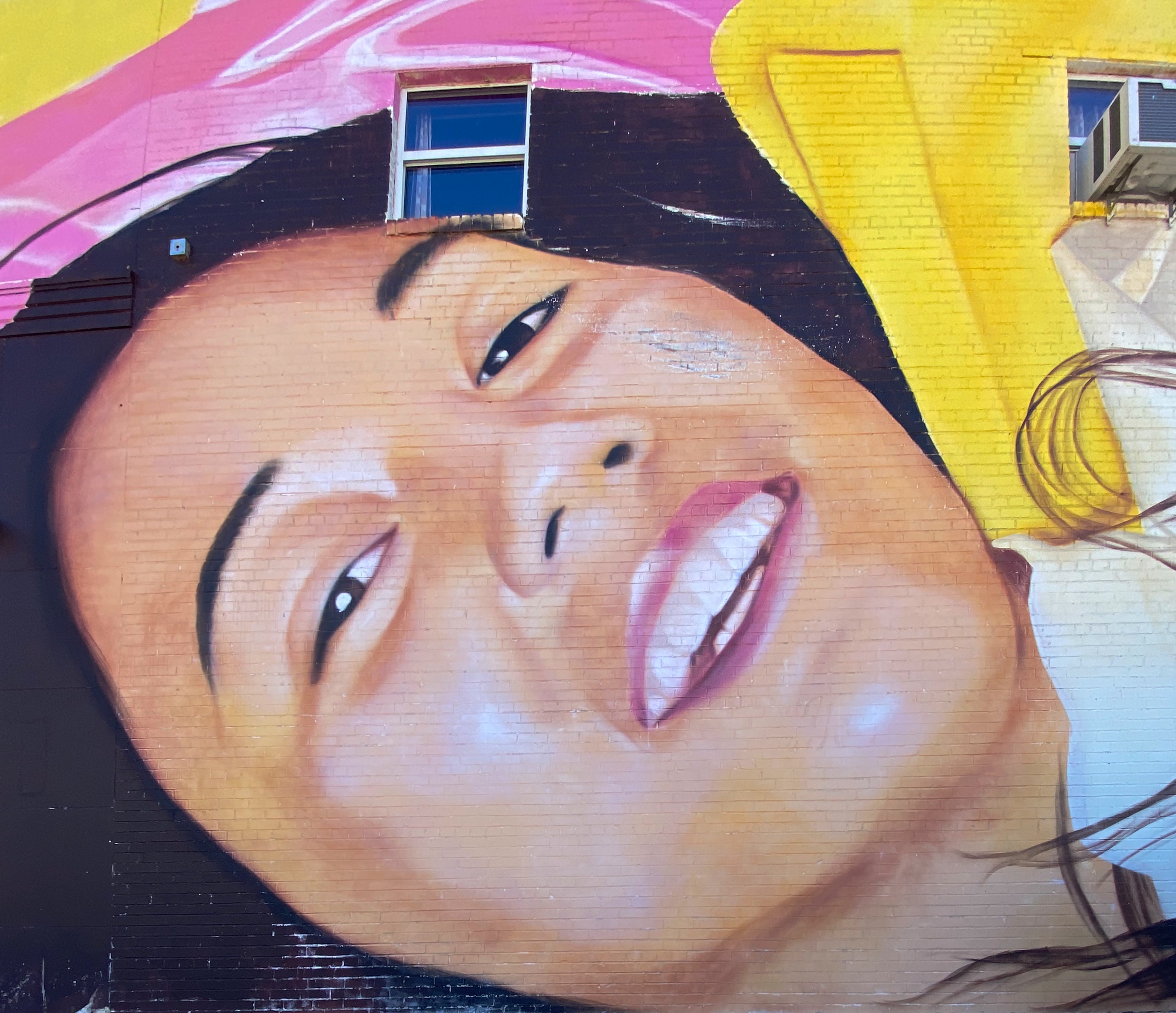
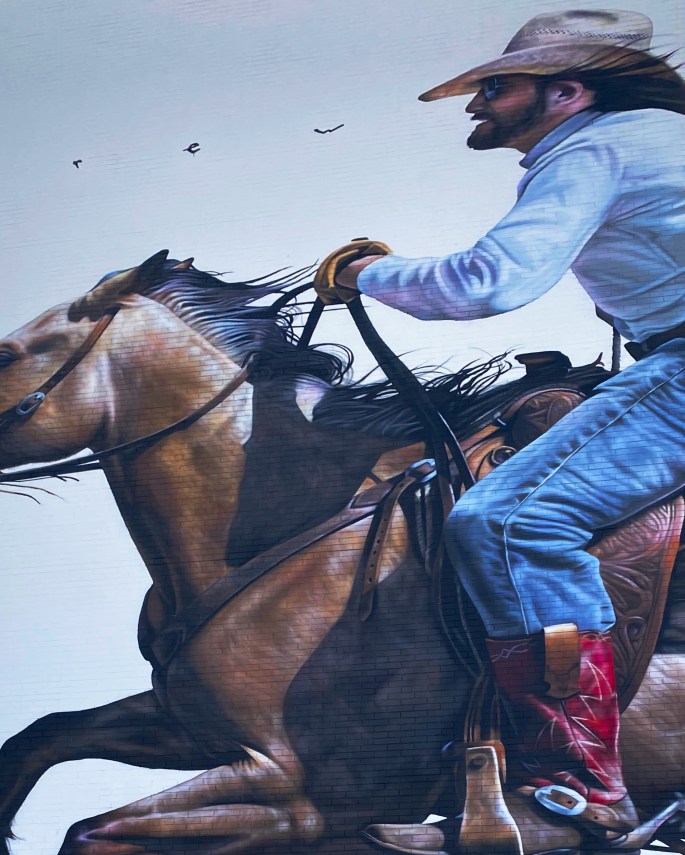
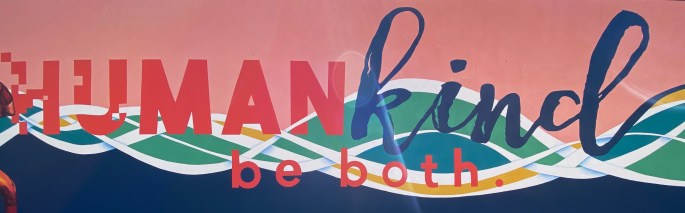
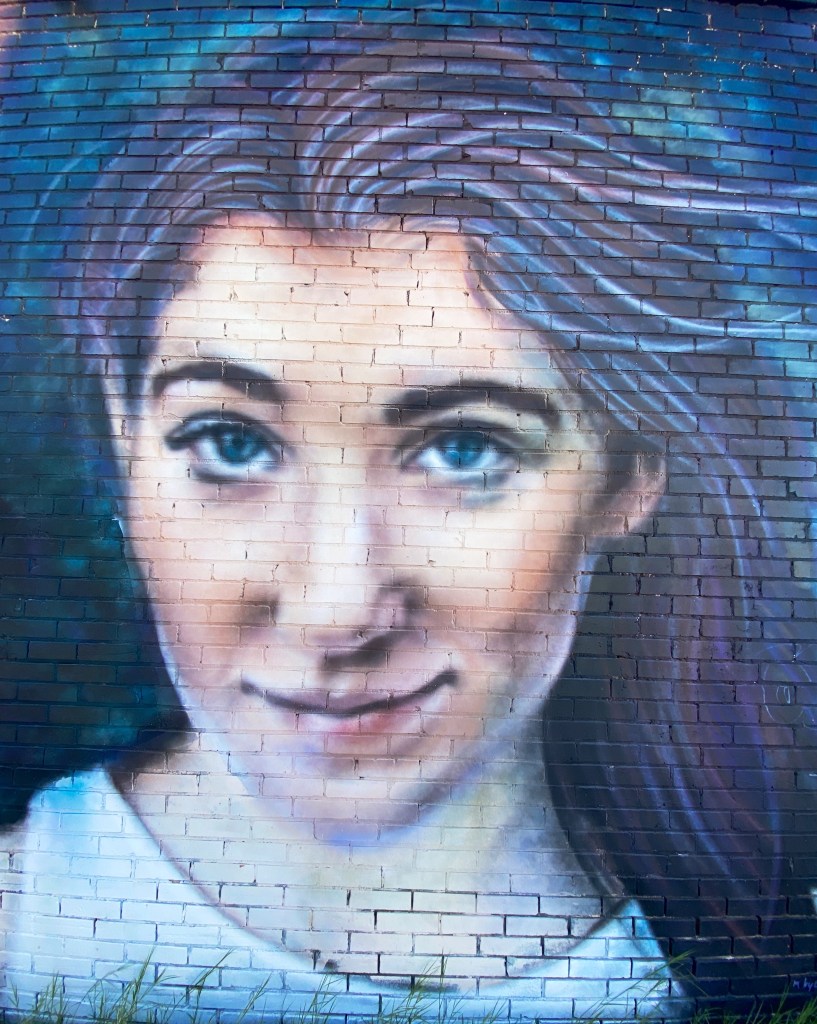
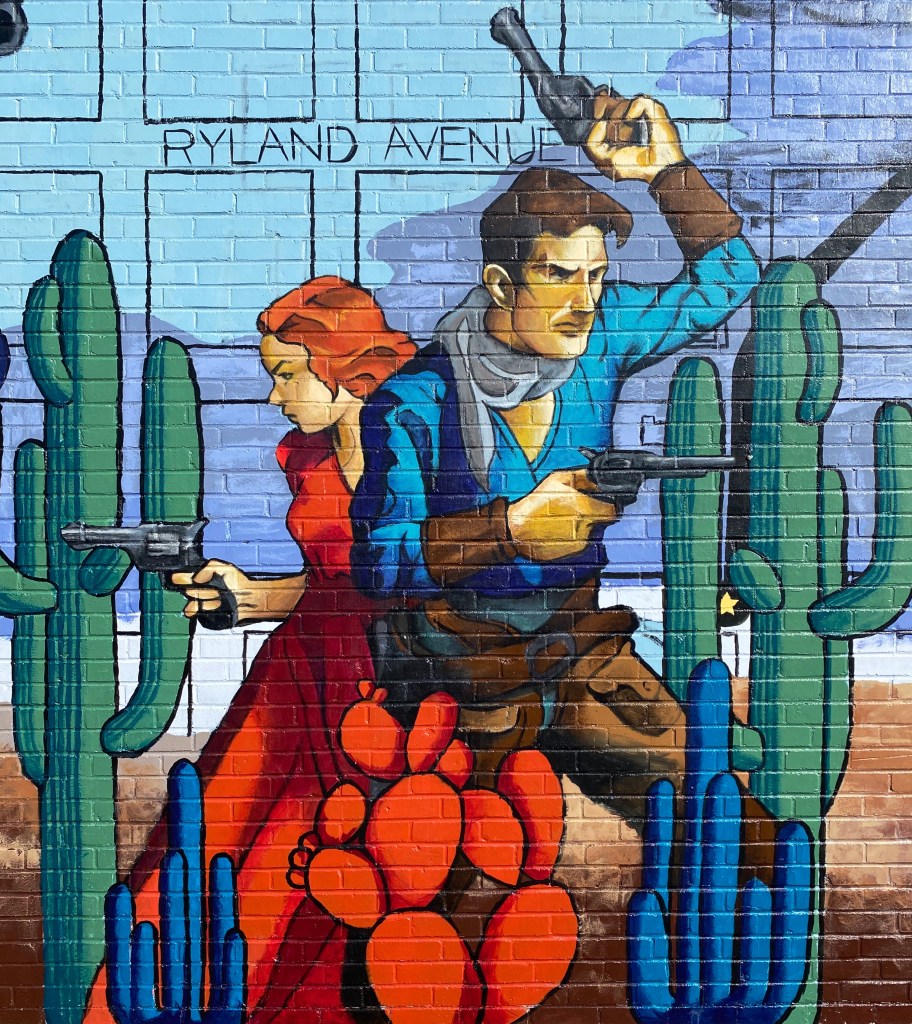
Both cities have a strong commitment to street art and we are excited to share our favorite murals from our tours.
Whenever we have been able to identify the muralist(s), we have included their information in the caption.
Knoxville, Tennessee
Many of the murals from Knox featured in this post are located in Strong Alley, downtown. The alley is known locally as graffitti alley.
We only spent a couple of days in Chattanooga but we were able to capture a number of murals that, fortunately for us, are clustered in the Southside neighborhoodand on Mccallie Street as part of the Mccallie Walls Mural Project.
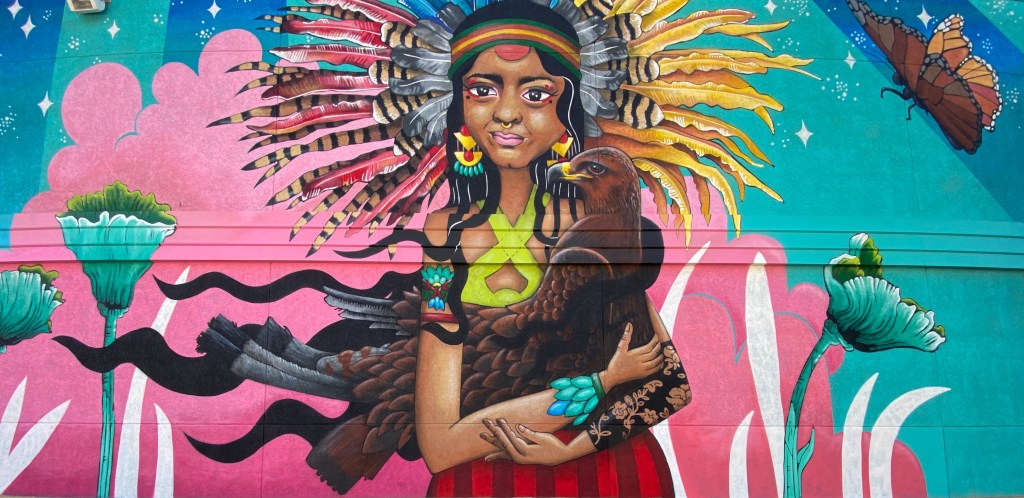
Ali Kay @ali_kay_studioAnna Carll @annacarllart
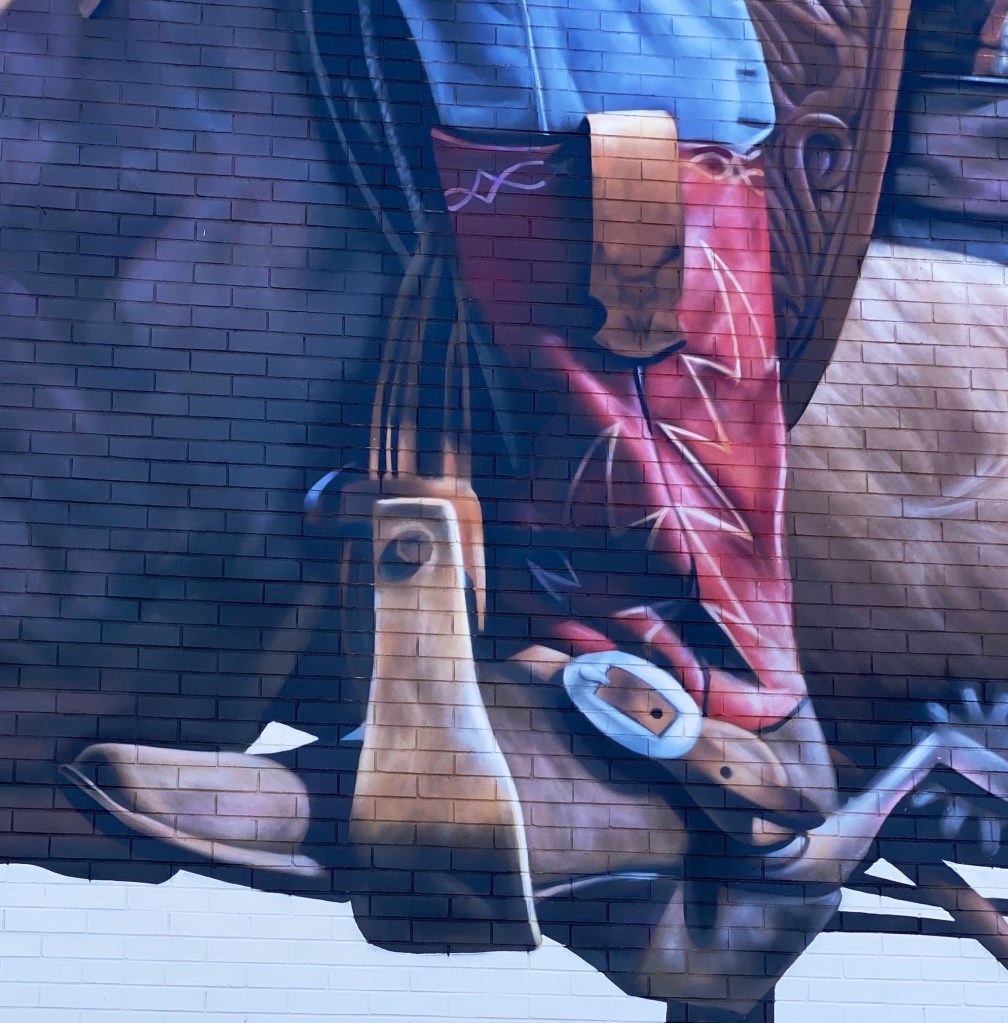
Kevin Bate @goodwithfaces
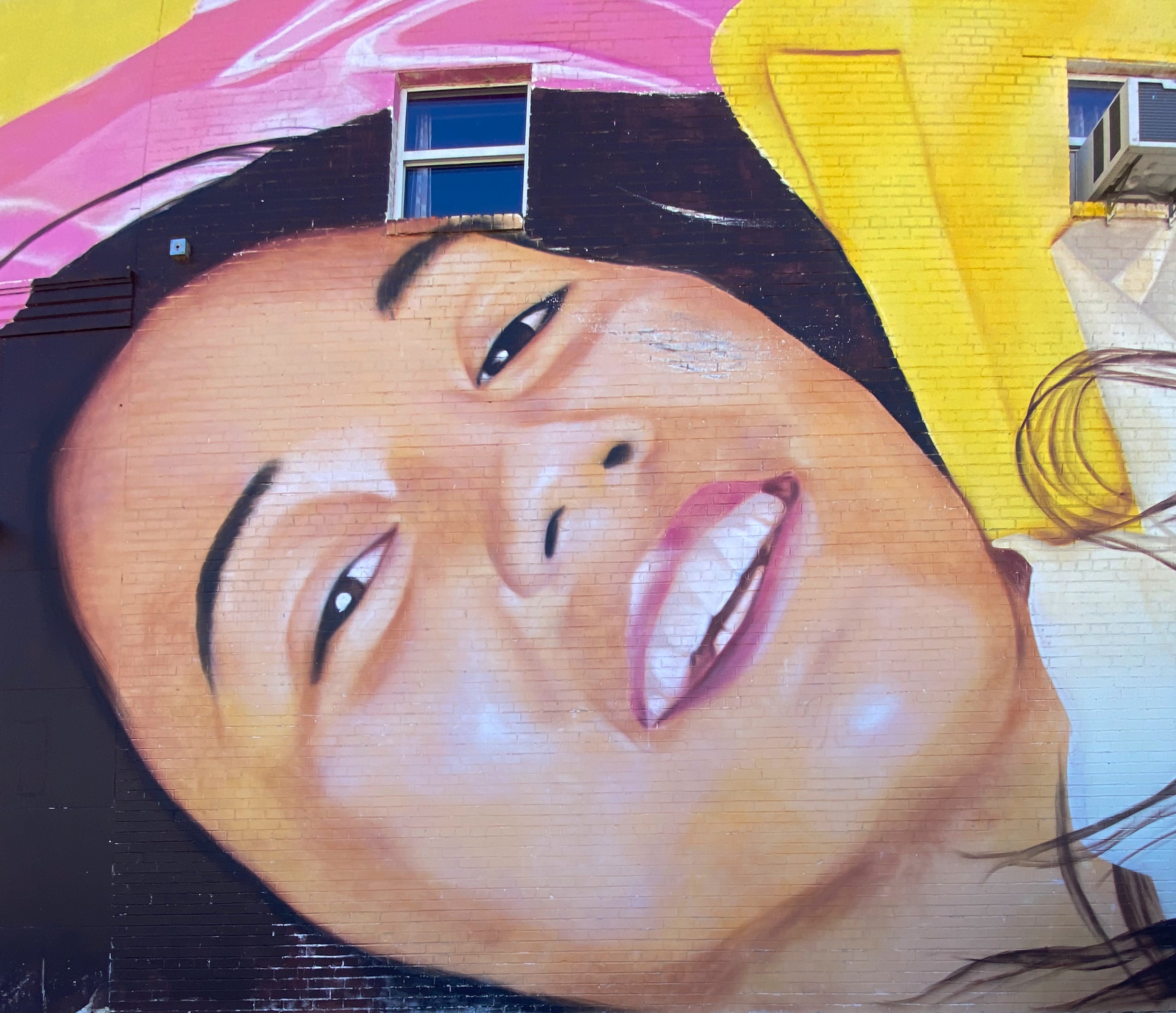
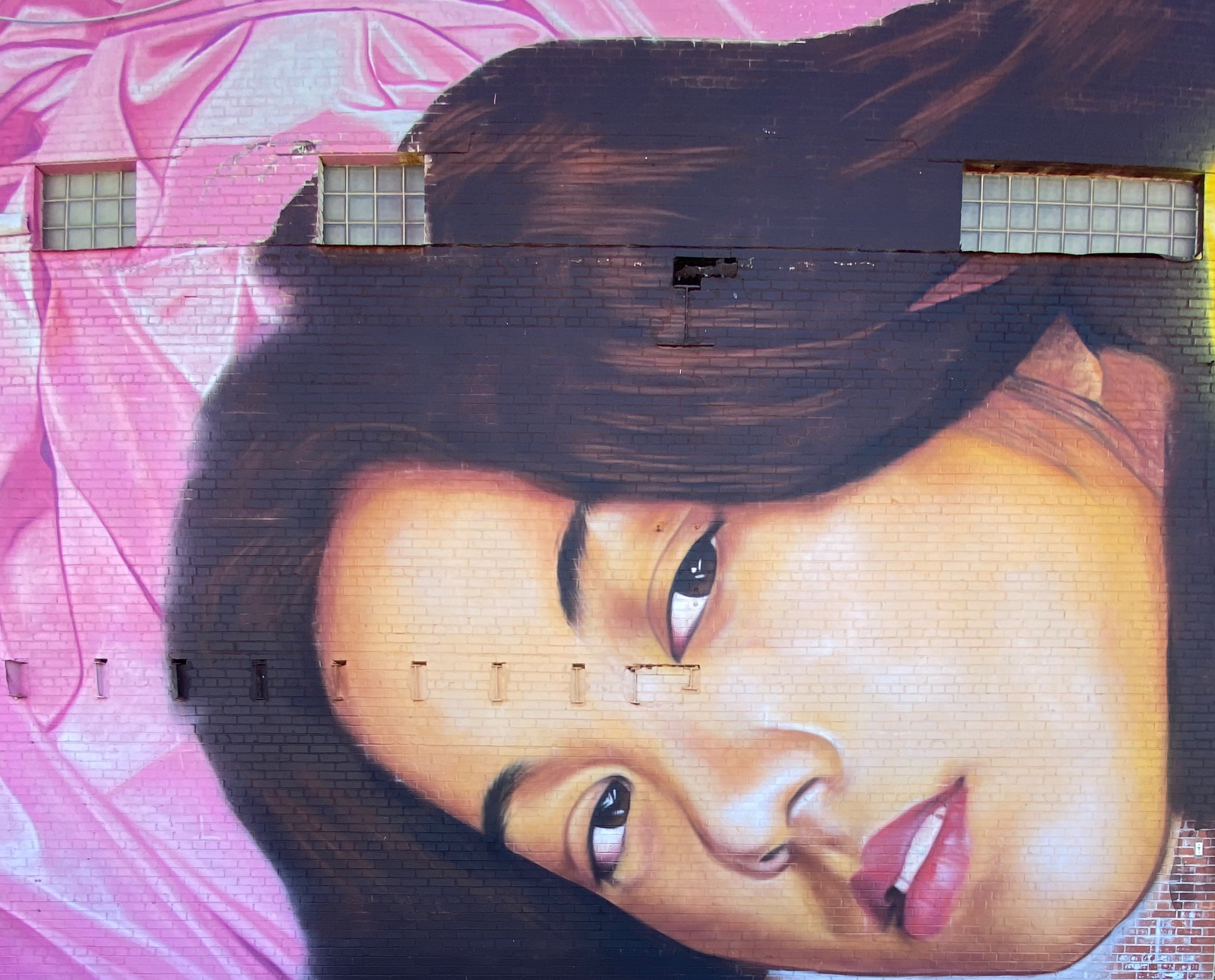
Nyx, Goddess of Night — Miki Boni
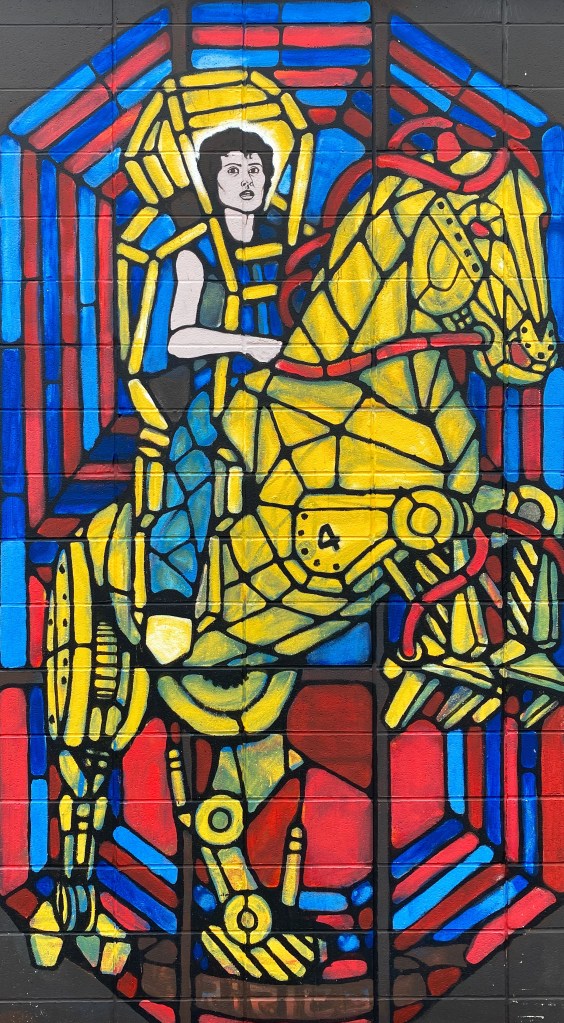
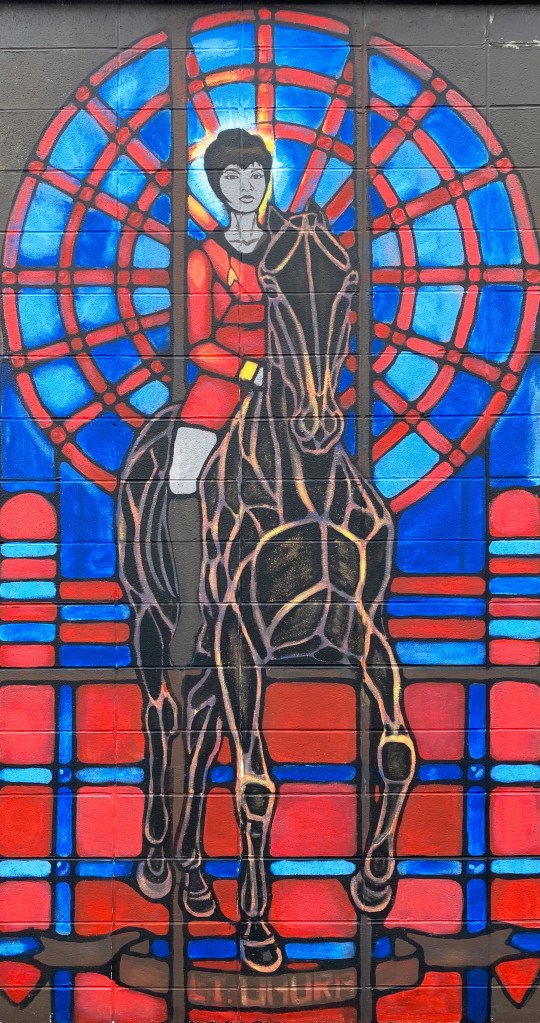
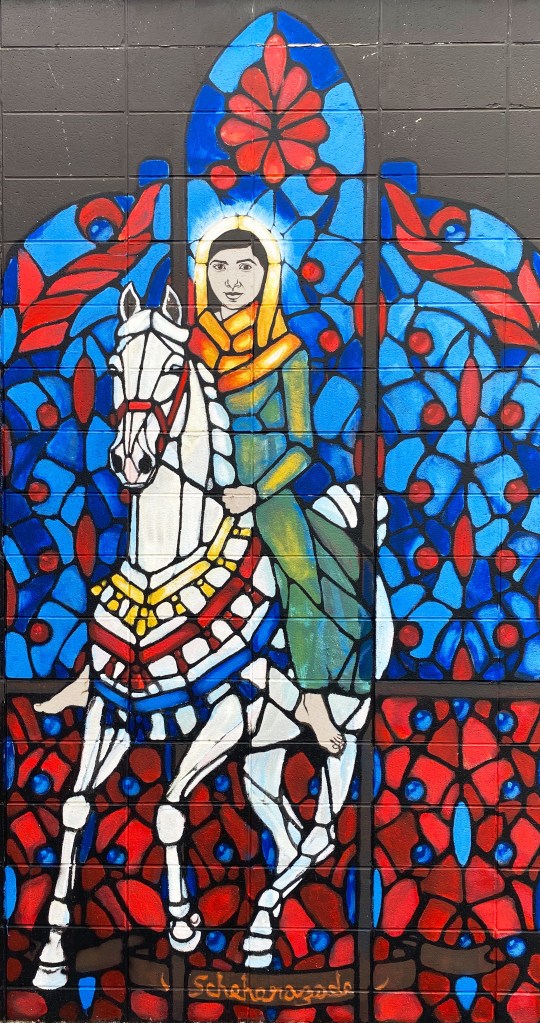
The Four Horsewomen (above and below) —- Kevin Bate, Hollie Berry, Miki Boni, Anna Carll and Ali Kay
We plan on publishing another edition of Street Art from the Road later in the trip. We hope you enjoyed the photographs of the murals.You can see additional murals @ctsprinterlife.
CAUGHT IN THE CIRCLE, 1903 —- Charles Marion Russell
The NCWHM was founded in 1955 as the National Cowboy Hall of Fame and Museum with a focus on honoring the cowboy. Today the museum is a smorgasbord of history, culture and fine art. The museum has over 200,000 square feet of display space with twelve galleries including a replica of a western frontier town and a significant collection of firearms in addition to cowboy and Native American art and artifacts. https://nationalcowboymuseum.org/all-galleries/
This post will focus on three painters whose works are in the museum collection, and are well known for their depiction of western life and Native Americans.
Federic Sackrider Remington (1861 – 1909) is undoubtedly one of the most widely recognized artists of the Old American West. As with many of his compatriots, Remington was an Easterner sent to the West to create illustrations for books and magazines which were focused on the romantized West of cowboys and indians.
PONIES PAWING IN THE SNOW, 1888 — Frederic Sackrider Remington
Unlike many of his fellow artists, he lived in the West for a period of time, owning a ranch and a saloon at different times (neither of which was successful). Remington’s start as a professional artist was actually the bartering of drawings to pay some of his debtors during the period of time he owned the saloon.
RAY’S TROOP, c. 1903 — Frederic Sackrider Remington
While he had very little formal art training, Remington became highly proficient at drawing cowboys, indians and cavalry officers (who paid him handsomely for portraits in uniform).He was quoted as saying “Cowboys are cash with me”.
THE HUNTERS’ SUPPER, 1909 — Frederic Sackrider Remington
Remington became quite successful financially, moving back East and taking up residence in a large mansion he had built for his family. Unfortunately for him, he adopted an oppulent life style and essentially ate and drank his way to an early death due to complications from his immense size.
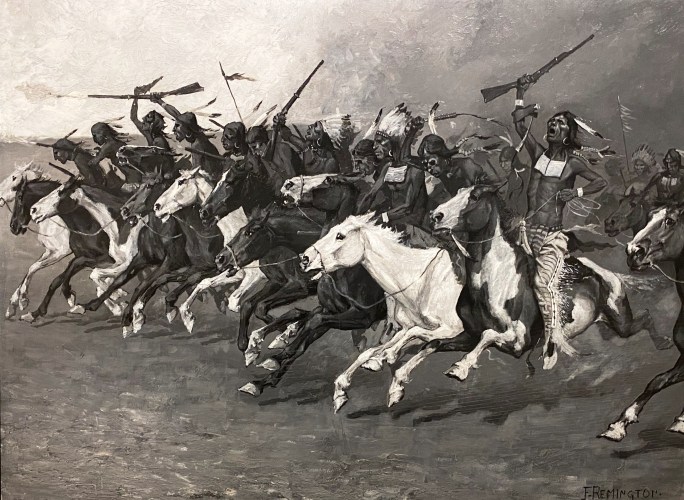
THE CHARGE ON THE SUN- POLE, c. 1890 — Frederic Sackrider Remington
IN FROM THE NIGHT HERD, 1907 — Frederic Sackrider Remington
Charles Marion Russell (1864 – 1926) was born in Saint Louis, but from an early age was enamored of the West; by the age of 16 had left home to work as a ranch hand in Montana. He made Montana his home for the rest of his life, marrying Nancy Cooper and building a home in Great Falls.
WHEN TRAILS WERE DIM, 1919 — Charles Marion Russsell
Russell had no formal art training. He drew scenes from his life on the ranch as a way to record his experiences. “Between the pen and the brush there is little difference but I believe the man that makes word pictures is the greater.” —- Charles Marion Russell
WHEN MULES WEAR DIAMONDS, 1921 — Charles Marion Russell
Russell’s wife was influential in marketing his sketches, painting and drawings – as his work became popular he devoted himself full time to his artistic endeavors.By that time, he had spent eleven years ranching and had even lived for a time with a Native American tribe. His first hand knowledge of the West provided him with the ability to portray the West in a manner that other artists could not achieve. It is no wonder that Charlie (as he was known by his friends) is considered America’s true Cowboy Artist.
THE CALL OF THE LAW, 1911 — Charles Marion Russell
Russell is considered by many to be an early conservationist. ”A pioneer is a man who turned all the grass upside down, strung bob-wire over the dust that was left, poisoned the water, cut down the trees, killed the Indian who owned the land and called it progress.” —- Charles Marion Russell
As an acknowledgement of his recognition of the need to preserve the environment, a 1.1 million acre national wildlife refuge stretching along a remote portion of the Missouri River in Montana bears his name. We visited the Charles M. Russell National Wildlife Refuge during the summmer of 2021 as part of OTR 6.0 ( see post – Montana Prairie…Sun, Heat, Wind and Beauty). The land within the refuge is much the same as it was during Russell’s lifetime. See photographs below. https://www.fws.gov/refuge/Charles_M_Russell/about.html
Russell had great respect and admiration for the Native Americans of the Plains and their way of life. Of the 4000 works that he completed during his career, 1700 featured Native Americans as the subject of the work.
THE SIGNAL GLASS, 1916 — Charles Marion Russell
“The Red man was the true American. They have almost all gone, but will never be forgotten. The history of how they fought for their country is written in blood, a stain that time cannot grind out. Their God was the Sun, their church all out doors. Their only book was nature and they knew all the pages.” —- Charles M.Russell
BEFORE THE WHITE MAN CAME, 1897 — Charles Marion Russell
Walter Ufer (1876-1936) was born in Germany in 1876, although he spent most of his youth in Louisville, Kentucky where there was a sizable German immigrant population. Unlike Remington and Russell, Ufer was a trained painter, having returned to Germany to study at the Royal Academy in Dresden. He returned to the United States and began work as a Commercial Artist before returning again to Germany to study in Munich.
In 1914, the mayor of Chicago, Carter Harrison and his business partner, Oscar Meyer (yes, that Oscar Meyer), both admirers of Ufer’s work, helped finance a visit to Taos to provide Ufer with new environment to continue his development as an artist (and, of course, sell his paintings back in chicago).
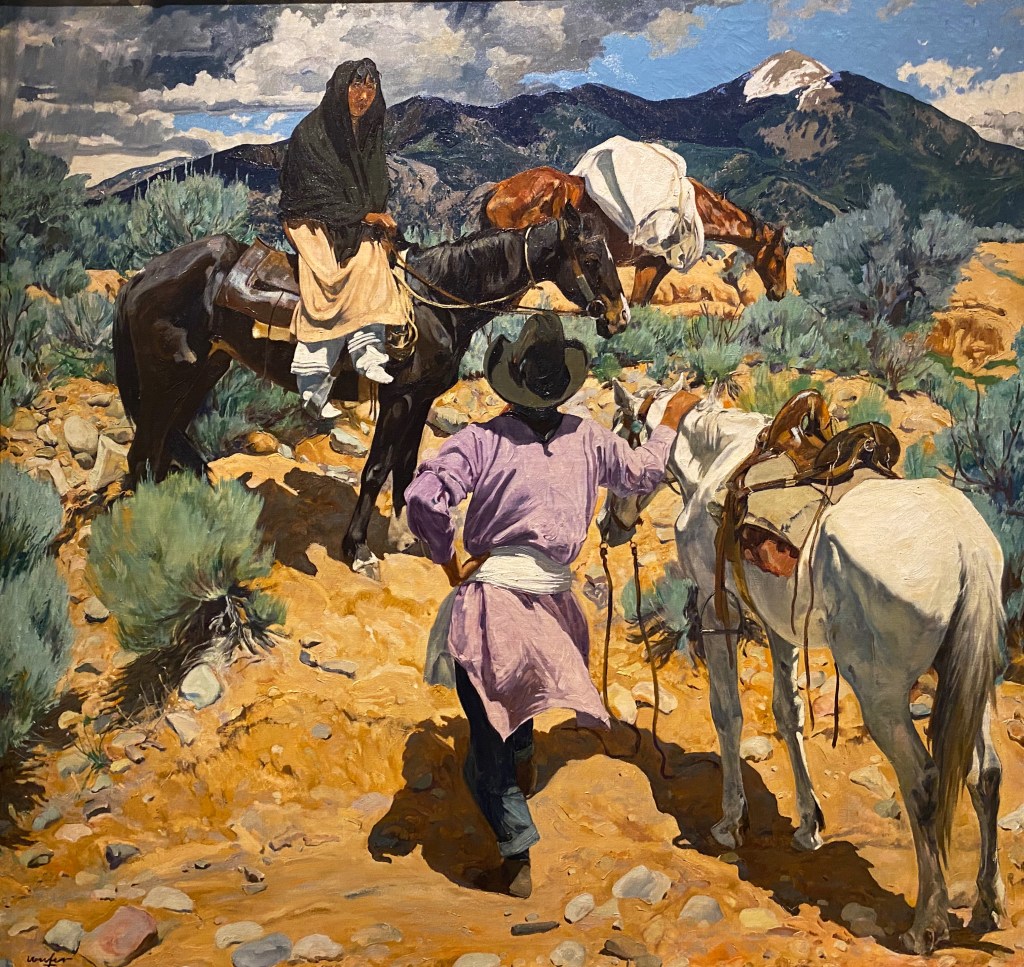
JIM AND HIS DAUGHTER, c. 1925 — Walter Ufer
The brilliant light, landscapes and Native American culture of New Mexico captivated Ufer.Ufer very quickly abandoned working in the studio and began working outdoors in order to capture the brilliant light of the southwest and the daily activites of Native Americans and Hispanos.
AT REST, 1926 — Walter Ufer
Ufer’s depictions of the Taos Pueblo Indianswere rarely romanticized. He was a committed socialist and soon came to believe that the Euro-American settlers were largely responsible for the destruction of Native American culture and identitythat had occurred in America.
“The Indian has lost his race pride, he wants only to be an American. Our civilization has terrific power. We don’t feel it, but that man out there in the mountains feels it, and he cannot cope with such pressure.”—- Walter Ufer
SLEEP, 1923 — Walter Ufer
Ufer realized both critical and commercial success from his depictions of Native Americans and the southwestern landscape. The stock market crash of 1929 and the ensuing Great Depression were diasterous for Ufer. The public fascination with art depicting Indians and the West diminished significantly as the financial crisis deepened and endured.
Sadly, as the sale of his work evaporated and his financial burdens mounted he turned to alcohol. He died in 1936 at the age of 60 as the result of a ruptured appendix.
Frederic Remington, Charles Russell, Walter Ufer
At one time, the images of the West that were shared via the work of these three artists and others were viewed as illustrative of how the white man won the West and conquered the savagetribes of Indians. The winning of the West was considered a noble and necessary precursor to American greatness – our Manifest Destiny.
None other than Theodore Roosevelt said it is “our manifest destiny to swallow up the land of all adjoining nations who were too weak to withstand us.” Many of the Western artists were, as such, unwitting propagandists for the conquering of the West through their depiction of Native Americans as savages who murdered innocent white settlers. Today it is commonly acknowledged that Native Americans were in fact fighting to remain on their sacred lands and maintain their way of life.
This post is not about villifying the featured artists – they painted the West as they saw and experienced it. Both Russell and Ufer were sympathetic to the plight of the Native American and Hispano peoples.Neither is the post meant to be critical of the museum – the NCWHM is a wonderful museum and we highly recommend a visit when your travels take you to Oklahoma City.
This is the final post from OTR 7.0. We will back on the road in early March. Be seeing you!
h. d. bugbee, mountain men, (old bill williams and jim bridger), oil on canvasboard
A brief history of the PPHM
PPHM is located in Canyon, Texas, approximately 20 miles south of Amarillo. The museum opened to the public in 1933. It was the brainchild of Hattie Anderson, an educator who had moved to Canyon to teach history at the West Texas Normal School (now West Texas A&M University).
Hattie was fascinated by the history of the area and began to enlist the aid of individuals in the area to form a historical society to preserve the history and culture of the Panhandle-Plains. The historical society flourished for thirteen years; the growing collection of artifacts that created the need for more space. The historical society then funded the creation and operation of the museum.
Today the museum continues to prosper and is home to over three million artifacts within the 285,000 square foot complex. The museum provides insight into the past and the present of many facets of the people,culture, history and industry of the Panhandle-Plains. The collection includes galleries devoted to paleontology, archeology, geology, Native American culture, textiles, petroleum extraction and western art. we
We enjoyed the PPHM immensely and strongly recommend devoting at least a half day visit when you visit the Amarillo – Lubbock area of the Panhandle. In addition to the museum this area offers ample outdoor recreational opportunities (Palo Duro Canyon and Caprock Canyon – see post: CTSPRINTERLIFE: TOURING THE PANHANDLE). https://wordpress.com/post/ontheroadwithmariastephen.net/6946
EmIL Bisttram
OTR had the great fortune to meet Deanna Lowe Craighead, Curator of Art at the PPHM, while visiting another museum in the panhandle. In addition to dialing us in about the Bisttram exhibition, Deanna also provided us with the recommendation to visit the Philbrook Museum in Tulsa ( see post FINE ART TOURIST PHILBROOK MUSEUM OF ART). https://wordpress.com/post/ontheroadwithmariastephen.net/7362 The balance of this post is dedicated to the Bisttram exhibit and a bit of his biography.
Emil Bisttram was born in Nagylak, Hungary (now Nadlac, Romania) in 1895. His family emigrated to New York City in 1906. Bisttram studied art at National Academy of Design, Cooper Union, the Art Students League, and the New York School of Fine and Applied Art. He also taught art while studying and was known through out his career as an excellent and sought after teacher.
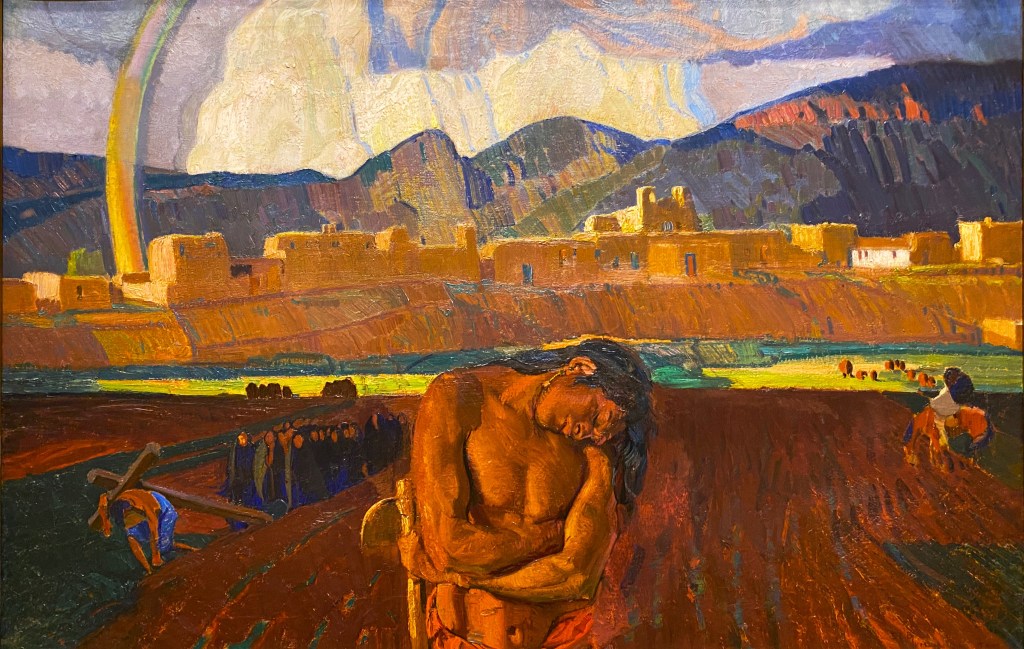
emil bisttram, storm over taos, c. 1931, oil on canvas
Bisttram visited Taos, New Mexico in 1930. Initially he was overwhelmed by the size and scale of the New Mexico landscape and he struggled to capture the majesty of the environment. Despite that he returned to Taos in 1932 and it remained his home until his death in 1976.
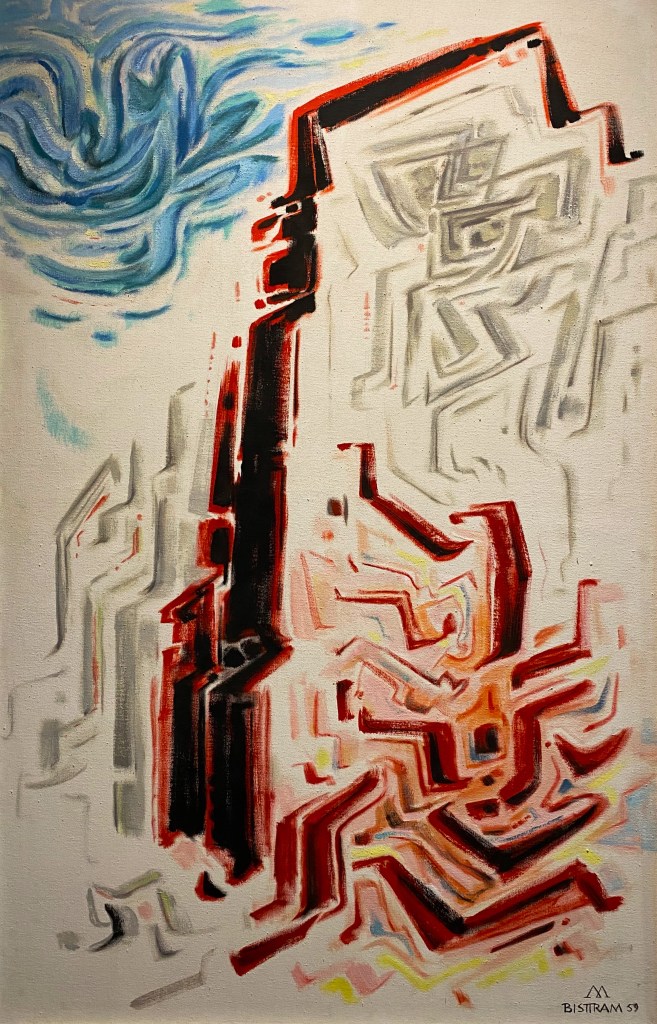
Bisttram evolved from painting New Mexico landscapes and native culture to a decidely abstractionist style. The painting above (Storm Over Taos, 1931) is representative of his early work in New Mexico. The photographs of his paintings below are from the PPHM exhibit (private collection on loan – Ladd Family) and show his progression into abstraction.
emil bisttram, waterfall, 1959, acrylic on canvas
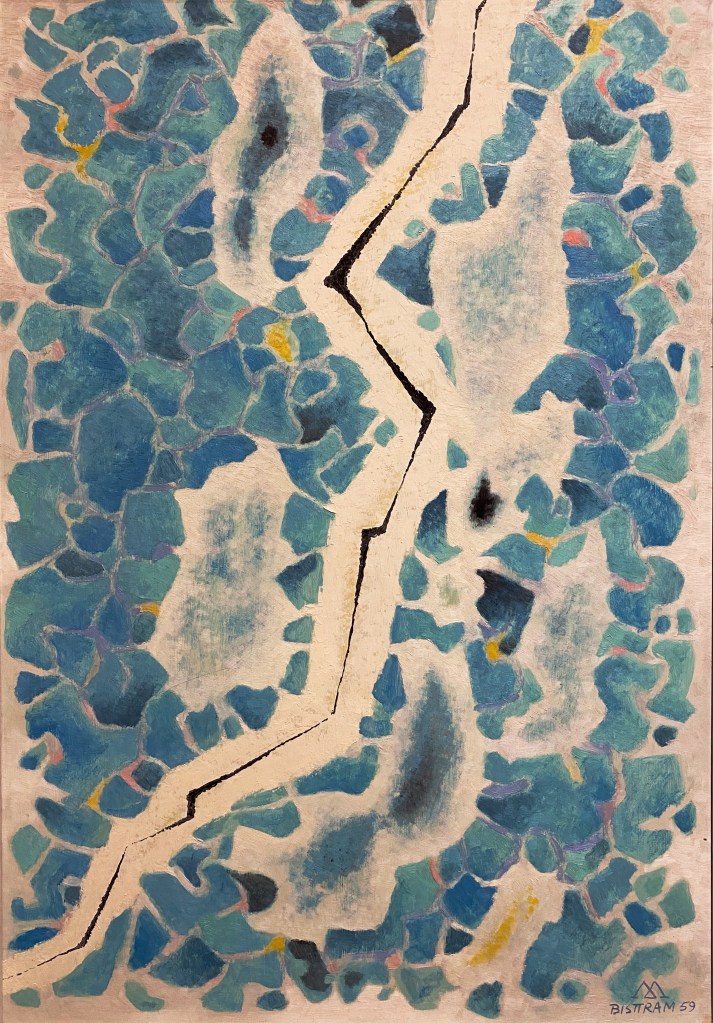
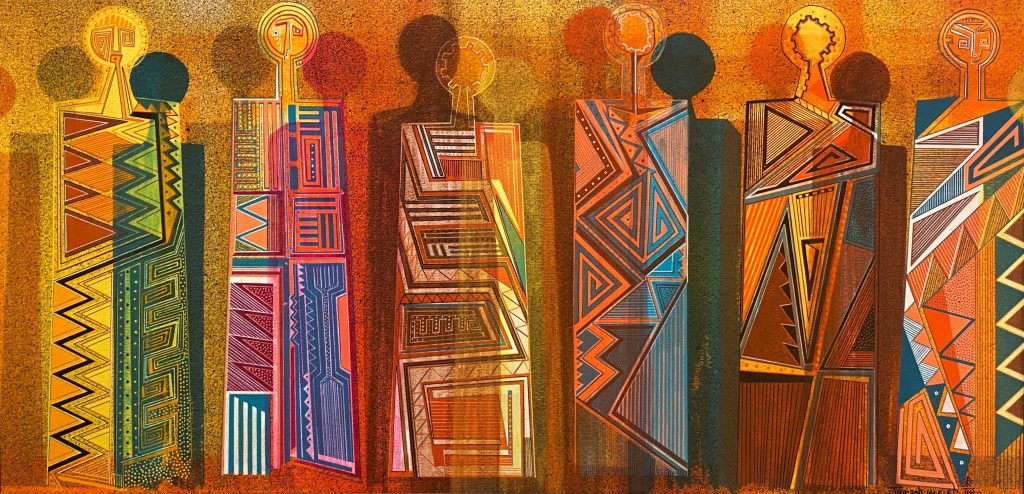
emil bisttram, winter, 1959, enamel on masoniteemil bisttram, celestial structures, 1959, enamel on masoniteemil bisttram, ascension no. 2, 1959, enamel on masoniteemil bisttram, midsummer night’s dream, 1960, enamel on masonite
festivity, 1960, enamel on masonite
Transcendental painting group (TPG)
Bisttram, along with Raymond Jonson, formed the TPG. The TPG was part of the Non-Objective Abstractionist wave of Modernism – which in part emanated from the influx of artists fleeing the increased political disruption ocurring during the 1930s in Europe.
emil bisttram, left: cosmic stream, 1959 – right: composition #77, 1960emil bisttram, the fiery world, 1963,emil bisttram, symphony in blue, 1963, oil on masonite
“The Transcendental Painting Group is composed of artists who are concerned with the development and presentation of various types of non-representational painting; painting that finds its source in the creative imagination and does not depend upon the objective approach.” —- TPG Manifesto
emil bisttram, windsong, 1964, oil on masonite
While we do not enjoy the work of some popular avant garde abstract artists, in our very humble opinion we think the paintings of the TPG artists and in particular Bisttram are in a different category. The work is clearly non-objective in may regards but relatable and created with a clear design in mind. We would love to know what you think.
Be seeing you!
P.S. Added bonus of visiting the PPHM – the excellent Palace Coffee is a five minute walk from the museum.
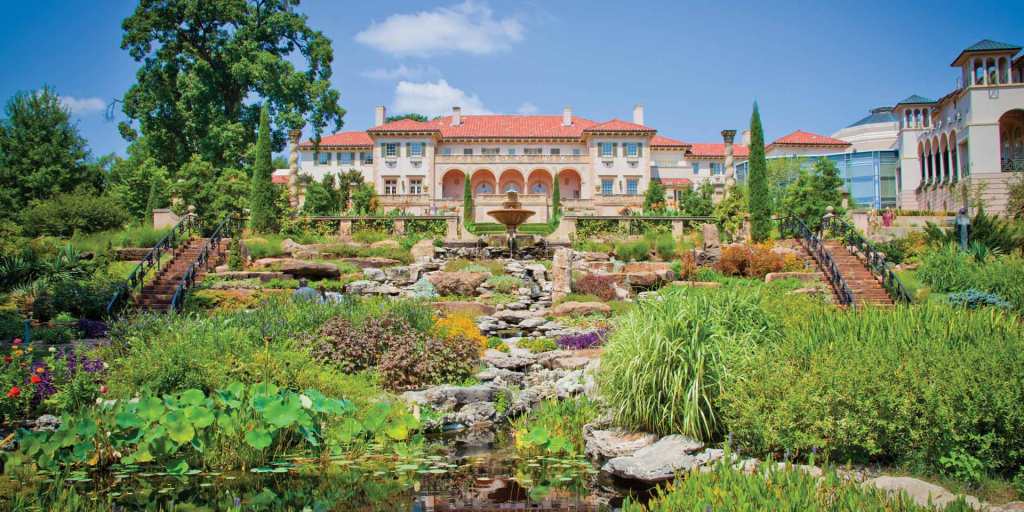
From 1927 to 1938 the Villa Philbrook, as it was known, was the family residence of Waite and Genevieve Phillips. The Italian Renaissance style villa as originally built consisted of 72 rooms set on 23 acres of gardens. Phillips donated the mansion to the city of Tulsa for use as an art museum in 1938.
The PMOA opened to the public in 1939. A 70,000 square foot wing was added in 1990 along with a redesign of the garden space ( the new wing also houses a very fine cafe). The museum houses 16,000 works in its permanent collection with a focus on Native American, American and European art.
Historical footnote: Phillips was a member of the Phillips family which founded Phillips Petroleum in 1917. Today the company trades as Phillips 66 and is one of the largest petroleum refiners in the world with revenues of approximately $107b.
Childe hassam, american, bridge over the stour, 1897, oil on canvas
Native american and american artists
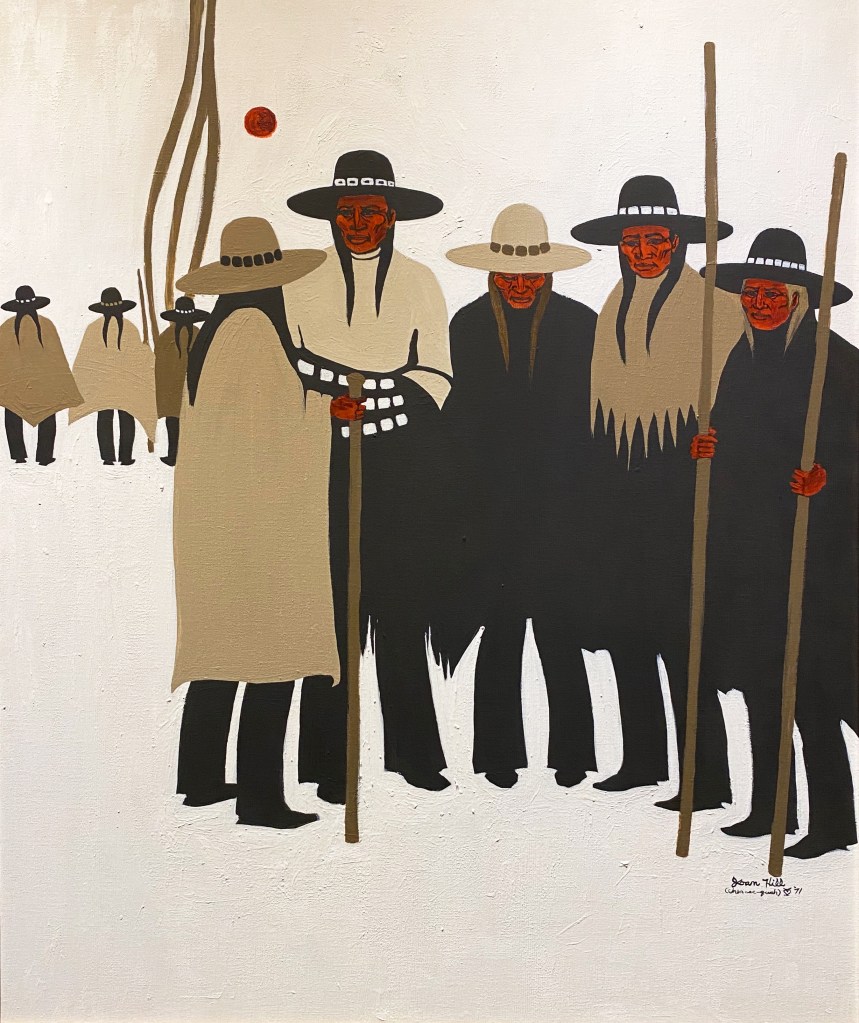
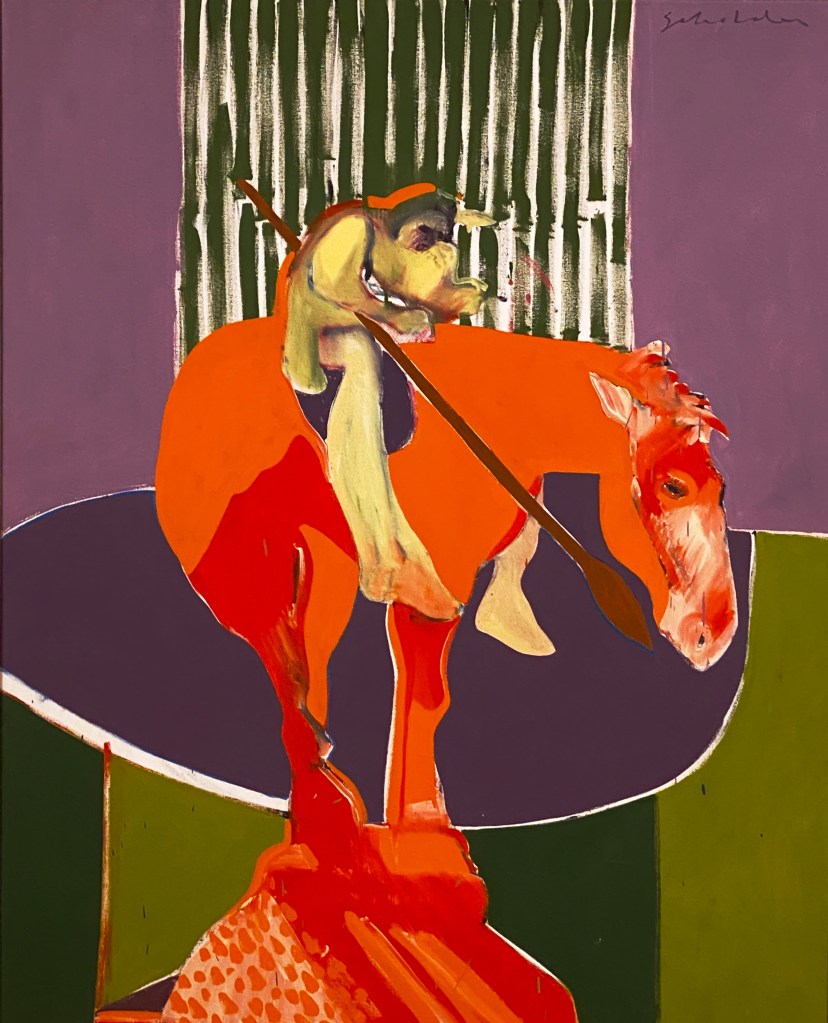
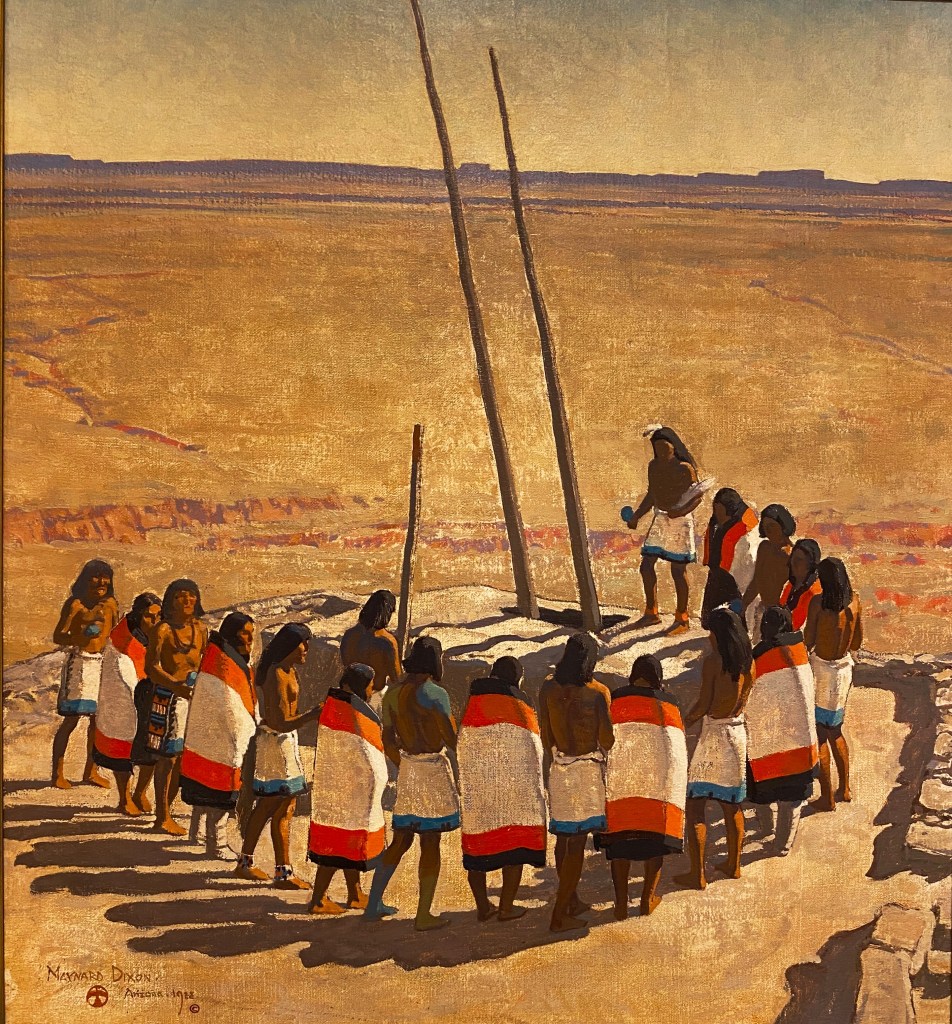
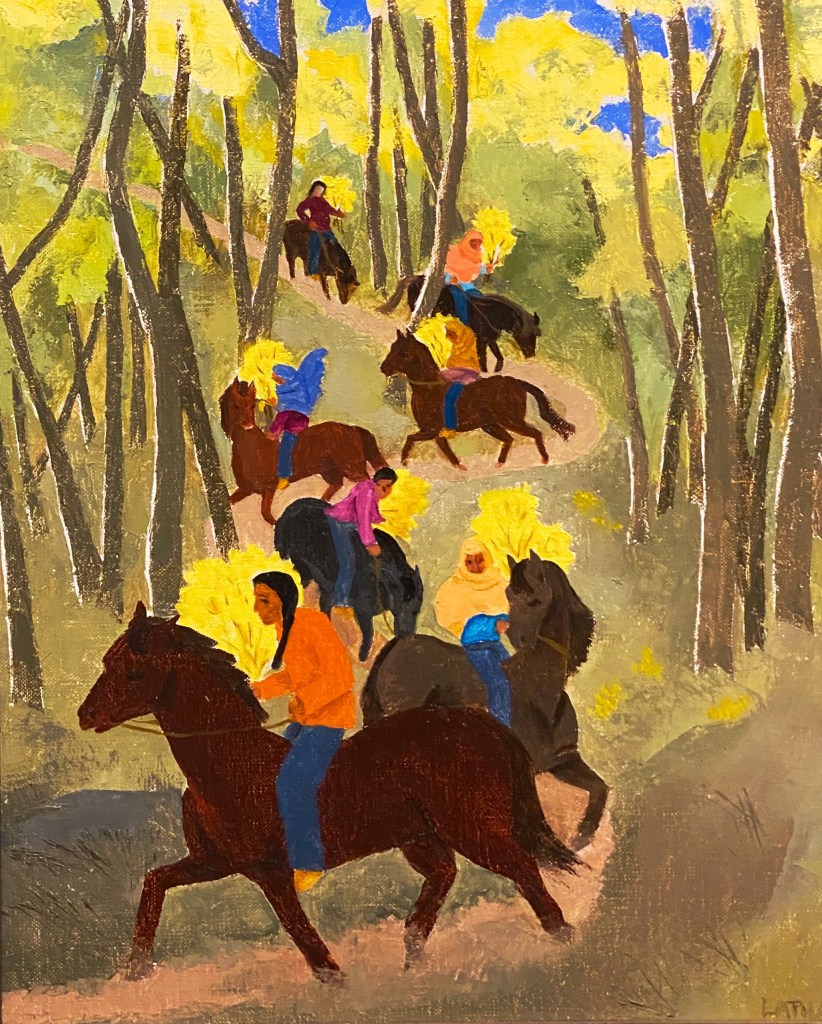
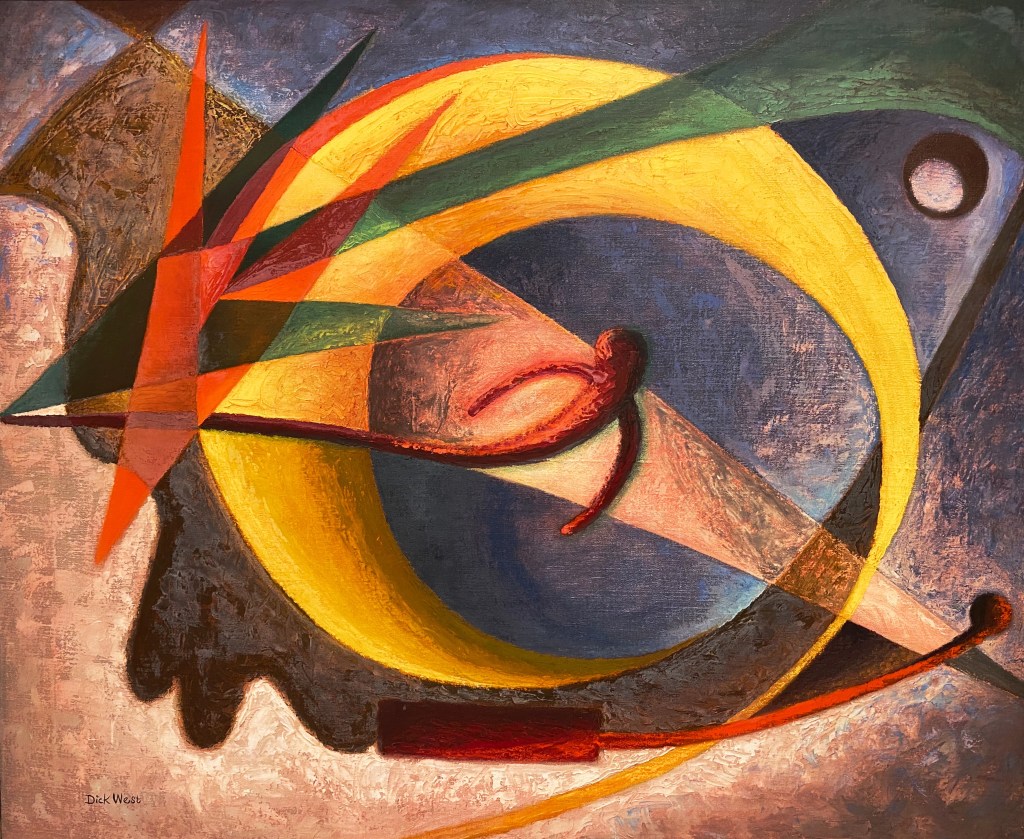
Harry fonseca, maidu, Coyote chiefs, from coyotes wild and wooly west show, 1987, acrylic and glitter on canvasJoan hill, muscogee (creek)/cheroke, war and rumors of war, c.1971, acrylic on canvasBrenda kennedy grummer, citizen band potawatomi, one sunday at shawnee, 1979, oil on panelFritz scholder, luiseno, indians #19, 1967 and the end of the trail, 1970, oil on canvashelen hardin, kha’p’oo owinge (santa clara pueblo), vision of a ghost dance, c.1975-1977, oil on boardLeft: Helen hardin, kha”p”oo owinge, prayer for bountiful blessings, 1980, oil on board right: maynard dixon, american, the circle of shimaikuli, 1923, oil on canvasleft: barbara latham, american, gathering aspens for san geronimo day, n.d. right: alexandre hogue, american, studio corner—taos, 1927, both oil on canvasTony abeyta, dine’ (navajo), firestorm, 2021, oil on canvasJoseph henry sharp, american, chief weasel bear, 1906, oil on canvasWALTER RICHARD (DICK) WEST, SR., SOUTHERN CHEYENNE, THE WEDDING OF ART AND SCIENCE, 1949, OIL ON CANVAS
European art
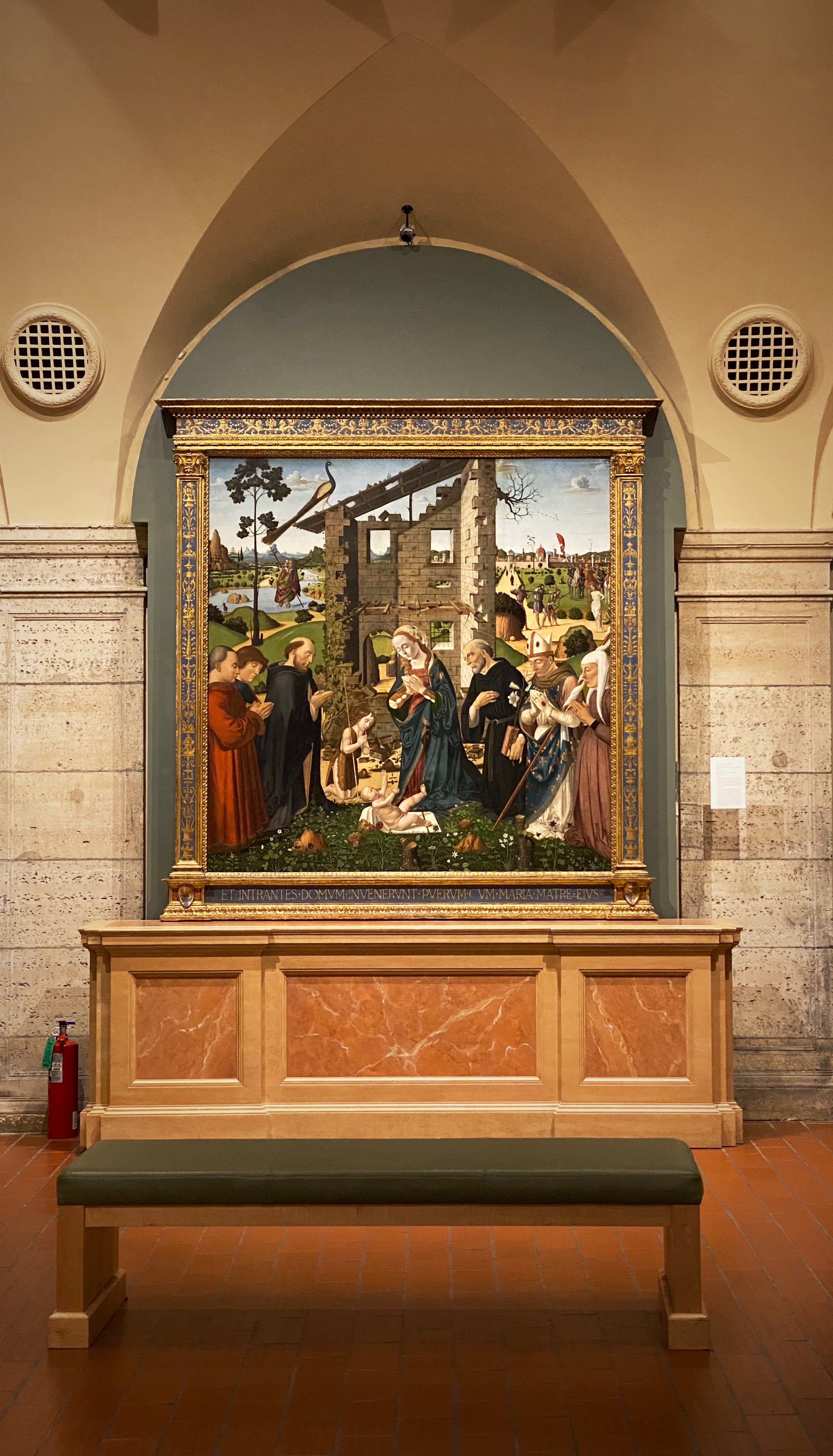
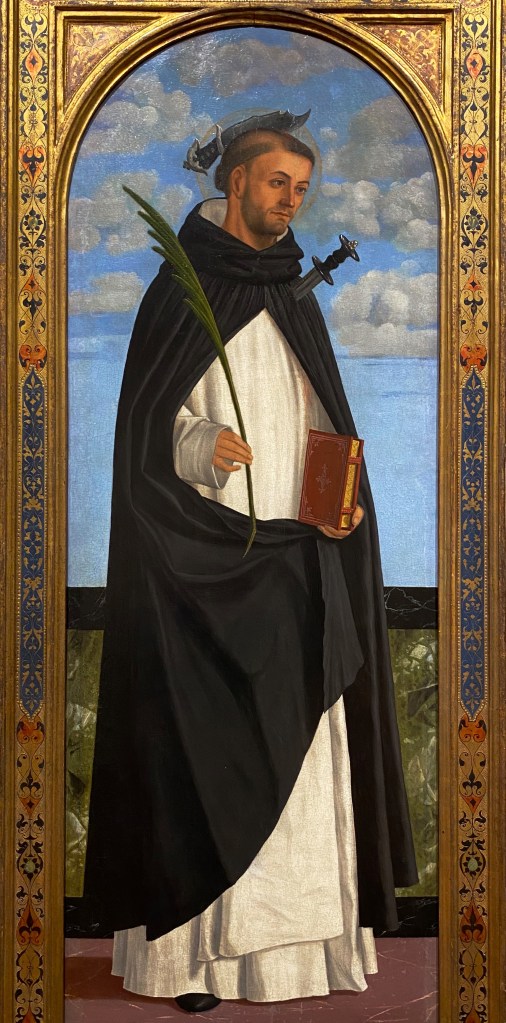
Pablo picasso, spanish, les pommes, 1947, oil on canvasWassily kandinsky,russian, kallmunz, the town hall square, 1903, Oil on boardvittore carpaccio, left: st. peter martyr of verona, right: st. john the baptist, 1505, oil on panel
We enjoyed our visit to the PMOA, and especially appreciated the focus the museum brings to Native American artists. The museum showcases the evolving manner and styles in which Native Americans have been portrayed over the last 150 years – both fascinating and enlightening.
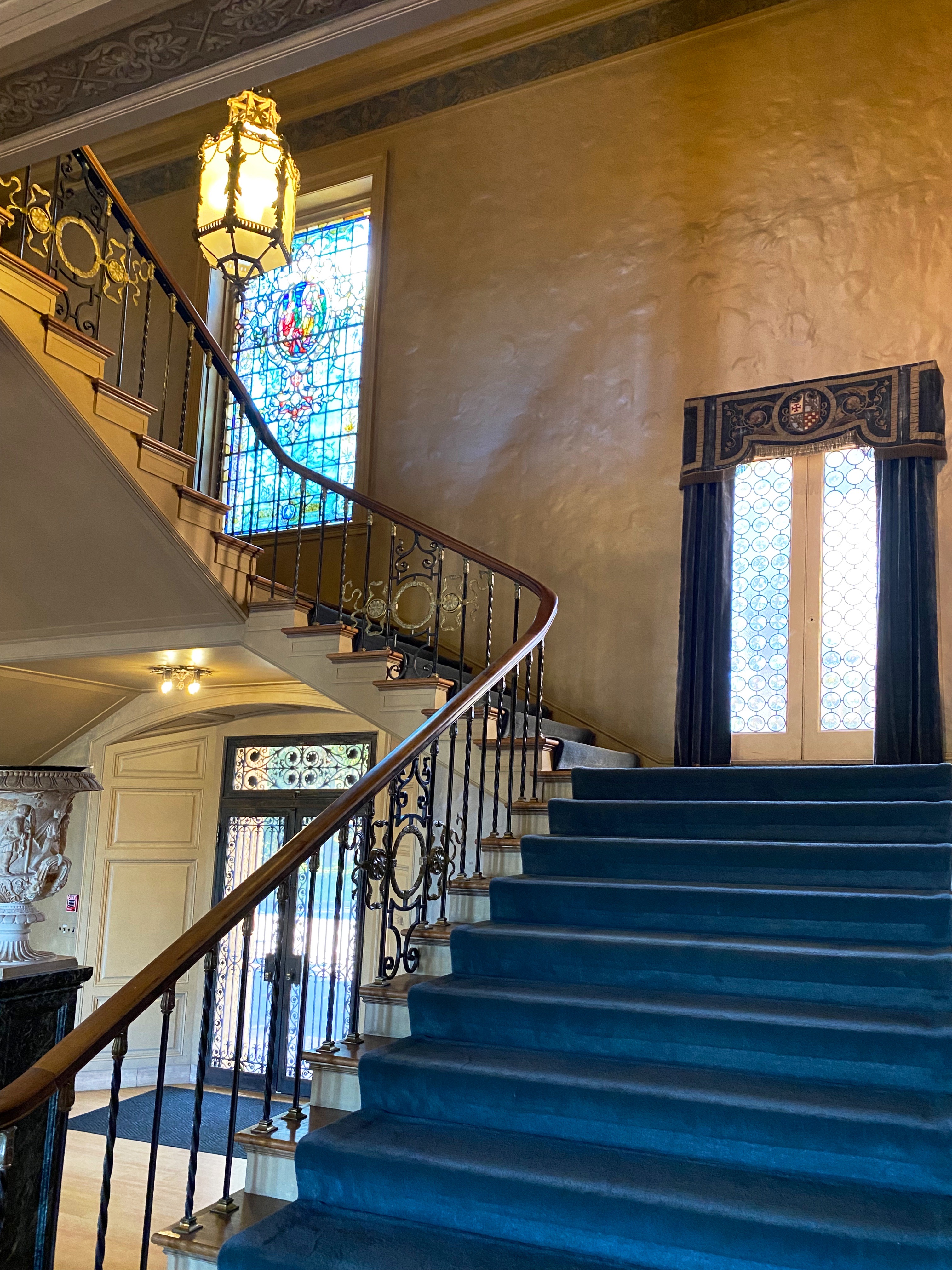
In addition to the finely curated collection, the museum itself is a wonderful piece of architecture. The extravagance and oppulence of a 72 room villa for a family of four is hard to fathom (at least for OTR), but makes for an inspired setting for the art work and artifacts. And of course, the gardens extending down the slope behind the villa are spectacular.
We absolutely recommend an afternoon at the PMOA when you visit Tulsa!
Be seeing you.
P.S. We also recommend having lunch when visiting the PMOA – KITCHEN 27 is excellent.
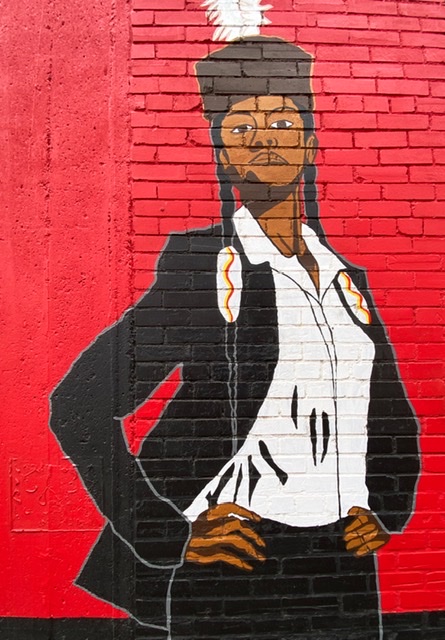
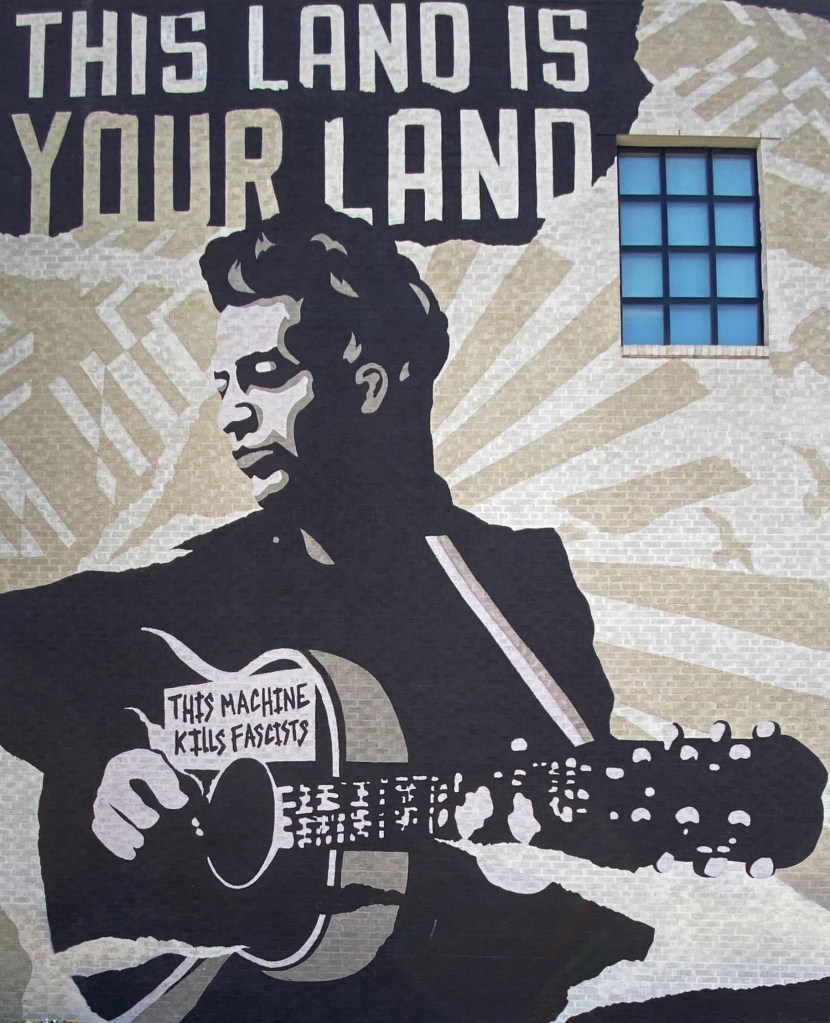
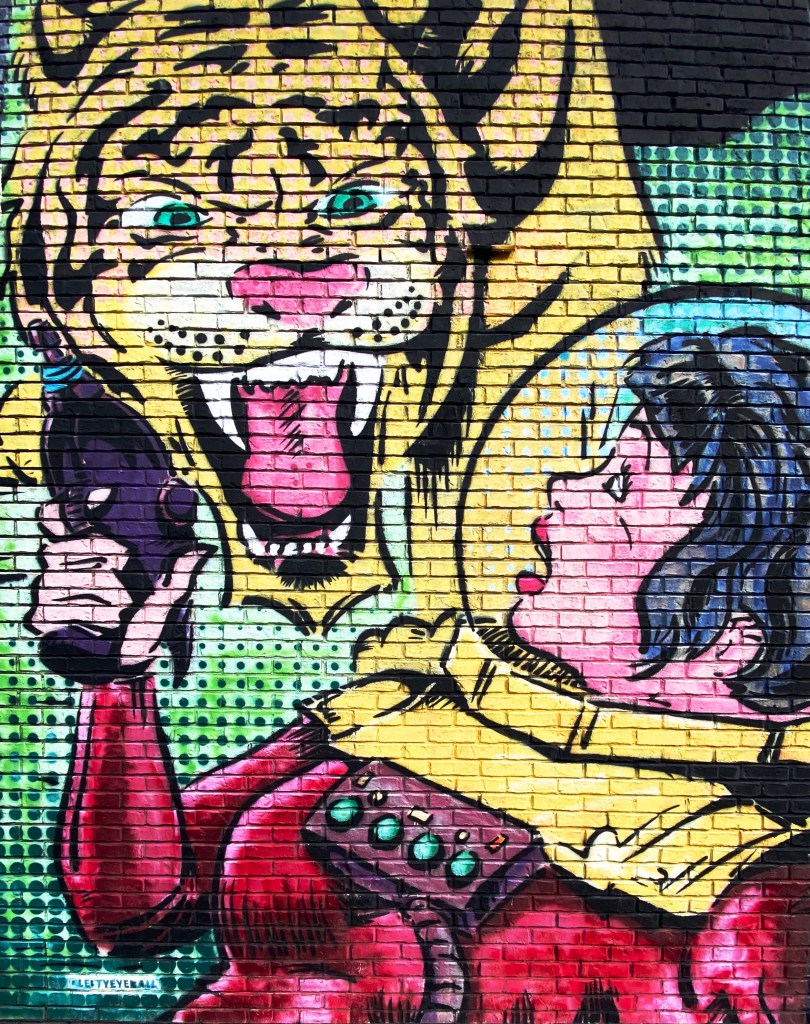
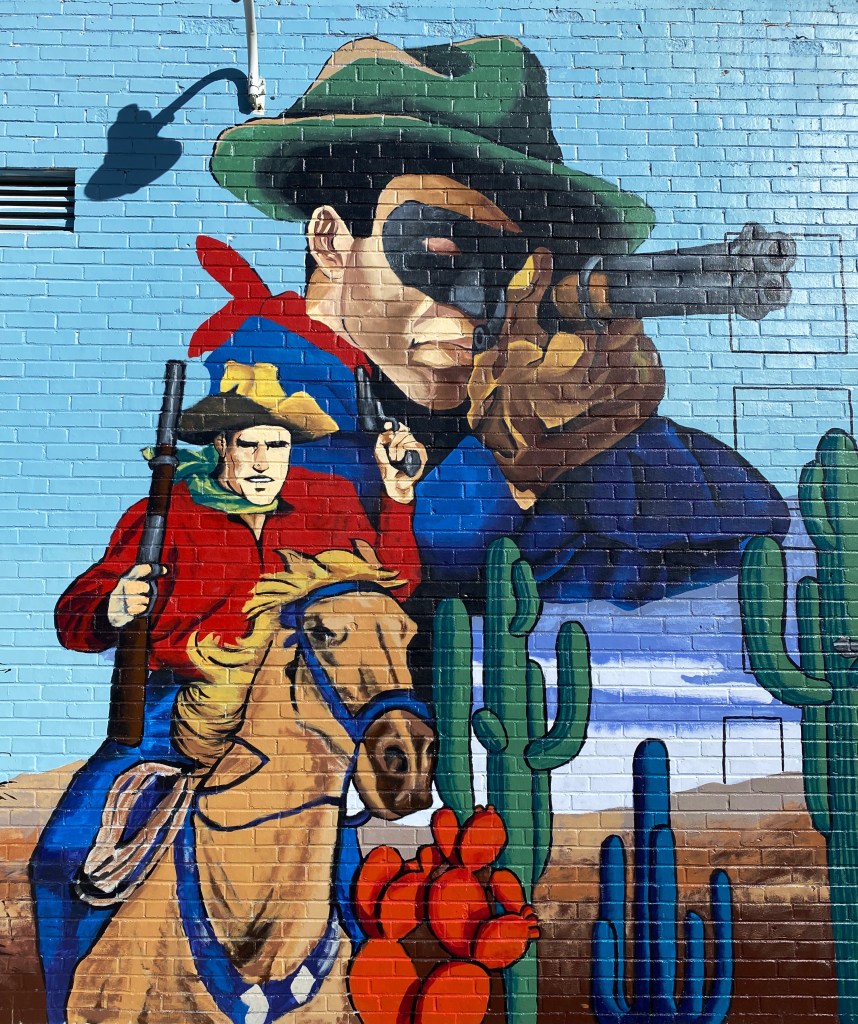
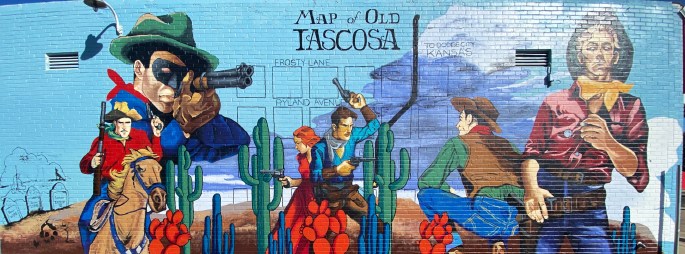
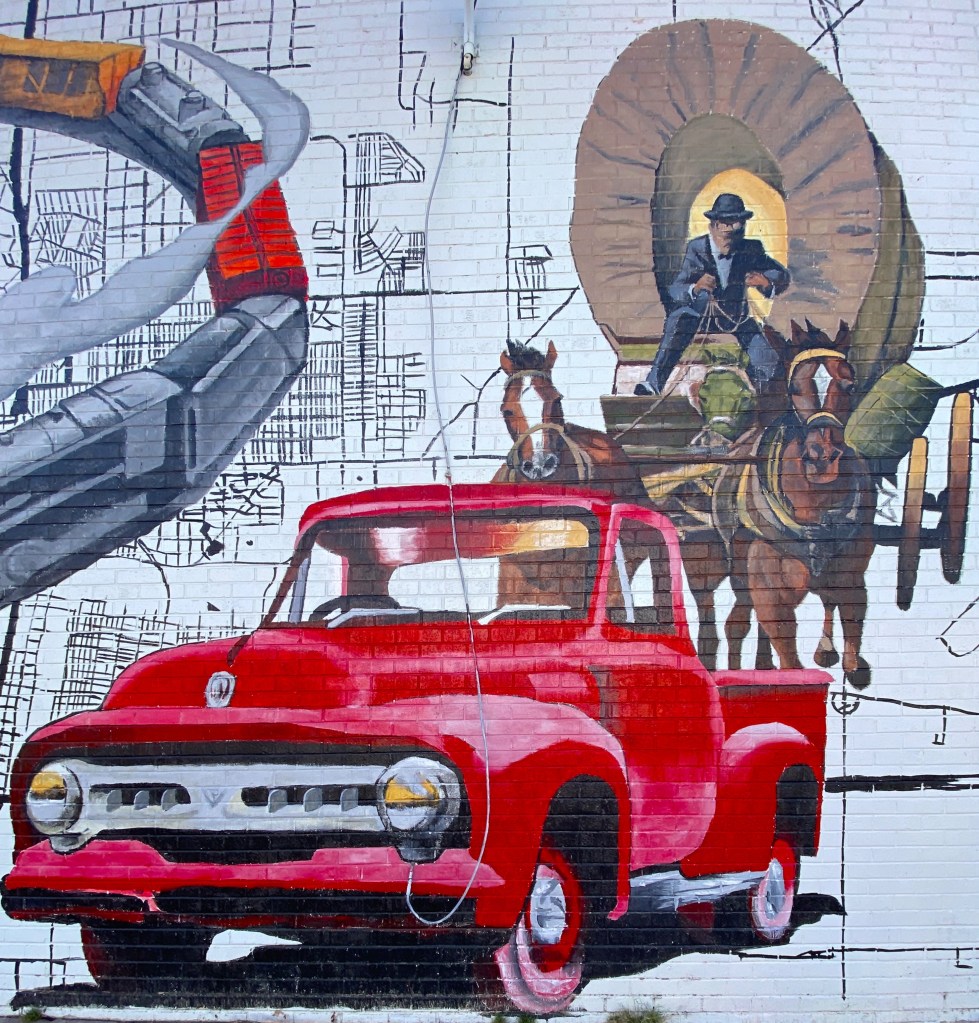
Regular followers of OTR know that, in addition to fine art and excellent coffee and tea, we are avid fans of street art (@streetartfromtheroad). This edition of OTR 7.0 presents a sampling of our favorite street murals from this trip. Some of the murals below we found purely by chance while others we sought out based on our research of public art in a particular area, town or neighborhood.
We should qualify that our focus is on street murals as opposed to graffiti or tagging. Marking public or private property is really a subversive activity and while we have our subversive moments, we do not support the defacing of public or private property. Okay, enough on that topic.
Street art is often very political and cultural in nature and at it’s best is powerful and moving. We also find that it is often highly creative, humorous and very often beautiful.
Please find below our favorites from OTR 7.0, we hope you enjoy the photographs. P.S. We have provided attribution wherever possible.
Utah: Moab
Muralist:@skyewalker_art
New Mexico: Taos
“El santero” muralist: george chacon
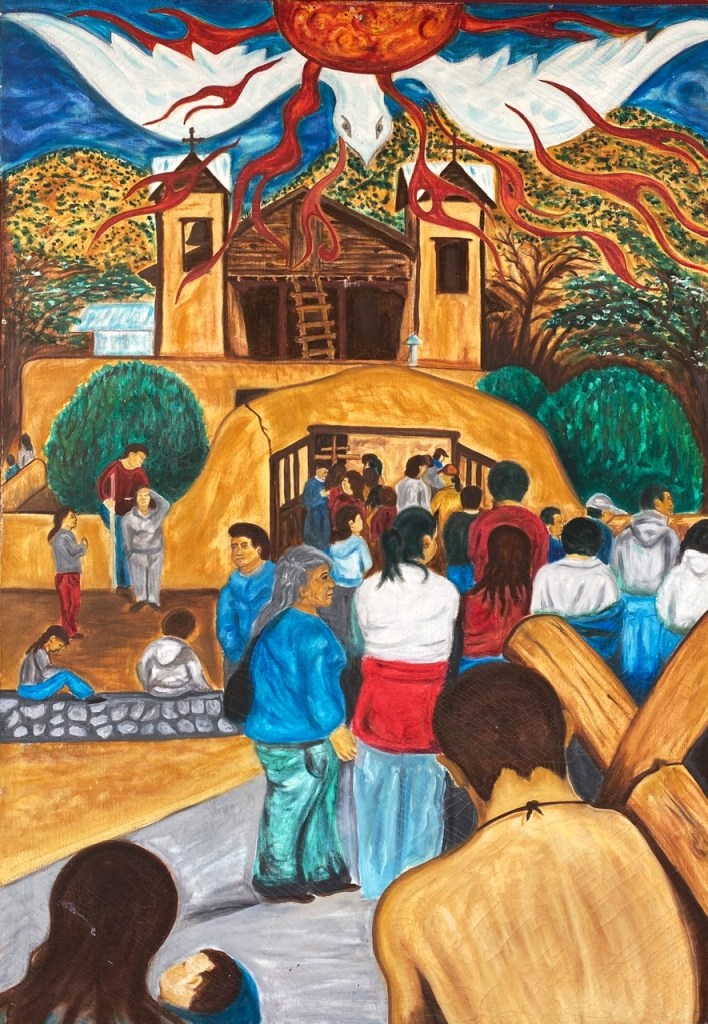
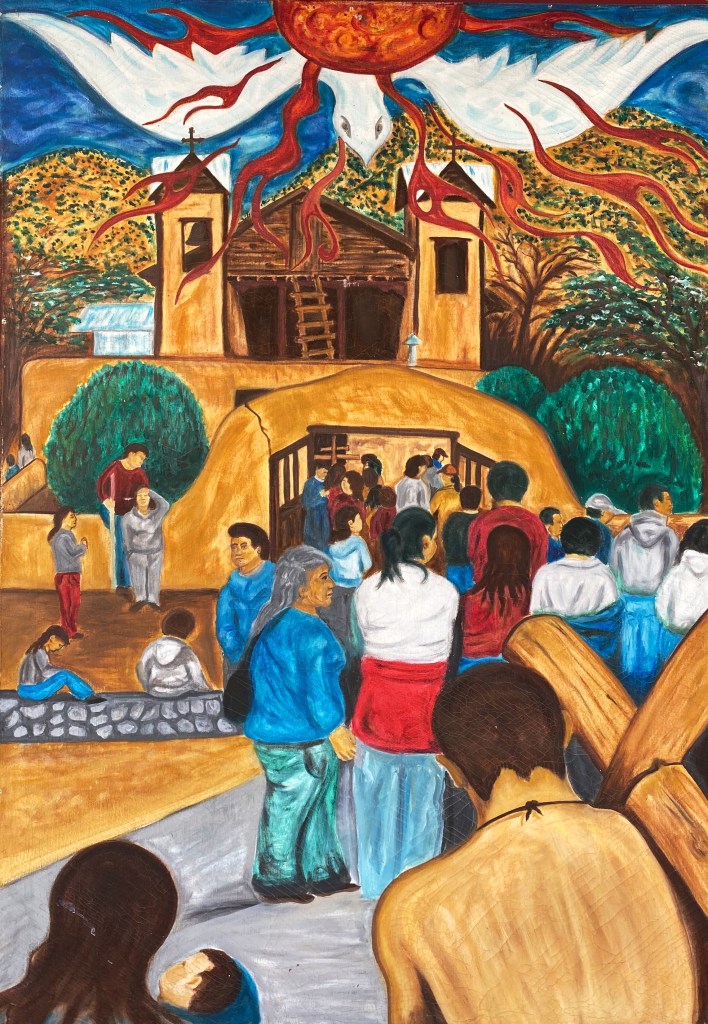
New Mexico: Plaza de Chimayo
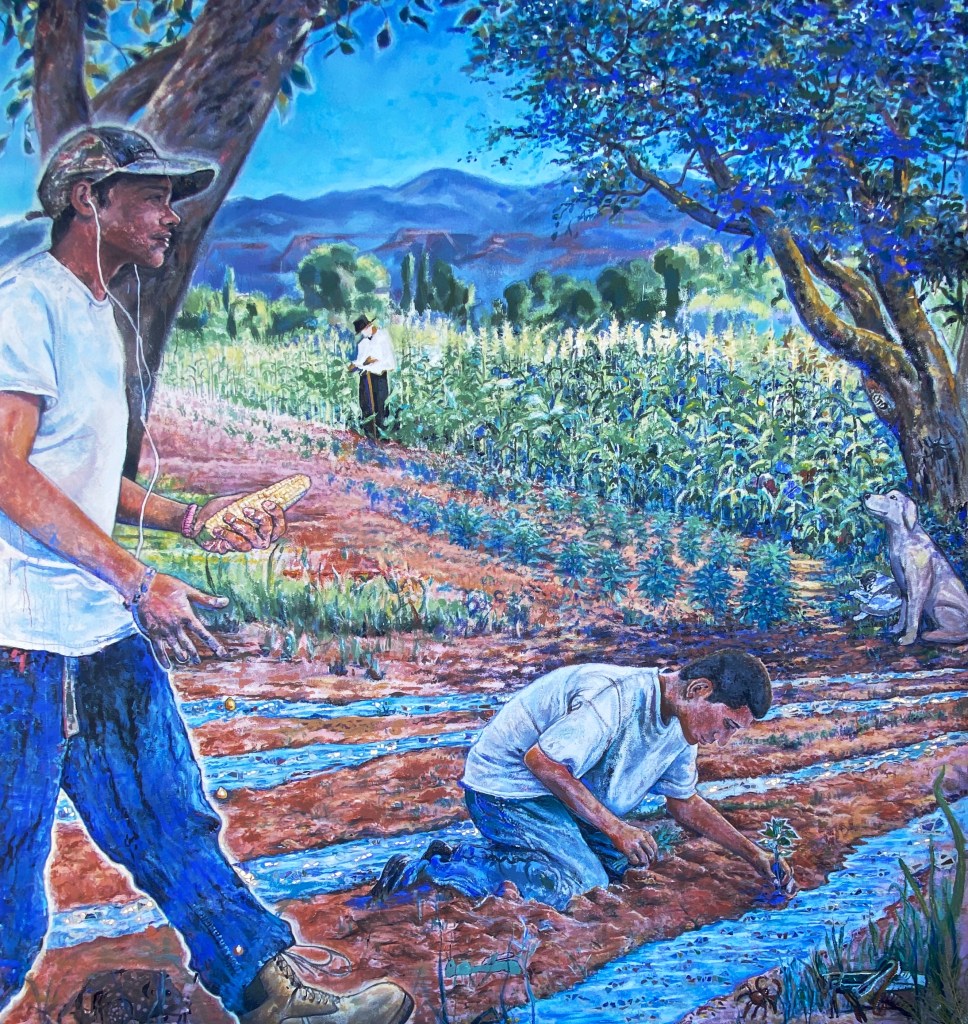
New Mexico: Espanola
“El sembrador”Muralist:Rubel rael
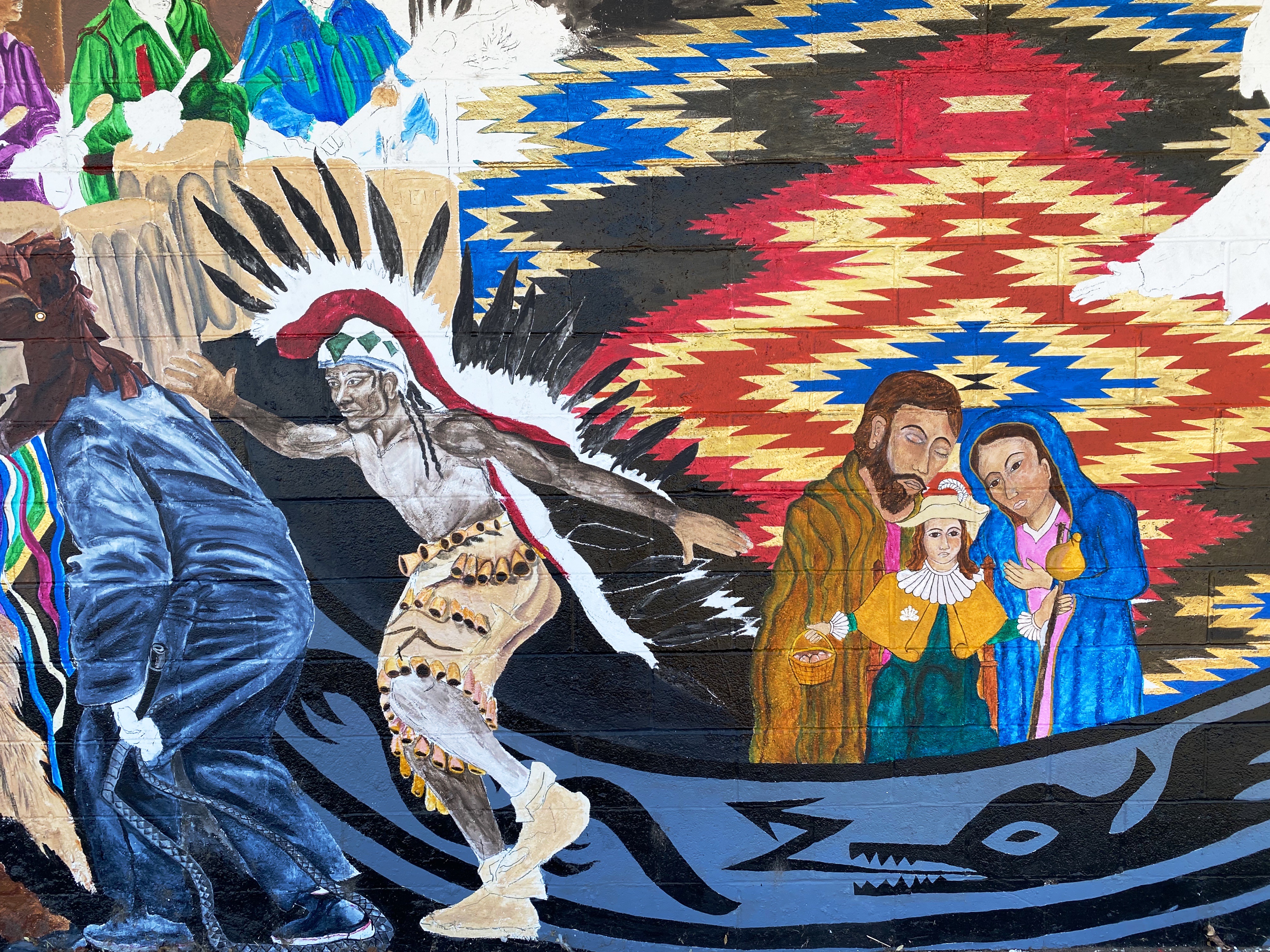
New Mexico: Santa Fe
Texas: Quitaque (kitty-k)
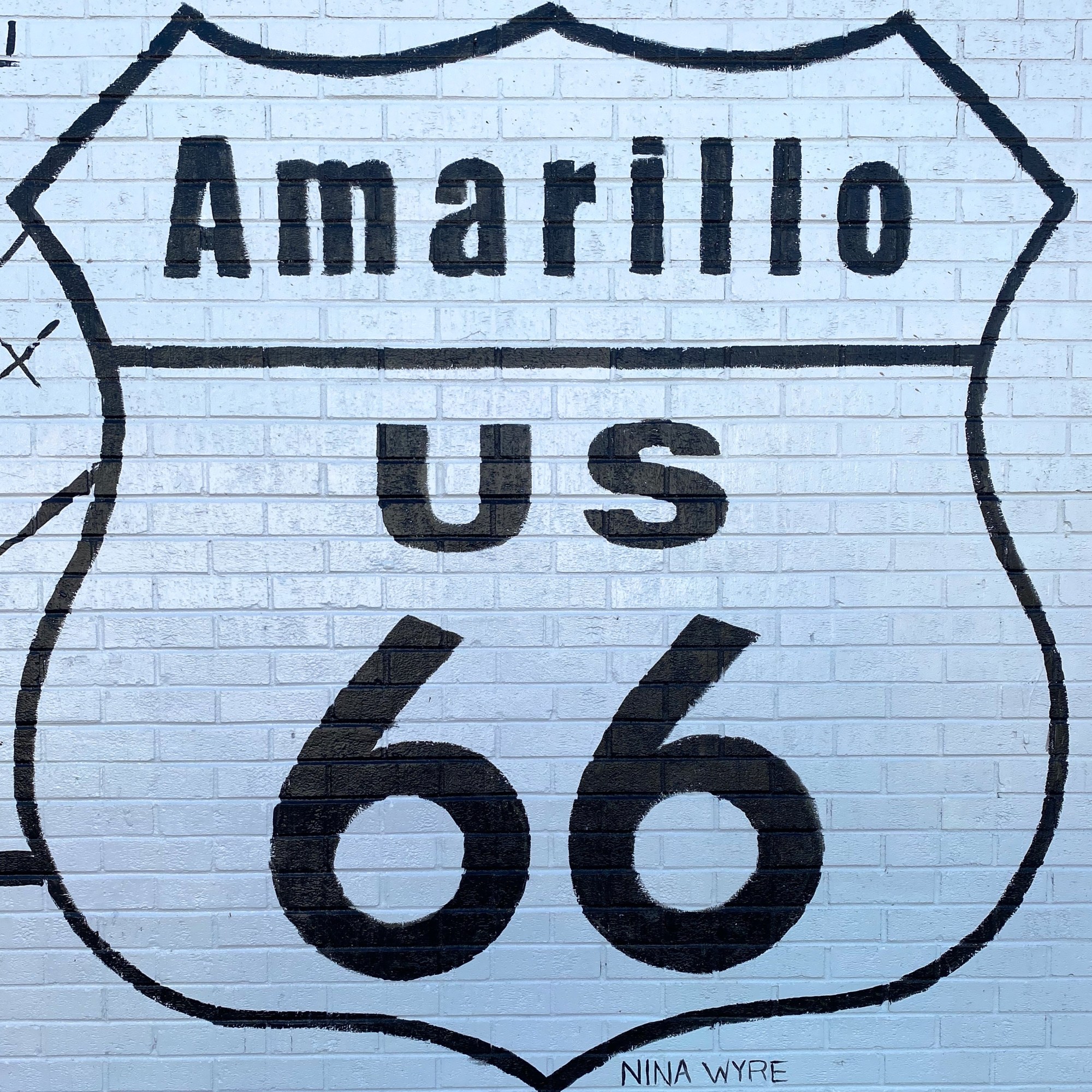
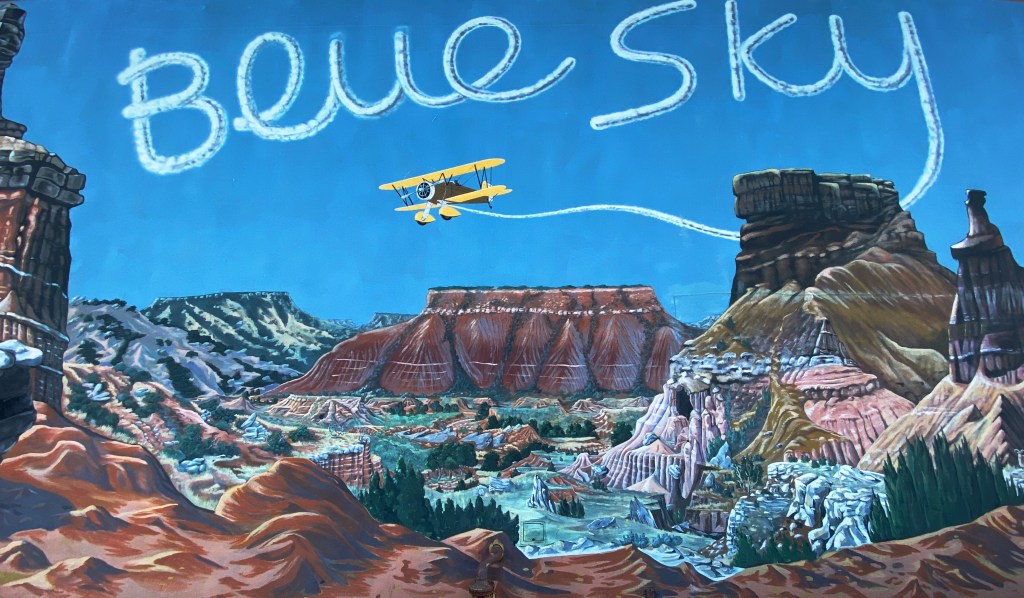
Texas: Amarillo
Muralist:@malcolm_byersblue sky texas burgers
Texas: Amarillo: Hoodo Mural Festival
Muralist:@daas
Muralist:@weshouldbestrangers
“Xochi” muralist: msyellowart
Muralist:@malcolm_byers
Muralist:@dtoxart
OK: OKC
Muralist:Eric tippeconnic (commanche nation of oklahoma)Muralist@juuriart83
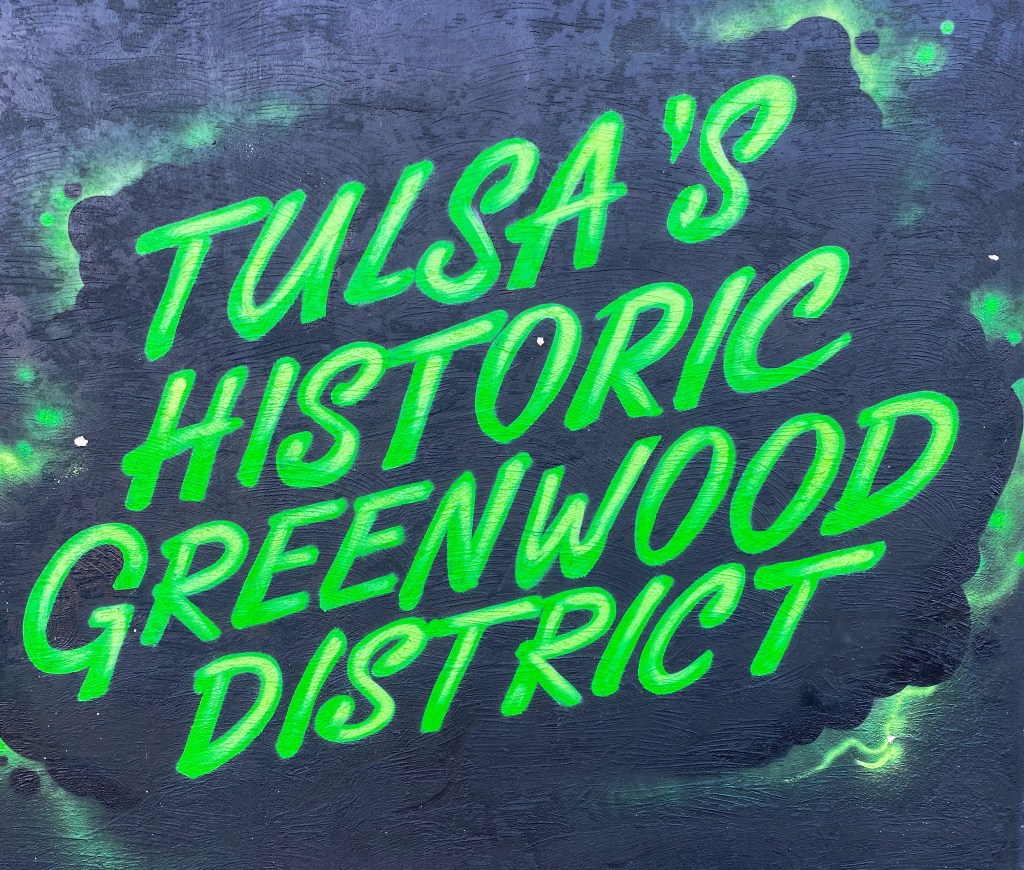
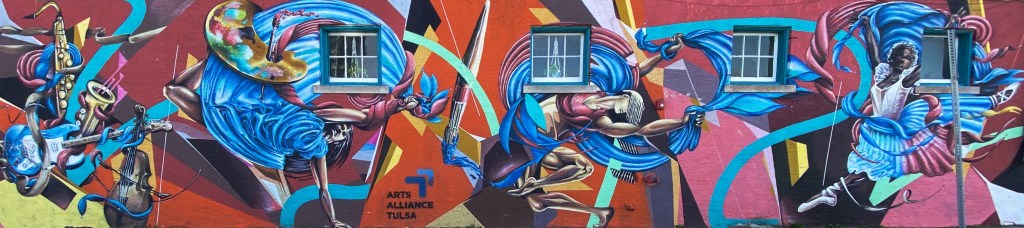
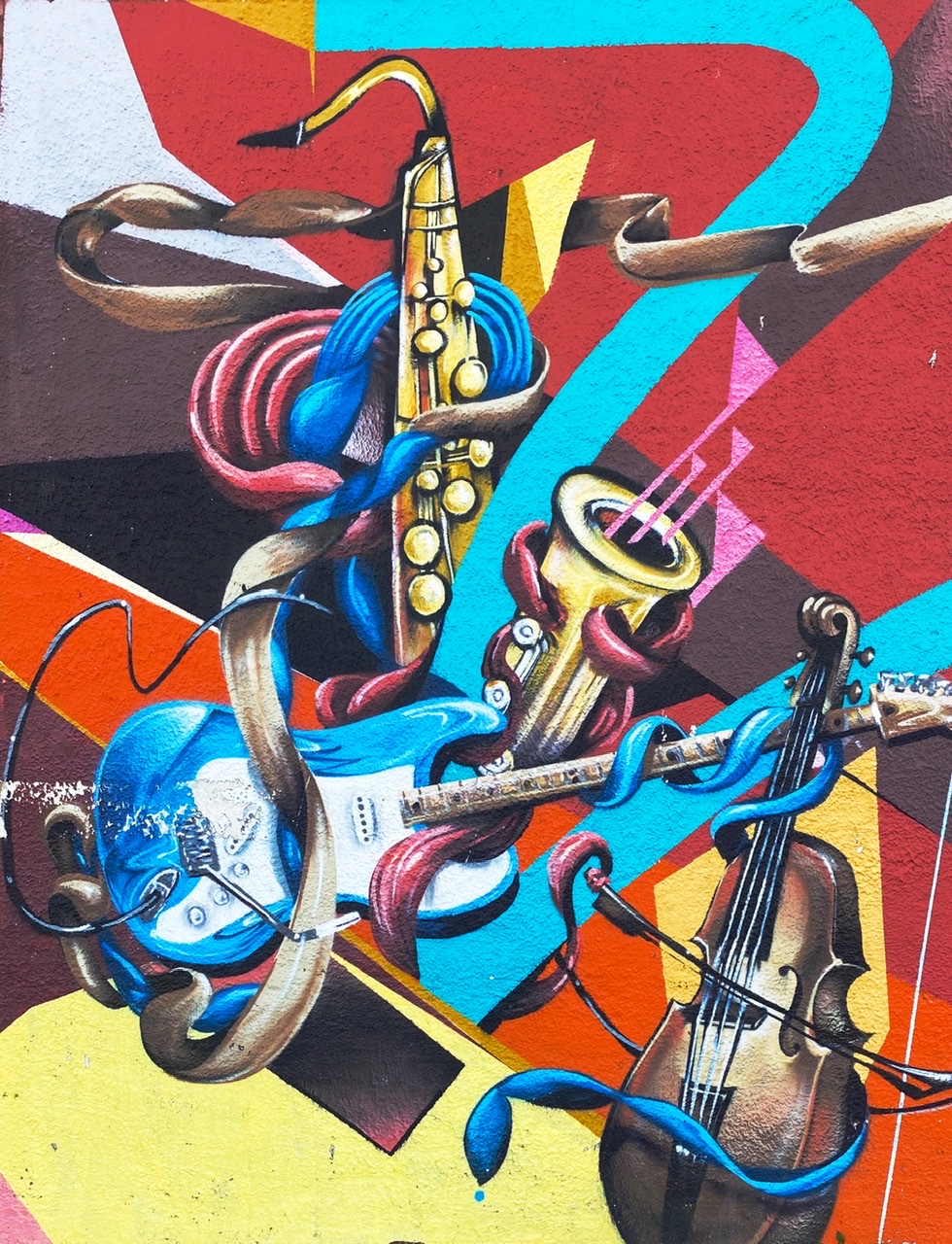
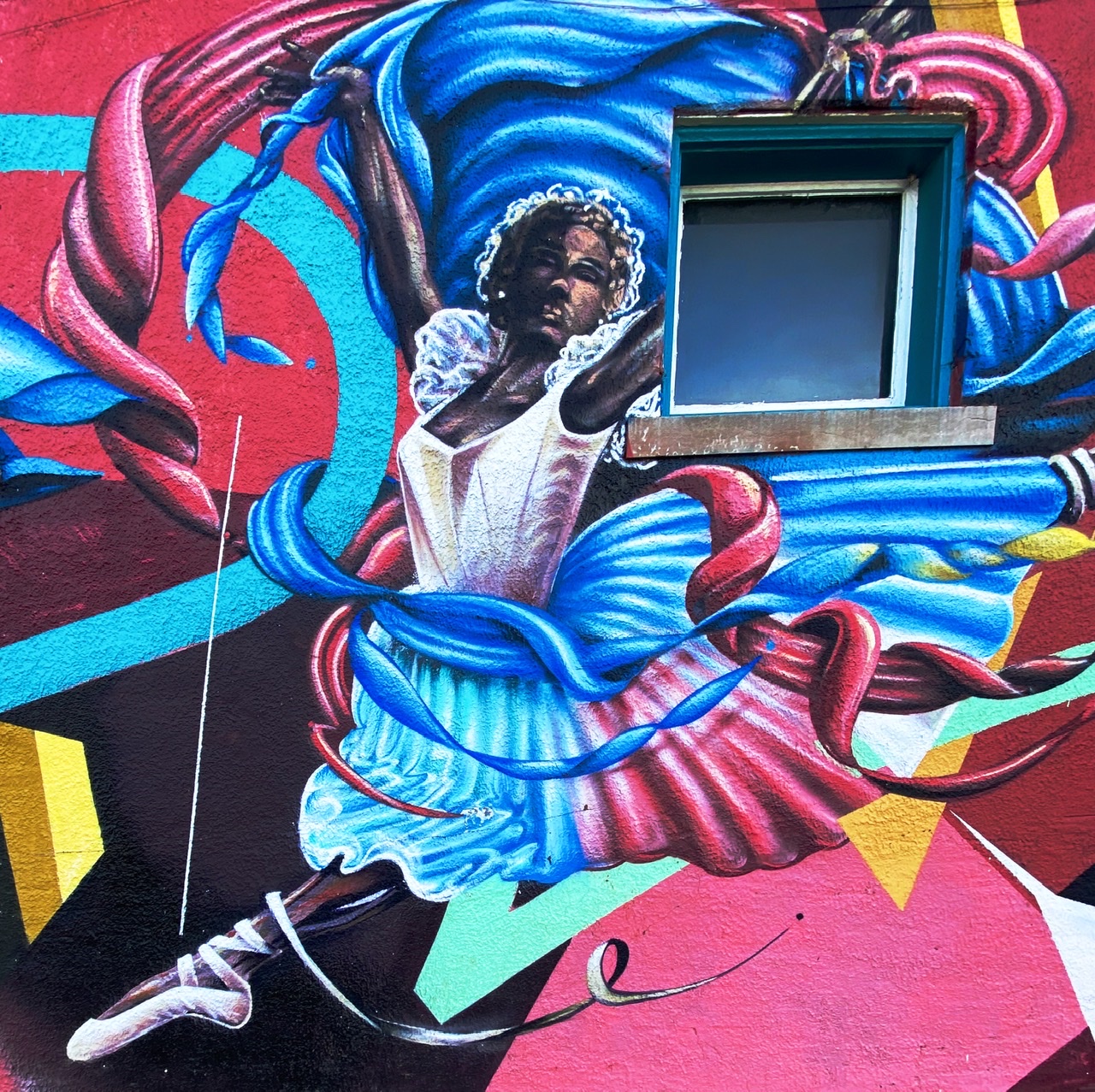
OK: Tulsa
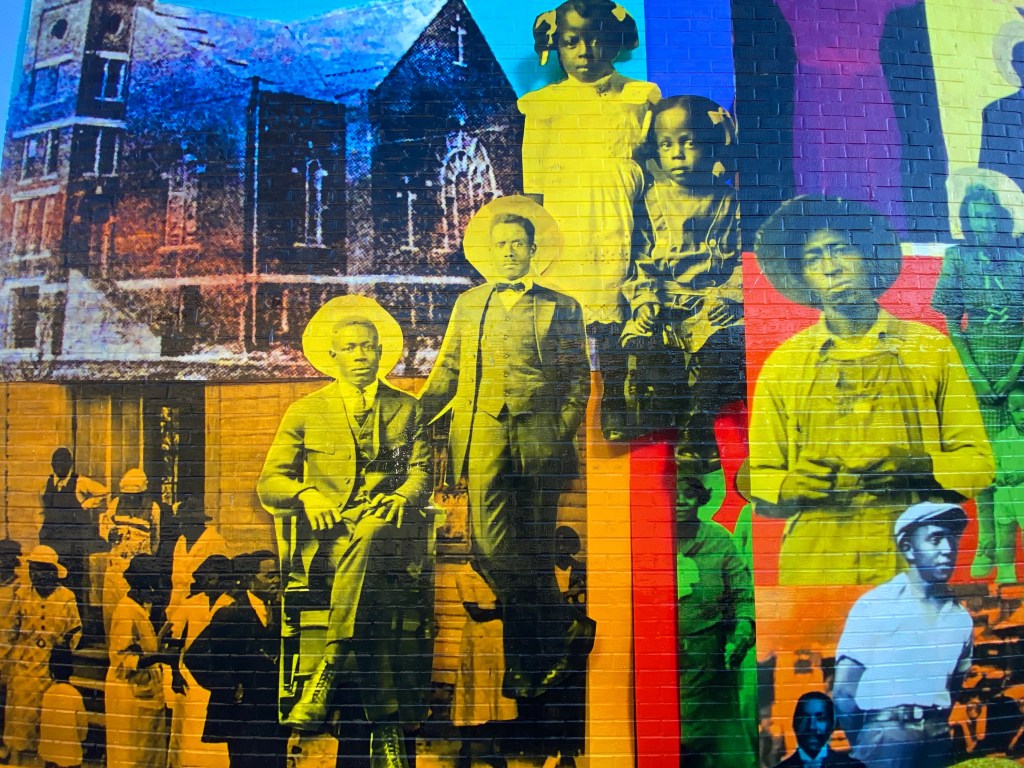
Muralist: Aaron Whisner“In Memory of Madison Mcmanus” Muralist: @jeks_nc
Historical footnote: the Greenwood District of Tulsa was the site of the Tulsa race massacre also known as the Tulsa race riot. In the early 1900’s this area of Tulsa was known as Black Wall Street due to the concentration of wealth in this largely black community.
On May 31, 1921 multiple mobs of armed white residents of Tulsa (deputized by city officials) attacked the residents of the area killing and injuring scores of people and destroying a 40 block area of the district. Thirty-six blacks were killed and over 800 were hospitalized.
Some accounts indicate that the massacre was triggered by the arrest of a black man for assaulting a white woman. Most historians agree that this event was more the result of a growing resentment in the white community of the financial success of ”Black Wall Street”.
Roswell is known primarily as the location of an alleged UFO crash that took place in 1947. Strangely, the purported crash site is 75 miles from Roswell – oh well, close enough for tourism purposes. I do not want to put a damper on the UFO tourist trade (and a our little blog won’t) but the UFO was, in fact, a weather balloon!
Donald B. Anderson, Irish Castle, 2000, acrylic on canvas
From our perspective (with all due respect to UFO fans) there is a much better reason to visit Roswell. As we did a quick bit of research on the town we found a website for the Anderson Museum of Contemporary Art, and decided to visit the museum the morning following our arrrival.
The next morning (after coffee and tea) we set out to walk to the museum just a short distance away. We feared we had made a wrong turn along the way as the only building we could see ahead looked much more like a warehouse than the exterior of a museum. However, upon getting loser to the building there was signage indicating that the building was in fact the home of the AMoCA.
Donald B. Anderson
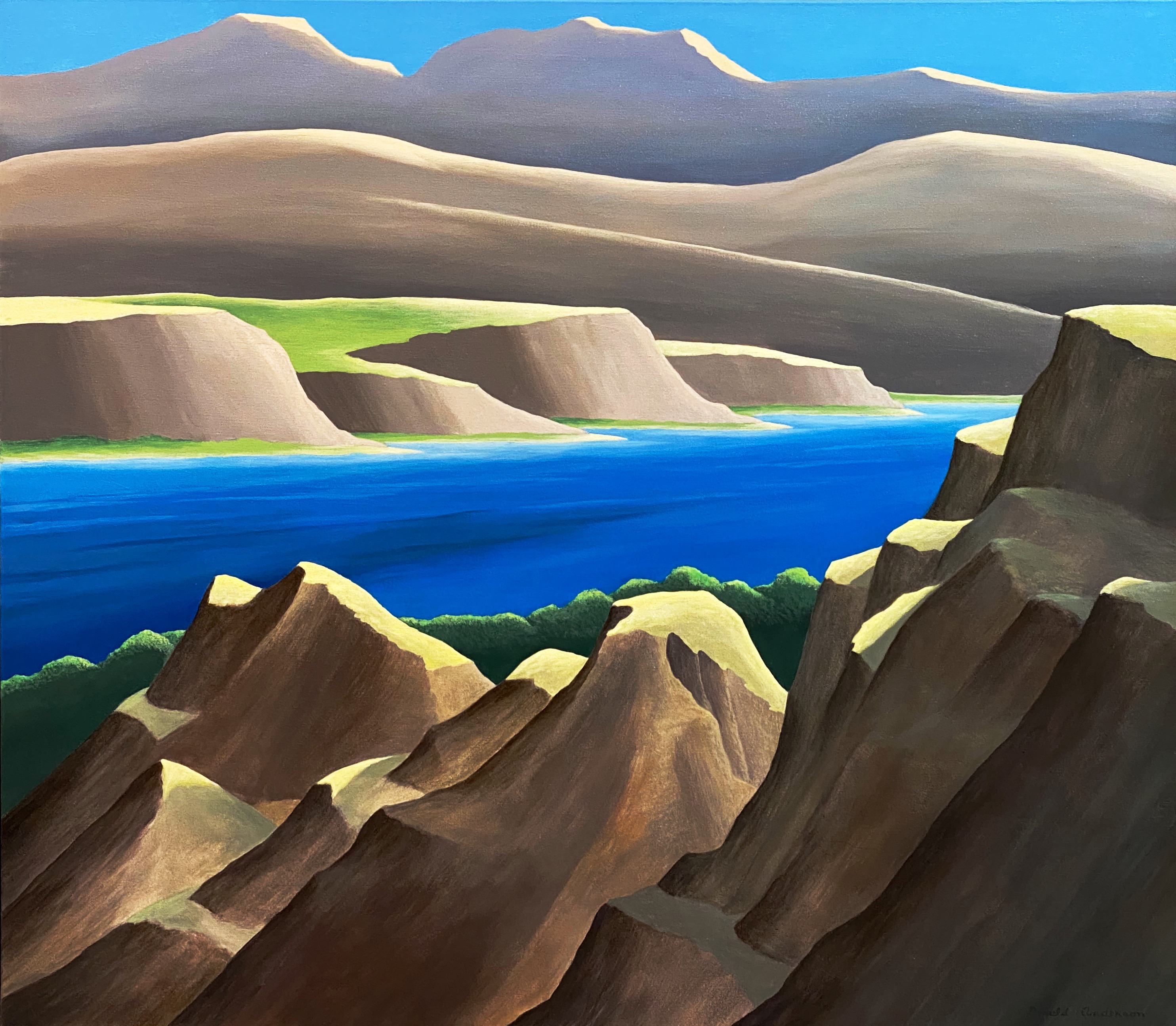
Donald B. Anderson, Achil Island, 1987, acrylic on canvas
We were delighted to find ourselves in a bright and colorful space with paintings covering the walls from floor to ceiling. The museum covers 22,000 square feet and is divided into twelve galleries with more than 500 artworks on display.
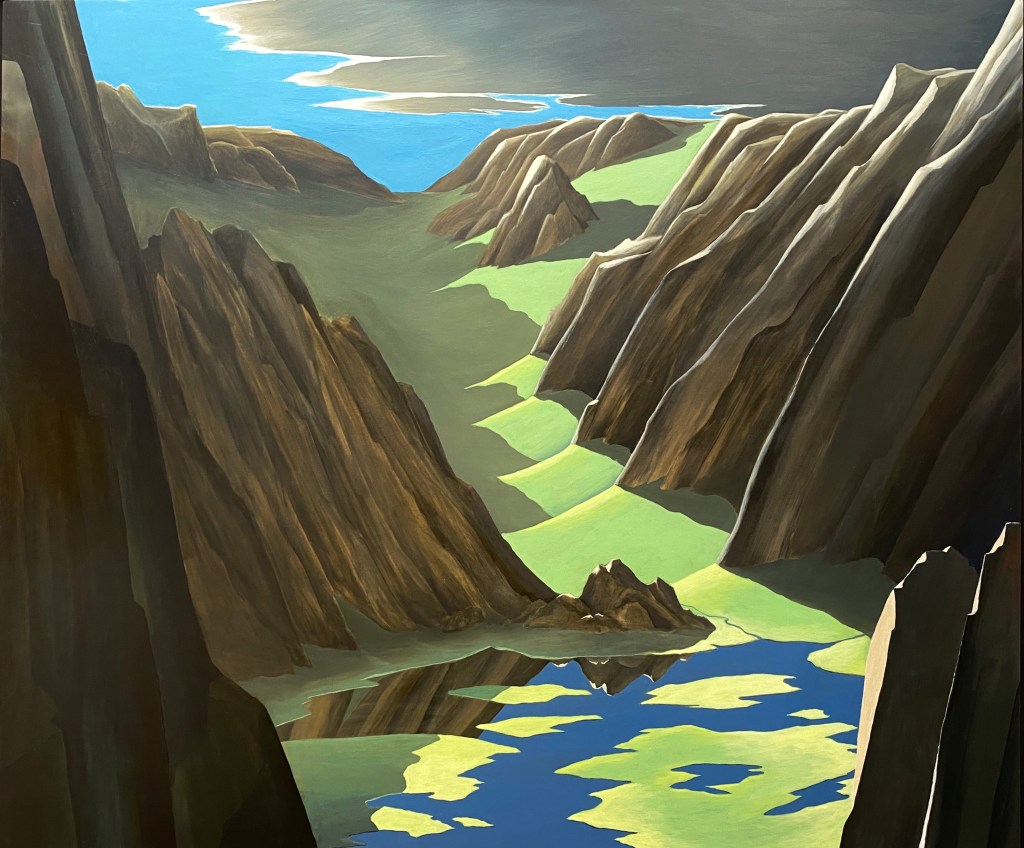
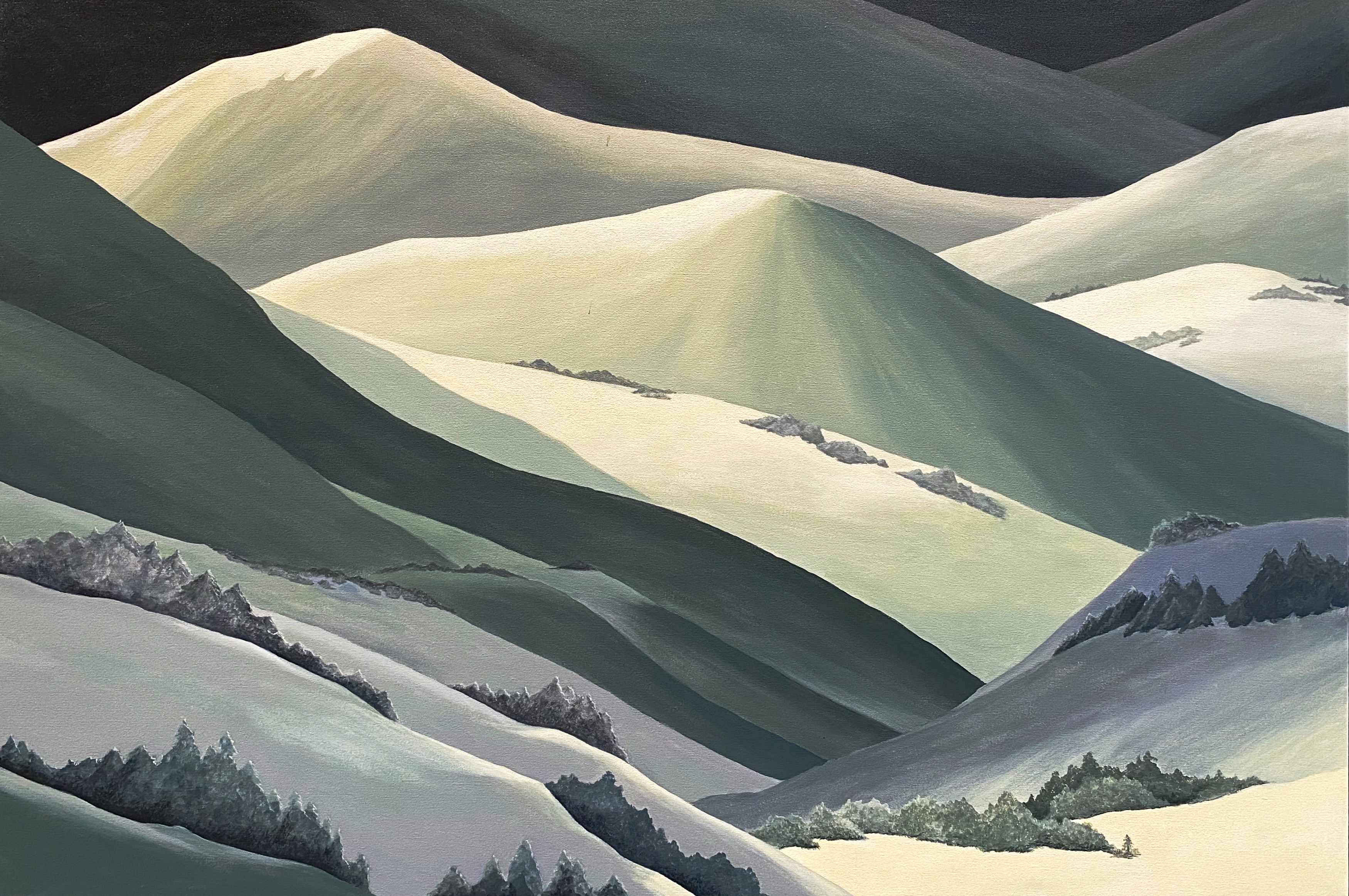
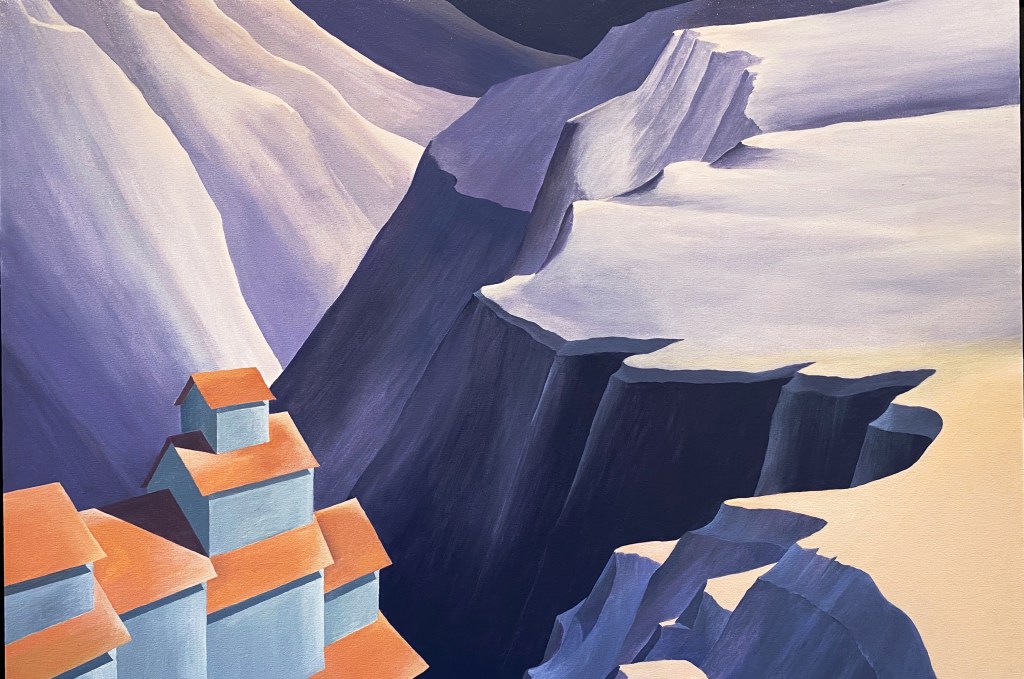
The photographs of the large scale landscape paintings directly above and below are by Donald B. Anderson, who was a highly successful businessman and artist. He founded the museum in order to bring more art and culture to Roswell and southeastern New Mexico. While a number of his delighful landscapes occupy one of the galleries, the museum is about much more than Mr Anderson.
Donald B. Anderson, Dark Valley, 2001, acrylic on canvas
roswell artists-in-residence (rair)
Jessica Kirkpatrick, Chora 1, 2013, oil on canvas
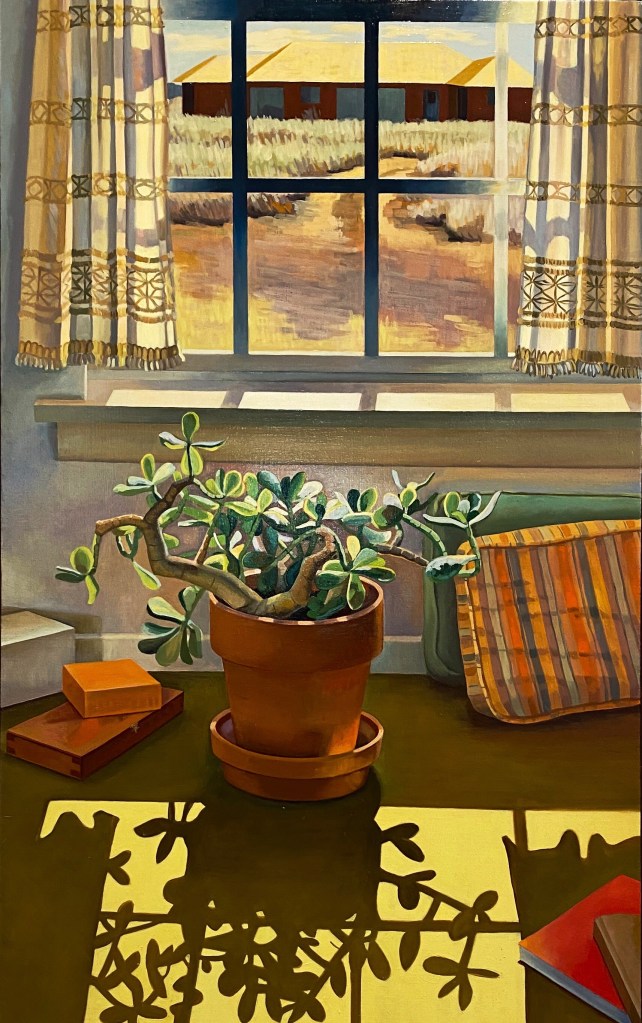
In addition to the museum itself, Mr Anderson created and funded the Roswell Artists-in-Residency program to bring artists from around the world to work in Roswell. The photograph above and all those below are of artworks by artists that participated in the program since its inception in the late 1960s.
Linda Long, View From My Window, 1991, oil on canvas
In 2002 the RAIR Foundation assumed full reponsibilty for the management of both the museum and the residency program. RAIR provides a full year residency and includes lodging, studio space and a stipend; over 250 artists have participated in the program since its inception.
Jerry R. West, Roswell Cotton Warehouse with Black Dog and Broken Moon, 2012, oil on linen
AMoCA is a first rate museum with a wide range of work by the artists that have benefited from RAIR. If your travels will be taking you in the vicinity of Roswell or even if you are just passing through we recommend that you visit this gem in the desert.
Brian Myers, On Borrowed Time, 1994, oil on canvas
Pierre-August Renoir, Portrait of a Girl, ca. 1895, Oil on canvas
The OKCMOA is the product of two Oklahoma City art museums that merged in 1989. The current modern and architecturally impressive downtown location was newly constructed and opened in 2002. OKCMOMA is a fully privately funded organization that has significant local individual and corporate support.
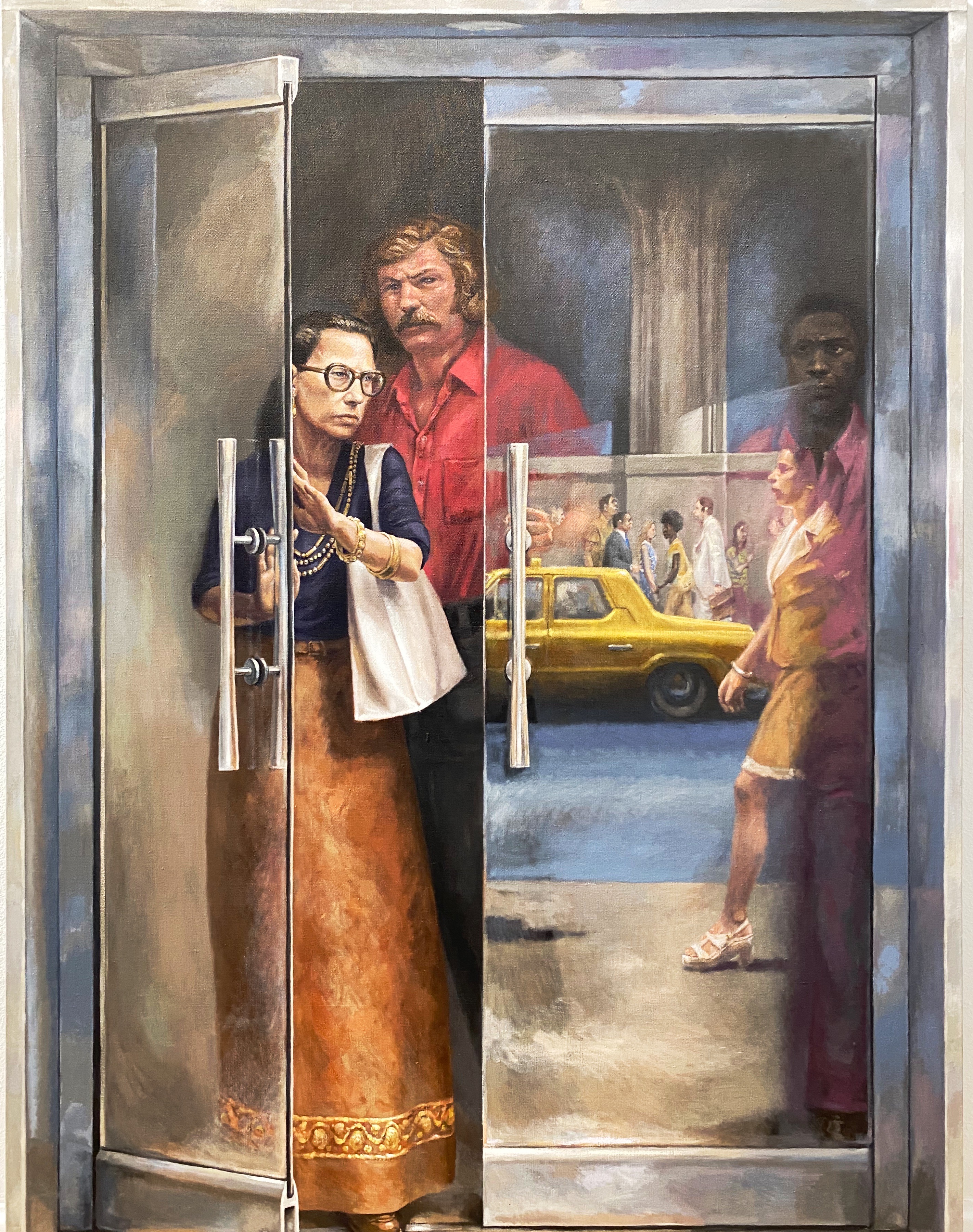
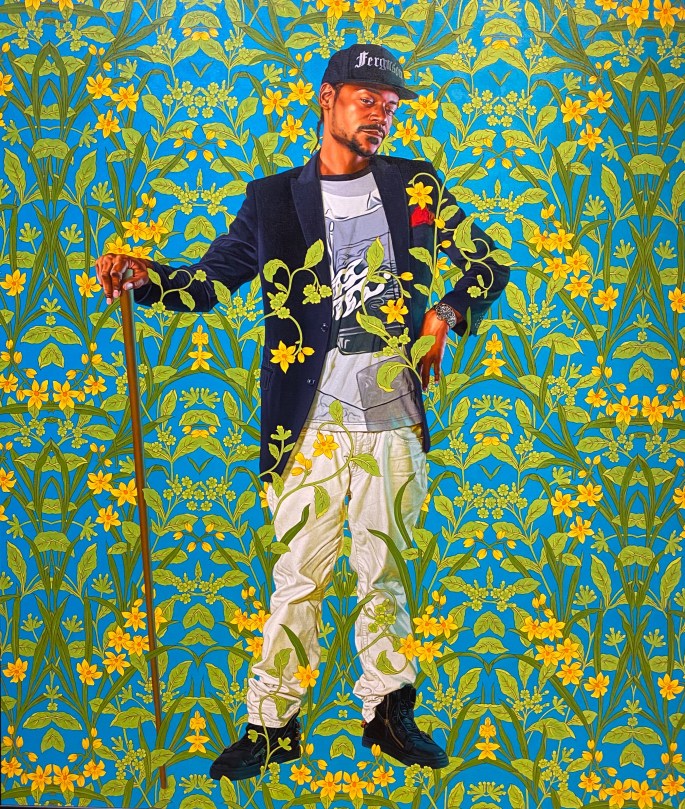
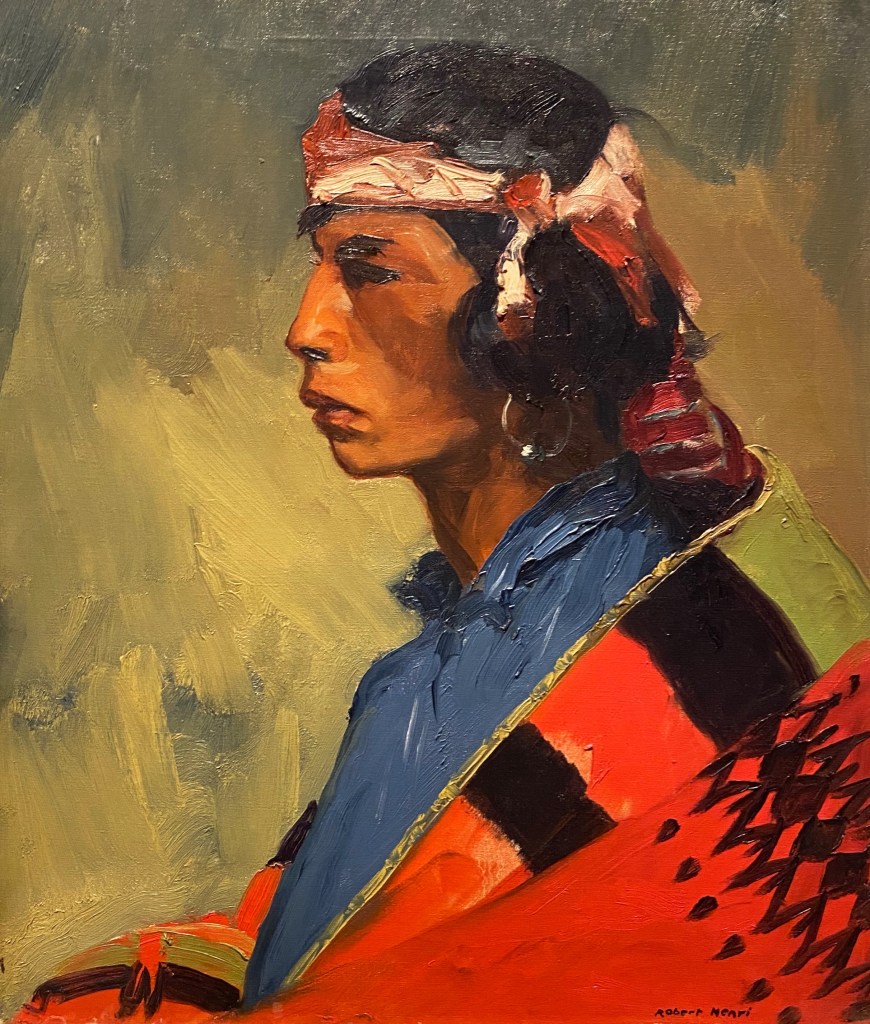
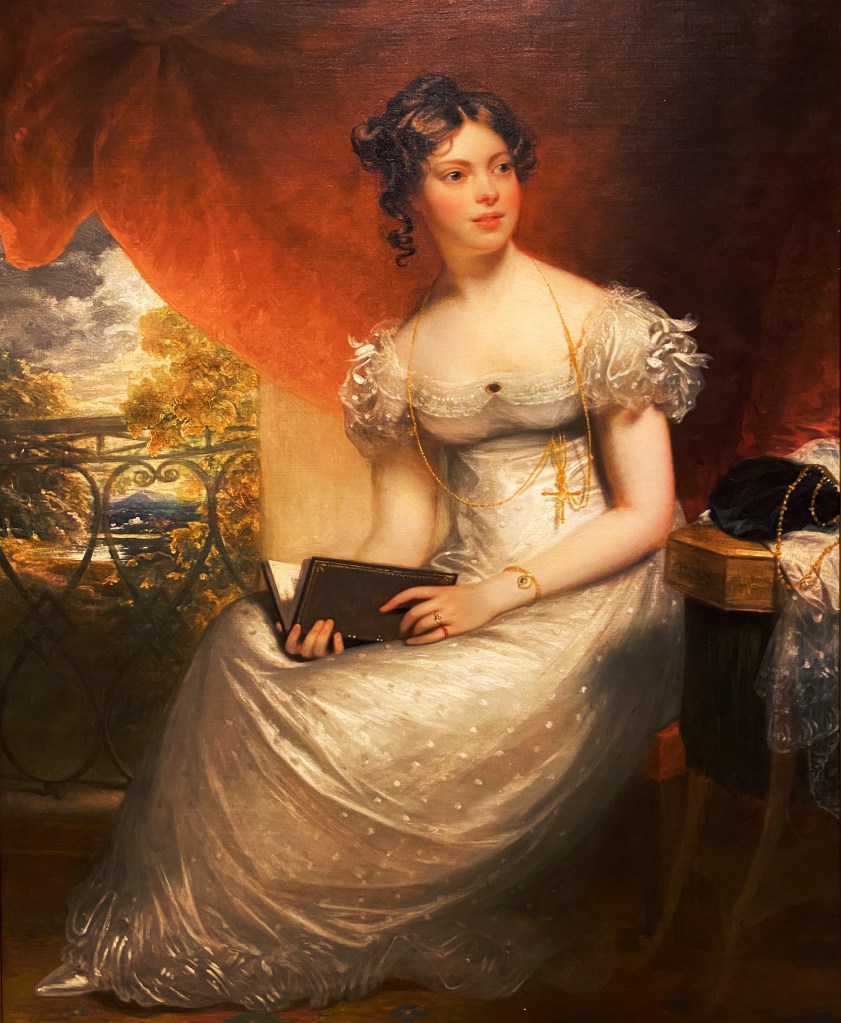
The museum has a diverse collection which we found to be well curated. As an example, the portrait gallery includes portraits that were painted in a period spanning 1820 through 2018 and brings a focus less to the style of painting and more to the culture and norms of the period. We have included photographs of several of our favorite paintings from the portrait gallery below.
Portrait gallery
Kehinde Wiley, Jacob de Graeff, 2018, Oil on linen
Otto Duecker, Robinson, 1985
Alex Katz, Jane, 1965
Robert Henri, Tesque Buck, 1916
William Beechey, Kitty Packe, 1820
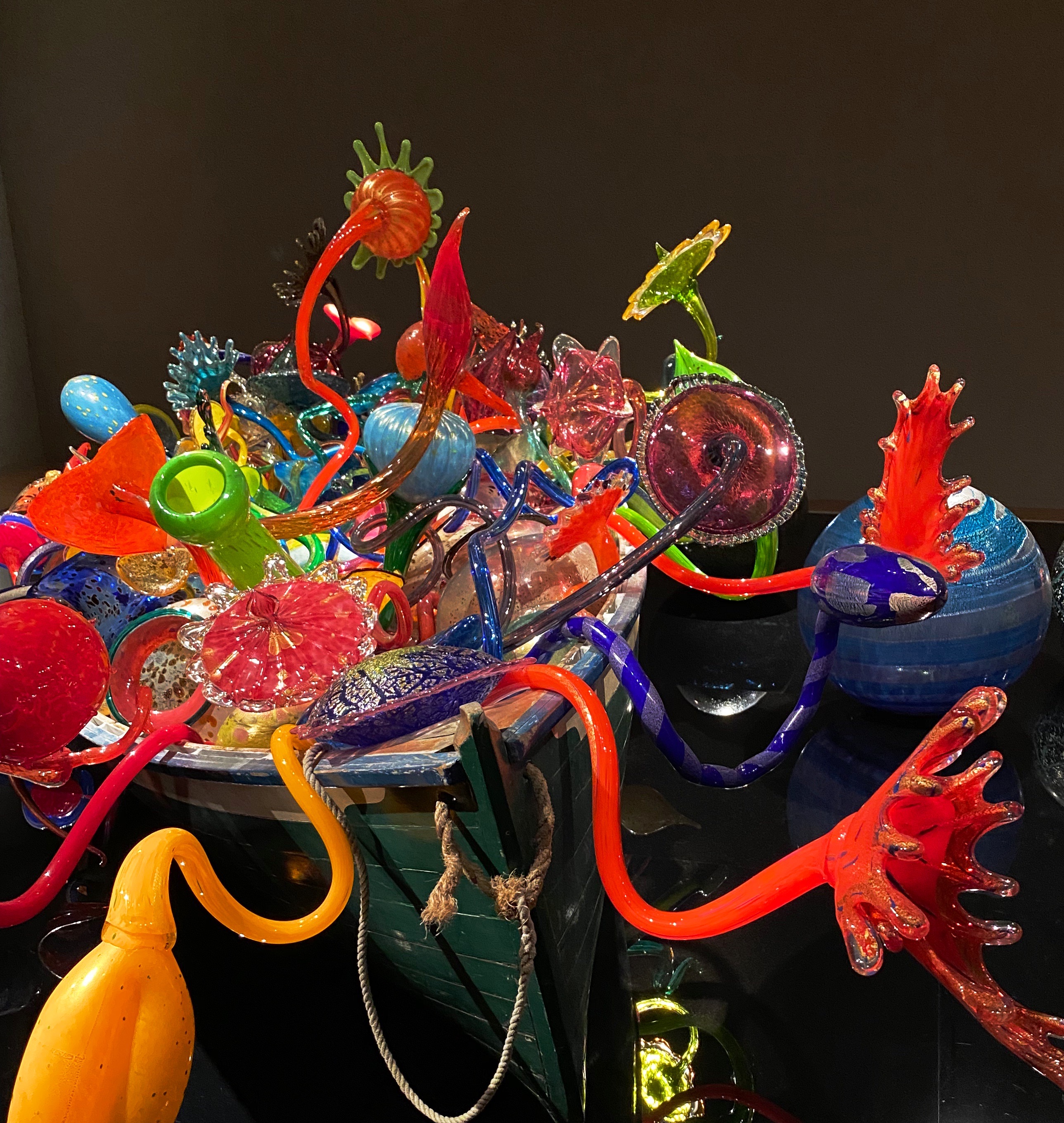
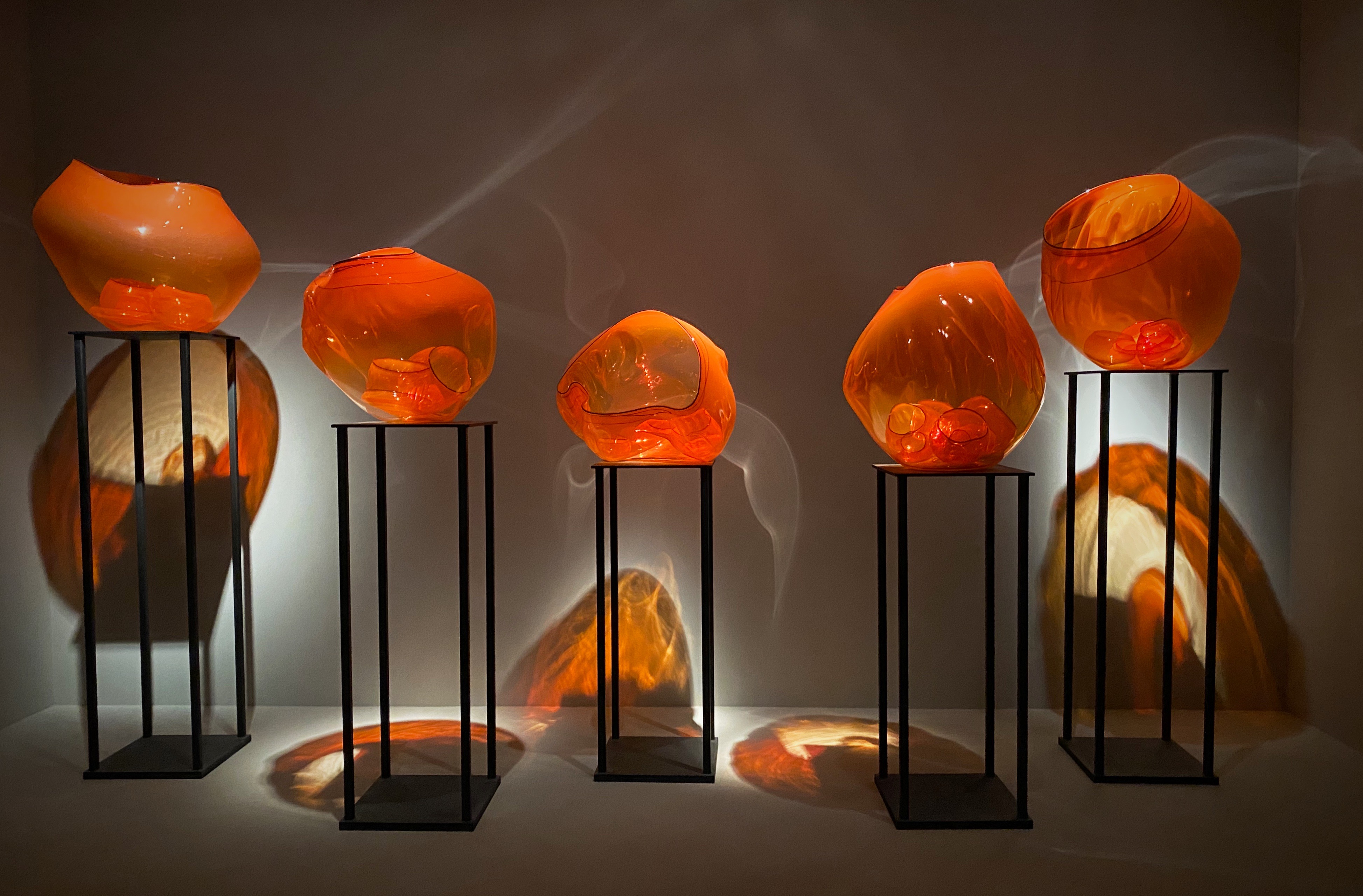
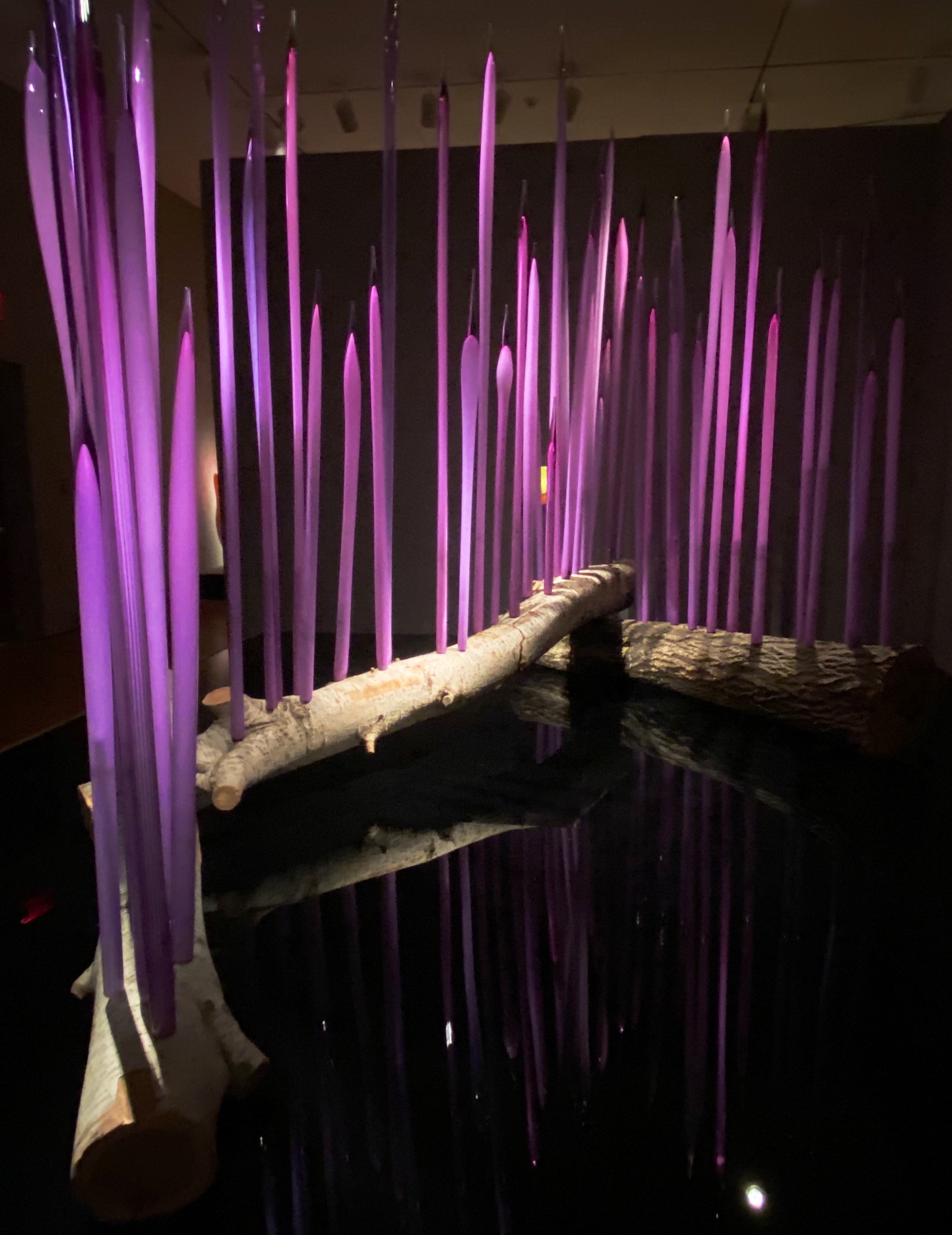
Dale chihuly
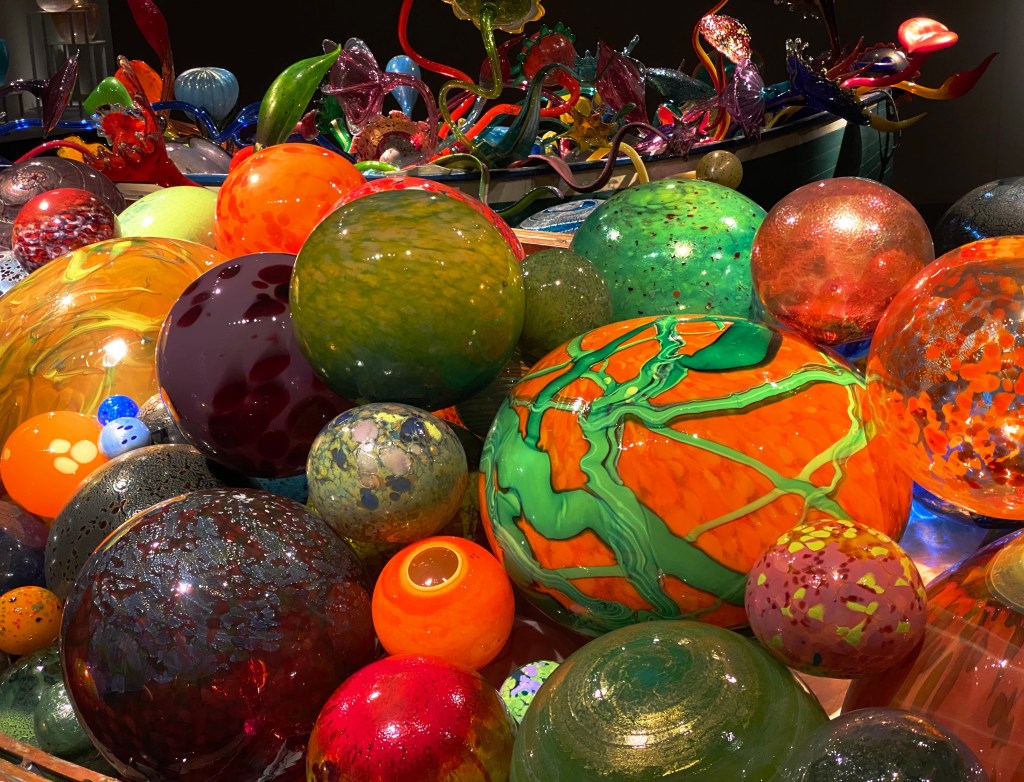
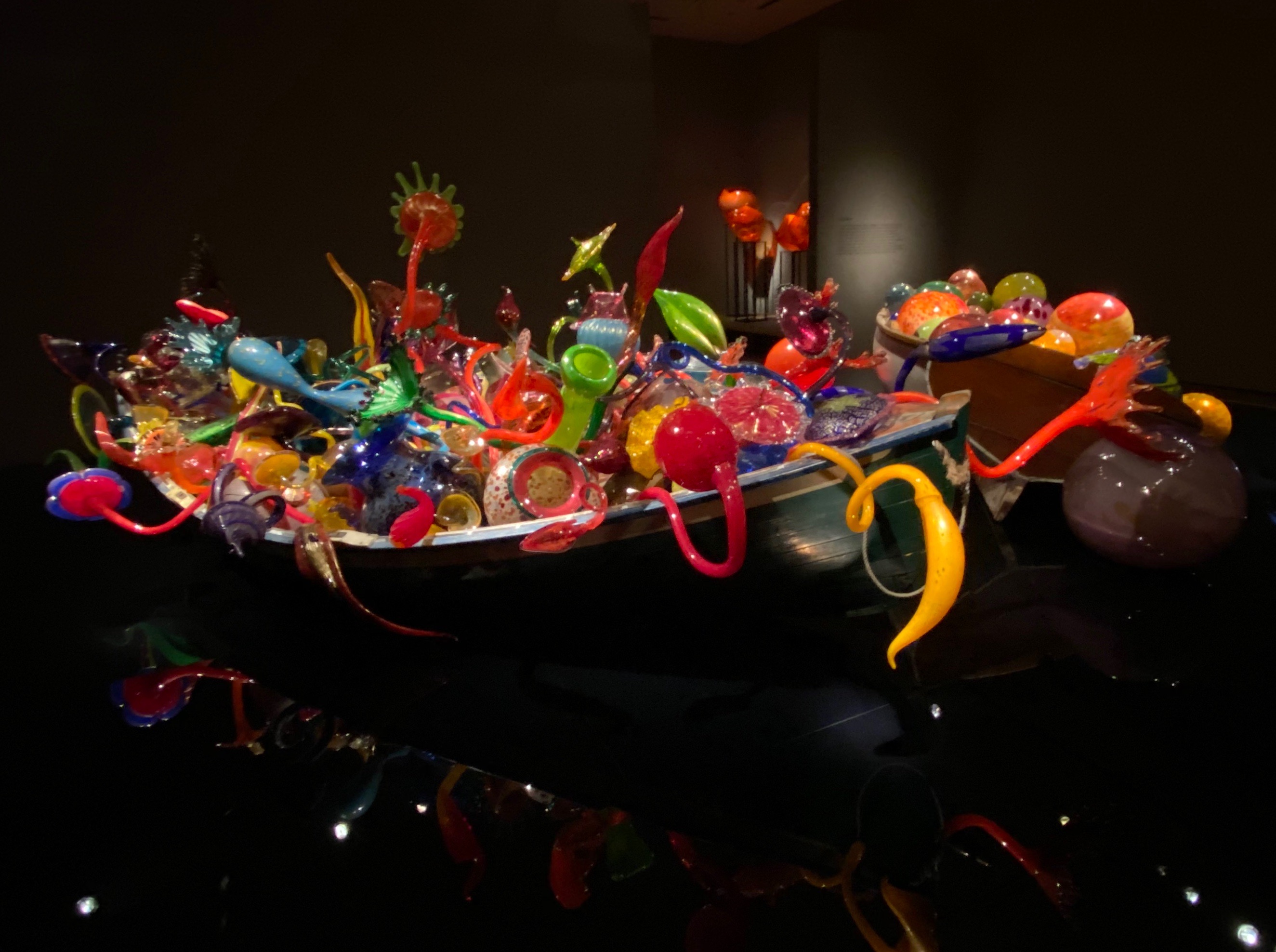
Many are familiar with the beautiful glass work of Dale Chihuly and his studio. The OKCMOA has one of the largest collections of his work anywhere. The pieces included in the OKCMOA collection span over 30 years of Chihuly’s work.
The collection is exquisite. What really adds to the collection is the staging of the various pieces – the lighting is set perfectly and most of the installations can be viewed from multiple perspectives adding greatly to the experience (and allowing for the possibility of reasonably good photographs!).
Southwestern art
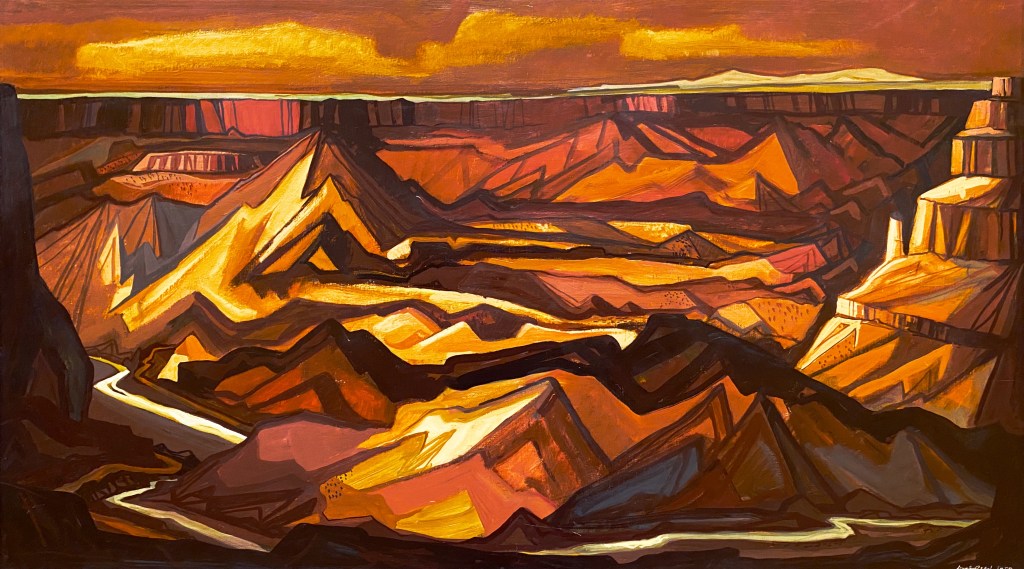
Followers of OTR know that we admire many styles and schools of art while having a special affinity for art from the southwest. We have included photographs of several of our favorites from the collection on display at OKCMOA.
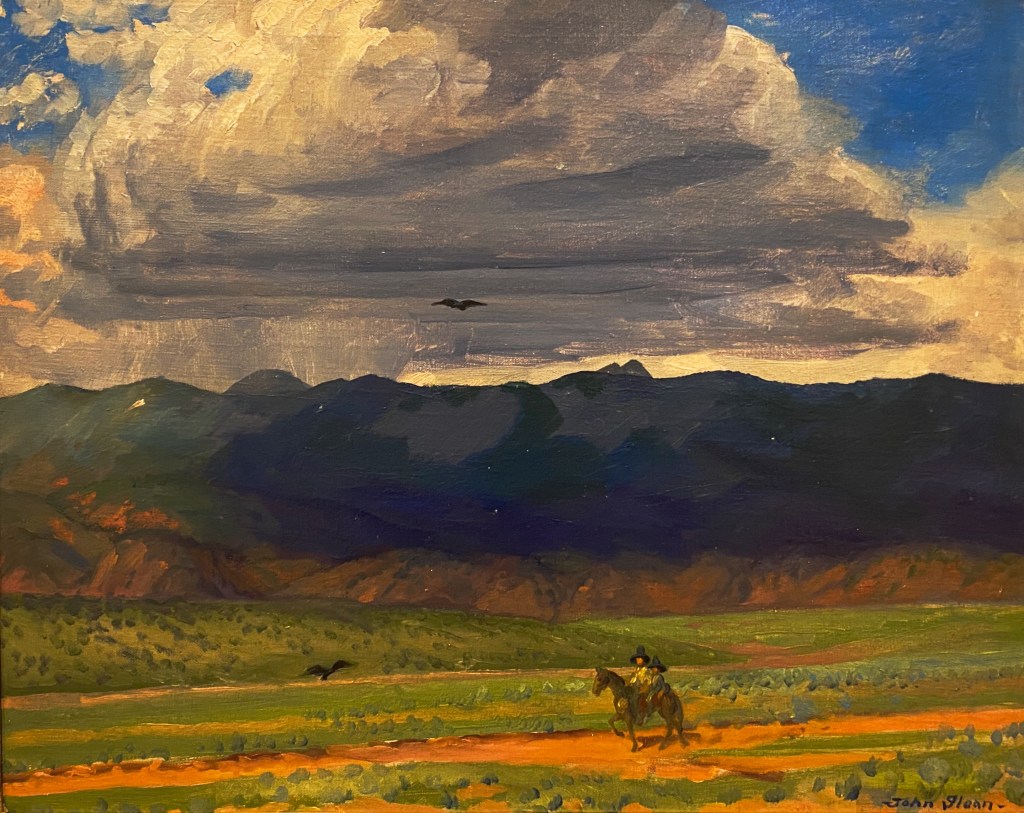
Doel Reed, The Canyon, 1958, Oil on boardEL Blumenschein, New Mexico, 1921, Oil on canvasJohn Sloan, Two Black Crows, 1924, Oil on canvasOscar Brousse Jacobseon, from the Trail Ridge, 1936, Oil on canvas boardAlexandre Hogue, Soil and Subsoil, 1946, Oil on canvas
Realism
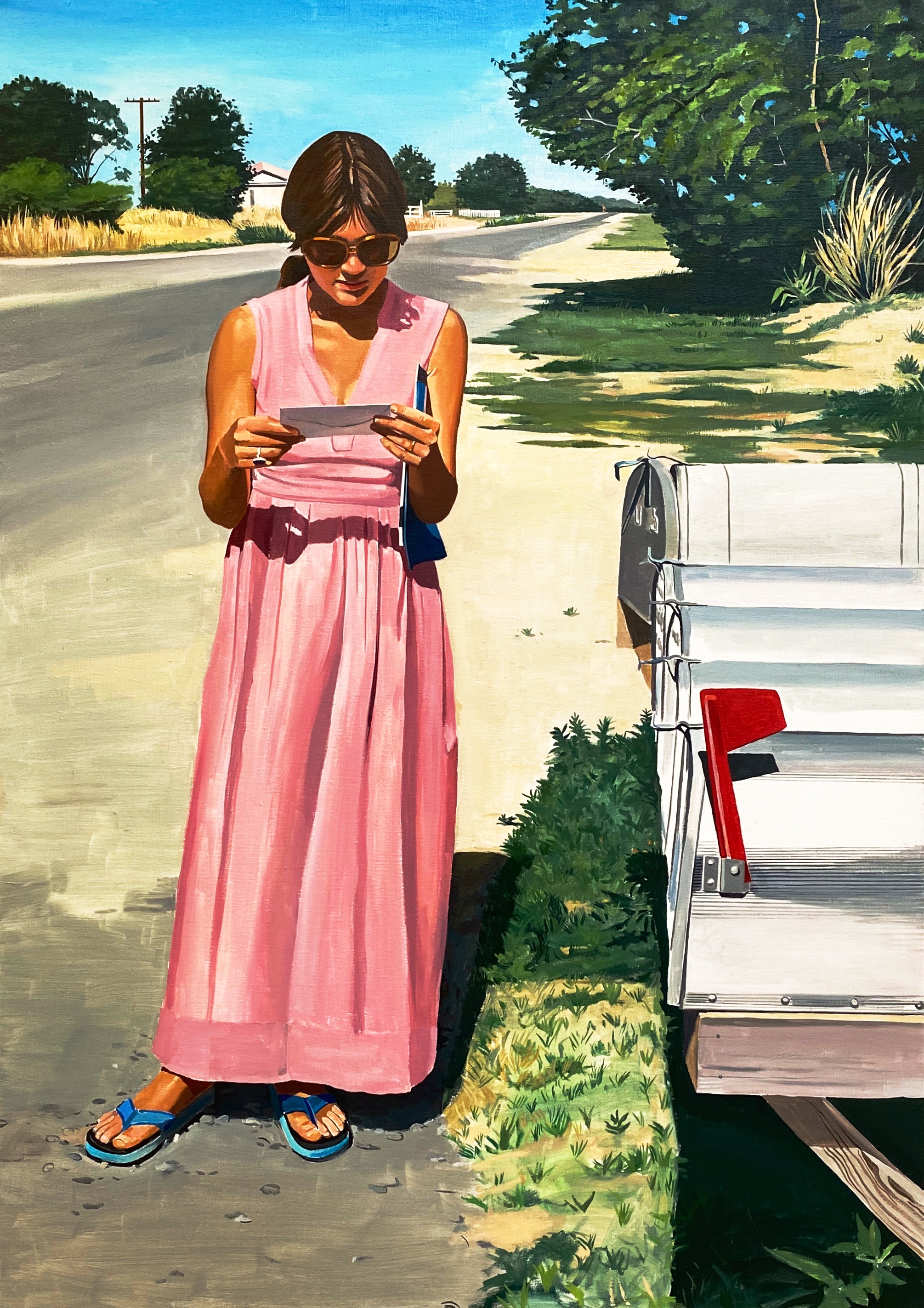
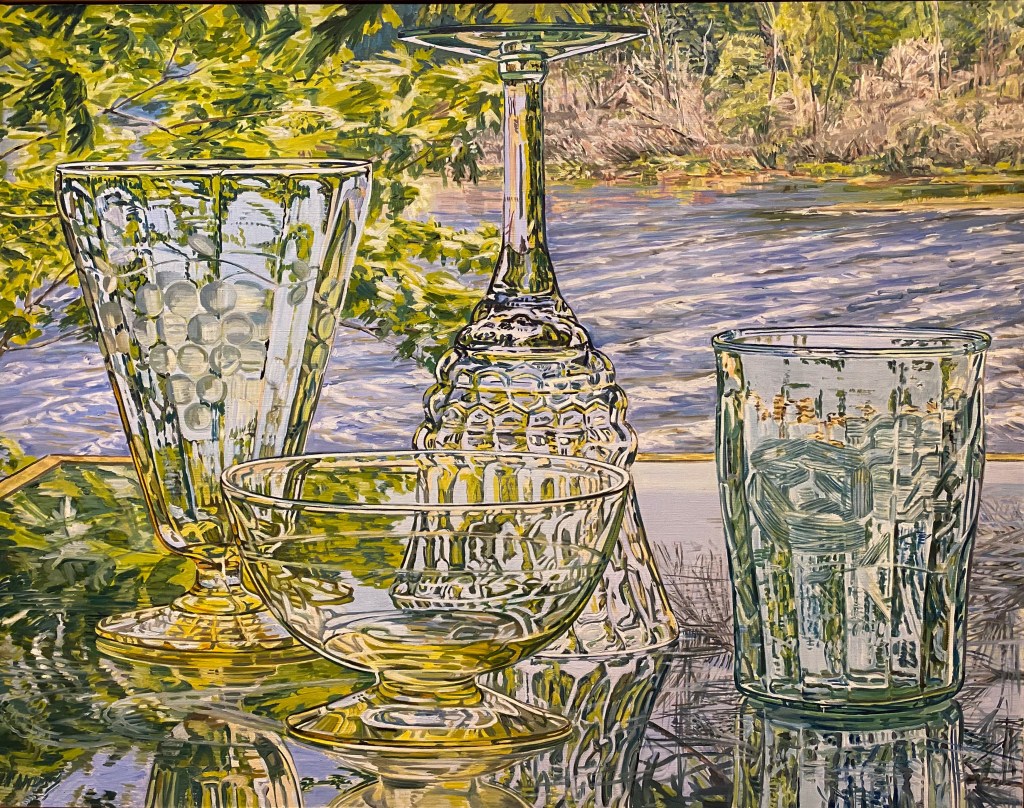
Our two favorites from the genre of Realist paintings.
Janet Fish, The Ox Bow, 1977, Oil on canvas
Dhimitri Zonia, Saturday Morning, 1969, Oil on canvas
OKCMOA is a very fine mid-sized museum which can be viewed in two to three hours, and should be included in your Oklahoma City itinerary. We will be writing about another OKC museum, the National Cowboy & Western Heritage Museum in an upcoming post.
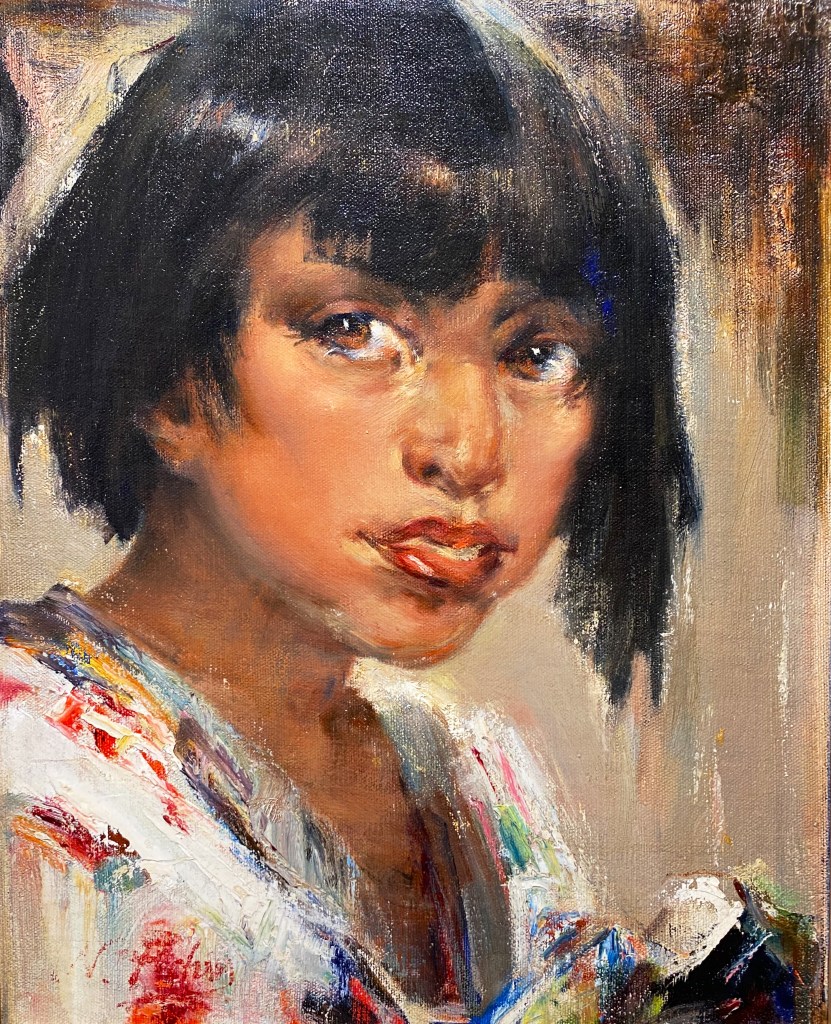
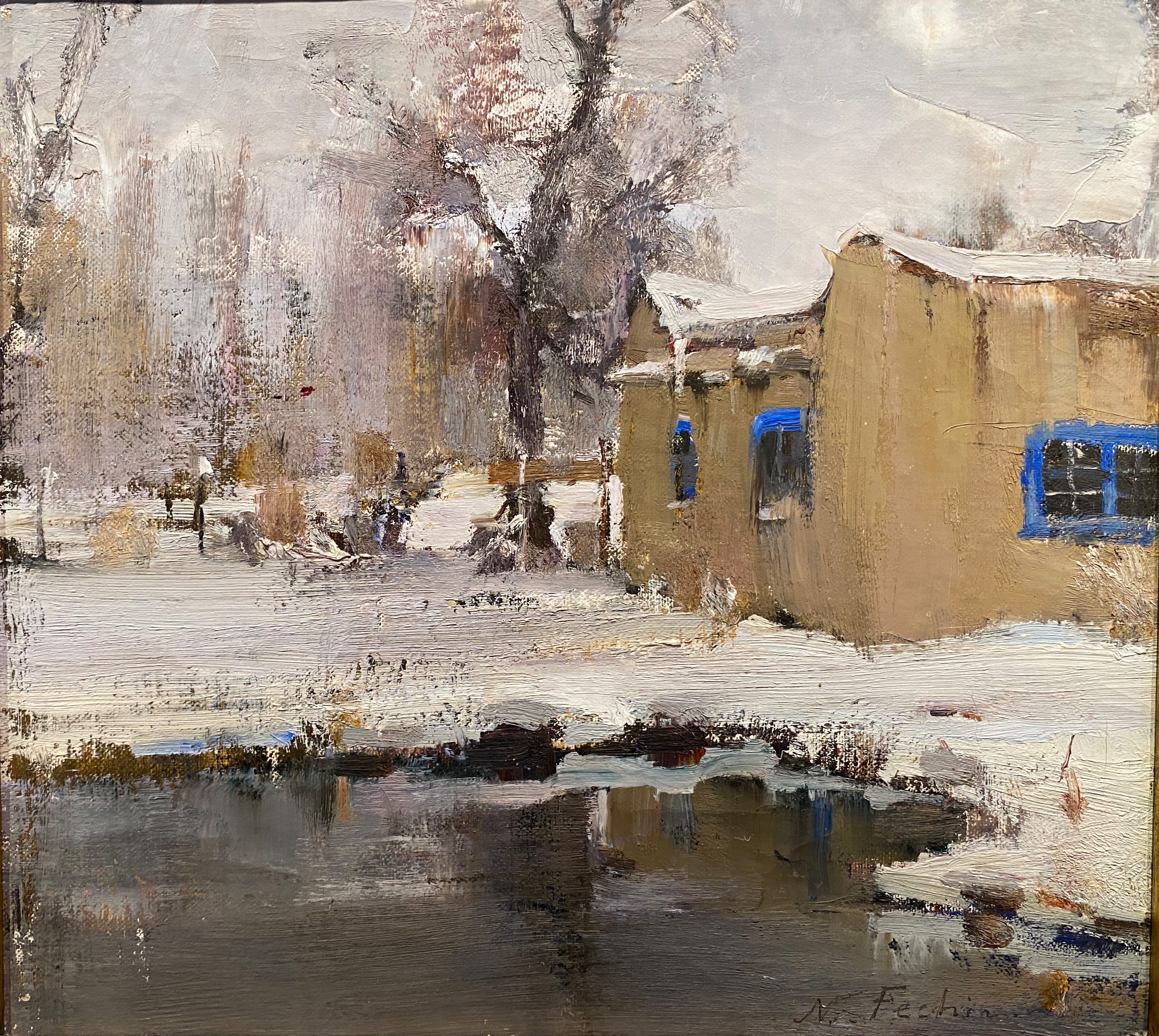
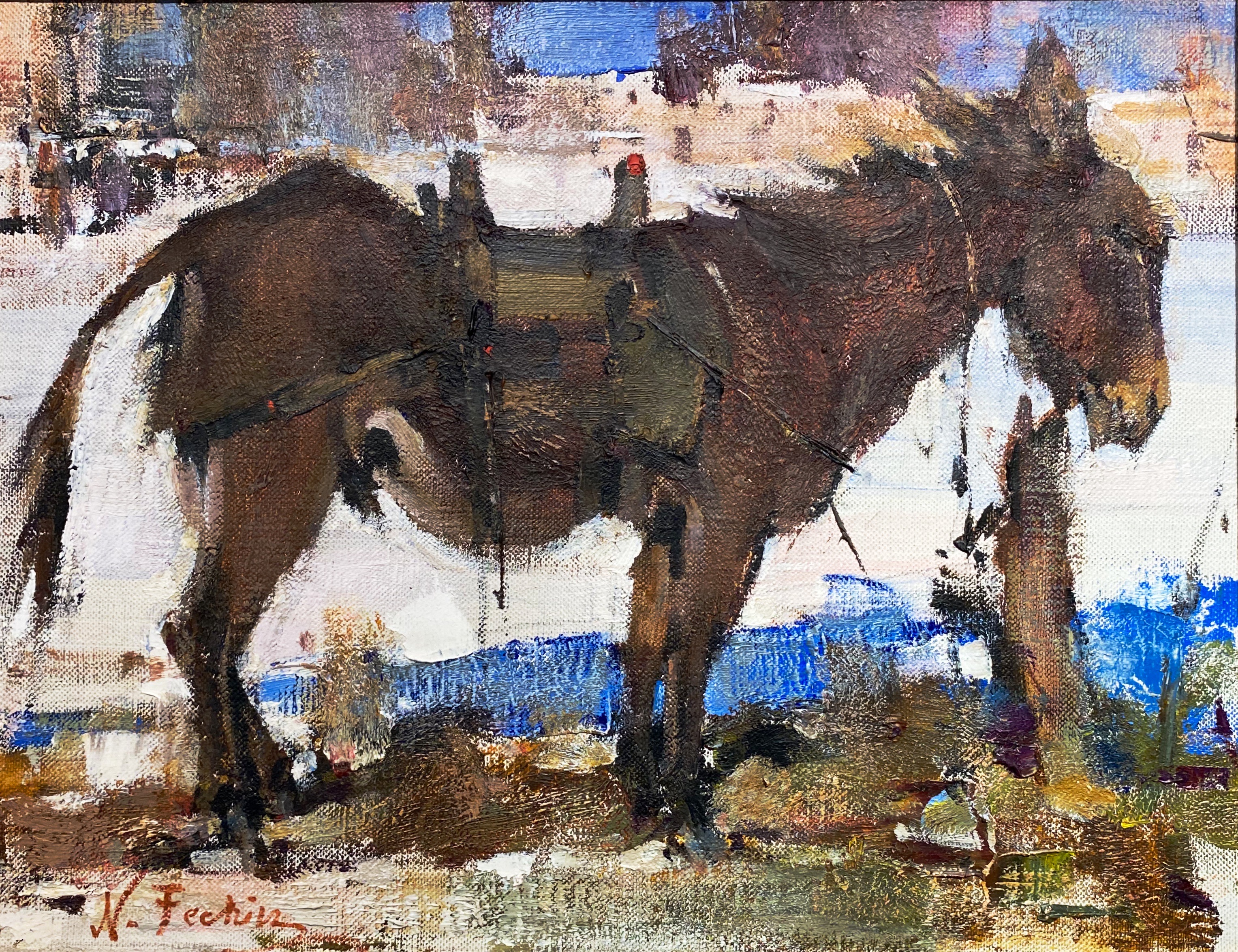
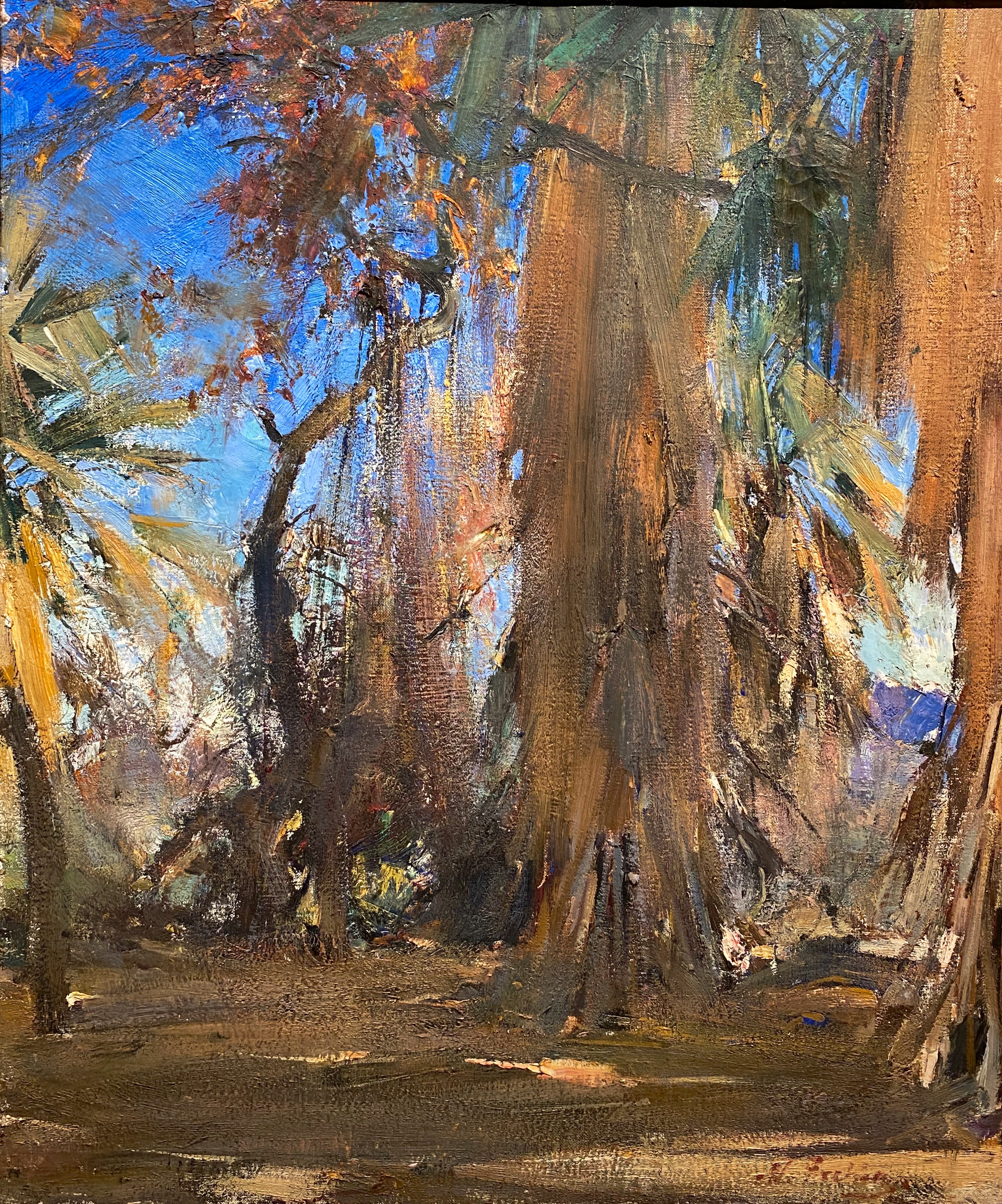
Nicolai Fechin emigrated, along with his wife and daughter, from Russia to New York City in 1923. He was already a well-established artist when he arrived in the States. Fechin developed tuberculosis while living in New York City, visited Taos in 1926 in search of a healthier environment and moved to Taos in 1927.
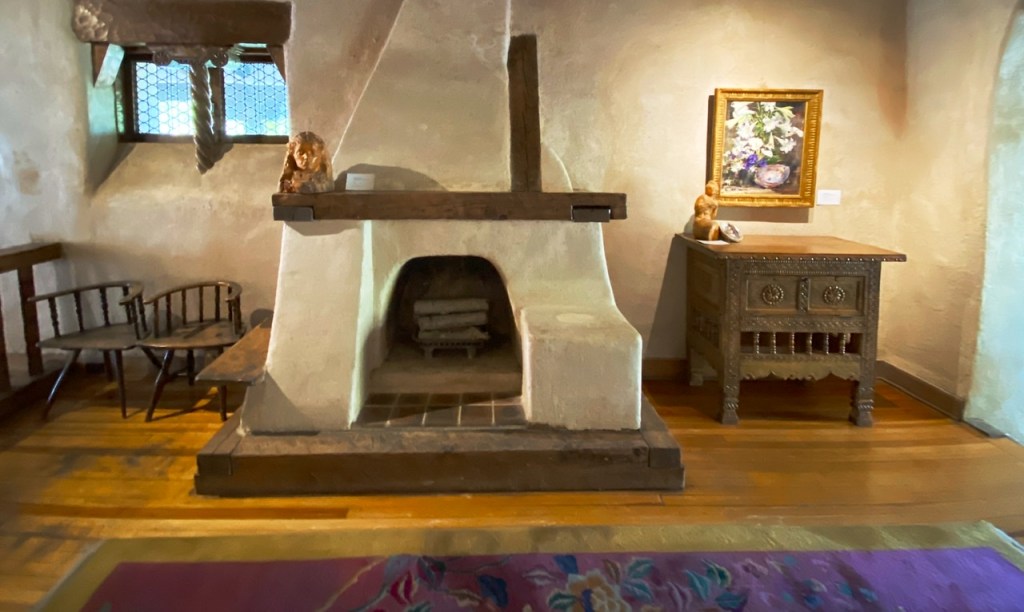
Fechin purchased an adobe revival house and, along with several members of the Taos Pueblo, worked on expanding and renovating the property for about six years. The beautiful property pictured in this post is the result of those labors.
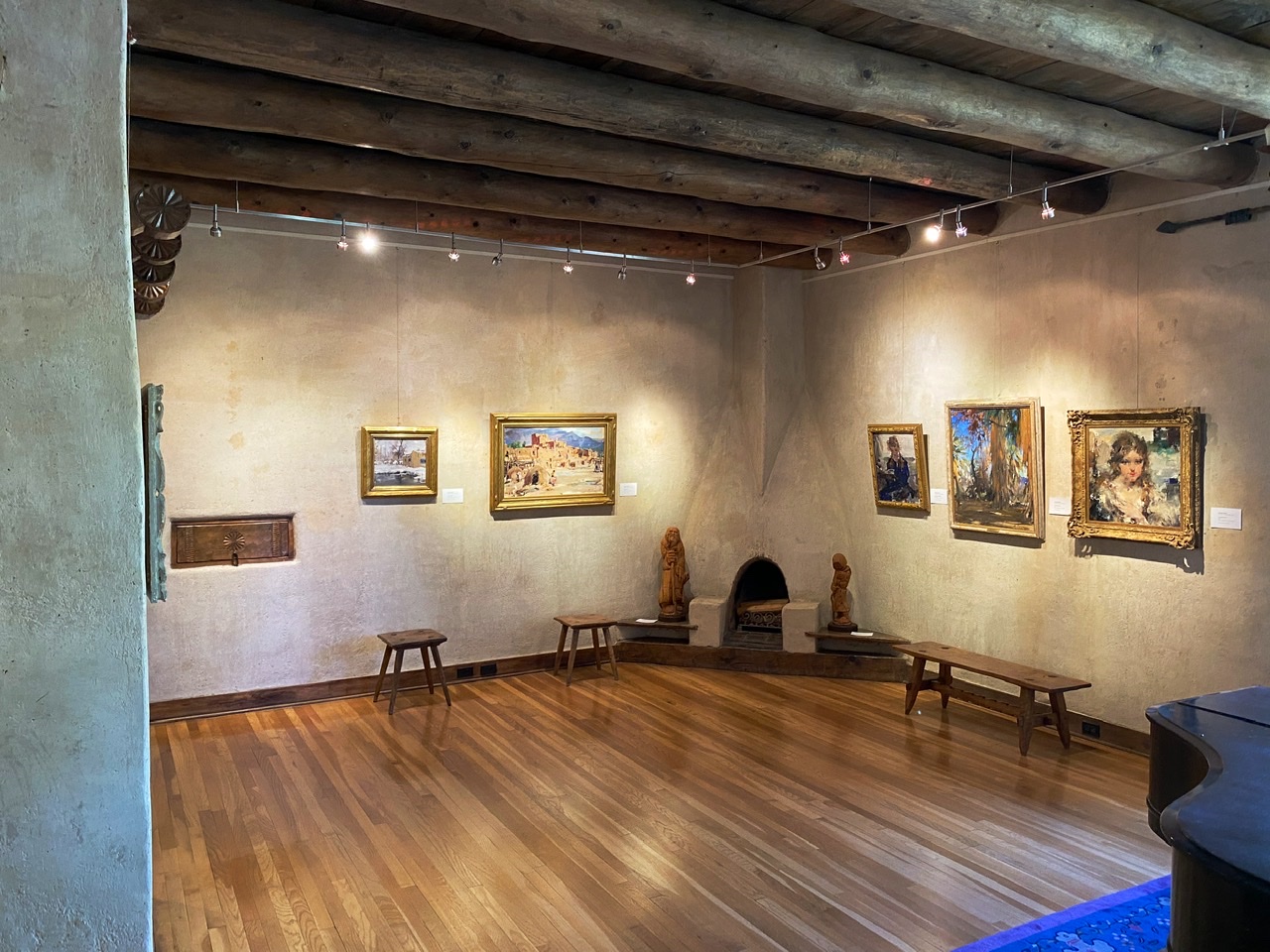
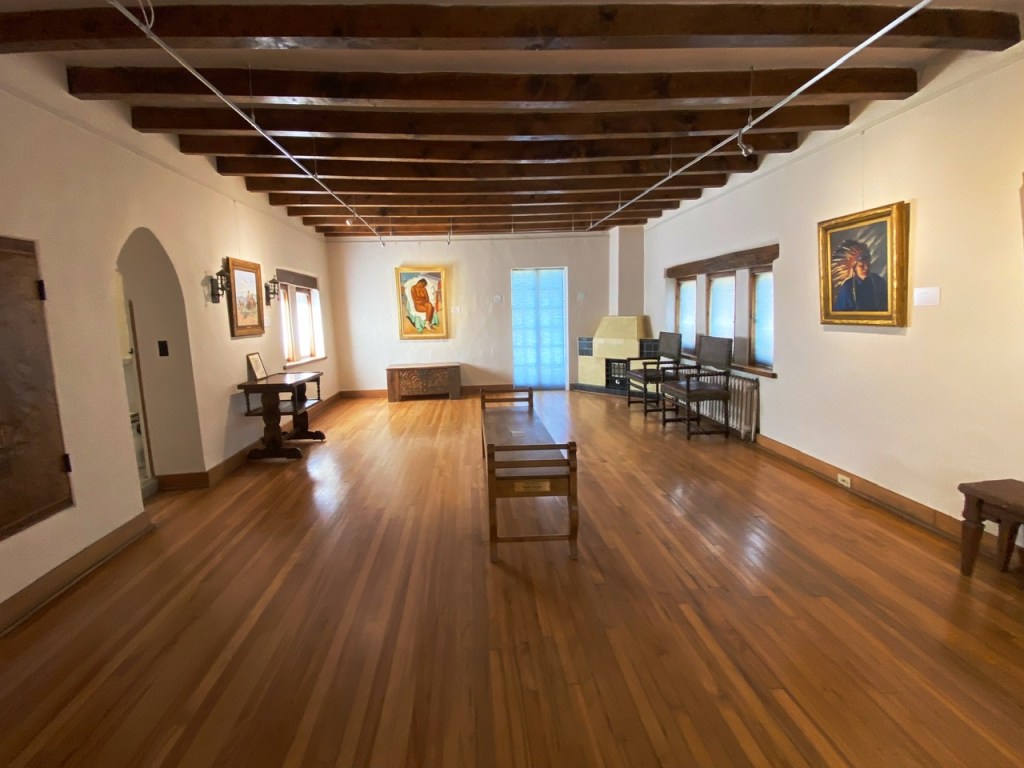
The house is now part of the Taos Art Museum, exhibiting paintings by Fechin and other well known southwest artists. The property surrounding the home was sold in order to raise the initial funds to convert the property to a museum. Fortunately, the family created covenants to prohibit the home from being occupied as a private residence.
Gallery, formerly Nicolai and Alexandra’s bedroomSecond floor siting room
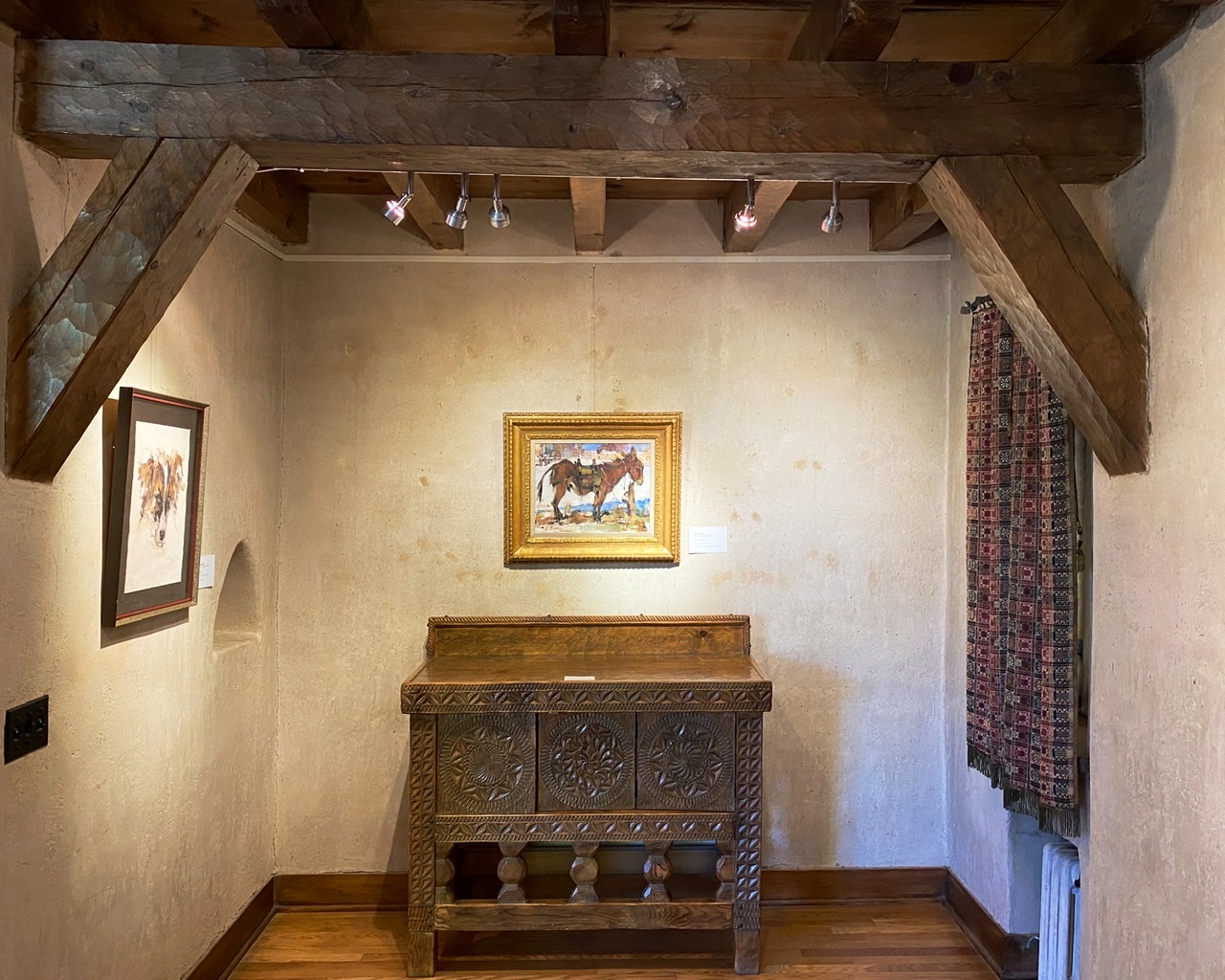
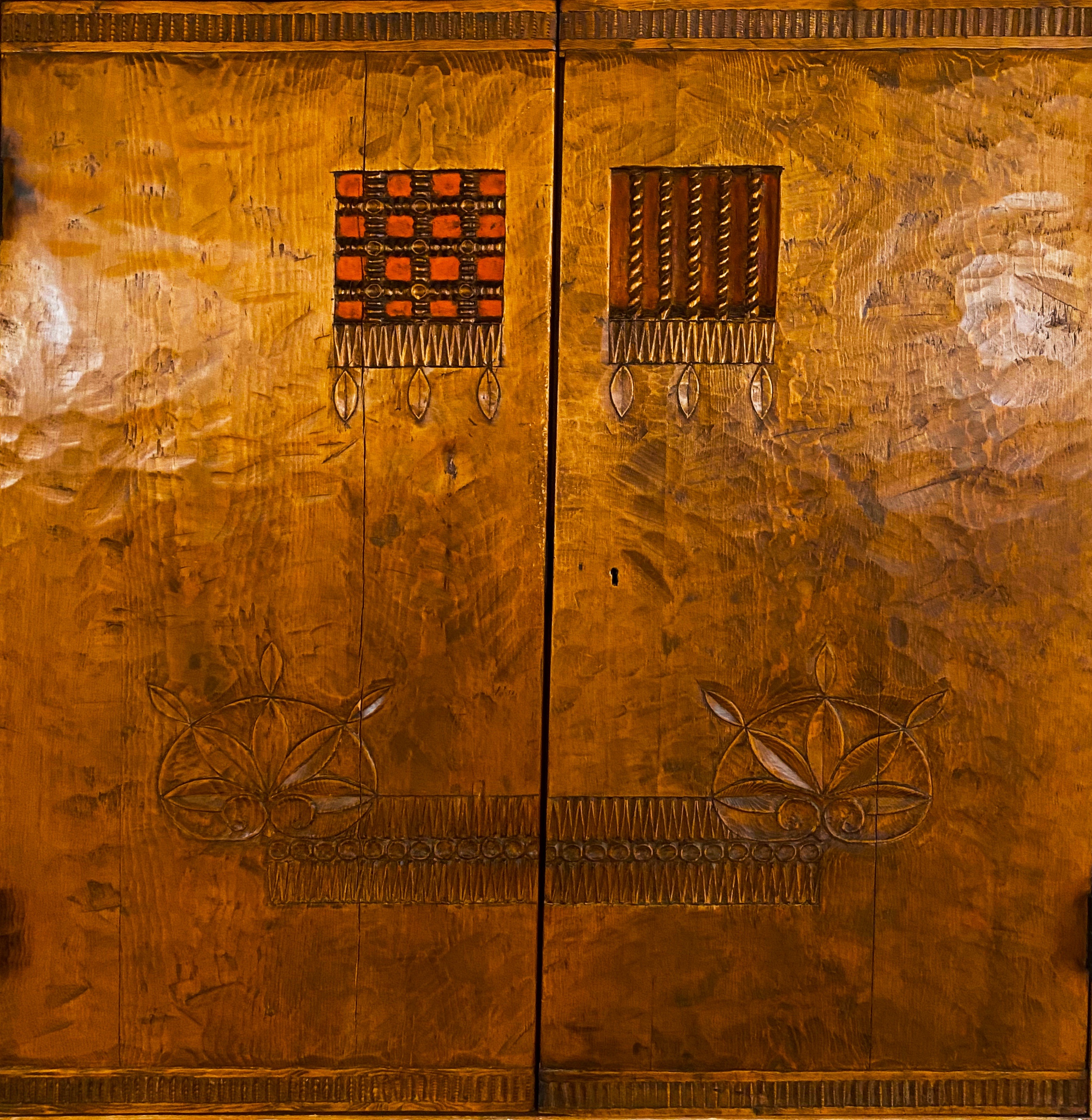
With the exception of two pieces, all of the furniture in the house was hand carved by Fechin. Additionally, he carved all of the closets and interior doors throughout the house.
Fechin’s art
As we mentioned earlier in the post Fechin was an established artist when he emigrated to New York City. We have included below a gallery of some of his paintings which are on display throughout the house.
Taos museum of art at fehcin house
The collection at Fechin House also includes a number of paintings by other renowned artists. We have included photgrpahs of several of our favorites below.
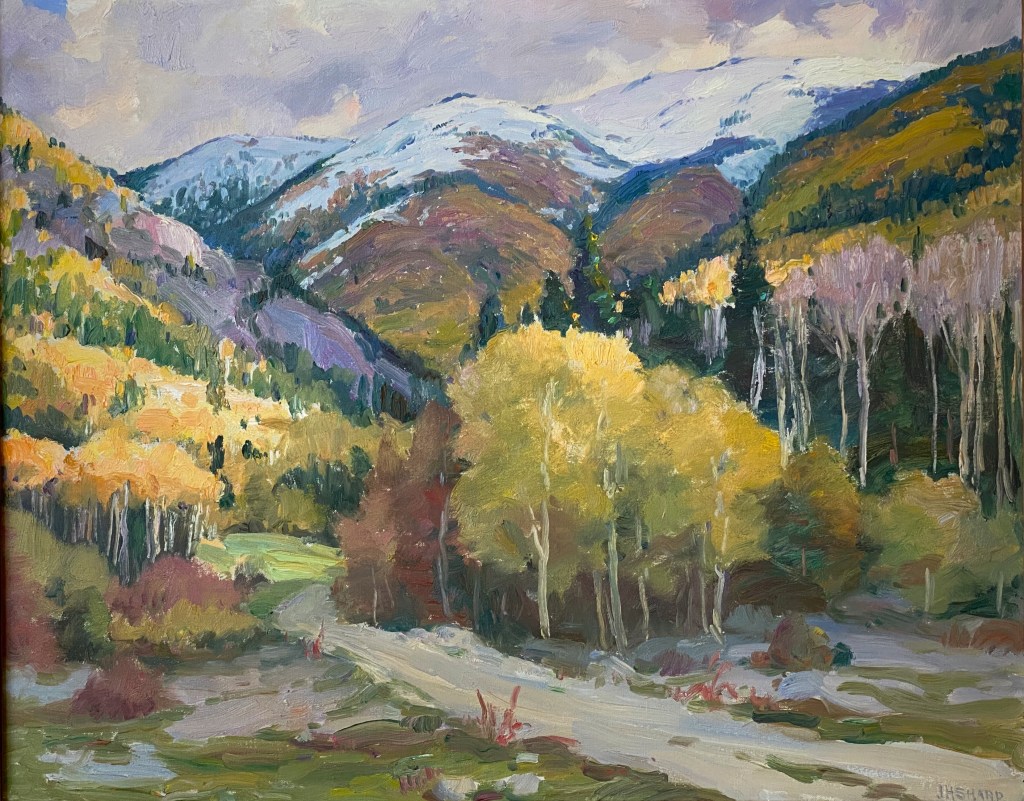
Joseph Henry Sharp – Taos Landscape, n.d. Oil on canvas.W. Herbert “Buck” Dunton – Study, McMillian Guide, n.d. Oil on canvas.W. Victor Higgins – Taos Landscape, Aspens, and Pines. n.d. Oil on canvas.Oscar E. Berninghaus – Crossing the Arroyo, 1944. Oil on canvas.Joseph Henry Sharp – The Entrance, n.d. Oil on canvas.
We have posted on our visit to Taos (The High Road to Taos and Taos) previously and recommended Taos as worthy of a several day visit. The Taos Museum of Art at Fechin House is an additional reason to visit Taos as part of your New Mexico travel plans.
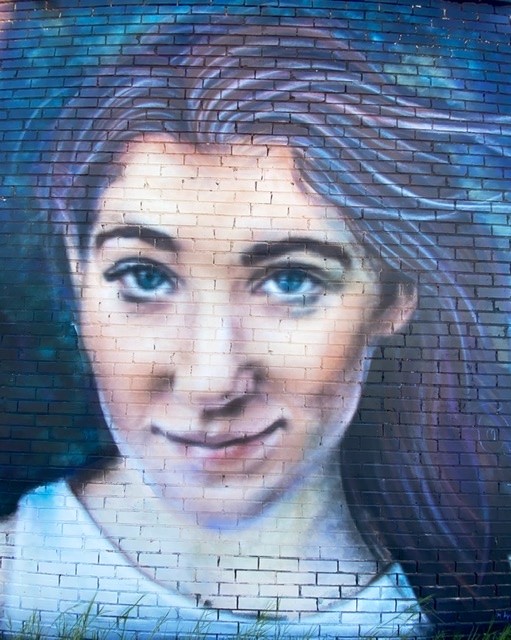
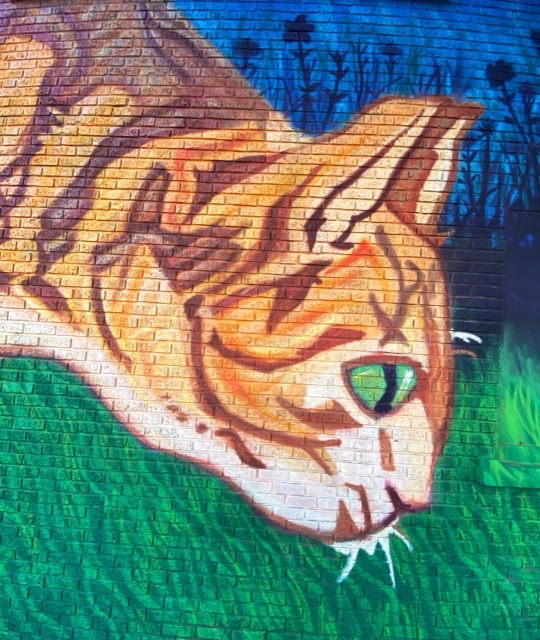
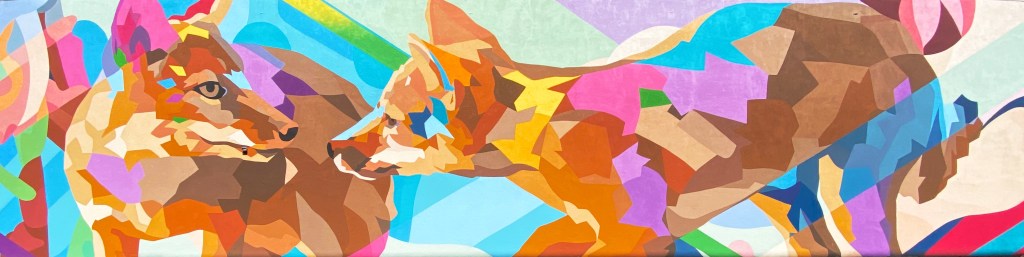
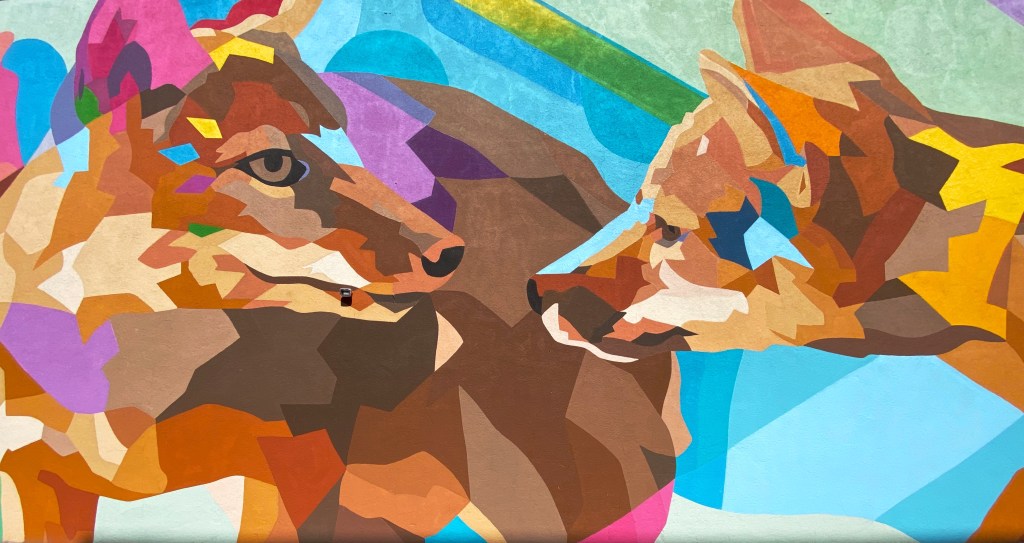
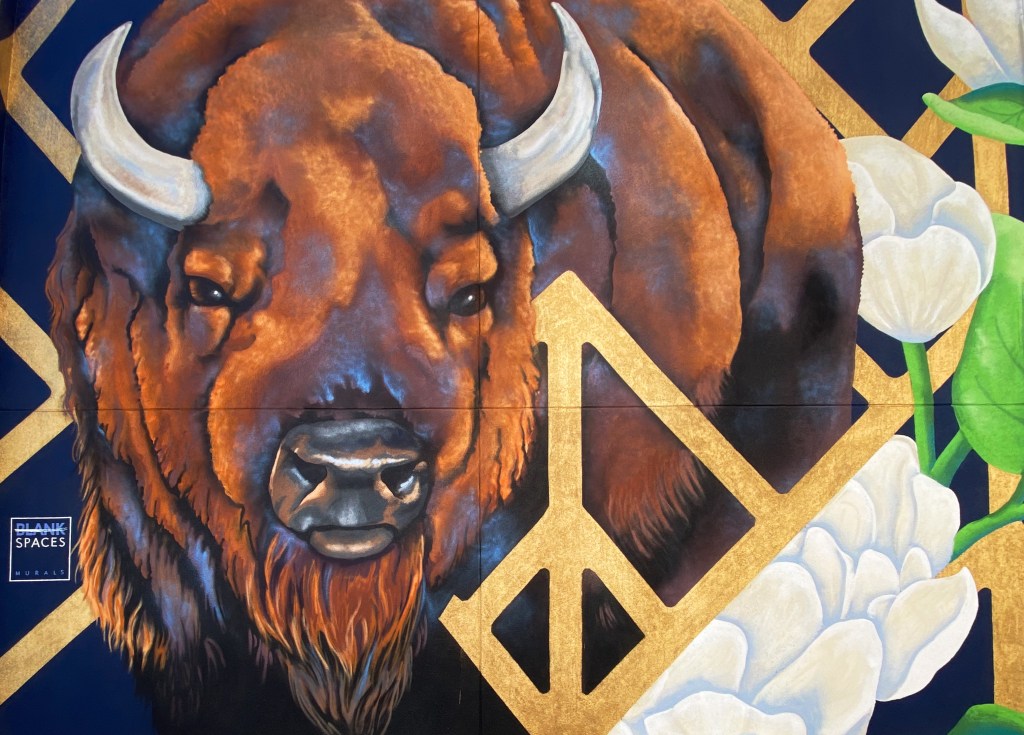
When we visited Amarillo the second Hoodoo Mural Festival had just wrapped up. Five large scale wall murals were commissioned for this year’s festival. We spent a relaxing Sunday afternoon viewing the murals. The murals are all within a very walkable area along Polk Street in downtown Amarillo.
@blankspacesmurals
All of the murals are impressive – not just for the scale – but for the quality, creativity and artistry. Please see the festival website for more information about the festival and the muralists. We have broken the murals down into sections due the large size.
The High Road to Taos is a scenic drive that connects Taos and Santa Fe. We drove a portion of the route while staying in Taos. Leaving from Taos heading south, the first 30 miles take you on a winding route up and over mountains within the Carson National Forest. The scenery as you might imagine is quite spectacular.
While the views are impressive we found the cultural aspects of the trip even more impressive. The villages, architecture, churches and food reflect the Old Spain of the early Spanish settlements.
Each of the small villages has a Spanish style church – many have been continuosly operating for over two hundred years. We traveled through the villages of Penasco, Chamisal, Trampas, Truchas, Cordova and Chimayo. These villages still maintain the wood carving and weaving expertise and traditions that came from Spain with the first settlers.
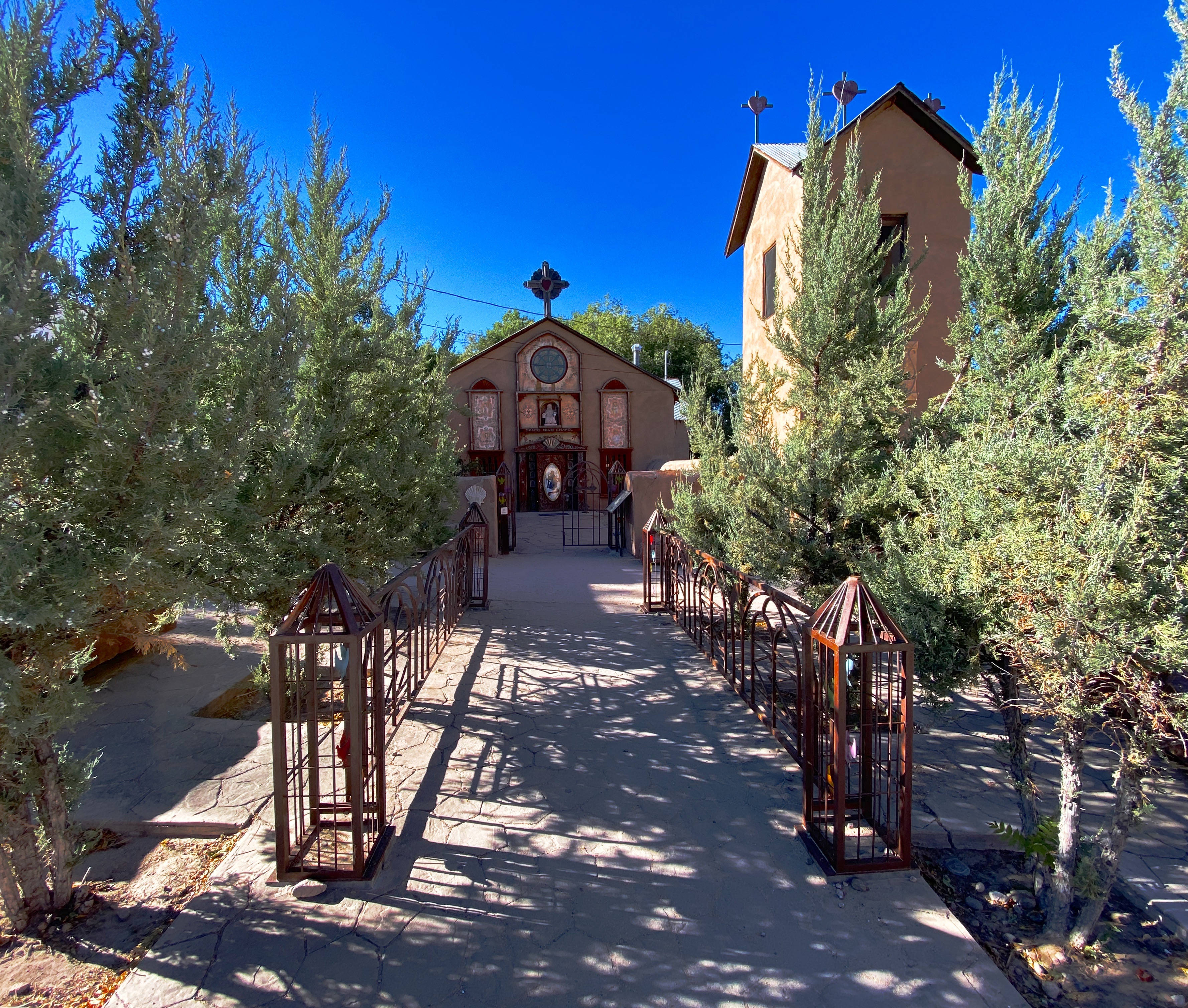
SANTUARIO DE Chimayo
We followed the byway as far as Chimayo where we stopped to visit El Santuario de Chimayo. The intial construction took place in 1813. Long before the Spanish arrived Pueblo Indians considered this ground as sacred with healing powers.
The Catholic Church carried forward the belief that the earth under what is now the Plaza del Cerro is sacred and has miraculous healing powers. As a result, the Santuario is a major pilgimage site drawing over 300,000 visitors annually.
The Santuario is considered one of the finest examples of Spanish Colonial architecture in the southwest. The evidence of the woodworking skills of the Spanish settlers is on display throughout the plaza – from the carved figures to the beautiful doors. The plaza is the sole remaining Spanish fortified plaza in New Mexico.
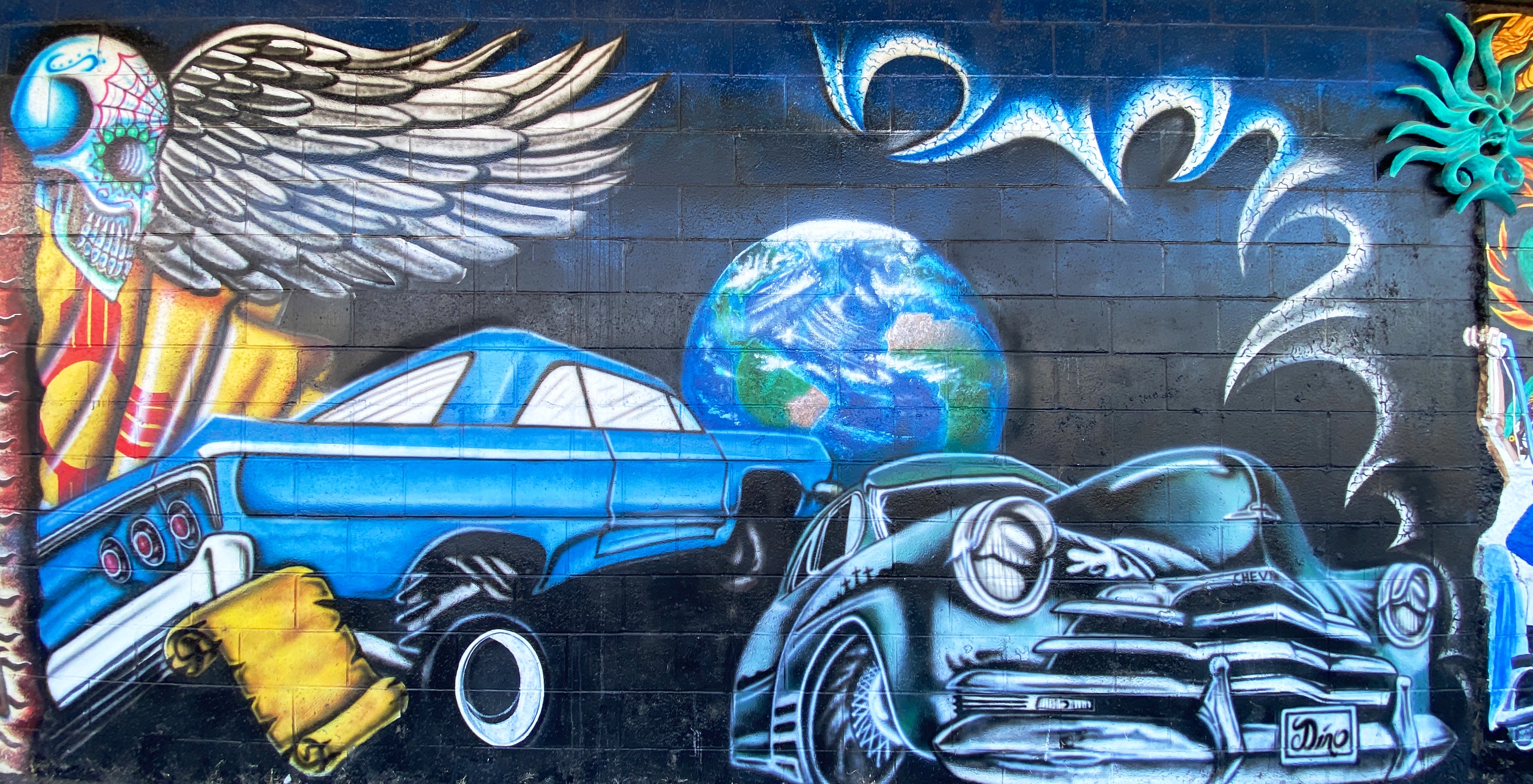
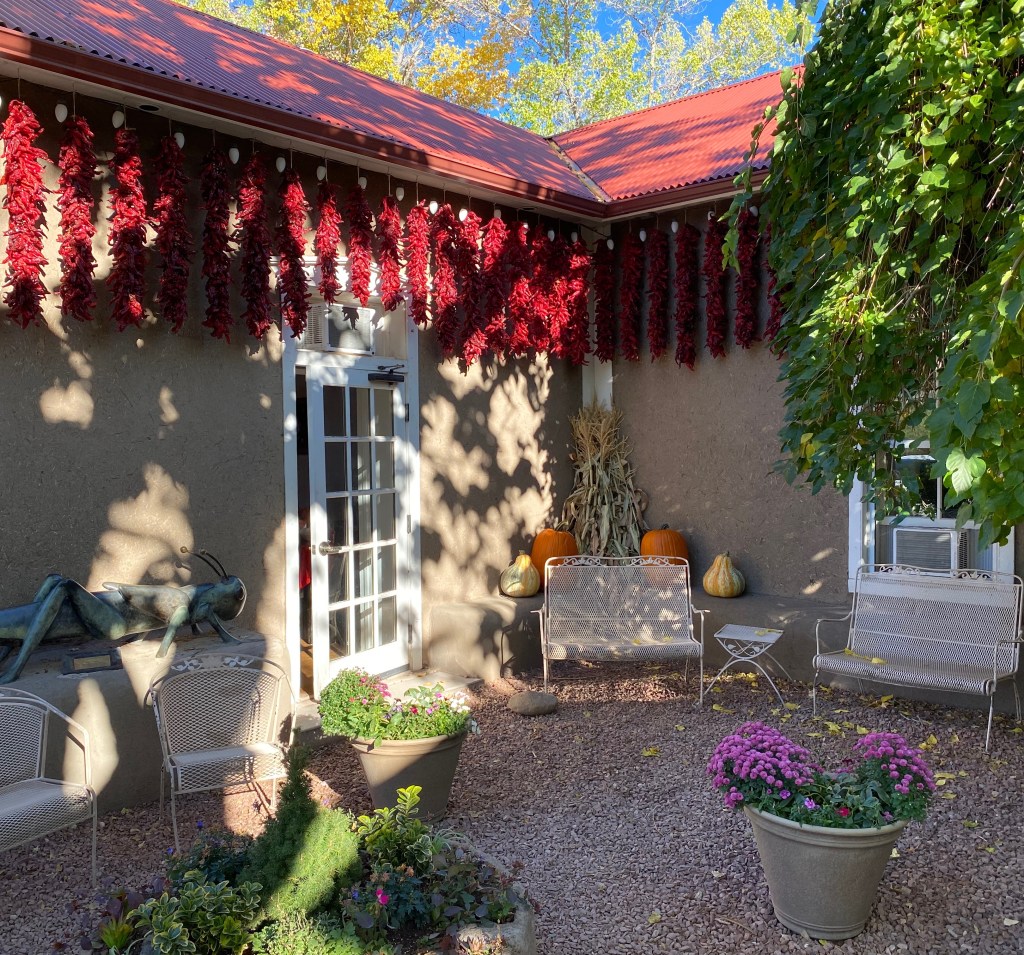
Arthur LowLow Meidna’s Low Low Ride Museum, Chimayo, New Mexico
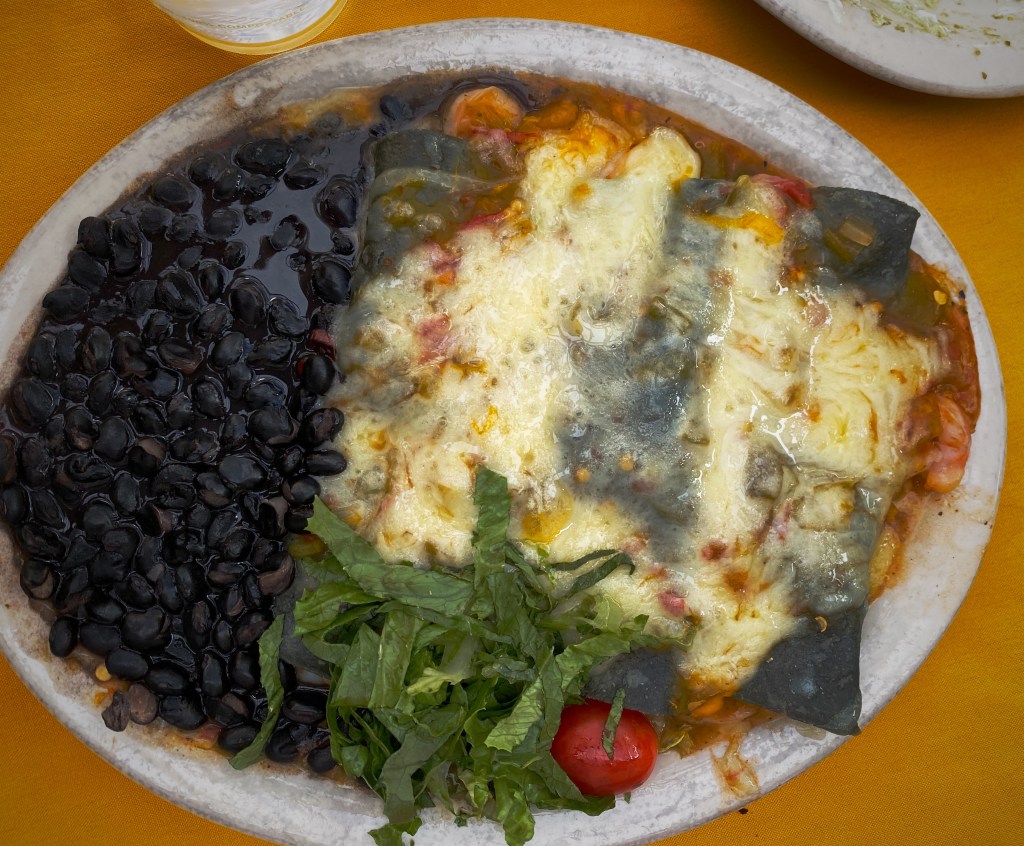
Ranchero de chimayo
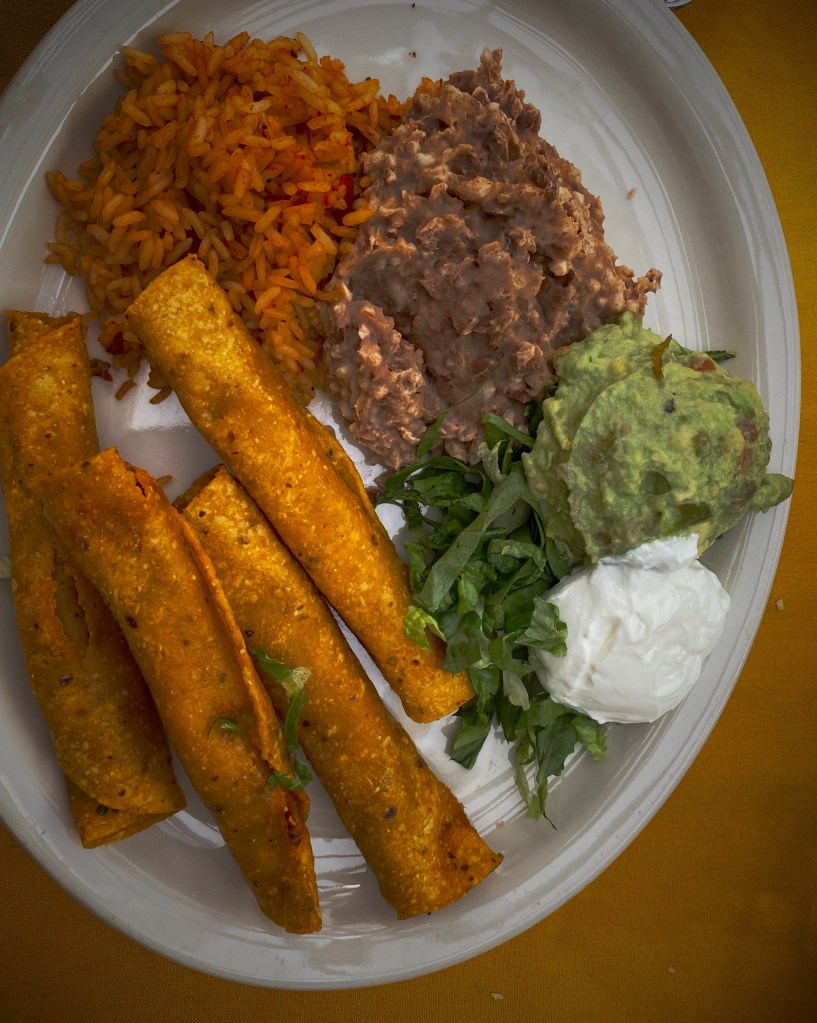
Any worthwhile pilgramage deserves to be rewarded with an excellent meal. Fortunately, while the total population of the small plazas that constitue Chimayo is only 3200 people, one of the best New Mexican cuisine restaurants is located here.
In fact, the Ranchero has been serving food here for 50 years to locals and travelers alike. Interestingly, for our fellow Nutmeggers, the owner, Florence Jaramillo was born in Hartford, Conneticut. Florence moved to Chimayo after marrying Arturo Jaramillo, who was a native of Chimayo. The site of the restaurant is Arturo’s ancestral home.
Espanola
We returned home via Espanola and the River Road (runs along the Rio Grande River).
Muralist Ruben Rael and Youth Participants
The Espanola Chamber of Commerce and the McCune Foundation are sponsoring youth mural projects and we stopped in town to see some of the murals. We are glad that we did – as you can see from the photographs these are, without exception, excellent murals.



































































































 ON THE ROAD with Maria + Stephen